
News
UNICEF: 466 million children live in areas experiencing at least twice as many extremely hot days as their grandparents

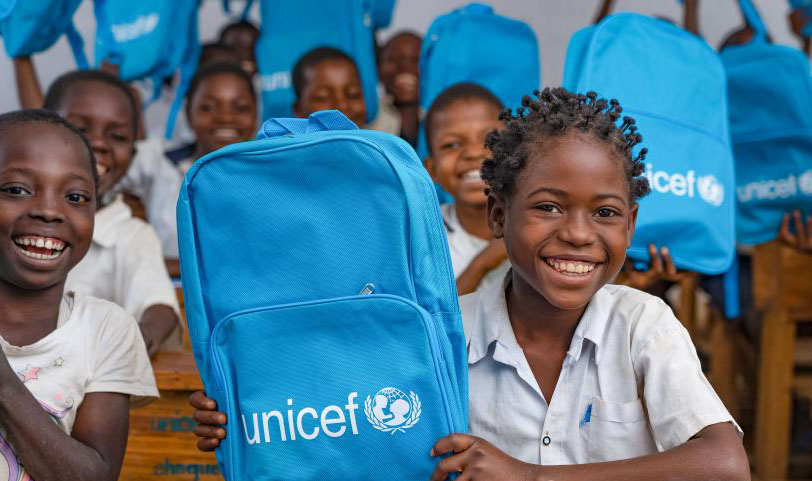
A new UNICEF analysis has revealed that one in 5 children – or 466 million – live in areas that experience at least double the number of extremely hot days every year compared to just six decades ago.
Using a comparison between a 1960s and a 2020-2024 average, the analysis issues a stark warning about the speed and scale at which extremely hot days – measured as more than 35 degrees Celsius / 95 degrees Fahrenheit – are increasing for almost half a billion children worldwide, many without the infrastructure or services to endure it.
“The hottest summer days now seem normal,” said UNICEF Executive Director Catherine Russell. “Extreme heat is increasing, disrupting children’s health, well-being and daily routines.”
The analysis also examines country-level data and finds that in 16 countries, children now experience more than a month of additional extremely hot days compared to six decades ago. In South Sudan, for example, children are living through a yearly average of 165 extremely hot days this decade compared to 110 days in the 1960s, while in Paraguay it has jumped to 71 days from 36.
Globally, children in West and Central Africa face the highest exposure to extremely hot days and the most significant increases over time, according to the analysis. 123 million children – or 39 per cent of children in the region – now experience an average of more than one third of the year – or at least 95 days – in temperatures above 35 degrees Celsius, reaching as many as 212 days in Mali, 202 days in Niger, 198 days in Senegal, and 195 days in Sudan. In Latin America and the Caribbean, almost 48 million children live in areas that are experiencing twice the number of extremely hot days.
Heat stress within the body, caused by exposure to extreme heat, poses unique threats to the health and well-being of children and pregnant women, particularly if cooling interventions are not available. It has been linked to pregnancy complications such as gestational chronic diseases and adverse birth outcomes including stillbirth, low birth weight, and preterm birth. Excess levels of heat stress also contribute to child malnutrition, non-communicable diseases such as heat-related illnesses, and leave children more vulnerable to infectious diseases that spread in high temperatures such as malaria and dengue. Evidence shows that it also impacts neurodevelopment, mental health, and well-being.
Extreme heat also has more concerning effects when experienced in longer periods of time. While extreme heat is increasing in every country worldwide, the analysis shows that children are also exposed to more severe, longer, and frequent heatwaves. Across 100 countries, more than half of children are experiencing twice as many heatwaves today as 60 years ago. In the United States, for example, 36 million children are exposed to double the number of heatwaves compared to 60 years ago, and 5.7 million are exposed to three times as many.
The impact of climate-related hazards on child health is multiplied by how climate-related hazards affect food and water security and contamination, damage infrastructure, disrupt services for children, including education, and drive displacement. In addition, the severity of these impacts is determined by underlying vulnerabilities and inequities children face based on their socioeconomic status, gender, location, existing health status and country context.
In the coming months, all Member State Parties to the Paris Agreement must submit new national climate plans – Nationally Defined Contributions (NDC 3.0). These plans will set the course of climate action for a decade. They are a timebound opportunity to set out concrete plans to realise the goals of the Paris agreement. UNICEF is calling on leaders, governments and the private sector to seize this opportunity to deliver urgent and bold climate action which upholds the right of every child to a clean, healthy and sustainable environment by taking the following actions:
REDUCE emissions and fulfil ambitious international sustainability and climate change agreements with urgency to get rising temperatures under control.
PROTECT the lives, health and well-being of children and the resilience of their communities, including by adapting essential social services to a changing climate, more frequent disasters, and degrading environment. For example, by making sure every health worker is trained to detect and treat heat stress, and by making health and education facilities resilient to extreme heat.
EMPOWER every child through their life course with the developmental opportunities, education, and skills to be a champion for the environment.
“Children are not little adults. Their bodies are far more vulnerable to extreme heat. Young bodies heat up faster, and cool down more slowly. Extreme heat is especially risky for babies due to their faster heart rate, so rising temperatures are even more alarming for children,” Russell said.
“Governments must act to get rising temperatures under control, and there is a unique opportunity to do that right now. As governments are currently drafting their national climate action plans, they can do so with the ambition and knowledge that today’s children and future generations will have to live in the world they leave behind.”








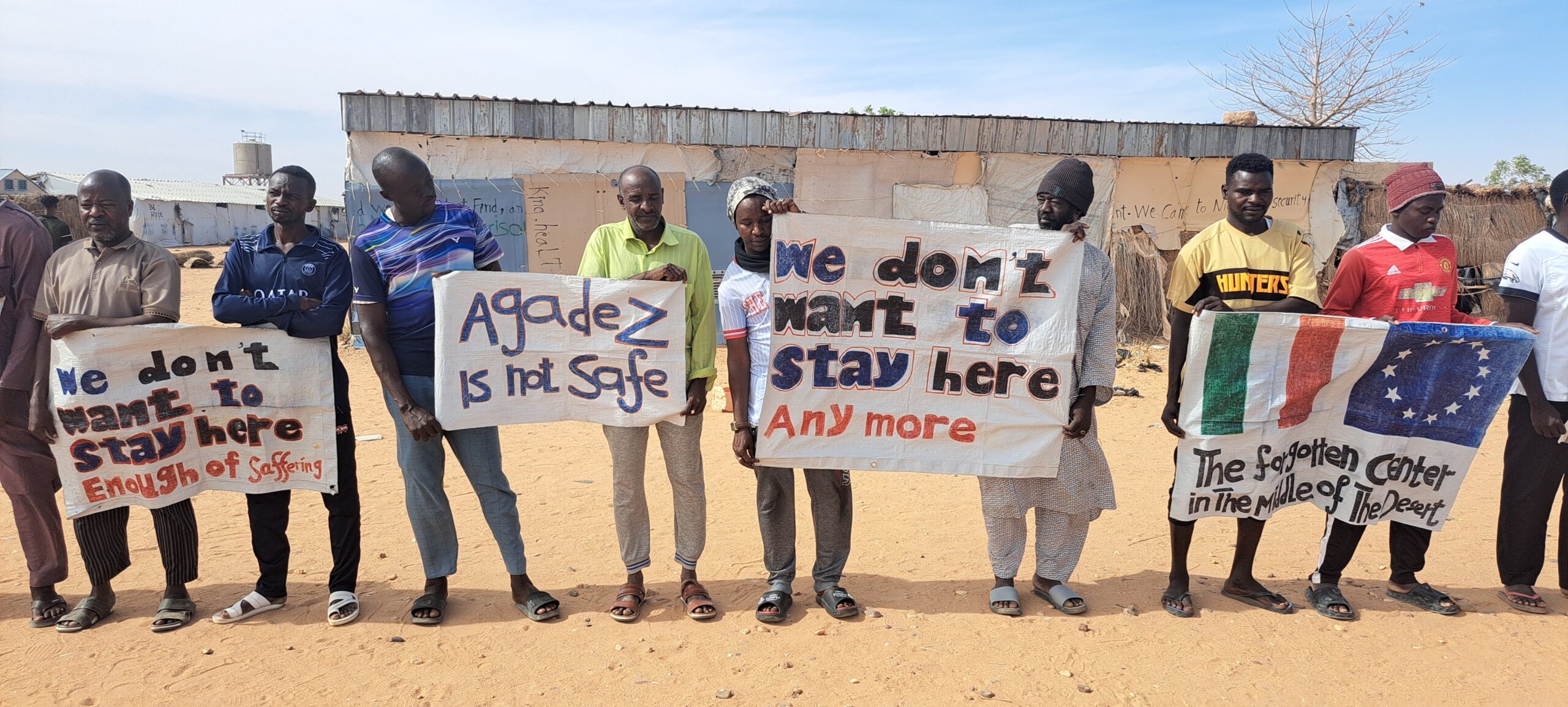
Des réfugiés installés au centre humanitaire d’Agadez, au Niger, poursuivent une manifestation pacifique devant les bureaux du Haut-Commissariat des Nations unies pour les réfugiés (HCR), accusant les organisations humanitaires d’ignorer leur situation et de ne pas répondre à leurs revendications.
Les réfugiés, regroupés sous le nom de Refugees in Niger, affirment manifester depuis plus de deux ans pour dénoncer leurs conditions de vie et ce qu’ils considèrent comme un manque d’engagement des organisations humanitaires en faveur de la protection de leurs droits.
Dans une série de publications sur X entre le 1er et le 5 novembre, le groupe a indiqué que la manifestation avait atteint son 771e jour au 2 novembre, ajoutant que la situation au centre s’était considérablement détériorée.
Il a décrit les conditions de vie comme extrêmement difficiles, soulignant que les réfugiés manquaient de produits de première nécessité et faisaient face à un avenir incertain.
« La situation à Agadez est devenue catastrophique. Les réfugiés souffrent énormément, vivent dans des conditions déplorables et leur sort demeure incertain depuis leur arrivée au centre », a déclaré le groupe dans une publication du 2 novembre.
Les manifestants ont également accusé le HCR et d’autres organisations humanitaires de garder le silence malgré la durée de leur mobilisation et leurs appels répétés à l’aide.
Dans une autre publication datée du 5 novembre, le groupe a indiqué que la manifestation pacifique se poursuivait toujours devant les bureaux du HCR, exprimant sa frustration face à ce qu’il a qualifié d’inaction persistante des organisations humanitaires alors que les réfugiés continuent de vivre dans des conditions difficiles.
Le groupe a attiré l’attention sur les revendications des réfugiés concernant leurs droits et l’amélioration de leurs conditions de vie, appelant les organisations humanitaires à répondre à leurs préoccupations.
Le HCR n’avait pas encore réagi aux accusations contenues dans les publications citées.
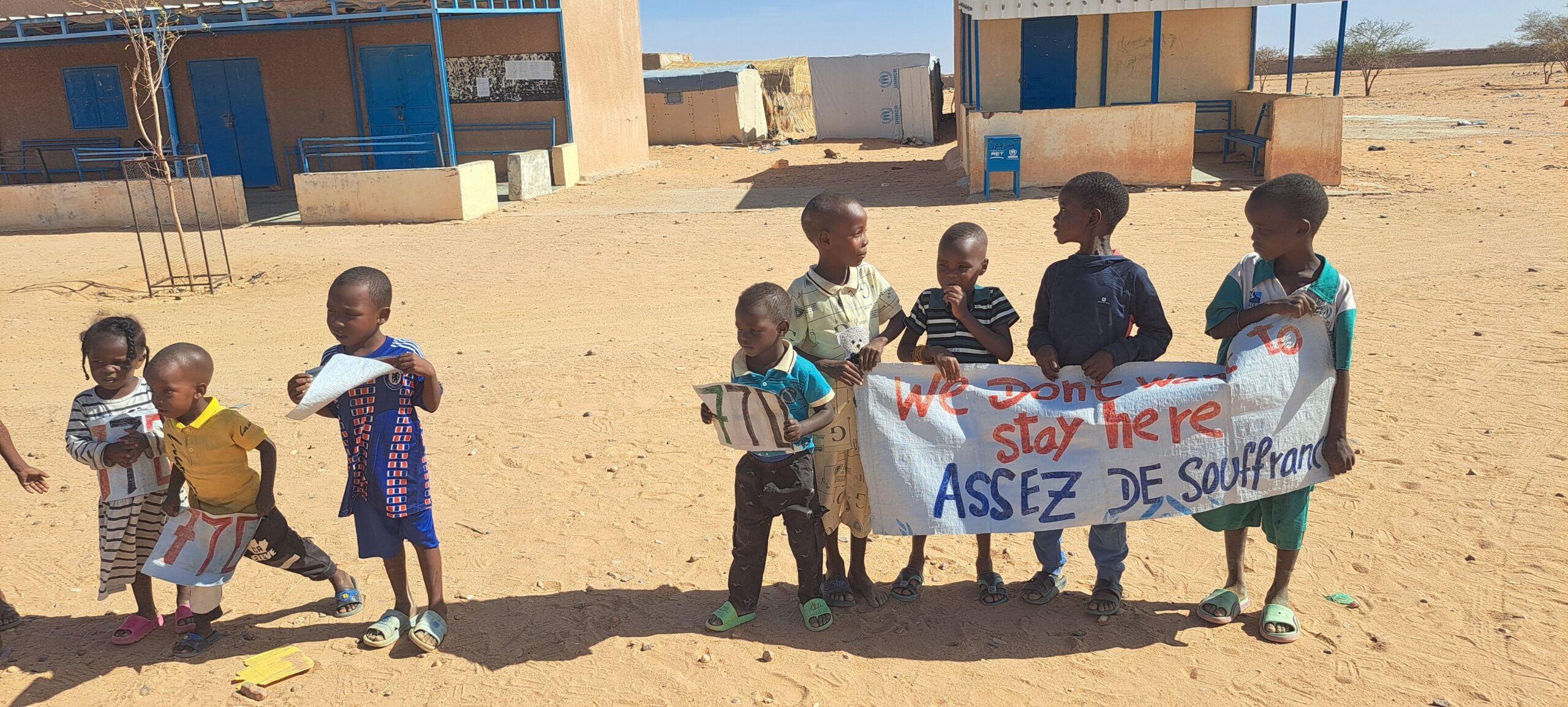
Refugees at the Agadez Humanitarian Centre in Niger have continued a peaceful protest outside the office of the United Nations High Commissioner for Refugees (UNHCR), accusing humanitarian organisations of ignoring their plight and failing to address their demands.
The refugees, under the group Refugees in Niger, said they had been protesting for more than two years over their living conditions and what they described as the lack of efforts by humanitarian agencies to protect their rights.
In a series of posts on X between November 1 and 5, the group said the protest had entered its 771st day as of November 2, adding that the situation at the centre had deteriorated significantly.
It described conditions as dire, saying the refugees lacked basic necessities and faced an uncertain future.
“The situation in Agadez has become catastrophic. Refugees are suffering immensely, living in dire conditions, and their fate has remained unknown since their arrival at the centre,” the group said in a post on November 2.
The protesters also accused UNHCR and other humanitarian organisations of remaining silent despite their prolonged demonstrations and appeals for assistance.
In another post on November 5, the group said the peaceful protest was still ongoing outside the UNHCR office, expressing frustration over what it described as the continued inaction of humanitarian organisations while refugees endured difficult conditions.
The group called attention to the refugees’ demands for their rights and improved living conditions, urging humanitarian organisations to address their concerns.
The UNHCR had not responded to the allegations in the posts cited.
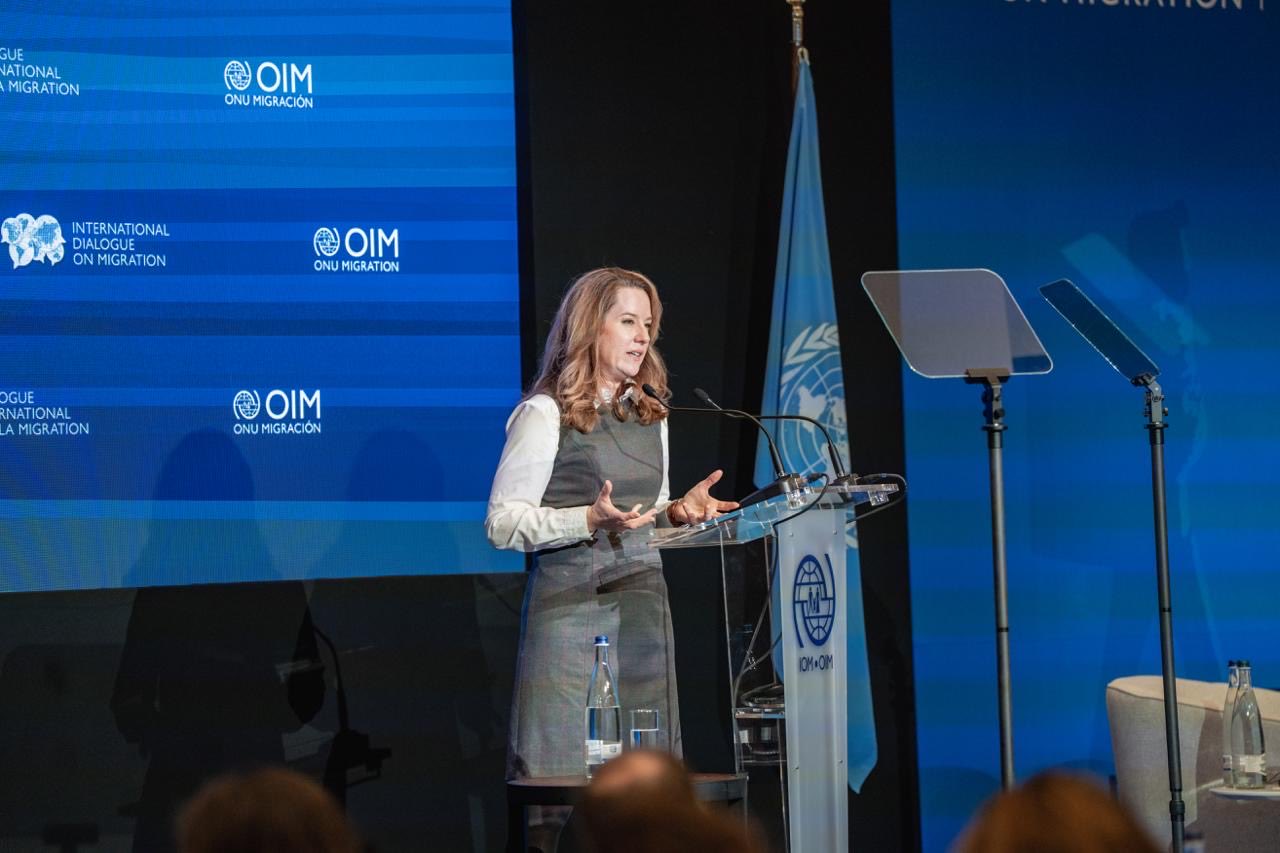
Migration expert Jeff Crisp has questioned the International Organization for Migration’s (IOM) decision to participate in the implementation of a United States programme involving the deportation of migrants to third countries.
Crisp also raised concerns over what he described as a racially based relocation programme targeting white South Africans.
In a post on X on November 2, Crisp said he was seeking clarification on IOM’s involvement in the two programmes.
“I am trying to understand IOM’s decision to be involved in the implementation of the US programme of 3rd country deportations and its racially-based relocation programme for white South Africans,” he wrote.
His comments were made in response to a post by IOM Director-General Amy Pope, who was discussing the importance of building public trust in migration governance.
In her post, Pope said trust in migration could not be established through facts and figures alone, stressing the need for transparency, public participation and accountability in institutional decision-making.
“Trust in migration isn’t built with facts and figures alone. It’s built when people understand decisions, can help shape them, and see that institutions follow through,” she wrote.
Pope added that the issues were central to discussions at the 2026 International Dialogue on Migration (#IDM2026), taking place in Geneva.
Crisp’s response raises questions about IOM’s role in implementing migration policies and deportation arrangements pursued by the US government.

Niger : des réfugiés poursuivent leur manifestation devant le centre du HCR à Agadez

Refugees continue protest at UNHCR centre in Niger’s Agadez

Jeff Crisp s’interroge sur la participation de l’OIM au programme américain d’expulsions vers des pays tiers

Jeff Crisp questions IOM’s involvement in US third-country deportation programme

Alarm Phone signale des appels de détresse de migrants au large de la Crète et le sauvetage de 53 personnes
-

 News Extra1 week ago
IOM’s Displacement Tracking Matrix monitors 97.2 million people in 2025
-

 News1 week ago
Libya repatriates hundreds of migrants, deploys reinforcements to Tobruk
-
News1 week ago
Libye : des centaines de migrants rapatriés, des renforts déployés à Tobrouk
-
 News1 week ago
Ebola:DRC confirms 10,000 cases, NRC seeks scale-up
-
 News Extra1 week ago
La Matrice de suivi des déplacements de l’OIM a suivi 97,2 millions de personnes en 2025
-
 News Extra4 days ago
SOS Humanity accuses Frontex of aiding migrant pushbacks to Libya
-

 Features1 week ago
League of Arab States, IOM launch Arab Migration Data Network
-
 News1 week ago
Ebola : la RDC confirme 10 000 cas, le NRC appelle à un renforcement urgent de la réponse