
Features
Criminalising Asylum: From exceptionalism to Rwanda by Prof Sarah Singer


On 4 June 2024, Professor Sarah Singer delivered her inaugural lecture ‘Criminalising Asylum: From exceptionalism to Rwanda’ at Senate House, University of London. The text of her lecture is reproduced below, and a recording of the event is available on the website of Refugee Law Initiative who shared the text..
Preparing for this talk gave me the opportunity to reflect on the entirety of my academic career, right from my earlier research on criminality and asylum, all the way up to my more recent engagement with the UK’s Rwanda policy. And in this talk I would like to outline the ways in which I can observe the same trends of what were previously considered to be quite exceptional measures applied to a relatively small group of suspected criminal migrants, becoming manifest much more broadly across the entirety of the UK’s asylum law and policy today.
Over the past few years we have seen the adoption of immigration and asylum legislation which is simply breathtaking in its scope – the Nationality and Borders Act of 2022, the Illegal Migration Act of 2023, and most recently the 2024 Safety of Rwanda Act. These have, of course, been set against a backdrop of increasingly hostile legislation and political rhetoric directed against refugees and asylum seekers over the past decades.
But this new legislation is much more pernicious in its direction and scope. In this talk I would also like to demonstrate the ways in which this new legal framework is giving rise to immense policy challenges, similar to those posed by responses to suspected criminal migrants but on a much greater scale.
The breadth of this exceptionality approach to asylum is problematic not only for its impact on those seeing protection in the UK, but importantly, for the way that it pushes our domestic legal framework to a dangerous extent, beyond what might reasonably be considered respectful of the rule of law and the judicial system in a properly functioning democratic society today.
But for me a really engaging part of preparing this talk was thinking back to what might be considered the beginning of my academic career – me waiting to register as a PhD student at the Queens Building in Queen Mary, University of London, back in 2010. And I’ve been reflecting on who was I then, and what was I thinking?
I remember I was enthused by this crazy passion to unpick what I considered to be a really significant social injustice – that was, the way in which asylum seekers and refugees had been caught up in the global War on Terror, and in many cases presented as terrorist threats themselves.
Over time this evolved into a PhD project which explored how political and legal discourse linking refugees and asylum seekers and terrorism had impacted the UK’s interpretation and practice on who would be excluded from and denied refugee protection due to suspected serious criminality, particularly those associated with the vague and amorphous term ‘terrorism’.
Because despite what many populists would have you believe, the international protection regime does not just blindly grant protection status to serious criminals. Rather, we have specific provisions in the key international treaty governing refugee protection – the 1951 Refugee Convention – and it’s regional counterparts, which explicitly exclude from protection those suspected of committing serious crimes.
And the rationale of these provisions is two-fold. Firstly, preventing impunity from justice – We have to remember that the Refugee Convention was drafted in the wake of the horrors of World War II, and so there was a particular concern that those who had perpetrated war crimes and other atrocities during the war did not benefit from refugee protection and use the refugee regime to evade prosecution.
Secondly, there is a humanitarian imperative and that is to protect the integrity of the international refugee regime by ensuring it is not abused by the perpetrators of serious crimes, particularly those giving rise to refugee-producing situations.
And I explored how, especially in the aftermath of the 9/11 terrorist attacks on the United States, the international preoccupation with terrorism had permeated the refugee protection regime and influenced the interpretation of who would be excluded from refugee status – who would be denied refugee protection – on account of suspected terrorist activities.
And this was a really exciting time for the law of exclusion from refugee status. We had a big Supreme Court decision, I was able to engage with staff at the Home Office, with senior legal advocates, with the judiciary. I was somehow granted permission to survey every member of the asylum tribunal! And throughout all of this I retained my focus on social justice, arguing for a rigorous and principled approach to this issue of exclusion for suspected serious criminality, and that it was not abused to unjustifiably exclude people due to overly expansive interpretations of politically charged terms such as ‘terrorism’ and national security.
Following my doctorate, the natural follow-on was exploring the vexed issue of how States respond to those who are excluded from protection -– not only suspected terrorists but the still relatively small but broader category of persons who are excluded from refugee protection due to suspected criminal activity – but who couldn’t be returned to their home country because they had valid protection claims. That is, they would be at real risk of serious human rights violations if they were removed back to their home country.
Although this was a relatively small group of individuals, the political sensitivity of the topic of these potentially criminal migrants, coupled with the very real practical and legal obstacles to removing them, meant that this posed enormous policy challenges for States.
And exploring this issue further, what was revealed was a real patchwork of domestic measures employed by States to address these people who could not be removed. In the UK this included detention, special forms of limited and precarious leave, and very resource intensive battles to secure removal for particularly high-profile cases.
As an example, some of you may recall the case of the Islamist cleric Abu Qatada, who dominated newspaper headlines in the UK for over a decade as successive home secretaries tried to remove him to Jordan to face trail there for his suspected role in terrorist-related offences.
Following his exclusion from refugee status in the UK due to suspected terrorist activity, Abu Qatada was subject to a range of in-country measures, this included detention and a number of measures under counter-terrorist initiatives and, ultimately, this long running saga as the UK tried to address the human rights concerns about removing him to Jordan by concluding a special agreement with Jordan– an MOU – through which Jordan guaranteed Abu Qatada’s safe treatment and fair trial standards. This was incredibly resource intensive and went through the UK and European Court systems for over a decade before Abu Qatada eventually agreed to return to Jordan of his own volition.
But for those individuals who couldn’t be removed, the UK created a unique special status to regulate their stay in the country – Restricted Leave. This is an incredibly precarious and temporary form of leave which can have a range of restrictions attached including on accommodation, residence, employment opportunities, even access to educational courses. This is all without even a criminal trial, and these cases are continuously reviewed by the Home Office with an eye to removal. We have had individuals remain on this temporary form of leave for years and years, it seems almost immune to challenge. Importantly, the intention here is to prevent their integration in the UK and any route to potential regularisation or settlement and keep the focus on the potential for removal.
So we can see we’ve had a range of very exceptional measures developed to deal with this issue of suspected criminal migrants who can’t be removed from the country. These measures are intended to prevent integration in the UK and keep the authorities eye on potential removal. But what became clear is that these measures are very much ad-hoc in nature and there’s a lack of any structural or long term solution of how to deal with what are so often very protracted situations of non-removability.
I argue that what we are seeing in the UK today is an expansion of these exceptional measures, of this exceptional approach which was originally applied to a relatively small group of suspected criminal migrants, and it is now being applied to the broader mainstream of asylum in the UK. We see the same themes, the same range of measures running through the Nationality and Borders Act and the Illegal Migration Act, and being targeted at asylum seekers. These measures actually criminalise asylum seekers – they create them into criminals – both directly and indirectly. And they do this in myriad ways.
Firstly, in the most literal sense, criminalising the act of seeking asylum by creating new criminal offences of illegal arrival, and facilitating illegal arrival, to the UK, with severe sentences attached. And we know from the work of Vicky Taylor and others that it’s not smugglers that are being prosecuted under this new legislation, but those seeking asylum.
Secondly, by treating asylum seekers as criminals through using the same types of measures we have seen in the criminal sphere, including:
Exclusion from refugee protection – asylum seekers are being barred from accessing the UK’s asylum system via the new inadmissibility regime;
Expansive detention and accommodation powers – this is not only extremely costly, but is resulting in refugees being detained or contained for extended periods in unsuitable conditions; and
An overwhelming focus on deportation and removal – what will likely prove to be largely futile efforts to remove these people to third countries, such as Rwanda, on the basis of questionable agreements. But here we’re not speaking about agreements focusing on the treatment of specific individuals, but whole groups of asylum seekers and refugees, with very limited exceptions.
Thirdly, as an indirect consequence of these measures, by actually pushing people into illegality. Because we know that denying people access to protection, facing threat of removal, will only force people underground, off-grid, leaving them exposed to abuse and exploitation.
And what I term this ‘criminalesque’ approach to asylum is not only unnecessarily punitive and inhumane, but it creates precisely the same policy challenges as that posed by unremovable criminal migrants, but on a far greater scale.
If we look at the rationale that’s being given for this new range of measures, it’s curious as we see the same rationale given as for the measures I outlined earlier directed at suspected criminal migrants, but in a perverse twist it is almost as if these rationales are being inverted.
We have the same rationale of addressing criminality. Its been made very clear, we have been repeatedly told these measures will ‘break the business model’ of the criminal smuggling gangs. But it’s not the criminal gangs who are being targeted by this legislation, it’s asylum seekers.
The purported humanitarian rationale of these measures – to save lives by deterring dangerous irregular journeys – is also disingenuous because it’s not accompanied by the creation of safe and legal routes for people to seek protection. All these measures achieve is actually pushing people into the very dangerous journeys that the measures are purportedly intended to address.
And the only outcome of this criminalesque approach to asylum, if it is indeed followed through to its natural conclusion, is the explosion of a policy nightmare. It’s immensely costly both in financial terms but also, as we will explore, in political, legal and reputational terms for the UK, and is far from any conception of a credible and functional immigration and asylum system.
Now the breadth of this legislation is vast and I don’t have time to cover the entirety in the time available today, so I’m going to focus now on three key areas which I think exemplify this legal and policy disorder. That is, exclusion from access to protection in the UK through the new inadmissibility regime; efforts to remove individuals to third countries, including Rwanda, and; the in-country measures which will inevitably be applied to those who cannot be removed from the country.
To begin with the new inadmissibility regime. The Nationality and Borders Act of 2022 saw a dramatic expansion of the UK asylum ‘inadmissibility’ regime whereby the Home Secretary could declare inadmissible – so effectively bar access to the UK’s asylum system – anyone who arrived in the UK irregularly via a third country. Indeed, the Illegal Migration Act of 2023 envisages it will be a mandatory duty on the Secretary of State to bar anyone who arrives in the UK irregularly from access to the asylum system, from being granted leave to enter or remain in the UK, and from ever settling or obtaining citizenship in the UK, regardless of whether or not they are a refugee. We can see clear parallels here with the approach to suspected criminal migrants which seeks to deny any possibility of a stable legal status or settlement in the UK.
This denial of access to the UK’s asylum system is clearly in breach of the 1951 Refugee Convention, as without a firm legal status refugees cannot access the range of rights they are entitled to under that instrument. But it furthermore creates a huge category of persons, the majority of which have genuine protection claims and cannot be removed back to their home country, in the UK in a limbo situation.
This issue is ostensibly addressed by my second area of focus, that is the increased powers granted to the Secretary of State to remove such persons from the UK. This sounds like a very simple solution, but the government knows that the vast majority of people arriving in the UK irregularly have genuine protection claims and cannot be removed back to their home country where they would face a real risk of serious human rights violations.
We can see this by looking at the demographics of people entering the country. The Refugee Council has shown that nearly three-quarters of people who irregularly crossed the Channel last year came from just seven countries where persecution, conflict and oppression is well documented – most notably Afghanistan, also Iran, Eritrea, Iraq, Syria and Sudan. These people would almost certainly be recognised as refugees if the government processed their asylum applications, so they cannot be removed back to their home countries.
Therefore the power of the Secretary of State to remove people from the UK has been greatly expanded to include countries with which they have absolutely no connection whatsoever, the idea being that these people can simply be sent elsewhere. But the fundamental flaw with this plan is the lack of available and willing countries to receive such persons. As we know, so far Rwanda is the only country the UK has been able to secure an agreement with, a policy which, as we will explore, is problematic on many levels.
Even the Prime Minister, who has been championing this removal route throughout his Premiership, seems to have lost faith in it ever being workable, and has recently announced that no removal flights to Rwanda will take place before the General Election in early July. Labour, the lead opposition party, has also intimated that they would not pursue removals to Rwanda if they come into power.
But even if removal to Rwanda specifically is not pursued, it is important to be mindful that the underlying legal architecture on which removals to this country have been based will still be very much part of law in this country, will still be ‘on the books’. These expanded powers will still be in place. And there has been no indication from any political party that this foundational legal framework will be repealed.
But why is this relationship with Rwanda and plans to remove refugees there is so problematic?
Firstly, the Rwanda policy rests on a legal fiction – that Rwanda is a safe country to remove asylum seekers to. How do we know this is a fiction, because it is in direct contravention of a very clear ruling of the UK Supreme Court last November, in which the Court unanimously held that Rwanda was not a safe country to remove asylum seekers to. Following this decision the UK swiftly concluded a new treaty with Rwanda which sought to address many of the concerns raised by the Supreme Court, and enacted the ‘Safety of Rwanda’ Act which declares “the judgement of Parliament that the Republic of Rwanda is a safe country”.
This determination of safety is quite questionable given the Supreme Court’s very recent ruling to the contrary. But even without this, it is deeply worrying because it is simply not Parliament’s role to turn a factual question regarding safety into a matter for legislation to conclusively determine. This approach is contrary to the UK’s well-established separation of powers between the judiciary (whose role it is to determine such factual questions) and the legislature, and it simply doesn’t make sense to declare, in perpetuity, a factual point which refers to an on the ground situation which is subject to change. Even if it was argued that Rwanda is safe today, what happens if civil war breaks out in Rwanda next year? What happens if there is an environmental disaster? What if there is a change of regime? Parliament’s determination of safety would still stand because one of the reasons this legislation is so concerning, is that (aside from a very limited scope of review based on individual circumstances) it removes the ability of the UK courts to review, on an ongoing basis, whether the country is in fact safe.
So the intention of the legislation is to facilitate removals to Rwanda by limiting almost completely the ability of UK courts to scrutinise government removal action. This is obviously devastating for those potentially subject to removal, but the concerns go much deeper. Seeking to limit the role of the courts and to contain judicial power in this way is a dangerous strategy and one most commonly associated with authoritarian regimes. Judicial scrutiny of government action is a necessary precondition for any well-functioning democratic society, to ensure the government is acting in line with the law and not beyond it, and to ensure there are safeguards for all individual rights. And we should be incredibly alert to any attempt to impede this judicial function.
And why is the government seeking to evade judicial scrutiny? Because there are serious concerns that these actions – seeking to remove asylum seekers to Rwanda – are not in line with the UK’s well-established and binding international human rights obligations. In order to bring in these new asylum measures, the Secretary of State actually disapplied certain sections of the UK’s Human Rights Act (which implements many of our human rights obligations into domestic law) and explicitly declared that they could not state this legislation was in conformity with the European Convention on Human Rights.
The fact that that the UK’s hard won human rights protections should be disapplied to such a vulnerable section of our society, to those on the margins – the very people human rights were intended to protect – is disgusting. And this criminalesque approach can be seen so clearly through comparison with the only other piece of legislation in which the government has been seeking to disapply sections of the Human Rights Act – the Victims and Prisoners Bill which, until very recently, was making its way through Parliament. We see a rights stripping akin to the approach taken to convicted criminals. Another group on the margins.
But despite all this, we know that these efforts to strip rights protections, and to insulate the government from scrutiny, will not succeed. Despite all the efforts of the current government to underfund, undermine, and dismantle the UK court and legal aid system; we know that our legal system is strong enough to resist this. Because we have legal advocates, judicial colleagues, practitioners across the board who work tirelessly to ensure that government action is not immune from judicial oversight, by our domestic courts or indeed by the European Court of Human Rights, as is pre-empted in Illegal Migration Act and the Safety of Rwanda Act themselves.
But the lunacy of the whole regime is that even if the Rwanda policy is on some level successful and people are removed there, or agreement with a different country is secured, we know that this could only apply to a limited number of people because it’s unlikely the UK will find any third country willing to receive large numbers of refugees. So one might question whether the ‘price’ of the Rwanda policy, or the price of any policy of seeking to remove refugees from the UK, is really worth the imagined benefit.
This leads directly on to the third area I wanted to explore – the in-country measures which will inevitably be applied to the tens of thousands of people caught in legal limbo who cannot be removed.
As with the approach to criminal migrants, detention is the key short-term ‘solution’ envisaged, and indeed it is given prominence in the Illegal Migration Act, which grants the Secretary of State wide new powers to detain people, frustrating much judicial oversight of the decision to detain or the length of such detention. If the hope is to achieve unchallenged incarceration for extensive periods of time, this will prove to be unworkable in practice, immensely costly to the State and damaging for all.
The annual financial cost of operating the UK’s detention system for the year ending March 2022 was around £94 million. With the increased costs of holding more people in detention for longer, and opening new large scale accommodation centres in disused RAF bases and barges such as the Bibby Stockholm, the cost is now soaring into the billions. What is ensuing is large numbers of people are being held for extended periods of time in unsuitable and often unsanitary conditions, at immense cost to the taxpayer and harm to them. But even this expansion will have its limits.
What then? Unable to detain potentially large numbers of people for such long periods of time, and with limited removal options, the Home Secretary will likely be forced to implement some form of temporary leave for unreturnable asylum seekers caught in the inadmissibility regime. It might be similar to the Restricted Leave policy which I mentioned earlier is in place for suspected criminal migrants. But the public interest in maintaining protection seekers on such a punitively limited form of leave is highly questionable. Furthermore, the effect will be enforced reliance on the State – again increasing the financial cost to the UK and preventing these people from becoming contributing members of society. Indeed, the precarity of this type of status and continual threat of removal will likely drive many people underground, off grid, forcing them into illegality, a policy which is harmful to them and ultimately, harmful to our society.
To reflect back, given all this, thinking back to where I started, what would I say to that younger me embarking on this academic journey? Well, firstly I would express immense gratitude for the amazing support I’ve had along the way. Because, as Jo mentioned in her introduction, I haven’t got here alone. From having a partner who looks after so much at home to enable me to come out into the world to do my ‘Professoring’, to having the most amazing academic mentorship during my decade here at the School of Advanced Study, and amazing support throughout my earlier academic studies as well. Thanks to the brilliant colleagues here at SAS and further afield, and to all my friends and family. And I’m so grateful to so many of you for being able to make it here today.
But I think also that the younger me would be quite shocked by this turn in UK asylum law, and indeed it does feel like quite a strange time to be emerging as a Professor of refugee law in the UK, given that refugee law seems to be crumbling around us. But this only makes me reflect on the importance of all the work in this field, work from academic colleagues, legal advocates and scholars. And all the work we do here at SAS in training, connecting and supporting the next generation of practitioners and researchers in this field, who are so sorely needed, and of bringing so many people together, like we’re doing today.
So what for the future? Well it looks likely it will be the end of days for this government, and I can only hope that the incoming government not only does not pursue removals to Rwanda, but also reverses this very pernicious legislation on which the Rwanda policy is based, and which is so detrimental for all. Because – and this is really the key issue – aside from any debate about whether Rwanda is or is not safe to remove people to, or any debates about what legal challenge options may or may not be available – any approach which seeks to criminalise refugees, deny access to protection and ship people across the globe, would mean the UK failing to play its part in the global system of refugee protection that relies on international co-operation and responsibility sharing. Those principles are enshrined in the Refugee Convention, which, as my colleague David Cantor has argued, is at its heart a pragmatic response to addressing the global phenomenon of refugees, which is not going to go away any time soon.
If the UK simply decides it wants to shirk its international obligations, then what’s going to stop many other countries shirking their international obligations as well? That doesn’t just include countries in Europe as we’ve been hearing about recently, but notably countries in the Majority world who are currently hosting more than 75% of the world’s refugees. And where would those refugees go? Well, I suggest we would be seeing many more Channel crossings.
The UK proportionately takes a very small number of asylum seekers and refugees in the global context. Even within the European context we host far fewer than countries such as France and Germany. Perhaps rather than criminalising asylum seekers, a more pragmatic approach would be to look at ways to avoid people having to make these dangerous journeys in the first place and supporting them in settling into the UK and becoming productive members of our community. Coming from refugee stock myself I would argue that refugees can and do make immensely productive and positive contributions to our society.
And finally, as a lawyer, I would urge everyone to be mindful that an attack on the fundamental rights of anyone in our society is an attack on all of us. To paraphrase Martin Niemöller, ‘First they came for the refugees, who will they come for next?’



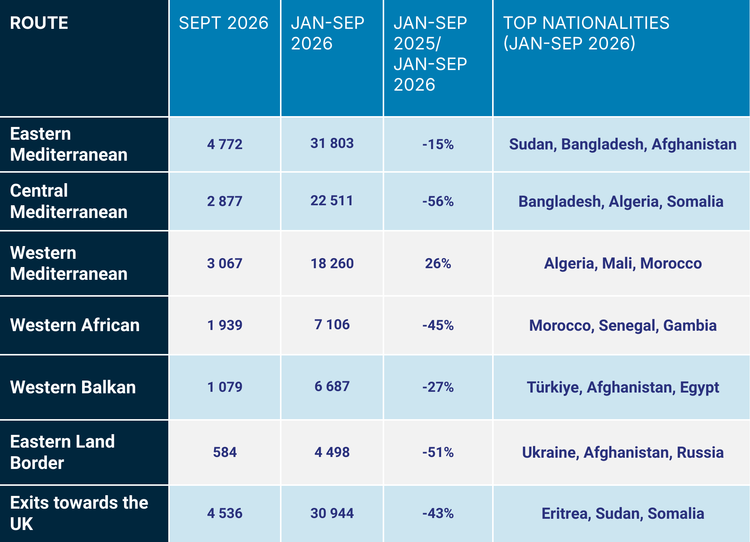
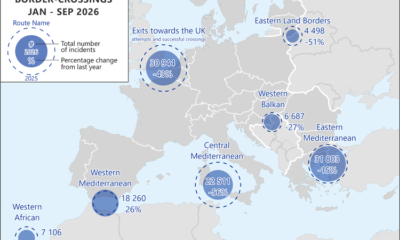
Le nombre de franchissements irréguliers des frontières de l’Union européenne (UE) a continué de diminuer au cours des neuf premiers mois de 2026, avec une baisse de près d’un tiers des détections par rapport à la même période de l’année dernière. Un peu plus de 91 000 franchissements ont été enregistrés, selon les données préliminaires recueillies par Frontex.
Cette baisse sur presque toutes les principales routes migratoires reflète la coopération soutenue avec les pays partenaires ainsi que les mesures préventives mises en place dans les principaux pays de départ, qui continuent de réduire le nombre d’embarcations prenant la mer en direction de l’Europe.
Au cours du seul mois de septembre, environ 14 300 franchissements ont été détectés, soit 28 % de moins qu’en septembre 2025, mais 11 % de plus qu’en août, en raison de l’amélioration des conditions le long des principaux corridors maritimes.
Cette période a également couvert le premier été complet d’application du Pacte de l’UE sur la migration et l’asile, qui instaure une procédure unique et harmonisée de filtrage aux frontières extérieures de l’Union. Les agents de Frontex apportent leur soutien aux États membres dans les principales étapes de cette nouvelle procédure, notamment la détermination de la nationalité des personnes arrivant sur le territoire, la collecte de données biométriques et la vérification des documents.
« Sur la plupart des routes menant vers l’Europe, moins de personnes tentent le voyage, et cette tendance s’est maintenue tout au long de l’été et jusqu’à l’automne. Mais la situation peut évoluer rapidement : les détections sur la route atlantique vers les îles Canaries ont été quatre fois plus nombreuses en septembre qu’en août. Les réseaux de passeurs ne disparaissent pas lorsque les chiffres diminuent. Ils se déplacent et attendent une occasion favorable. Notre mission est d’être prêts lorsqu’ils la trouvent », a déclaré le directeur exécutif de Frontex, Hans Leijtens.
Principaux faits marquants
- La Méditerranée orientale et la Méditerranée centrale sont restées les routes les plus fréquentées, représentant ensemble près de 60 % de toutes les entrées irrégulières dans l’UE.
- La Méditerranée centrale a enregistré la plus forte baisse, avec une diminution de 56 % des détections par rapport à la même période de l’année dernière.
- La Méditerranée occidentale a été la seule grande route migratoire à enregistrer une hausse, avec une augmentation de 26 % des détections.
- Les détections sur la route de l’Afrique de l’Ouest ont fortement augmenté en septembre, même si cette route affiche toujours une baisse de 45 % sur les neuf premiers mois de l’année.
Le nombre global d’arrivées irrégulières continue de diminuer, mais le coût humain reste élevé. Selon l’Organisation internationale pour les migrations (OIM), près de 2 000 personnes ont perdu la vie en Méditerranée depuis le début de l’année. Chacun de ces décès rappelle les risques auxquels les personnes sont contraintes de s’exposer. Les réseaux de passeurs continuent de les envoyer en mer à bord d’embarcations surchargées et inaptes à la navigation, quelles que soient les conditions météorologiques.
Les évolutions au-delà des frontières extérieures de l’UE demeurent une source d’incertitude. Les retours à grande échelle de ressortissants afghans depuis l’Iran et le Pakistan continuent d’influencer les mouvements migratoires vers l’Europe, tandis que l’instabilité dans l’ensemble du Sahel pousse des personnes à partir en direction de l’Atlantique et de la Méditerranée occidentale.
Jusqu’à présent, ces évolutions ne se sont pas traduites par un changement significatif aux frontières extérieures de l’UE, mais Frontex continue de suivre la situation de près.
Avec 3 800 agents déployés aux frontières extérieures de l’UE, Frontex continue de soutenir les autorités nationales dans la protection des frontières européennes et le sauvetage de vies en mer.
Les routes migratoires les plus fréquentées
La Méditerranée orientale a été la route la plus fréquentée au cours des neuf premiers mois de l’année, avec environ 31 800 franchissements enregistrés, soit une baisse de 15 % par rapport à la même période de l’année dernière.
Le corridor reliant la Libye à la Crète a constitué le principal axe de cette route, devant les îles de la mer Égée orientale et la frontière terrestre avec la Türkiye, tandis que Chypre n’a représenté qu’une faible proportion des arrivées.
Les arrivées ont rebondi vers la fin de l’été après une baisse liée aux conditions météorologiques, et environ 4 800 franchissements ont été détectés en septembre. Les principales nationalités recensées étaient soudanaise, bangladaise et afghane.
La Méditerranée centrale a enregistré environ 22 500 arrivées, soit 56 % de moins qu’au cours de la même période de l’année dernière. Il s’agit de la baisse la plus importante parmi toutes les routes migratoires.
La Libye est restée le principal point de départ, représentant environ les trois quarts des arrivées sur cette route, devant les corridors tunisien et algérien. Les principales nationalités recensées étaient bangladaise, algérienne et somalienne.
La Méditerranée occidentale a été la seule grande route migratoire à enregistrer une hausse, avec environ 18 300 détections, soit une augmentation de 26 % sur un an.
Cette hausse s’est concentrée à la frontière terrestre, où les détections ont plus que doublé, tandis que les arrivées par voie maritime ont augmenté de 8 %.
L’Algérie est restée le principal pays de départ pour les traversées maritimes, les îles Baléares et le continent espagnol constituant les principales destinations. Les Baléares demeurent le point d’entrée le plus dangereux sur cette route.
Les principales nationalités recensées étaient algérienne, malienne et marocaine.
La route de l’Afrique de l’Ouest a enregistré environ 7 100 détections, soit une baisse de 45 %.
Les mesures préventives mises en œuvre par la Mauritanie, puis plus récemment par le Sénégal et la Gambie, en coopération avec l’Espagne et l’UE, ont considérablement réduit les départs. Les flux migratoires restent toutefois instables.
Les détections ont fortement augmenté en septembre, atteignant environ 1 900, soit quatre fois le chiffre enregistré en août. Des départs depuis le Maroc et la Gambie en direction des îles Canaries ont été signalés.
Les principales nationalités recensées étaient marocaine, sénégalaise et gambienne.
Les tentatives de départ vers le Royaume-Uni à travers la Manche, qui comprennent aussi bien les personnes ayant réussi à atteindre le Royaume-Uni que celles qui ont été empêchées de partir, ont diminué de 43 %, pour atteindre environ 30 900 cas, dont près de 4 500 enregistrés en septembre.
Les principales nationalités recensées étaient érythréenne, soudanaise et somalienne.
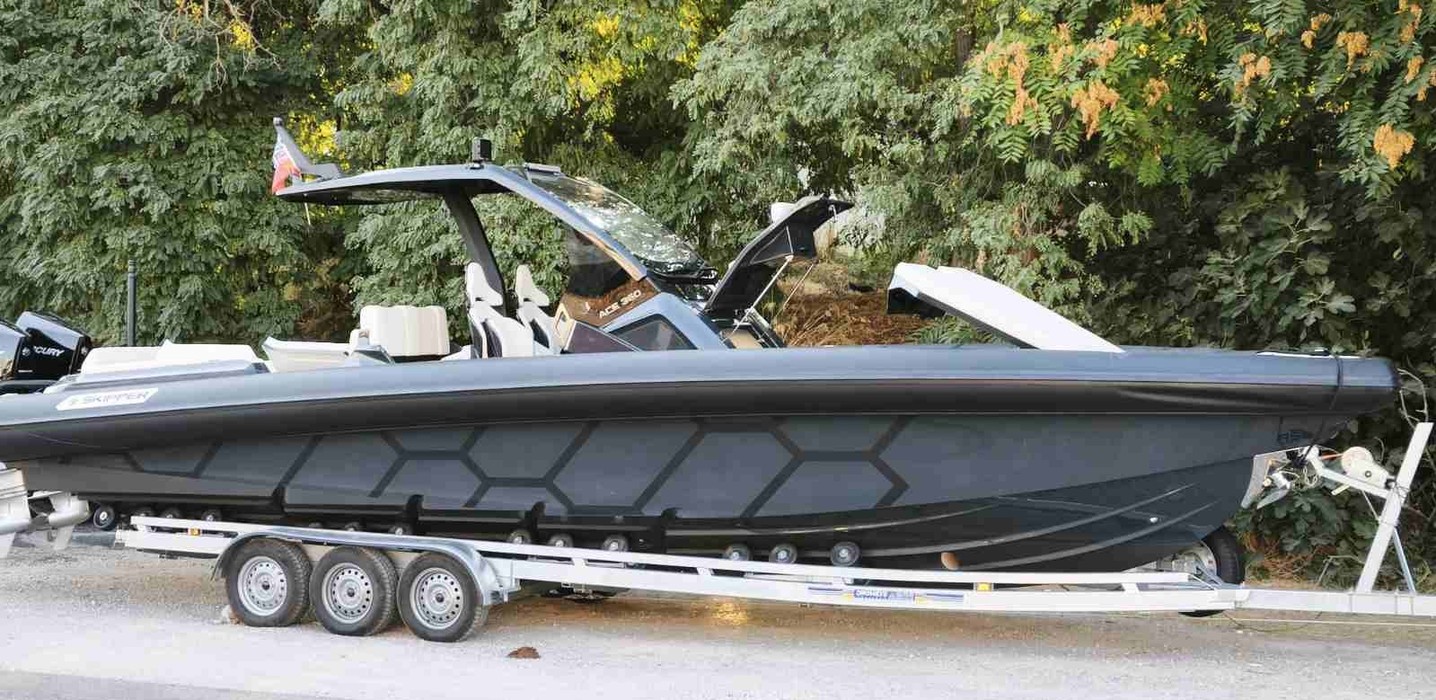
Les réseaux de passeurs ont de plus en plus recours à des embarcations pneumatiques de très grande capacité, communément appelées « méga-canots pneumatiques ». Un record de 230 personnes, dont plus de 20 enfants, a ainsi atteint le Royaume-Uni en août à bord d’une seule embarcation pneumatique.
L’accord signé entre le Royaume-Uni et la France en avril devrait permettre de renforcer davantage les patrouilles le long des côtes françaises au cours des prochains mois.
Features
Une opération menée par Frontex saisit plus de 700 véhicules et 34 bateaux et conduit à 334 arrestations en Europe
Une opération menée à l’échelle européenne par l’Agence européenne de garde-frontières et de garde-côtes (Frontex) a permis la saisie de plus de 700 véhicules, 34 bateaux et 41 moteurs de bateaux, ainsi que l’arrestation de 334 personnes soupçonnées d’être impliquées dans des activités criminelles transfrontalières.
Baptisée Joint Action Days (JAD) Mobile 9, cette opération a été menée dans 26 pays avec le soutien de l’Organisation internationale de police criminelle (INTERPOL), dans le but de lutter contre la criminalité transfrontalière, notamment le vol de véhicules, le trafic de migrants et le commerce illicite de marchandises.
Selon un communiqué publié par Frontex le 26 octobre, l’opération a également permis de détecter 2 202 migrants en situation irrégulière et de saisir plus de 7,4 tonnes de cocaïne, 2,3 tonnes de cannabis et plus de 10,6 millions de cigarettes.
Parmi les autres objets saisis figurent 115 pièces détachées de véhicules, 127 faux documents, 44 600 comprimés de benzodiazépines, plus de 3 160 litres d’alcool, 80 armes à feu, 17 autres armes et 3 466 cartouches de munitions.
Les autorités ont également récupéré des espèces non déclarées et des sommes présumées provenir d’activités criminelles, d’une valeur de 621 645 euros, 24 500 dollars, 20 000 livres sterling et 27 400 zlotys polonais.
L’opération a en outre permis de saisir 38 259 articles vestimentaires contrefaits, 2 773 parfums contrefaits et deux drones qui auraient été utilisés pour des activités de contrebande.
Les pays participants comprenaient notamment l’Autriche, la Bulgarie, la Croatie, la France, l’Allemagne, la Grèce, l’Italie, les Pays-Bas, la Pologne, le Portugal, l’Espagne et la Suisse, ainsi que d’autres pays européens et des États des Balkans occidentaux.
Le directeur exécutif de Frontex, Hans Leijtens, a déclaré que cette opération démontrait l’importance de la coopération internationale et du partage rapide des informations dans la lutte contre les réseaux criminels transfrontaliers.
« Une voiture volée peut franchir plusieurs frontières en très peu de temps. Si nous voulons l’arrêter, les informations doivent circuler tout aussi rapidement », a-t-il affirmé.
Il a ajouté que la coopération entre les services chargés de l’application de la loi permettait aux agents de différents pays d’échanger des renseignements et de coordonner leurs interventions.
Au cours de l’opération, les autorités ont effectué des contrôles sur 150 631 personnes, 129 286 véhicules, 39 322 documents, 2 721 bateaux et 1 393 moteurs de bateaux aux points de passage frontaliers et dans les ports.
Dans 75 cas, les résultats des contrôles ont révélé des liens avec des réseaux criminels et des individus classés parmi les réseaux et individus criminels les plus menaçants (Most Threatening Criminal Networks and Individuals, MTCNI), dans le cadre de la Plateforme pluridisciplinaire européenne contre les menaces criminelles (EMPACT).
Ces affaires ont donné lieu à 51 arrestations en lien avec ces activités en Grèce, en Lituanie, au Portugal et en Espagne. Les agents de Frontex ont également participé à 25 % de l’ensemble des détections de véhicules volés aux frontières extérieures de l’Union européenne.
Plusieurs enquêtes menées dans le cadre de l’opération ont mis en évidence les avantages du partage de renseignements entre pays.
Dans un premier cas, des informations échangées par l’intermédiaire du centre de coordination de Frontex ont permis d’identifier un véhicule volé en Allemagne et localisé sur une autoroute près de Varsovie, en Pologne.
À la suite de cet échange d’informations entre les autorités allemandes et polonaises, la police polonaise a intercepté le véhicule dans la périphérie de Varsovie et arrêté un suspect.
Dans une autre affaire, la coopération entre les autorités serbes et croates a permis d’intercepter un véhicule volé en France alors qu’il était transporté en direction de la Serbie.
Au port de Gênes, en Italie, les agents de Frontex, la police d’État italienne et INTERPOL ont identifié deux véhicules volés en Italie et destinés à la Tunisie. Ces véhicules étaient munis de documents d’immatriculation contrefaits et de numéros d’identification falsifiés.
Les autorités ont retrouvé leurs numéros d’identification d’origine à l’aide d’un lecteur de diagnostic embarqué.
Au poste-frontière de Tabanovce, en Macédoine du Nord, les agents de Frontex ont également aidé les autorités locales à détecter un permis de conduire slovène contrefait. Le document a été confisqué, le conducteur placé en détention et l’affaire transmise aux services compétents pour une enquête approfondie.
L’opération comprenait également des activités ciblant les bateaux volés en Croatie, sous la direction d’experts allemands et néerlandais avec le soutien de Frontex, ainsi que des campagnes de sensibilisation et des opérations de contrôle au port de Bari, en Italie.
En complément des opérations sur le terrain, Frontex a organisé des sessions de sensibilisation en ligne auxquelles ont participé environ 1 300 personnes. Ces sessions ont porté sur les techniques d’identification des véhicules, la fraude aux plaques d’immatriculation, la criminalité liée aux engins lourds et le vol de véhicules transfrontaliers.
L’agence a accueilli le centre de coordination de l’opération à son siège de Varsovie, du 28 septembre au 9 octobre 2026. Des représentants des pays participants y ont échangé des informations et coordonné leurs enquêtes en temps réel.
Les agents du corps permanent de Frontex ont apporté leur soutien aux autorités nationales aux postes-frontières, dans les ports et les aéroports, en effectuant des inspections supplémentaires, des vérifications de documents, des contrôles de véhicules et des entretiens.
INTERPOL a également déployé des représentants de son siège en France, de ses bureaux régionaux au Cameroun et en Côte d’Ivoire, ainsi que de ses Bureaux centraux nationaux au Canada et au Maroc, afin de contribuer à la recherche des véhicules volés et de faciliter leur saisie.
Des officiers de liaison de l’Organisation mondiale des douanes (OMD) ont également pris part à l’opération.
Frontex a coordonné l’opération dans le cadre de l’EMPACT, tandis que la France en assurait la direction opérationnelle.
L’agence a indiqué que cette opération démontrait comment le partage rapide de renseignements et la coopération directe entre les autorités nationales pouvaient renforcer les efforts visant à intercepter les véhicules volés et autres marchandises illicites avant qu’ils n’atteignent leurs destinations prévues.

A Europe-wide operation led by the European Border and Coast Guard Agency (Frontex) has resulted in the seizure of more than 700 vehicles, 34 boats and 41 boat engines, as well as the arrest of 334 people suspected of involvement in cross-border criminal activities.
The operation, known as Joint Action Days (JAD) Mobile 9, was conducted across 26 countries with support from the International Criminal Police Organisation (INTERPOL) to combat cross-border crime, including vehicle theft, human smuggling and the trafficking of illicit goods.
According to a statement published by Frontex on October 26, the operation also led to the detection of 2,202 irregular migrants and the seizure of more than 7.4 tonnes of cocaine, 2.3 tonnes of cannabis and over 10.6 million cigarettes.
Other items seized included 115 vehicle spare parts, 127 forged documents, 44,600 benzodiazepine pills, more than 3,160 litres of alcohol, 80 firearms, 17 other weapons and 3,466 rounds of ammunition.
Authorities also recovered undeclared cash and suspected proceeds of crime worth €621,645, $24,500, £20,000 and 27,400 Polish zlotys.
The operation further resulted in the seizure of 38,259 counterfeit clothing items, 2,773 counterfeit perfumes and two drones allegedly used for smuggling.
The participating countries included Austria, Bulgaria, Croatia, France, Germany, Greece, Italy, the Netherlands, Poland, Portugal, Spain and Switzerland, alongside other European countries and the Western Balkan states.
Frontex Executive Director Hans Leijtens said the operation demonstrated the importance of international cooperation and rapid information sharing in tackling cross-border criminal networks.
“A stolen car can cross several borders in a very short time. If we want to stop it, information has to travel just as quickly,” Leijtens said.
He added that cooperation among law enforcement agencies enabled officers in different countries to exchange intelligence and coordinate their responses.
During the operation, authorities conducted checks on 150,631 people, 129,286 vehicles, 39,322 documents, 2,721 boats and 1,393 boat engines at border crossing points and ports.
In 75 cases, the findings were linked to criminal networks and individuals classified as the Most Threatening Criminal Networks and Individuals (MTCNI) under the European Multidisciplinary Platform Against Criminal Threats (EMPACT).
The cases resulted in 51 related arrests in Greece, Lithuania, Portugal and Spain. Frontex officers were also involved in 25 per cent of all stolen vehicle detections at the European Union’s external borders.
Several investigations during the operation highlighted the benefits of cross-border intelligence sharing.
In one case, information exchanged through Frontex’s coordination centre helped identify a vehicle stolen in Germany and located on a motorway near Warsaw, Poland.
Following the exchange of information between German and Polish authorities, Polish police intercepted the vehicle on the outskirts of Warsaw and arrested a suspect.
In another incident, cooperation between Serbian and Croatian authorities led to the interception of a vehicle stolen in France while it was being transported towards Serbia.
At the port of Genoa in Italy, Frontex officers, the Italian State Police and INTERPOL identified two vehicles stolen in Italy and destined for Tunisia. The vehicles had counterfeit registration documents and falsified identification numbers.
Authorities recovered their original identification numbers using an onboard diagnostic reader.
At the Tabanovce border crossing in North Macedonia, Frontex officers also assisted local authorities in detecting a counterfeit Slovenian driving licence. The document was confiscated, the driver detained and the case referred for further investigation.
The operation also included activities targeting stolen boats in Croatia, led by experts from Germany and the Netherlands with Frontex support, as well as awareness campaigns and enforcement activities at the port of Bari in Italy.
Beyond the field operations, Frontex organised online awareness sessions attended by approximately 1,300 participants. The sessions covered vehicle identification techniques, licence plate fraud, heavy machinery crime and cross-border vehicle theft.
The agency hosted the operation’s coordination centre at its headquarters in Warsaw from September 28 to October 9, 2026, where representatives from participating countries exchanged information and coordinated investigations in real time.
Frontex Standing Corps officers supported national authorities at border crossing points, ports and airports through additional inspections, document verification, vehicle examinations and interviews.
INTERPOL also deployed representatives from its headquarters in France, regional bureaux in Cameroon and Côte d’Ivoire, and National Central Bureaux in Canada and Morocco to assist in tracing stolen vehicles and facilitating seizures.
Liaison officers from the World Customs Organisation also participated in the operation.
Frontex coordinated the operation under EMPACT, while France served as the operational leader of JAD Mobile 9.
The agency said the operation demonstrated how rapid intelligence sharing and direct cooperation among national authorities could improve efforts to intercept stolen vehicles and other illicit goods before they reached their intended destinations.

Des migrants égyptiens et d’autres nationalités portés disparus ou présumés morts après le naufrage d’une embarcation au large de la Libye

Egyptian migrants, others feared dead, missing after boat sinks off Libya

Les traversées en Méditerranée occidentale augmentent de 26 %

Western Mediterranean crossings rise by 26%
Frontex se félicite de la baisse des franchissements irréguliers aux frontières de l’UE
-
 News2 weeks ago
Sea-Watch condemns proposed EU plan to expand Frontex powers
-

 News2 weeks ago
Refugees continue protest at UNHCR centre in Niger’s Agadez
-
 News Extra2 weeks ago
Sea-Watch renouvelle son appel à mettre fin au financement européen des garde-côtes libyens
-
 News Extra2 weeks ago
Frontex celebrates drop in irregular crossings into EU
-
News Extra2 weeks ago
Sea-Watch condamne le projet de l’UE visant à étendre les pouvoirs de Frontex
-
 News3 weeks ago
Jeff Crisp questions IOM’s involvement in US third-country deportation programme
-

 News Extra2 weeks ago
Sea-Watch renews calls to end EU funding for Libyan Coast Guard
-
 News Extra2 weeks ago
Jeff Crisp s’interroge sur la participation de l’OIM au programme américain d’expulsions vers des pays tiers