
Features
Criminalising Asylum: From exceptionalism to Rwanda by Prof Sarah Singer


On 4 June 2024, Professor Sarah Singer delivered her inaugural lecture ‘Criminalising Asylum: From exceptionalism to Rwanda’ at Senate House, University of London. The text of her lecture is reproduced below, and a recording of the event is available on the website of Refugee Law Initiative who shared the text..
Preparing for this talk gave me the opportunity to reflect on the entirety of my academic career, right from my earlier research on criminality and asylum, all the way up to my more recent engagement with the UK’s Rwanda policy. And in this talk I would like to outline the ways in which I can observe the same trends of what were previously considered to be quite exceptional measures applied to a relatively small group of suspected criminal migrants, becoming manifest much more broadly across the entirety of the UK’s asylum law and policy today.
Over the past few years we have seen the adoption of immigration and asylum legislation which is simply breathtaking in its scope – the Nationality and Borders Act of 2022, the Illegal Migration Act of 2023, and most recently the 2024 Safety of Rwanda Act. These have, of course, been set against a backdrop of increasingly hostile legislation and political rhetoric directed against refugees and asylum seekers over the past decades.
But this new legislation is much more pernicious in its direction and scope. In this talk I would also like to demonstrate the ways in which this new legal framework is giving rise to immense policy challenges, similar to those posed by responses to suspected criminal migrants but on a much greater scale.
The breadth of this exceptionality approach to asylum is problematic not only for its impact on those seeing protection in the UK, but importantly, for the way that it pushes our domestic legal framework to a dangerous extent, beyond what might reasonably be considered respectful of the rule of law and the judicial system in a properly functioning democratic society today.
But for me a really engaging part of preparing this talk was thinking back to what might be considered the beginning of my academic career – me waiting to register as a PhD student at the Queens Building in Queen Mary, University of London, back in 2010. And I’ve been reflecting on who was I then, and what was I thinking?
I remember I was enthused by this crazy passion to unpick what I considered to be a really significant social injustice – that was, the way in which asylum seekers and refugees had been caught up in the global War on Terror, and in many cases presented as terrorist threats themselves.
Over time this evolved into a PhD project which explored how political and legal discourse linking refugees and asylum seekers and terrorism had impacted the UK’s interpretation and practice on who would be excluded from and denied refugee protection due to suspected serious criminality, particularly those associated with the vague and amorphous term ‘terrorism’.
Because despite what many populists would have you believe, the international protection regime does not just blindly grant protection status to serious criminals. Rather, we have specific provisions in the key international treaty governing refugee protection – the 1951 Refugee Convention – and it’s regional counterparts, which explicitly exclude from protection those suspected of committing serious crimes.
And the rationale of these provisions is two-fold. Firstly, preventing impunity from justice – We have to remember that the Refugee Convention was drafted in the wake of the horrors of World War II, and so there was a particular concern that those who had perpetrated war crimes and other atrocities during the war did not benefit from refugee protection and use the refugee regime to evade prosecution.
Secondly, there is a humanitarian imperative and that is to protect the integrity of the international refugee regime by ensuring it is not abused by the perpetrators of serious crimes, particularly those giving rise to refugee-producing situations.
And I explored how, especially in the aftermath of the 9/11 terrorist attacks on the United States, the international preoccupation with terrorism had permeated the refugee protection regime and influenced the interpretation of who would be excluded from refugee status – who would be denied refugee protection – on account of suspected terrorist activities.
And this was a really exciting time for the law of exclusion from refugee status. We had a big Supreme Court decision, I was able to engage with staff at the Home Office, with senior legal advocates, with the judiciary. I was somehow granted permission to survey every member of the asylum tribunal! And throughout all of this I retained my focus on social justice, arguing for a rigorous and principled approach to this issue of exclusion for suspected serious criminality, and that it was not abused to unjustifiably exclude people due to overly expansive interpretations of politically charged terms such as ‘terrorism’ and national security.
Following my doctorate, the natural follow-on was exploring the vexed issue of how States respond to those who are excluded from protection -– not only suspected terrorists but the still relatively small but broader category of persons who are excluded from refugee protection due to suspected criminal activity – but who couldn’t be returned to their home country because they had valid protection claims. That is, they would be at real risk of serious human rights violations if they were removed back to their home country.
Although this was a relatively small group of individuals, the political sensitivity of the topic of these potentially criminal migrants, coupled with the very real practical and legal obstacles to removing them, meant that this posed enormous policy challenges for States.
And exploring this issue further, what was revealed was a real patchwork of domestic measures employed by States to address these people who could not be removed. In the UK this included detention, special forms of limited and precarious leave, and very resource intensive battles to secure removal for particularly high-profile cases.
As an example, some of you may recall the case of the Islamist cleric Abu Qatada, who dominated newspaper headlines in the UK for over a decade as successive home secretaries tried to remove him to Jordan to face trail there for his suspected role in terrorist-related offences.
Following his exclusion from refugee status in the UK due to suspected terrorist activity, Abu Qatada was subject to a range of in-country measures, this included detention and a number of measures under counter-terrorist initiatives and, ultimately, this long running saga as the UK tried to address the human rights concerns about removing him to Jordan by concluding a special agreement with Jordan– an MOU – through which Jordan guaranteed Abu Qatada’s safe treatment and fair trial standards. This was incredibly resource intensive and went through the UK and European Court systems for over a decade before Abu Qatada eventually agreed to return to Jordan of his own volition.
But for those individuals who couldn’t be removed, the UK created a unique special status to regulate their stay in the country – Restricted Leave. This is an incredibly precarious and temporary form of leave which can have a range of restrictions attached including on accommodation, residence, employment opportunities, even access to educational courses. This is all without even a criminal trial, and these cases are continuously reviewed by the Home Office with an eye to removal. We have had individuals remain on this temporary form of leave for years and years, it seems almost immune to challenge. Importantly, the intention here is to prevent their integration in the UK and any route to potential regularisation or settlement and keep the focus on the potential for removal.
So we can see we’ve had a range of very exceptional measures developed to deal with this issue of suspected criminal migrants who can’t be removed from the country. These measures are intended to prevent integration in the UK and keep the authorities eye on potential removal. But what became clear is that these measures are very much ad-hoc in nature and there’s a lack of any structural or long term solution of how to deal with what are so often very protracted situations of non-removability.
I argue that what we are seeing in the UK today is an expansion of these exceptional measures, of this exceptional approach which was originally applied to a relatively small group of suspected criminal migrants, and it is now being applied to the broader mainstream of asylum in the UK. We see the same themes, the same range of measures running through the Nationality and Borders Act and the Illegal Migration Act, and being targeted at asylum seekers. These measures actually criminalise asylum seekers – they create them into criminals – both directly and indirectly. And they do this in myriad ways.
Firstly, in the most literal sense, criminalising the act of seeking asylum by creating new criminal offences of illegal arrival, and facilitating illegal arrival, to the UK, with severe sentences attached. And we know from the work of Vicky Taylor and others that it’s not smugglers that are being prosecuted under this new legislation, but those seeking asylum.
Secondly, by treating asylum seekers as criminals through using the same types of measures we have seen in the criminal sphere, including:
Exclusion from refugee protection – asylum seekers are being barred from accessing the UK’s asylum system via the new inadmissibility regime;
Expansive detention and accommodation powers – this is not only extremely costly, but is resulting in refugees being detained or contained for extended periods in unsuitable conditions; and
An overwhelming focus on deportation and removal – what will likely prove to be largely futile efforts to remove these people to third countries, such as Rwanda, on the basis of questionable agreements. But here we’re not speaking about agreements focusing on the treatment of specific individuals, but whole groups of asylum seekers and refugees, with very limited exceptions.
Thirdly, as an indirect consequence of these measures, by actually pushing people into illegality. Because we know that denying people access to protection, facing threat of removal, will only force people underground, off-grid, leaving them exposed to abuse and exploitation.
And what I term this ‘criminalesque’ approach to asylum is not only unnecessarily punitive and inhumane, but it creates precisely the same policy challenges as that posed by unremovable criminal migrants, but on a far greater scale.
If we look at the rationale that’s being given for this new range of measures, it’s curious as we see the same rationale given as for the measures I outlined earlier directed at suspected criminal migrants, but in a perverse twist it is almost as if these rationales are being inverted.
We have the same rationale of addressing criminality. Its been made very clear, we have been repeatedly told these measures will ‘break the business model’ of the criminal smuggling gangs. But it’s not the criminal gangs who are being targeted by this legislation, it’s asylum seekers.
The purported humanitarian rationale of these measures – to save lives by deterring dangerous irregular journeys – is also disingenuous because it’s not accompanied by the creation of safe and legal routes for people to seek protection. All these measures achieve is actually pushing people into the very dangerous journeys that the measures are purportedly intended to address.
And the only outcome of this criminalesque approach to asylum, if it is indeed followed through to its natural conclusion, is the explosion of a policy nightmare. It’s immensely costly both in financial terms but also, as we will explore, in political, legal and reputational terms for the UK, and is far from any conception of a credible and functional immigration and asylum system.
Now the breadth of this legislation is vast and I don’t have time to cover the entirety in the time available today, so I’m going to focus now on three key areas which I think exemplify this legal and policy disorder. That is, exclusion from access to protection in the UK through the new inadmissibility regime; efforts to remove individuals to third countries, including Rwanda, and; the in-country measures which will inevitably be applied to those who cannot be removed from the country.
To begin with the new inadmissibility regime. The Nationality and Borders Act of 2022 saw a dramatic expansion of the UK asylum ‘inadmissibility’ regime whereby the Home Secretary could declare inadmissible – so effectively bar access to the UK’s asylum system – anyone who arrived in the UK irregularly via a third country. Indeed, the Illegal Migration Act of 2023 envisages it will be a mandatory duty on the Secretary of State to bar anyone who arrives in the UK irregularly from access to the asylum system, from being granted leave to enter or remain in the UK, and from ever settling or obtaining citizenship in the UK, regardless of whether or not they are a refugee. We can see clear parallels here with the approach to suspected criminal migrants which seeks to deny any possibility of a stable legal status or settlement in the UK.
This denial of access to the UK’s asylum system is clearly in breach of the 1951 Refugee Convention, as without a firm legal status refugees cannot access the range of rights they are entitled to under that instrument. But it furthermore creates a huge category of persons, the majority of which have genuine protection claims and cannot be removed back to their home country, in the UK in a limbo situation.
This issue is ostensibly addressed by my second area of focus, that is the increased powers granted to the Secretary of State to remove such persons from the UK. This sounds like a very simple solution, but the government knows that the vast majority of people arriving in the UK irregularly have genuine protection claims and cannot be removed back to their home country where they would face a real risk of serious human rights violations.
We can see this by looking at the demographics of people entering the country. The Refugee Council has shown that nearly three-quarters of people who irregularly crossed the Channel last year came from just seven countries where persecution, conflict and oppression is well documented – most notably Afghanistan, also Iran, Eritrea, Iraq, Syria and Sudan. These people would almost certainly be recognised as refugees if the government processed their asylum applications, so they cannot be removed back to their home countries.
Therefore the power of the Secretary of State to remove people from the UK has been greatly expanded to include countries with which they have absolutely no connection whatsoever, the idea being that these people can simply be sent elsewhere. But the fundamental flaw with this plan is the lack of available and willing countries to receive such persons. As we know, so far Rwanda is the only country the UK has been able to secure an agreement with, a policy which, as we will explore, is problematic on many levels.
Even the Prime Minister, who has been championing this removal route throughout his Premiership, seems to have lost faith in it ever being workable, and has recently announced that no removal flights to Rwanda will take place before the General Election in early July. Labour, the lead opposition party, has also intimated that they would not pursue removals to Rwanda if they come into power.
But even if removal to Rwanda specifically is not pursued, it is important to be mindful that the underlying legal architecture on which removals to this country have been based will still be very much part of law in this country, will still be ‘on the books’. These expanded powers will still be in place. And there has been no indication from any political party that this foundational legal framework will be repealed.
But why is this relationship with Rwanda and plans to remove refugees there is so problematic?
Firstly, the Rwanda policy rests on a legal fiction – that Rwanda is a safe country to remove asylum seekers to. How do we know this is a fiction, because it is in direct contravention of a very clear ruling of the UK Supreme Court last November, in which the Court unanimously held that Rwanda was not a safe country to remove asylum seekers to. Following this decision the UK swiftly concluded a new treaty with Rwanda which sought to address many of the concerns raised by the Supreme Court, and enacted the ‘Safety of Rwanda’ Act which declares “the judgement of Parliament that the Republic of Rwanda is a safe country”.
This determination of safety is quite questionable given the Supreme Court’s very recent ruling to the contrary. But even without this, it is deeply worrying because it is simply not Parliament’s role to turn a factual question regarding safety into a matter for legislation to conclusively determine. This approach is contrary to the UK’s well-established separation of powers between the judiciary (whose role it is to determine such factual questions) and the legislature, and it simply doesn’t make sense to declare, in perpetuity, a factual point which refers to an on the ground situation which is subject to change. Even if it was argued that Rwanda is safe today, what happens if civil war breaks out in Rwanda next year? What happens if there is an environmental disaster? What if there is a change of regime? Parliament’s determination of safety would still stand because one of the reasons this legislation is so concerning, is that (aside from a very limited scope of review based on individual circumstances) it removes the ability of the UK courts to review, on an ongoing basis, whether the country is in fact safe.
So the intention of the legislation is to facilitate removals to Rwanda by limiting almost completely the ability of UK courts to scrutinise government removal action. This is obviously devastating for those potentially subject to removal, but the concerns go much deeper. Seeking to limit the role of the courts and to contain judicial power in this way is a dangerous strategy and one most commonly associated with authoritarian regimes. Judicial scrutiny of government action is a necessary precondition for any well-functioning democratic society, to ensure the government is acting in line with the law and not beyond it, and to ensure there are safeguards for all individual rights. And we should be incredibly alert to any attempt to impede this judicial function.
And why is the government seeking to evade judicial scrutiny? Because there are serious concerns that these actions – seeking to remove asylum seekers to Rwanda – are not in line with the UK’s well-established and binding international human rights obligations. In order to bring in these new asylum measures, the Secretary of State actually disapplied certain sections of the UK’s Human Rights Act (which implements many of our human rights obligations into domestic law) and explicitly declared that they could not state this legislation was in conformity with the European Convention on Human Rights.
The fact that that the UK’s hard won human rights protections should be disapplied to such a vulnerable section of our society, to those on the margins – the very people human rights were intended to protect – is disgusting. And this criminalesque approach can be seen so clearly through comparison with the only other piece of legislation in which the government has been seeking to disapply sections of the Human Rights Act – the Victims and Prisoners Bill which, until very recently, was making its way through Parliament. We see a rights stripping akin to the approach taken to convicted criminals. Another group on the margins.
But despite all this, we know that these efforts to strip rights protections, and to insulate the government from scrutiny, will not succeed. Despite all the efforts of the current government to underfund, undermine, and dismantle the UK court and legal aid system; we know that our legal system is strong enough to resist this. Because we have legal advocates, judicial colleagues, practitioners across the board who work tirelessly to ensure that government action is not immune from judicial oversight, by our domestic courts or indeed by the European Court of Human Rights, as is pre-empted in Illegal Migration Act and the Safety of Rwanda Act themselves.
But the lunacy of the whole regime is that even if the Rwanda policy is on some level successful and people are removed there, or agreement with a different country is secured, we know that this could only apply to a limited number of people because it’s unlikely the UK will find any third country willing to receive large numbers of refugees. So one might question whether the ‘price’ of the Rwanda policy, or the price of any policy of seeking to remove refugees from the UK, is really worth the imagined benefit.
This leads directly on to the third area I wanted to explore – the in-country measures which will inevitably be applied to the tens of thousands of people caught in legal limbo who cannot be removed.
As with the approach to criminal migrants, detention is the key short-term ‘solution’ envisaged, and indeed it is given prominence in the Illegal Migration Act, which grants the Secretary of State wide new powers to detain people, frustrating much judicial oversight of the decision to detain or the length of such detention. If the hope is to achieve unchallenged incarceration for extensive periods of time, this will prove to be unworkable in practice, immensely costly to the State and damaging for all.
The annual financial cost of operating the UK’s detention system for the year ending March 2022 was around £94 million. With the increased costs of holding more people in detention for longer, and opening new large scale accommodation centres in disused RAF bases and barges such as the Bibby Stockholm, the cost is now soaring into the billions. What is ensuing is large numbers of people are being held for extended periods of time in unsuitable and often unsanitary conditions, at immense cost to the taxpayer and harm to them. But even this expansion will have its limits.
What then? Unable to detain potentially large numbers of people for such long periods of time, and with limited removal options, the Home Secretary will likely be forced to implement some form of temporary leave for unreturnable asylum seekers caught in the inadmissibility regime. It might be similar to the Restricted Leave policy which I mentioned earlier is in place for suspected criminal migrants. But the public interest in maintaining protection seekers on such a punitively limited form of leave is highly questionable. Furthermore, the effect will be enforced reliance on the State – again increasing the financial cost to the UK and preventing these people from becoming contributing members of society. Indeed, the precarity of this type of status and continual threat of removal will likely drive many people underground, off grid, forcing them into illegality, a policy which is harmful to them and ultimately, harmful to our society.
To reflect back, given all this, thinking back to where I started, what would I say to that younger me embarking on this academic journey? Well, firstly I would express immense gratitude for the amazing support I’ve had along the way. Because, as Jo mentioned in her introduction, I haven’t got here alone. From having a partner who looks after so much at home to enable me to come out into the world to do my ‘Professoring’, to having the most amazing academic mentorship during my decade here at the School of Advanced Study, and amazing support throughout my earlier academic studies as well. Thanks to the brilliant colleagues here at SAS and further afield, and to all my friends and family. And I’m so grateful to so many of you for being able to make it here today.
But I think also that the younger me would be quite shocked by this turn in UK asylum law, and indeed it does feel like quite a strange time to be emerging as a Professor of refugee law in the UK, given that refugee law seems to be crumbling around us. But this only makes me reflect on the importance of all the work in this field, work from academic colleagues, legal advocates and scholars. And all the work we do here at SAS in training, connecting and supporting the next generation of practitioners and researchers in this field, who are so sorely needed, and of bringing so many people together, like we’re doing today.
So what for the future? Well it looks likely it will be the end of days for this government, and I can only hope that the incoming government not only does not pursue removals to Rwanda, but also reverses this very pernicious legislation on which the Rwanda policy is based, and which is so detrimental for all. Because – and this is really the key issue – aside from any debate about whether Rwanda is or is not safe to remove people to, or any debates about what legal challenge options may or may not be available – any approach which seeks to criminalise refugees, deny access to protection and ship people across the globe, would mean the UK failing to play its part in the global system of refugee protection that relies on international co-operation and responsibility sharing. Those principles are enshrined in the Refugee Convention, which, as my colleague David Cantor has argued, is at its heart a pragmatic response to addressing the global phenomenon of refugees, which is not going to go away any time soon.
If the UK simply decides it wants to shirk its international obligations, then what’s going to stop many other countries shirking their international obligations as well? That doesn’t just include countries in Europe as we’ve been hearing about recently, but notably countries in the Majority world who are currently hosting more than 75% of the world’s refugees. And where would those refugees go? Well, I suggest we would be seeing many more Channel crossings.
The UK proportionately takes a very small number of asylum seekers and refugees in the global context. Even within the European context we host far fewer than countries such as France and Germany. Perhaps rather than criminalising asylum seekers, a more pragmatic approach would be to look at ways to avoid people having to make these dangerous journeys in the first place and supporting them in settling into the UK and becoming productive members of our community. Coming from refugee stock myself I would argue that refugees can and do make immensely productive and positive contributions to our society.
And finally, as a lawyer, I would urge everyone to be mindful that an attack on the fundamental rights of anyone in our society is an attack on all of us. To paraphrase Martin Niemöller, ‘First they came for the refugees, who will they come for next?’



Features
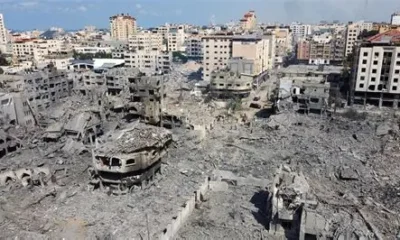
Gaza : Près de deux millions de personnes ont besoin d’une aide d’urgence en matière d’hébergement
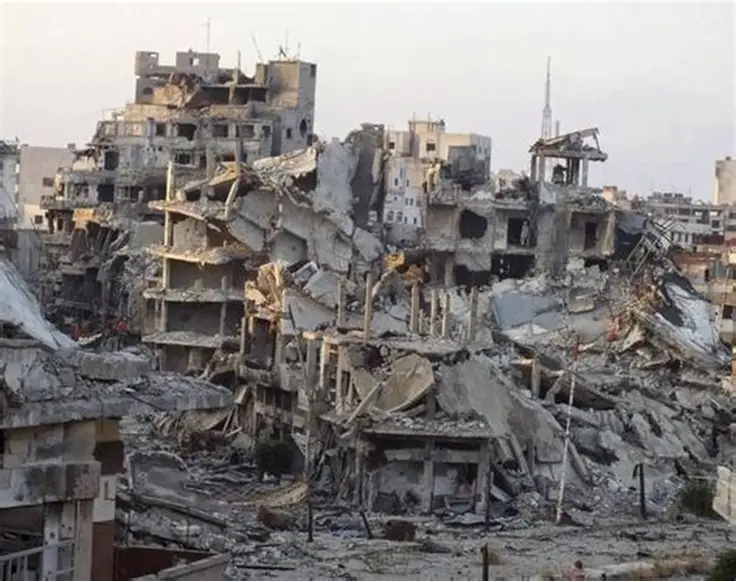
Près de deux millions de personnes, soit la quasi-totalité de la population de Gaza, ont toujours besoin d’une aide en matière d’hébergement, un an après l’annonce d’un cessez-le-feu. Alors que les pluies hivernales commencent, l’ensemble des approvisionnements prévus par les partenaires humanitaires intervenant dans le domaine de l’hébergement ne couvre qu’à peine 17 % des besoins identifiés pour l’hiver, a averti aujourd’hui Amy Pope, Directrice générale de l’Organisation internationale pour les migrations (OIM).
Après des années de déplacements et de destructions généralisées, les Palestiniens affrontent un quatrième hiver sans protection adéquate contre la pluie, les inondations et le froid. L’insuffisance des financements et les restrictions persistantes imposées par les autorités israéliennes à l’entrée de fournitures essentielles destinées aux abris empêchent les organisations humanitaires d’apporter une réponse à la hauteur des besoins.
« Les familles qui ont déjà subi des déplacements répétés et des pertes dévastatrices doivent pouvoir affronter l’hiver dans la sécurité et la dignité », a déclaré Pope. « Les matériaux destinés aux abris doivent pouvoir entrer rapidement, de manière prévisible et en quantités suffisantes pour répondre aux besoins. »
Plus de la moitié des tentes et des abris de fortune actuellement utilisés sont en mauvais état et doivent être remplacés. Les tentes sont conçues comme une mesure d’urgence temporaire et ne durent généralement que six à douze mois.
Faute d’autres solutions, de nombreuses familles vivent dans des bâtiments endommagés par la guerre qui présentent de graves risques pour leur vie. Le mois dernier seulement, des dizaines de personnes ont été tuées dans la ville de Gaza lorsqu’un bâtiment endommagé par la guerre s’est effondré. En août, un partenaire de l’OIM avait recensé plus de 3 600 structures jugées dangereuses et présentant un risque d’effondrement.
Le renforcement du phénomène El Niño devrait entraîner des précipitations plus abondantes, susceptibles de fragiliser davantage les bâtiments déjà dangereux, tandis que les systèmes de drainage fortement endommagés exposent les communautés aux inondations.
L’OIM et ses partenaires chargés de la gestion des sites ont recensé près de 1,8 million de personnes vivant dans des sites de déplacement, dont la plupart se trouvent dans des zones exposées aux risques d’inondation. Les eaux de crue pourraient endommager les abris, détruire les derniers biens des familles et contraindre les populations à se déplacer une nouvelle fois.
Environ 8 600 kits d’hébergement d’urgence de l’OIM sont prépositionnés à l’extérieur de Gaza et prêts à être acheminés, mais les autorités israéliennes continuent de leur refuser l’accès aux points de passage. Pendant ce temps, les équipes humanitaires utilisent, dans la mesure du possible, des matériaux disponibles localement et des matériaux récupérés. Ces efforts apportent un soutien temporaire limité, mais restent insuffisants pour répondre à l’ampleur des besoins en matière d’hébergement.
« Les solutions sont connues, les fournitures sont prêtes et les équipes humanitaires sont préparées à les acheminer », a déclaré Pope. « Un accès humanitaire immédiat et durable est essentiel pour protéger des vies, renforcer les abris endommagés et aider les familles à dépasser le stade des solutions temporaires. Toutes les parties doivent faciliter une action humanitaire fondée sur les principes humanitaires et soutenir une réponse à la hauteur de la gravité de la crise. »
L’OIM appelle à autoriser immédiatement et durablement l’entrée de tentes, de kits d’hébergement d’urgence, d’unités de logement de secours, de bois, d’outils et d’autres matériaux nécessaires pour renforcer les abris, réparer les habitations endommagées et aider les familles à trouver des logements plus sûrs.
Un accès prévisible aux équipements spécialisés, au carburant, aux pièces de rechange et aux matériaux de construction sera également essentiel pour permettre l’enlèvement des décombres et progresser vers un relèvement précoce.
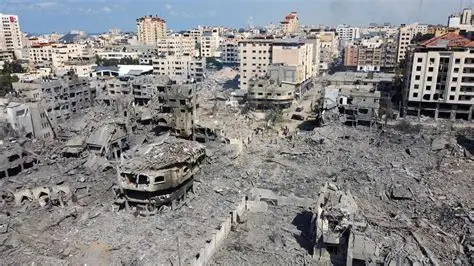
Nearly all of Gaza’s population, almost two million people, still require shelter assistance one year after a ceasefire was announced. As winter rain begins, the combined supply pipeline of humanitarian shelter partners covers barely 17 per cent of identified winter needs, the International Organization for Migration (IOM) Director General Amy Pope warned today.
After years of displacement and widespread destruction, Palestinians are facing a fourth winter without adequate protection from rain, flooding and cold. Insufficient funding and continuing Israeli authorities’ constraints on the entry of critical shelter supplies are preventing humanitarian organizations from responding at the scale required.
“Families who have already endured repeated displacement and devastating loss must be able to face the winter in safety and dignity,” Pope said. “Shelter materials must enter quickly, predictably and at the scale required.”
More than half of all tents and makeshift shelters currently in use are in poor condition that requires replacement. Tents are designed as a temporary emergency measure and generally last only six to 12 months.
With few alternatives available, many families are living in war-damaged buildings that pose serious risks to life. Just last month, dozens were killed in Gaza city when a war-damaged building collapsed. More than 3,600 structures were identified by an IOM partner in August as dangerous and at risk of collapse. The strengthening El Niño phenomenon is expected to bring heavier rainfall, which could further weaken unsafe buildings, while heavily damaged drainage systems leave communities exposed to flooding.
IOM and partners working in site management have identified nearly 1.8 million people living in displacement sites, most of them in areas at risk of flooding. Floodwaters could damage shelters, destroy families’ remaining possessions and force people to move once again.
Approximately 8,600 IOM emergency shelter kits are pre-positioned outside Gaza and ready for delivery but continue to be turned away at crossing points by the Israeli authorities. Meanwhile, humanitarian teams are using locally available and salvaged materials wherever possible. These efforts provide limited temporary support but are insufficient to meet widespread shelter needs.
“The solutions are known, the supplies are ready and humanitarian teams are prepared to deliver,” Pope said. “Immediate and sustained humanitarian access is essential to protect lives, strengthen damaged shelters, and help families move beyond temporary solutions. All parties must facilitate principled humanitarian action and support a response equal to the severity of the crisis.”
IOM calls for the immediate and sustained entry of tents, emergency shelter kits, relief housing units, wood, tools and other materials needed to reinforce shelters, repair damaged homes and support families seeking safer accommodation. Predictable access to specialized equipment, fuel, spare parts and construction materials will also be essential for debris removal and movement toward early recovery.
Features
Les immigrants Nigérians confrontés à des problèmes de santé mentale invisibles malgré leur réussite, alerte un expert
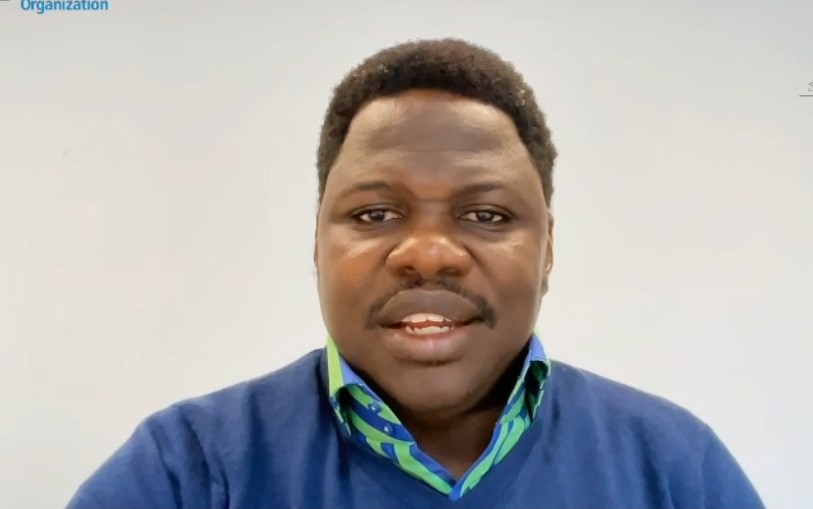
Les immigrants Nigérians peuvent connaître une réussite professionnelle et personnelle dans leurs pays d’accueil tout en faisant face à des problèmes de santé mentale souvent dissimulés, liés à la migration, aux changements identitaires et au stress prolongé, a déclaré Kehinde Ekpudu, un professionnel de la santé mentale.
Ekpudu, titulaire d’un MBA et d’un master en travail social, et travailleur social clinicien agréé (RCSW), a mis en lumière les conséquences psychologiques de la migration lors d’une présentation intitulée « Au-delà de la survie : santé mentale des immigrants nigérians — expériences vécues, identité et cerveau ».
Cette intervention a eu lieu lors du premier Sommet nigérian sur la santé mentale, organisé en ligne hier à l’occasion de la Journée mondiale de la santé mentale.
La présentation a examiné les liens entre la migration, l’identité, le cerveau et la santé mentale, en attirant l’attention sur les pressions émotionnelles auxquelles les immigrants peuvent être confrontés lorsqu’ils s’adaptent à la vie dans un nouveau pays.
« Lorsque nous parlons de la réussite des immigrants, nous célébrons leur capacité à s’en sortir. Mais que se passe-t-il lorsque la survie devient un mode de vie ? », a demandé Ekpudu, remettant en question la tendance à mesurer la réussite des immigrants principalement à travers leurs réalisations professionnelles et leur capacité d’adaptation.
Selon la présentation, les Nigérians n’arrivent pas dans leurs pays d’accueil dépourvus d’identité, d’expérience ou de références culturelles. La migration ne consiste pas simplement à passer d’un lieu géographique à un autre ; elle représente également une transition psychologique et identitaire.
La présentation a souligné que les immigrants peuvent être amenés à concilier simultanément plusieurs identités : nigériane, africaine, noire, canadienne, professionnelle, partenaire, parent, fils ou fille.
« La migration peut nous obliger à redéfinir certaines parties de nous-mêmes qui nous semblaient autrefois stables », indique le document.
Ekpudu a également cité une étude publiée en 2023 par Aluh et d’autres chercheurs, selon laquelle 51,7 % des immigrants nigérians participant à une étude menée au Canada présentaient un résultat positif au dépistage de la dépression.
La présentation a en outre relevé que le fait de résider au Canada depuis plus de dix ans était significativement associé à une probabilité plus élevée d’obtenir un résultat positif au dépistage de la dépression.
Ce constat remet en question l’idée selon laquelle les difficultés psychologiques liées à la migration diminuent nécessairement à mesure que les immigrants passent davantage de temps dans leur pays d’accueil.
Au-delà de la dépression, la présentation a identifié l’adaptation constante, l’incertitude et le stress chronique comme des facteurs susceptibles d’affecter le système nerveux et le bien-être émotionnel des immigrants.
Parmi les conséquences possibles figurent l’hypervigilance, l’anxiété, les troubles du sommeil, l’épuisement émotionnel, les difficultés de concentration et le burn-out.
« Parfois, ce qui ressemble à de la résilience de l’extérieur est en réalité un système nerveux qui est devenu très performant dans l’art de survivre », a déclaré Ekpudu.
La présentation a suggéré que des comportements souvent interprétés comme des signes de résilience peuvent parfois traduire les effets d’une pression psychologique prolongée, notamment lorsque les personnes se sentent obligées de rester fortes malgré leurs difficultés émotionnelles.
Elle a également examiné l’influence des attentes culturelles sur la manière dont les immigrants nigérians comprennent et expriment leurs problèmes de santé mentale.
Des expressions telles que « Je suis simplement fatigué », « Ce n’est que du stress », « Dieu m’aidera », « Je dois être plus fort », « D’autres personnes vivent des situations plus difficiles » et « Je ne peux pas craquer » ont été présentées comme des façons courantes de décrire ou d’aborder les difficultés émotionnelles sans reconnaître ouvertement ses besoins en matière de santé mentale.
Selon la présentation, ces réactions peuvent refléter la pression ressentie par certains immigrants, qui doivent rester forts, assumer leurs responsabilités familiales et continuer à rechercher la réussite, même lorsqu’ils traversent des difficultés émotionnelles.
Intitulée « Au-delà de la survie », la présentation a insisté sur la nécessité de prendre en compte les expériences vécues, les identités ainsi que le bien-être physique et psychologique des immigrants dans les discussions sur la santé mentale.
Elle a proposé un parcours allant de la survie à la confiance en soi, fondé sur trois principes : le sentiment d’appartenance, l’intégration et l’épanouissement.
Dans ce cadre, le sentiment d’appartenance consiste à pouvoir créer des liens sans renoncer à son identité ; l’intégration implique d’accepter et de concilier plusieurs identités ; tandis que l’épanouissement signifie reconnaître que la vie peut offrir davantage que la simple survie face aux difficultés quotidiennes.
« Je peux trouver ma place sans renoncer à moi-même », indique la présentation pour illustrer le premier principe.
Elle ajoute : « Je peux assumer plusieurs identités » et « Ma vie peut être davantage qu’une simple survie ».
La présentation a été réalisée dans le cadre des activités de Twin Ocean, dont la devise est : « Naviguer ensemble sur les vagues de la vie ».
Le sommet nigérian appelle à une approche inclusive des soins de santé mentale
Le coordonnateur du Sommet nigérian sur la santé mentale (NMHS), le Dr Oluyinka Oyeniji, a appelé à l’adoption d’une approche nationale inclusive des soins de santé mentale, qui tienne compte des expériences vécues par les patients, les aidants, les familles et les autres personnes affectées par les troubles mentaux.
Oyeniji a lancé cet appel hier dans son discours d’ouverture du premier Sommet nigérian sur la santé mentale, organisé pour commémorer la Journée mondiale de la santé mentale.
Le sommet, organisé en collaboration avec le Ladoke Akintola Neuroscience Group (LNG), a réuni des défenseurs de la santé mentale, des professionnels de santé, des chercheurs et d’autres acteurs concernés afin de discuter des défis et des possibilités d’amélioration des soins de santé mentale au Nigeria.
Selon Oyeniji, le sommet a été créé pour promouvoir des changements positifs dans le secteur de la santé mentale du pays et renforcer les efforts en faveur d’une réponse nationale coordonnée aux problèmes de santé mentale.
Il a déclaré que cette initiative revêtait une importance particulière à un moment où de nombreux Nigérians étaient confrontés à des problèmes de santé mentale, soit directement, soit en raison de leurs responsabilités en tant qu’aidants, membres de la famille ou amis.
Le coordonnateur a également souligné la démarche du gouvernement fédéral visant à dépénaliser la tentative de suicide, qu’il a qualifiée d’évolution importante après plus de quatorze années de plaidoyer.
Il a salué les acteurs qui ont maintenu la mobilisation en faveur de cette réforme et exhorté les Nigérians à soutenir les initiatives visant à améliorer les soins de santé mentale et à protéger les droits des personnes vivant avec des troubles mentaux.

Soudan : les attaques de drones perturbent les cours à El-Obeid, alerte le NRC

Sudan: Drone attacks disrupt school lessons in El Obeid- NRC

Sea-Watch secourt 227 migrants en Méditerranée en 48 heures

Sea-Watch rescues 227 migrants in Mediterranean within 48 hours

Un avocat ougandais exhorte l’UA à rejeter les accords migratoires avec l’Europe
-
 Features2 weeks ago
Gaza : Près de deux millions de personnes ont besoin d’une aide d’urgence en matière d’hébergement
-

 News Extra2 weeks ago
NACTAL conteste le rapport américain sur la traite des personnes et exige la reconnaissance des contributions des organisations de la société civile nigérianes
-
 News Extra2 weeks ago
Un avocat ougandais exhorte l’UA à rejeter les accords migratoires avec l’Europe
-
 News Extra1 week ago
Sudan: Drone attacks disrupt school lessons in El Obeid- NRC
-
 Features2 weeks ago
Nigerian immigrants face hidden mental health challenges despite success, expert warns
-
 Features2 weeks ago
Gaza: About two million need urgent shelter assistance
-

 News Extra2 weeks ago
NACTAL faults US trafficking report, demands recognition of Nigerian CSOs’ contributions
-

 News Extra2 weeks ago
US to deport fresh set of Nigerians over alleged criminal offences