
Features
After Civil Fleet’s FOI, Home Office ordered to release data on five dead people


A recent release by Civil Fleet, a news blog and podcast focused on the activist-led refugee rescue and support missions in the Mediterranean and across Fortress Europe, says the Home Office has been ordered to release information it sought to keep secret regarding the at least five people who died in its asylum-seeker accommodation in the first six months of 2023.
A four-month investigation by the Information Commissioner’s Office found that the Home Office’s arguments to withhold the information don’t hold up, and that it must disclose the information by April 4.
In July 2023, The Civil Fleet sent a Freedom of Information Request (FOI) to the Home Office asking the following:
1) The number of asylum seekers who died in Home Office accommodation between 1 January 2023 to 30 June 2023.
2) The cause and location of each death, as well as their ages, nationalities, and gender.
The Home Office answered the first question in full.
foi-77208-annex-1Download
According to its data at the time, five people died in the Home Office’s outsourced asylum-seeker accommodation in the first six months of 2023.
Suicide was listed as the cause of death for one of the deceased. This happened in March in the Northwest of England. The Home Office’s accommodation there is run by Serco.
The rest of the deaths were listed as “cause to be confirmed.”
Two people died in accommodations in the South of England, which are run by Clearsprings Ready Homes. One died in April; the other in June.
One person died in March while housed by Serco in the Midlands and East of England.
Another person died in March in Scotland, where Mears Group has been outsourced to run asylum-seeker accommodation.
“It’s been three years since the current asylum policy of refusing to take responsibility for tens of thousands of people’s claims began, but the government still appears to have nothing in place to monitor the true impact of this dire policy,” Amnesty International UK’s refugee and migrant rights director Steve Valdez-Symonds told The Civil Fleet.
“With a substantial rise in fatalities in the asylum system already identified, a bare minimum response would have been to record and assess the number and circumstances of these deaths.
“But ministers have chosen not to do that. They do not want to know – or want anyone else to know – the true costs, including to human life, of the policy they keep ratcheting up rather than ever face the fact that it is doing enormous harm.
“The consequences are already utterly dreadful and the longer this continues, the more lives will be ruined, even lost, to a miserable determination on the part of government to simply refuse to fairly and efficiently decide the claims that people make.”
Ann Salter, Freedom from Torture’s head of clinical services northwest, told The Civil Fleet that many of the asylum-seekers who receive clinical treatment with the organisation live in unsafe and unsuitable accommodation – “whether that’s in a hotel, self-contained unit, shared housing or even a shared room.
“Every day we see first-hand the impact that poor quality and hazardous housing has on survivors of torture – cold and damp conditions exacerbate physical harm caused by torture, and unhygienic and mouldy environments can lead to survivors feeling unsafe and so can trigger PTSD symptoms.
“For those who’ve just arrived in the UK and are trying to rebuild their lives, dangerous accommodation can compound an already difficult road to recovery.
“The government must urgently take steps to make sure that survivors and other refugees are housed in decent homes within our communities, where they have proper access to healthcare and other vital services.”
The Home Office’s arguments
The Home Office refused to provide the ages, nationalities and gender of the deceased, despite doing so in 2021, 2022 and early 2023.
Data provided from those requests showed that 46 people died while housed at Home Office asylum-seeker accommodation in 2022 — more than double the 19 deaths in 2021.
In fact, 22 people died in the Home Office’s care in the first six months of 2022 — more than in the whole of 2021.
Excluding five newborn babies, the average age of all those who died in 2022 was 45.2 years old, at a rate of 3.8 deaths per month.
The average age of those who died in 2021 was 40.3 years, with 1.5 deaths per month.
The Home Office justified its decision to keep the information secret this time by citing Section 38(1)(a) and (b) of the Freedom of Information Act 2000 (FOIA).
That section of the FOIA states that information can be exempt from disclosure if its release “would, or would likely, endanger the physical or mental health of any individual,” or “endanger the safety of any individual.”
The Home Office added that disclosing the ages, nationalities, and gender of those who died in its asylum-seeker accommodation could “identify the deceased and, by association, any family members and other asylum seekers.
“We believe that disclosure of this information would or would be likely to have a detrimental effect on the physical or mental health of any individual and could endanger the safety of any individual.”
The Home Office’s internal review determined in October that the original response was correct. [The Home Office says it aims to complete internal reviews within 20 working day, but this took 57.]
“I have determined that sections 38(1)(a) and (b) have been applied correctly in this instance,” the internal review said.
“I agree with the [original] decision that the balance of the public interest identified lies in favour of non-disclosure of the details relating to the deceased asylum seekers.
“This is because the overall public interest lies in protecting the families of the deceased individuals.”
In response to the Home Office deciding not to provide the ages, nationalities and gender of the dead this time (despite having done so on three prior occasions), the internal reviewer simply said: “Each request must be considered on a case by case basis.”
Enter the ICO
Later in October, The Civil Fleet filed a complaint with the Information Commissioner’s Office (ICO).
ic-258210-g2b4-decision-noticeDownload
The ICO’s decision notice, delivered on February 29, revealed that a reconsideration of the Home Office’s “handling of High Profile Notifications, in relation to asylum seekers and related requests made under the FOIA, took place in spring 2023.”
“This included a review of requests relating to deaths of asylum seekers. It explained that a decision was made to adopt a more risk-based approach to the disclosure of additional ‘identifier’ information in relation to deceased persons, based on legal advice and advice from information rights practitioners.”
The Home Office explained to the ICO that “each request is still considered individually on its merits, but it does not disclose detailed information about deceased asylum seekers, from which they could be identified, as a matter of course, as might previously have been the case.”
The decision notice also showed that it is not standard Home Office “practice to locate or attempt to contact a next of kin” of those who die in its care, “unless there is a surviving dependent on the Asylum Support package.”
While recognising that the withheld information may allow relatives or others previously close to the deceased to speculate that the information relates to them, the ICO said it “cannot see how the deceased individuals would be identified with absolute certainty.”
In regard to the Home Office’s information causing “a detrimental effect on the physical or mental health of any individual,” the ICO said it cannot see how this risk “would be a greater impact than causing upset and distress.”
The Commissioner said it was aware that the Home Office has previously disclosed deaths relating to asylum seekers in Home Office accommodation to The Civil Fleet.
“The Commissioner would expect that, were there any realistic risk of endangerment to any individual’s physical or mental health, the Home Office would have been able to evidence this after that information had been disclosed,” the ICO said.
“No actual evidence of any endangerment resulting from previous disclosure has been presented to the Commissioner.
“The Commissioner is therefore not persuaded that the Home Office’s arguments are sufficient to demonstrate a causal relationship between the endangerment to the physical or mental health of any individual and the disclosure of the requested information.
“He therefore finds that section 38(1)(a) of the FOIA is not engaged and the withheld information should be disclosed.”
The Home Office has until April 4 (“35 calendar days of the date of this decision notice”) to disclose all the requested information.
“Failure to comply may result in the Commissioner making written certification of this fact to the High Court pursuant to section 54 of the Act and may be dealt with as a contempt of court,” the ICO said.
The Home Office has the right to appeal against the ICO’s decision notice to the First-tier Tribunal (Information Rights).











Features
Gaza : Près de deux millions de personnes ont besoin d’une aide d’urgence en matière d’hébergement
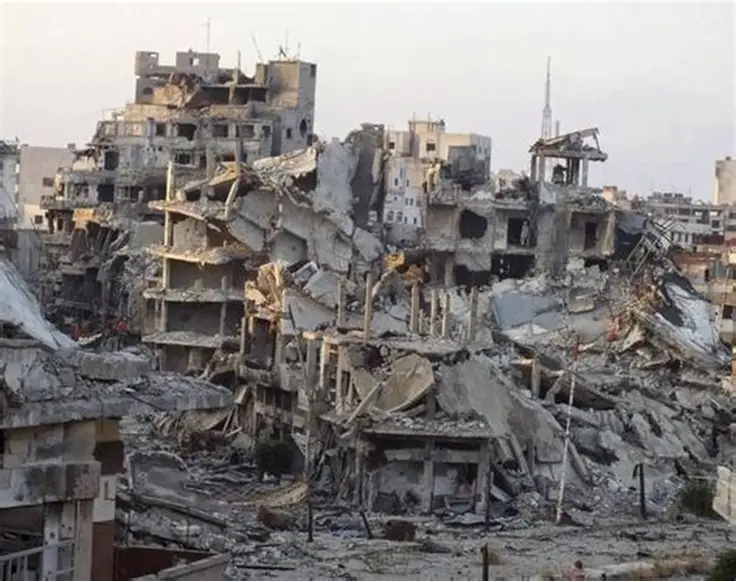
Près de deux millions de personnes, soit la quasi-totalité de la population de Gaza, ont toujours besoin d’une aide en matière d’hébergement, un an après l’annonce d’un cessez-le-feu. Alors que les pluies hivernales commencent, l’ensemble des approvisionnements prévus par les partenaires humanitaires intervenant dans le domaine de l’hébergement ne couvre qu’à peine 17 % des besoins identifiés pour l’hiver, a averti aujourd’hui Amy Pope, Directrice générale de l’Organisation internationale pour les migrations (OIM).
Après des années de déplacements et de destructions généralisées, les Palestiniens affrontent un quatrième hiver sans protection adéquate contre la pluie, les inondations et le froid. L’insuffisance des financements et les restrictions persistantes imposées par les autorités israéliennes à l’entrée de fournitures essentielles destinées aux abris empêchent les organisations humanitaires d’apporter une réponse à la hauteur des besoins.
« Les familles qui ont déjà subi des déplacements répétés et des pertes dévastatrices doivent pouvoir affronter l’hiver dans la sécurité et la dignité », a déclaré Pope. « Les matériaux destinés aux abris doivent pouvoir entrer rapidement, de manière prévisible et en quantités suffisantes pour répondre aux besoins. »
Plus de la moitié des tentes et des abris de fortune actuellement utilisés sont en mauvais état et doivent être remplacés. Les tentes sont conçues comme une mesure d’urgence temporaire et ne durent généralement que six à douze mois.
Faute d’autres solutions, de nombreuses familles vivent dans des bâtiments endommagés par la guerre qui présentent de graves risques pour leur vie. Le mois dernier seulement, des dizaines de personnes ont été tuées dans la ville de Gaza lorsqu’un bâtiment endommagé par la guerre s’est effondré. En août, un partenaire de l’OIM avait recensé plus de 3 600 structures jugées dangereuses et présentant un risque d’effondrement.
Le renforcement du phénomène El Niño devrait entraîner des précipitations plus abondantes, susceptibles de fragiliser davantage les bâtiments déjà dangereux, tandis que les systèmes de drainage fortement endommagés exposent les communautés aux inondations.
L’OIM et ses partenaires chargés de la gestion des sites ont recensé près de 1,8 million de personnes vivant dans des sites de déplacement, dont la plupart se trouvent dans des zones exposées aux risques d’inondation. Les eaux de crue pourraient endommager les abris, détruire les derniers biens des familles et contraindre les populations à se déplacer une nouvelle fois.
Environ 8 600 kits d’hébergement d’urgence de l’OIM sont prépositionnés à l’extérieur de Gaza et prêts à être acheminés, mais les autorités israéliennes continuent de leur refuser l’accès aux points de passage. Pendant ce temps, les équipes humanitaires utilisent, dans la mesure du possible, des matériaux disponibles localement et des matériaux récupérés. Ces efforts apportent un soutien temporaire limité, mais restent insuffisants pour répondre à l’ampleur des besoins en matière d’hébergement.
« Les solutions sont connues, les fournitures sont prêtes et les équipes humanitaires sont préparées à les acheminer », a déclaré Pope. « Un accès humanitaire immédiat et durable est essentiel pour protéger des vies, renforcer les abris endommagés et aider les familles à dépasser le stade des solutions temporaires. Toutes les parties doivent faciliter une action humanitaire fondée sur les principes humanitaires et soutenir une réponse à la hauteur de la gravité de la crise. »
L’OIM appelle à autoriser immédiatement et durablement l’entrée de tentes, de kits d’hébergement d’urgence, d’unités de logement de secours, de bois, d’outils et d’autres matériaux nécessaires pour renforcer les abris, réparer les habitations endommagées et aider les familles à trouver des logements plus sûrs.
Un accès prévisible aux équipements spécialisés, au carburant, aux pièces de rechange et aux matériaux de construction sera également essentiel pour permettre l’enlèvement des décombres et progresser vers un relèvement précoce.
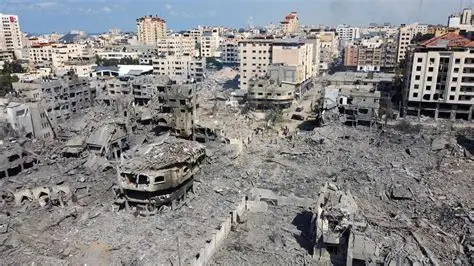
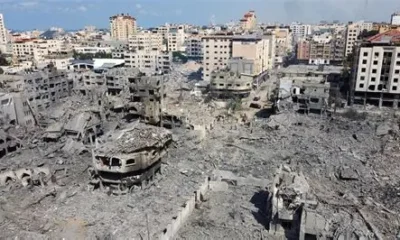
Nearly all of Gaza’s population, almost two million people, still require shelter assistance one year after a ceasefire was announced. As winter rain begins, the combined supply pipeline of humanitarian shelter partners covers barely 17 per cent of identified winter needs, the International Organization for Migration (IOM) Director General Amy Pope warned today.
After years of displacement and widespread destruction, Palestinians are facing a fourth winter without adequate protection from rain, flooding and cold. Insufficient funding and continuing Israeli authorities’ constraints on the entry of critical shelter supplies are preventing humanitarian organizations from responding at the scale required.
“Families who have already endured repeated displacement and devastating loss must be able to face the winter in safety and dignity,” Pope said. “Shelter materials must enter quickly, predictably and at the scale required.”
More than half of all tents and makeshift shelters currently in use are in poor condition that requires replacement. Tents are designed as a temporary emergency measure and generally last only six to 12 months.
With few alternatives available, many families are living in war-damaged buildings that pose serious risks to life. Just last month, dozens were killed in Gaza city when a war-damaged building collapsed. More than 3,600 structures were identified by an IOM partner in August as dangerous and at risk of collapse. The strengthening El Niño phenomenon is expected to bring heavier rainfall, which could further weaken unsafe buildings, while heavily damaged drainage systems leave communities exposed to flooding.
IOM and partners working in site management have identified nearly 1.8 million people living in displacement sites, most of them in areas at risk of flooding. Floodwaters could damage shelters, destroy families’ remaining possessions and force people to move once again.
Approximately 8,600 IOM emergency shelter kits are pre-positioned outside Gaza and ready for delivery but continue to be turned away at crossing points by the Israeli authorities. Meanwhile, humanitarian teams are using locally available and salvaged materials wherever possible. These efforts provide limited temporary support but are insufficient to meet widespread shelter needs.
“The solutions are known, the supplies are ready and humanitarian teams are prepared to deliver,” Pope said. “Immediate and sustained humanitarian access is essential to protect lives, strengthen damaged shelters, and help families move beyond temporary solutions. All parties must facilitate principled humanitarian action and support a response equal to the severity of the crisis.”
IOM calls for the immediate and sustained entry of tents, emergency shelter kits, relief housing units, wood, tools and other materials needed to reinforce shelters, repair damaged homes and support families seeking safer accommodation. Predictable access to specialized equipment, fuel, spare parts and construction materials will also be essential for debris removal and movement toward early recovery.
Features
Les immigrants Nigérians confrontés à des problèmes de santé mentale invisibles malgré leur réussite, alerte un expert

Les immigrants Nigérians peuvent connaître une réussite professionnelle et personnelle dans leurs pays d’accueil tout en faisant face à des problèmes de santé mentale souvent dissimulés, liés à la migration, aux changements identitaires et au stress prolongé, a déclaré Kehinde Ekpudu, un professionnel de la santé mentale.
Ekpudu, titulaire d’un MBA et d’un master en travail social, et travailleur social clinicien agréé (RCSW), a mis en lumière les conséquences psychologiques de la migration lors d’une présentation intitulée « Au-delà de la survie : santé mentale des immigrants nigérians — expériences vécues, identité et cerveau ».
Cette intervention a eu lieu lors du premier Sommet nigérian sur la santé mentale, organisé en ligne hier à l’occasion de la Journée mondiale de la santé mentale.
La présentation a examiné les liens entre la migration, l’identité, le cerveau et la santé mentale, en attirant l’attention sur les pressions émotionnelles auxquelles les immigrants peuvent être confrontés lorsqu’ils s’adaptent à la vie dans un nouveau pays.
« Lorsque nous parlons de la réussite des immigrants, nous célébrons leur capacité à s’en sortir. Mais que se passe-t-il lorsque la survie devient un mode de vie ? », a demandé Ekpudu, remettant en question la tendance à mesurer la réussite des immigrants principalement à travers leurs réalisations professionnelles et leur capacité d’adaptation.
Selon la présentation, les Nigérians n’arrivent pas dans leurs pays d’accueil dépourvus d’identité, d’expérience ou de références culturelles. La migration ne consiste pas simplement à passer d’un lieu géographique à un autre ; elle représente également une transition psychologique et identitaire.
La présentation a souligné que les immigrants peuvent être amenés à concilier simultanément plusieurs identités : nigériane, africaine, noire, canadienne, professionnelle, partenaire, parent, fils ou fille.
« La migration peut nous obliger à redéfinir certaines parties de nous-mêmes qui nous semblaient autrefois stables », indique le document.
Ekpudu a également cité une étude publiée en 2023 par Aluh et d’autres chercheurs, selon laquelle 51,7 % des immigrants nigérians participant à une étude menée au Canada présentaient un résultat positif au dépistage de la dépression.
La présentation a en outre relevé que le fait de résider au Canada depuis plus de dix ans était significativement associé à une probabilité plus élevée d’obtenir un résultat positif au dépistage de la dépression.
Ce constat remet en question l’idée selon laquelle les difficultés psychologiques liées à la migration diminuent nécessairement à mesure que les immigrants passent davantage de temps dans leur pays d’accueil.
Au-delà de la dépression, la présentation a identifié l’adaptation constante, l’incertitude et le stress chronique comme des facteurs susceptibles d’affecter le système nerveux et le bien-être émotionnel des immigrants.
Parmi les conséquences possibles figurent l’hypervigilance, l’anxiété, les troubles du sommeil, l’épuisement émotionnel, les difficultés de concentration et le burn-out.
« Parfois, ce qui ressemble à de la résilience de l’extérieur est en réalité un système nerveux qui est devenu très performant dans l’art de survivre », a déclaré Ekpudu.
La présentation a suggéré que des comportements souvent interprétés comme des signes de résilience peuvent parfois traduire les effets d’une pression psychologique prolongée, notamment lorsque les personnes se sentent obligées de rester fortes malgré leurs difficultés émotionnelles.
Elle a également examiné l’influence des attentes culturelles sur la manière dont les immigrants nigérians comprennent et expriment leurs problèmes de santé mentale.
Des expressions telles que « Je suis simplement fatigué », « Ce n’est que du stress », « Dieu m’aidera », « Je dois être plus fort », « D’autres personnes vivent des situations plus difficiles » et « Je ne peux pas craquer » ont été présentées comme des façons courantes de décrire ou d’aborder les difficultés émotionnelles sans reconnaître ouvertement ses besoins en matière de santé mentale.
Selon la présentation, ces réactions peuvent refléter la pression ressentie par certains immigrants, qui doivent rester forts, assumer leurs responsabilités familiales et continuer à rechercher la réussite, même lorsqu’ils traversent des difficultés émotionnelles.
Intitulée « Au-delà de la survie », la présentation a insisté sur la nécessité de prendre en compte les expériences vécues, les identités ainsi que le bien-être physique et psychologique des immigrants dans les discussions sur la santé mentale.
Elle a proposé un parcours allant de la survie à la confiance en soi, fondé sur trois principes : le sentiment d’appartenance, l’intégration et l’épanouissement.
Dans ce cadre, le sentiment d’appartenance consiste à pouvoir créer des liens sans renoncer à son identité ; l’intégration implique d’accepter et de concilier plusieurs identités ; tandis que l’épanouissement signifie reconnaître que la vie peut offrir davantage que la simple survie face aux difficultés quotidiennes.
« Je peux trouver ma place sans renoncer à moi-même », indique la présentation pour illustrer le premier principe.
Elle ajoute : « Je peux assumer plusieurs identités » et « Ma vie peut être davantage qu’une simple survie ».
La présentation a été réalisée dans le cadre des activités de Twin Ocean, dont la devise est : « Naviguer ensemble sur les vagues de la vie ».
Le sommet nigérian appelle à une approche inclusive des soins de santé mentale
Le coordonnateur du Sommet nigérian sur la santé mentale (NMHS), le Dr Oluyinka Oyeniji, a appelé à l’adoption d’une approche nationale inclusive des soins de santé mentale, qui tienne compte des expériences vécues par les patients, les aidants, les familles et les autres personnes affectées par les troubles mentaux.
Oyeniji a lancé cet appel hier dans son discours d’ouverture du premier Sommet nigérian sur la santé mentale, organisé pour commémorer la Journée mondiale de la santé mentale.
Le sommet, organisé en collaboration avec le Ladoke Akintola Neuroscience Group (LNG), a réuni des défenseurs de la santé mentale, des professionnels de santé, des chercheurs et d’autres acteurs concernés afin de discuter des défis et des possibilités d’amélioration des soins de santé mentale au Nigeria.
Selon Oyeniji, le sommet a été créé pour promouvoir des changements positifs dans le secteur de la santé mentale du pays et renforcer les efforts en faveur d’une réponse nationale coordonnée aux problèmes de santé mentale.
Il a déclaré que cette initiative revêtait une importance particulière à un moment où de nombreux Nigérians étaient confrontés à des problèmes de santé mentale, soit directement, soit en raison de leurs responsabilités en tant qu’aidants, membres de la famille ou amis.
Le coordonnateur a également souligné la démarche du gouvernement fédéral visant à dépénaliser la tentative de suicide, qu’il a qualifiée d’évolution importante après plus de quatorze années de plaidoyer.
Il a salué les acteurs qui ont maintenu la mobilisation en faveur de cette réforme et exhorté les Nigérians à soutenir les initiatives visant à améliorer les soins de santé mentale et à protéger les droits des personnes vivant avec des troubles mentaux.

Soudan : les attaques de drones perturbent les cours à El-Obeid, alerte le NRC

Sudan: Drone attacks disrupt school lessons in El Obeid- NRC

Sea-Watch secourt 227 migrants en Méditerranée en 48 heures

Sea-Watch rescues 227 migrants in Mediterranean within 48 hours

Un avocat ougandais exhorte l’UA à rejeter les accords migratoires avec l’Europe
-
 Features2 weeks ago
Gaza : Près de deux millions de personnes ont besoin d’une aide d’urgence en matière d’hébergement
-

 News Extra2 weeks ago
NACTAL conteste le rapport américain sur la traite des personnes et exige la reconnaissance des contributions des organisations de la société civile nigérianes
-
 News Extra2 weeks ago
Un avocat ougandais exhorte l’UA à rejeter les accords migratoires avec l’Europe
-
 News Extra1 week ago
Sudan: Drone attacks disrupt school lessons in El Obeid- NRC
-

 Features2 weeks ago
Nigerian immigrants face hidden mental health challenges despite success, expert warns
-
 Features2 weeks ago
Gaza: About two million need urgent shelter assistance
-

 News Extra2 weeks ago
NACTAL faults US trafficking report, demands recognition of Nigerian CSOs’ contributions
-

 News Extra2 weeks ago
US to deport fresh set of Nigerians over alleged criminal offences