
Interviews
Why my research work is to highlight, counteract unjust and treatment of refugees , migrants -Dr Franzisca Zanker


Franzisca Zanker is a Senior Researcher at the Arnold-Bergstraesser-Institute (ABI) in Freiburg, Germany, where she heads the research cluster on “Patterns of (Forced) Migration.” Her research interests include migration and refugee governance, including return policies. She is the co-founder of the AEGIS Collaborative Research Group on ‘African Migration, Mobility and Displacement’ (AMMODI).
In this exclusive interview with voiceforafricanmigrants.org, Dr Zanker spoke about why she wants to use her research work to highlight and counteract unjust and treatment of refugees and migrants. Excerpts:
What informed your decision to work in the area of migration?
Having moved a lot since I was a child, I experienced being a (privileged) migrant from a young age with all the beauty and challenges that contains. The places I have lived – UK, France, Netherlands, Australia and Germany – do not exactly have the best reputation of accommodating people from other parts of the world. It is the unjust and treatment of refugees and migrants that I want to highlight and counteract with my research work.
For the benefits of those who do not know, what is forced migration?
If we open a newspaper or listen to discussions by politicians, it seems that there are universally accepted definitions of “migration”, or “refugees” or “displaced”. Yet, I would argue that it is actually not that clear-cut: many people move for different reasons and in different ways over time. Why would a Nigerian in Germany be called an “irregular migrant” and a German in Nigeria an “expat”? The research cluster I lead at the Arnold-Bergstraesser Institute in Germany is called “patterns of (forced) migration” – the brackets are no accident, we want people to stumble over them and to question who defines a type of journey and for what purpose.
What can you say about the politics of forced migration in Africa?
This has been my primary research focus in recent years, also to counteract the heavy bias in migration research in general on states in the Global North. The politics around migration, displacement and refugees in Africa are of course complex and multifold, and depend on the different states, non-state actors who are involved as well as the society of the specific location. For example, in South Africa we find that the political reaction to migration is tied to a domestic interest of scapegoating migrants for a variety of social problems. In Uganda, hosting refugees is considered a political tool to gain international leverage, and to a degree also to improve development for local host communities.
What are the challenges posed by forced migration?
Of course it is highly problematic when people are forced to flee due to war, natural disasters or other issues and are moving against their choice. They will most likely have lost their home, faced numerous traumatic events along the way and often live in terrible conditions once they reach their destination, be it temporary or not. However, it must be said that migration per se is not a problem- it is something that has always happened since the beginning of humankind, and will continue no matter what. The challenge as I see it is the responses to migration – the unequal power of passports, the dangerous routes many migrants are forced to take because of European externalisation policies, the hostile reception migrants face after they arrive.
What steps can be taken to reduce forced migration in Africa and the world at large?
To start with, wars need to end, the climate crisis needs to be acknowledged and action taken at a governmental and international level, government repression of minorities or political opposition needs to end. Beyond that, as above, a major problem we face today is the conditions of migration – we live in a world where your origin determines where you can move to, in what ways and for what purpose. Further securing borders, building walls, only accepting quotas only adds oil to the fire and in the long-run may even give people more reasons to move in the first place. Governments across the world need to take a step back and realise their policies are not working, causing the tragic deaths of thousand migrants each year and need to be changed.
From your experience, what is most responsible for forced migration?
This is an interesting question. I would like to say “who” is the most responsible, rather than what. We have governments causing wars, passing homophobic legislation or endangering their political opponents. We also have governments, all over the world, who are maintaining an unjust globalised white supremacist capitalist system that only benefits a small minority, and leaves a majority suffering. Governments who are not acting on the climate emergency. Beyond that, we have companies who are implicated in these systems, but are also directly causing displacements for development projects for example. This is why the African Kampala Convention on Internally Displaced Persons is such an important legislation; it includes a section on development-induced displacement.
Kindly share your field experience especially the ones that touched your heart most.
It’s hard to point to one experience. Talking to a variety of actors from different settings, from politicians, civil society actors down to people experiencing policies at the everyday level is a vital part of my research work. It is a great privilege to be able to talk to such a variety of people and learn from situations outside my everyday contexts. Of course the treatment of migrants and refugees is often very sad to hear, and frustrating when there is so little you can do to change the situation apart from raise awareness of what is happening.
There has always been deportation of migrants from Europe to Africa. What do you make of this and why is it so rampant these days?
Through the use of social media there is certainly more awareness of deportations, which I believe is a good thing. This allows for more transparency in a situation where often basic human right standards are not met. Though European governments are keen to deport many migrants who have no claims to stay in Europe legally, the actual number of deportations is still quite low.
Are African countries obligated to accept all deportations or are they at liberty to say no?
This is actually not easy to answer. Under international customary law (i.e. what is “always done”) it seems to be that states have to accept (to receive) deportees without question. They are their citizens after all. It is for example also included as a responsibility in the Cotonou Agreement from 2000. It is not actually a legally binding obligation however. In addition, if we question international standards more broadly, arguing that they treat states unequally, do states have to oblige with them? It’s a tricky situation because most states want to remain in a favourable position in the international community for which they need to follow the “rules” and accept the return of those being deported. But states also need to do what’s best for their citizens. This might be refusing their deportation back home. Or telling other states that the rules of game are biased and unjust.
What is your position on externalisation of borders by the EU and mass deportation of black Africans by Tunisia?
The current state of affairs is heart breaking. The number of people that have died due to awful racist policies is scandalous. Worse than that, it is creating more conflict-situations, entrenching autocratic leadership, pushing people to the brinks of society unable to work, go to school or take part in civil life, that will only lead to further migrations. It is simply not a way to deal with a ‘problem’, especially when the problem is not the migration, but the response to it.
Deportees are often sent home empty handed without any help from the home country. Is there anything the EU can do in the light of this to help the deportees?
The EU needs to work on having a better relationship with the countries of origin to work with them to provide an expansive, long-term support network for people forced to come home. At the same time, no one will ever be happy if they are forced to go somewhere against their will. If the EU put viable, accessible and visible legal migration pathways into place, fewer people would have to try dangerous irregular pathways and not all hope would be lost for entire families if their members came home empty-handed.
The views expressed in this interview are my personal views and do not necessarily reflect those of my employer, the Arnold-Bergstraesser Institute at the University of Freiburg.
—



Interviews
La déportation traumatisante d’Abdulai Daramy soulève des inquiétudes concernant l’accord avec les États-Unis
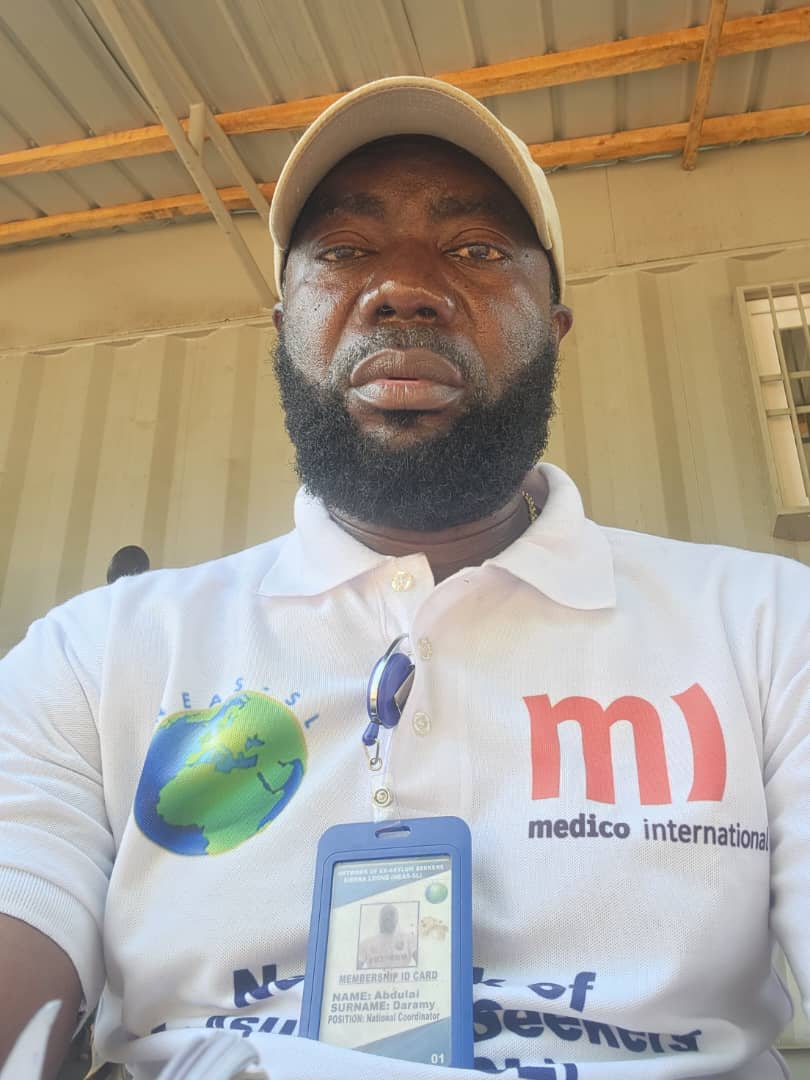
L’expérience traumatisante de déportation vécue par Abdulai Daramy, un Sierra-Léonais expulsé de force d’Allemagne en 2011, a ravivé les inquiétudes autour de l’accord présumé entre la Sierra Leone et les États-Unis visant à accueillir des ressortissants de pays tiers expulsés du territoire américain.
Daramy affirme que son expérience d’expulsion forcée lui a laissé des séquelles physiques et psychologiques qui ont persisté bien longtemps après l’atterrissage de l’avion de déportation en Sierra Leone.
Selon le récit de son expérience, Daramy s’est fracturé la main lors de son transfert d’un centre de détention vers un vol de déportation en Allemagne.
Mais pour lui, cette blessure physique n’était que le début d’une épreuve bien plus profonde.
À son retour en Sierra Leone, Daramy a rencontré d’autres personnes expulsées qui tentaient de reconstruire leur vie après leur renvoi forcé. Beaucoup d’entre elles, a-t-il constaté, étaient confrontées au rejet de leur famille et de leur communauté, au chômage, à la pauvreté, aux traumatismes psychologiques ainsi qu’à des difficultés d’accès aux soins de santé et à d’autres formes de soutien essentiel.
« Je ne veux que personne d’autre ne vive ce que j’ai vécu », a déclaré Daramy.
Son expérience personnelle allait plus tard inspirer des initiatives visant à soutenir les personnes expulsées à travers le Réseau des anciens demandeurs d’asile de Sierra Leone (Network of Ex-Asylum Seekers Sierra Leone), une organisation créée par d’anciens expulsés pour venir en aide aux personnes confrontées aux conséquences de la détention, de l’expulsion forcée et d’une difficile réintégration.
L’histoire de Daramy a pris une importance particulière dans le contexte des informations selon lesquelles la Sierra Leone pourrait accueillir des ressortissants de pays tiers expulsés des États-Unis dans le cadre d’un arrangement conclu entre les deux pays.
Selon plusieurs informations, un premier groupe de personnes expulsées serait déjà arrivé en Sierra Leone, comprenant notamment des ressortissants du Ghana, du Sénégal, de la Guinée et du Nigeria.
Alors que le gouvernement sierra-léonais aurait défendu cet arrangement comme s’inscrivant dans le cadre de ses relations diplomatiques avec Washington, l’expérience de Daramy soulève une question fondamentale : que devient une personne expulsée après son arrivée ?
Pour Daramy et de nombreux autres anciens expulsés, le voyage ne s’arrête pas lorsque l’avion touche le sol.
Au contraire, la déportation peut marquer le début d’une autre lutte difficile : trouver un logement, obtenir un emploi, surmonter la stigmatisation sociale, renouer avec sa famille et sa communauté et faire face aux conséquences psychologiques de la détention et de l’expulsion forcée.
Au fil des années, le Réseau des anciens demandeurs d’asile de Sierra Leone a appelé à l’adoption de politiques gouvernementales plus solides pour soutenir la réintégration des personnes expulsées, notamment par une assistance sociale et un soutien en matière de santé mentale.
L’arrangement présumé avec les États-Unis a toutefois suscité de nouvelles inquiétudes quant à la capacité de la Sierra Leone à fournir un soutien, une protection et des services de réintégration adéquats, non seulement à ses propres citoyens de retour au pays, mais également aux ressortissants étrangers envoyés dans le pays.
Ces préoccupations sont particulièrement importantes au regard des informations selon lesquelles certaines des personnes expulsées seraient originaires d’autres pays d’Afrique de l’Ouest.
Des observateurs des droits humains et des détracteurs de cet arrangement ont également appelé à une plus grande transparence, notamment à des clarifications sur le statut juridique des personnes déportées en Sierra Leone, les procédures utilisées pour les contrôler et les garanties mises en place pour protéger leurs droits.
Des questions ont également été soulevées sur le sort des personnes expulsées qui ne pourraient pas ou ne souhaiteraient pas retourner dans leur pays d’origine après l’expiration de tout accord de résidence temporaire qui leur aurait été accordé.
Daramy a reconnu ce qu’il décrit comme une réalité politique : les organisations de la société civile sierra-léonaise et les communautés concernées pourraient avoir un pouvoir limité pour empêcher des politiques de déportation décidées par des gouvernements plus puissants.
Il estime toutefois que le processus peut encore être rendu plus humain.
Au cœur de ses préoccupations figure la nécessité d’associer les anciens expulsés et les organisations ayant une expérience directe des retours forcés à l’élaboration des politiques qui affectent directement la vie des personnes déportées.
L’expérience de Daramy, ainsi que celle d’autres anciens demandeurs d’asile, illustre la manière dont les conséquences de la déportation peuvent aller bien au-delà de l’application des lois sur l’immigration et du contrôle des frontières.
Pour de nombreuses personnes de retour, la partie la plus difficile de l’épreuve commence après la déportation.
Alors que la Sierra Leone fait face à une controverse croissante autour du présumé accord de déportation avec les États-Unis, l’histoire de Daramy devrait renforcer les appels en faveur d’une plus grande transparence, de garanties juridiques solides et d’un soutien concret aux personnes envoyées dans le pays.
Pour les anciens expulsés, la question centrale n’est donc pas simplement de savoir si la Sierra Leone doit accueillir des personnes déportées d’autres pays.
La véritable question est de savoir ce qu’elles deviennent après que l’avion a atterri.
The traumatic deportation experience of Abdulai Daramy, a Sierra Leonean who was forcibly removed from Germany in 2011, has brought renewed attention to concerns surrounding Sierra Leone’s reported agreement to receive third-country deportees from the United States.
Daramy said his experience of forced removal left him with physical and psychological scars that continued long after the deportation flight landed in Sierra Leone.
According to an account of his experience, Daramy suffered a broken hand during his transfer from a detention facility to a deportation flight in Germany.
But for him, the physical injury was only the beginning of a much deeper ordeal.
On his return to Sierra Leone, Daramy encountered other deportees struggling to rebuild their lives after forced removal. Many, he found, were confronted with rejection by families and communities, unemployment, poverty, psychological trauma and difficulties accessing healthcare and other basic support.
“I don’t want anyone else to experience what I experienced,” Daramy said.
His personal experience would later inspire efforts to support deportees through the Network of Ex-Asylum Seekers Sierra Leone, an organisation established by former deportees to assist people grappling with the consequences of detention, forced removal and difficult reintegration.
Daramy’s story has become particularly significant amid reports that Sierra Leone may receive third-country nationals deported from the United States under an arrangement between the two countries.
Reports indicate that an initial group of deportees has already arrived in Sierra Leone, including nationals of Ghana, Senegal, Guinea and Nigeria.
While the Sierra Leone Government has reportedly defended the arrangement as part of its diplomatic relationship with Washington, the experience of Daramy has raised a fundamental question: what happens to deportees after they arrive?
For Daramy and many other former deportees, the journey does not end when the aircraft touches down.
Instead, deportation can mark the beginning of another difficult struggle — finding accommodation, securing employment, overcoming social stigma, reconnecting with family and community, and coping with the psychological consequences of detention and forced removal.
Over the years, the Network of Ex-Asylum Seekers Sierra Leone has called for stronger government policies to support the reintegration of deportees, including welfare assistance and mental health support.
The reported US arrangement has, however, generated fresh concerns over whether Sierra Leone has the capacity to provide adequate support, protection and reintegration services not only for its own returning citizens but also for foreign nationals sent to the country.
The concerns are particularly significant following reports that some of the deportees are nationals of other West African countries.
Human rights observers and critics have also called for greater transparency over the arrangement, including clarification on the legal status of those deported to Sierra Leone, the procedures used to screen them and the safeguards available to protect their rights.
Questions have also been raised about what would happen to deportees who are unable or unwilling to return to their countries of origin after the expiration of any temporary residency arrangements.
Daramy acknowledged what he described as the political reality that Sierra Leonean civil society organisations and affected communities may have limited power to stop deportation policies agreed upon by more powerful governments.
However, he believes the process can still be made more humane.
Central to his concern is the need for former deportees and organisations with first-hand experience of forced returns to be involved in shaping policies that directly affect the lives of deportees.
Daramy’s experience, and those of other former asylum seekers, illustrates how the consequences of deportation can extend far beyond immigration enforcement and border control.
For many returnees, the most difficult part of the experience begins after deportation.
As Sierra Leone navigates growing controversy over the reported US deportation arrangement, Daramy’s story is expected to strengthen calls for greater transparency, legal safeguards and meaningful support for those sent to the country.
For former deportees, the central question is not simply whether Sierra Leone should receive deportees from other countries.
It is what becomes of them after the aircraft lands.I can also make it more investigative and hard-hitting, with a stronger focus on Daramy’s personal trauma as the opening angle.
Interviews
Oluwagbolahan Oluwatobi : à la croisée du conseil en matière de visas, de la migration et de l’impact social
La migration ne se résume pas au fait de se déplacer d’un pays à un autre. Derrière chaque demande de visa se trouve une personne porteuse d’un rêve, une famille nourrissant des attentes, un étudiant à la recherche d’opportunités ou un professionnel qui aspire à un avenir meilleur.
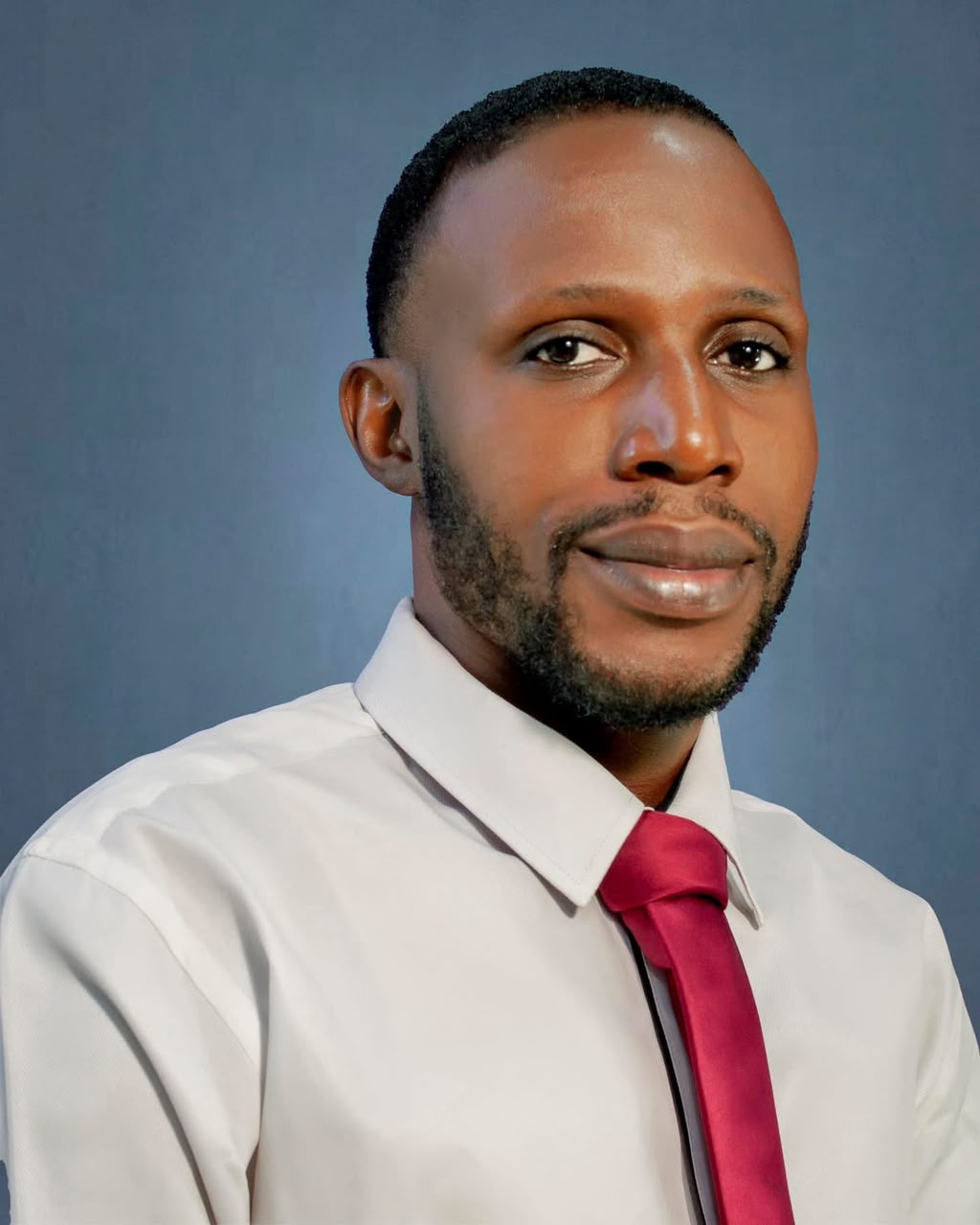
Pour Oluwagbolahan Oluwatobi, cette compréhension a façonné son travail dans les domaines du conseil en matière de visas, du voyage, de la sensibilisation aux questions migratoires et du développement communautaire.
En tant que conseiller en visas et voyages chez Suit-U Travels and Tours, Oluwagbolahan accompagne les demandeurs confrontés à la complexité des voyages internationaux et des procédures de demande de visa. Son travail va au-delà de la simple préparation des documents. Il estime que les demandeurs ont besoin d’informations précises, d’un accompagnement adéquat et d’une compréhension claire des exigences et des procédures à suivre.
Comprendre le demandeur
Pour Oluwagbolahan, une demande de visa ne se résume pas à des formalités administratives. Chaque demandeur a une raison précise de vouloir voyager.
Certains recherchent des opportunités d’études, tandis que d’autres voyagent pour affaires, pour le tourisme, pour rendre visite à leur famille ou pour poursuivre leur développement professionnel. Comprendre les motivations du demandeur constitue donc un élément essentiel d’un accompagnement responsable.
Il estime qu’un bon conseiller doit fournir des orientations honnêtes plutôt que de faire des promesses irréalistes. Les demandeurs doivent comprendre leurs responsabilités, fournir des informations véridiques et éviter les raccourcis susceptibles de compromettre leur demande ou leurs futures possibilités de voyager.
Se tenir au fait des politiques migratoires
Les politiques d’immigration évoluent constamment. Les pays mettent en place de nouvelles voies d’obtention de visas, réexaminent les critères d’éligibilité et ajustent leurs systèmes migratoires.
Ces changements ont une incidence directe sur les demandeurs.
Oluwagbolahan estime donc que les professionnels du secteur des visas et de la migration doivent continuer à se former et à rester informés des évolutions politiques et réglementaires. Les demandeurs ont également la responsabilité de vérifier les informations et de rechercher des conseils fiables avant de prendre d’importantes décisions liées à la migration.
Son approche repose sur l’information, la transparence et une prise de décision responsable.
La migration au-delà du voyage
L’engagement d’Oluwagbolahan dans le domaine de la migration dépasse son activité professionnelle.
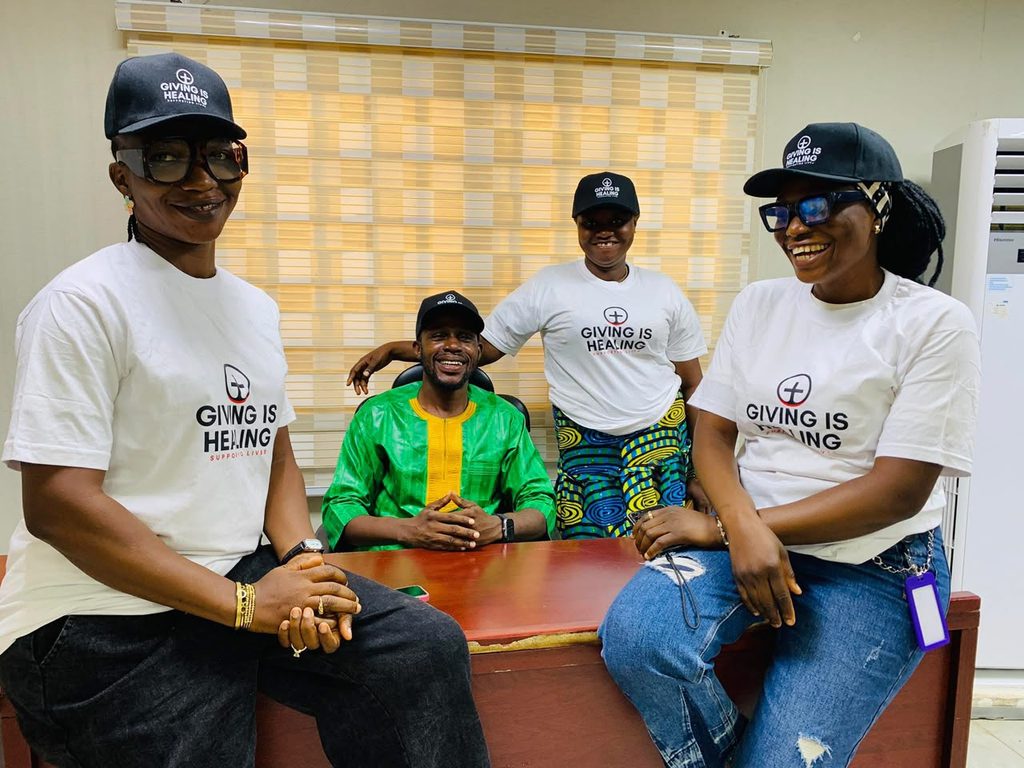
Il est également directeur de Giving Is Healing Foundation, une organisation à but non lucratif axée sur l’autonomisation par l’éducation, le bien-être communautaire et la protection des migrants.
À travers cette fondation, la migration est abordée dans une perspective sociale plus large. Si la migration peut créer des opportunités, les personnes peuvent également devenir vulnérables lorsqu’elles ne disposent pas d’informations précises ou qu’elles ont recours à des voies migratoires dangereuses.
La protection des migrants constitue donc un volet important du travail de la fondation, notamment à travers la sensibilisation, l’engagement communautaire et les initiatives visant à encourager des choix plus sûrs et mieux informés.
Deux fonctions, un même objectif
Son travail au sein de Suit-U Travels and Tours et de Giving Is Healing Foundation lui offre deux perspectives différentes mais complémentaires.
L’une consiste à aider les individus à naviguer dans les procédures de voyage et de demande de visa, tandis que l’autre aborde la migration sous l’angle de la protection, de l’éducation et du bien-être communautaire.
Ensemble, ces deux expériences ont renforcé sa conviction que le débat sur la migration ne devrait pas se limiter à la question de savoir si une personne peut voyager. Il devrait également prendre en compte les raisons qui la poussent à migrer, la mesure dans laquelle elle est correctement informée et la manière dont elle peut prendre des décisions sûres et responsables.
Se préparer au changement
La technologie, les événements mondiaux et l’évolution des politiques d’immigration continuent de transformer les secteurs du voyage et de la migration.
Pour Oluwagbolahan, il est essentiel de s’adapter à ces changements. Il considère que l’apprentissage continu, la connaissance des politiques migratoires et une communication responsable sont des qualités importantes pour les professionnels qui travaillent avec les migrants et les demandeurs de visa.
Son objectif n’est pas simplement d’aider les personnes à déposer leurs demandes. Il est de les aider à comprendre leurs options et à prendre des décisions éclairées.
À travers ses activités professionnelles et son engagement dans le secteur associatif, Oluwagbolahan Oluwatobi continue de contribuer aux discussions sur le conseil en matière de visas, la sensibilisation aux questions migratoires, l’évolution des politiques et l’impact social.
Sa philosophie est simple : la migration doit être abordée avec des informations précises, une préparation adéquate, un sens des responsabilités et dans le respect de la dignité humaine.

Défendre les plus vulnérables :

Fighting for the vulnerable: How Udekwe Kennedy Obinna Is giving migrants a voice and a chance at safer futures

Une militante sénégalaise transforme la mort de son frère sur la route migratoire de l’Atlantique en combat pour le changement
Senegalese activist turns brother’s death on Atlantic migration route into campaign for change

La déportation traumatisante d’Abdulai Daramy soulève des inquiétudes concernant l’accord avec les États-Unis
-
 Features3 weeks ago
Sea-Watch 5 découvre huit corps dans un état avancé de décomposition
-

 News3 weeks ago
Trois autres corps sans vie retrouvés après les 11 découverts par SOS Méditerranée
-
 News Extra3 weeks ago
Colombia: Conflict-affected families lose everything again after deadly earthquake
-
News3 weeks ago
Three more bodies found in Mediterranean after 11 discovered by SOS Méditerranée
-
 Features3 weeks ago
Un séisme meurtrier aggrave la grave crise humanitaire en Colombie
-
News Extra3 weeks ago
Colombie : les familles touchées par le conflit perdent une nouvelle fois tout après le séisme meurtrier
-
 News Extra2 weeks ago
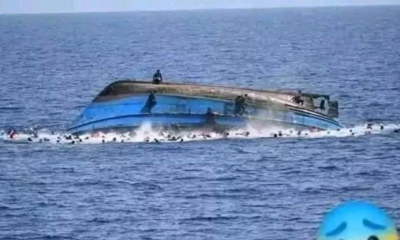
Des manifestations éclatent après la mort de migrants dans le naufrage d’un bateau
-
News Extra2 weeks ago
La Libye intercepte 87 migrants alors que trois personnes meurent et que plusieurs autres sont portées disparues
Ngozi Louis Uzomah
September 30, 2023 at 10:28 am
This is a great interview with some
level of critical migration and border dimension that points out how the unfair and hegemonic partnerships and agreements between the Europa and Africa circumscribe people’s access to mobilit and mangrantized, problematized and racialized their movement. As a result, there is the global socioeconomic inequalities and access to citizenships and freedom of movement is restricted for people from Africa and those with fir example EU passport are given an almost unfettered access to countries in the world.