
Features
Assisted Voluntary Return, Post-Arrival Assistance, and Reintegration: IOM’s Role Explained

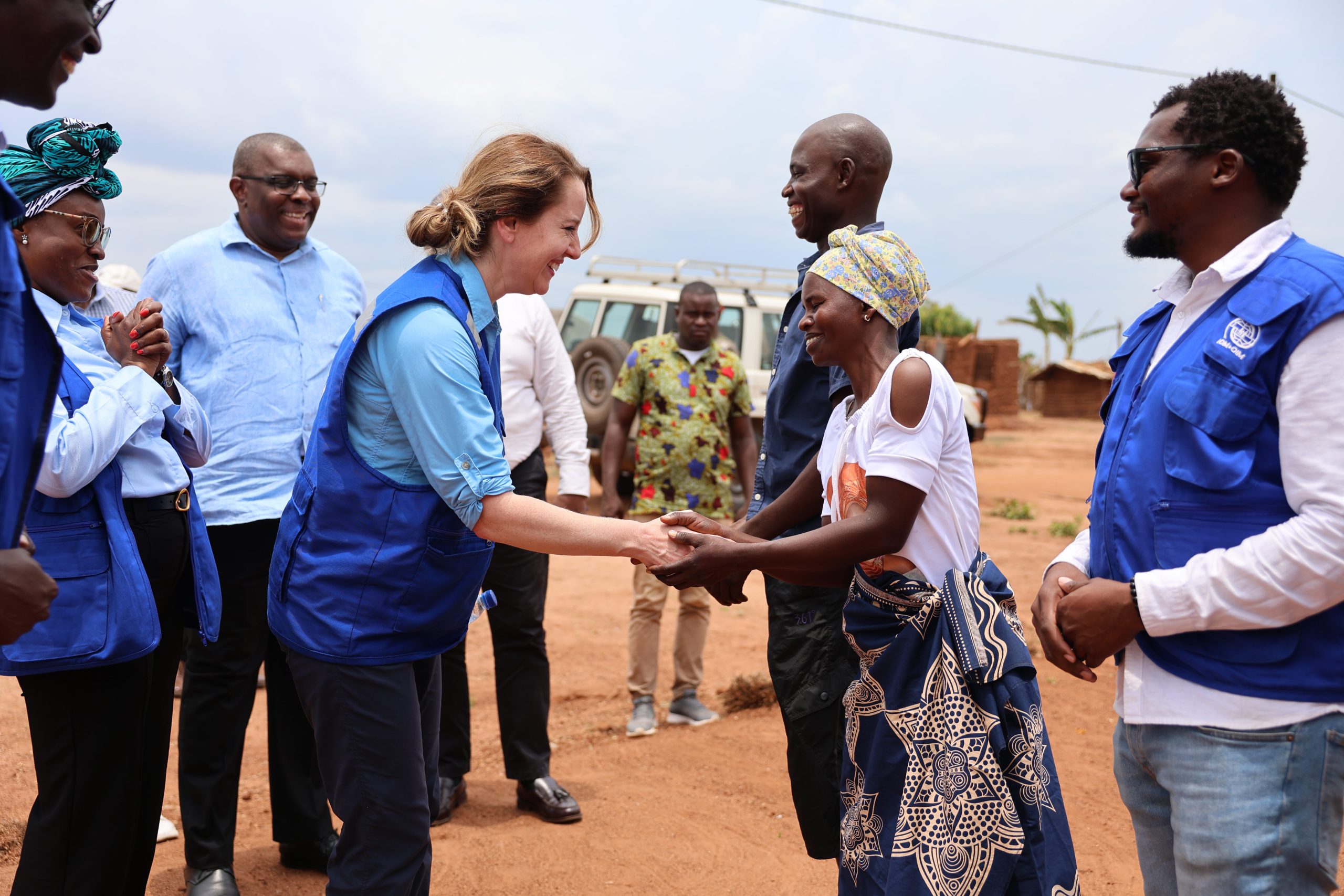
Overview
Migrants sometimes find themselves unable to remain in a host or transit country — due to lack of legal status, detention, or the exhaustion of other options. In these circumstances, return may become the most viable path available.
IOM’s work in this area falls into two distinct but related tracks, which are often confused in public discussion:
Assisted Voluntary Return and Reintegration (AVRR): Programmes led and operated by IOM, initiated by migrants who choose to return and request IOM’s support.
Post-Arrival Assistance: Support provided by IOM at the request of a receiving state, to help that state assist people who have arrived through return operations — including deportations — carried out by other actors.
These are different in their legal basis, what triggers them, and IOM’s role in each. Both are explained below.
IOM recognises that individuals faced with these decisions are rarely making them in unconstrained circumstances. A person may face detention, depleted resources, or they are in a legal situation that leaves few alternatives. In both tracks, our role is to ensure that individuals have access to information and support — and that assistance is provided with full respect for their rights and dignity.
IOM’s capacity to provide assistance on either track is subject to available funding, programme scope, and operational access. We cannot guarantee assistance in all contexts.
ASSISTED VOLUNTARY RETURN AND REINTEGRATION (AVRR)
AVRR is an IOM-led programme. It begins when a migrant chooses to return to their country of origin or a country where they have the right to enter and stay, and requests IOM’s support to do so. IOM does not initiate returns. The migrant does.
Before any assistance is provided, IOM conducts individual counselling to ensure the person has accurate, neutral, and complete information about their options and what IOM can offer. The migrant confirms their consent in writing if they choose to proceed. They can ask questions at any time and withdraw without consequence.
Assistance may include:
Clear, neutral information on available options
Contact with consular offices regarding identity and travel documents
Transportation and logistical support
Vulnerability screening and individual needs assessments
Tailored support for those in vulnerable situations — including unaccompanied children, trafficking victims, and those with health needs
Post-arrival and reintegration assistance in the country of origin/legal stay
IOM’s support does not end on arrival. Reintegration assistance aims to support economic self-sufficiency, psychosocial wellbeing, and social stability.
AVRR is not enforcement. It is migrant-initiated, consent-based, and entirely separate from deportation or forced removal, which are carried out by some governments.
In 2025, IOM helped more than 81,000 people return home from 115 countries through AVRR, and assisted more than 82,000 people with reintegration, across 147 countries of origin. These figures represent individuals who specifically requested and received IOM’s support — they are not a count of all returns globally.
POST-ARRIVAL ASSISTANCE IN THE CONTEXT OF RETURN CARRIED OUT BY OTHERS
Governments carry out return operations — including deportations and enforced removals — independently of IOM. In some of these cases, the receiving state asks IOM to support its capacity to assist people who have arrived.
This is a fundamentally different situation from AVRR. IOM is not the return operator. IOM is not involved in the bilateral agreements between states. IOM plays no role in the decision to remove someone, the logistics of the removal, or the legal framework governing it.
IOM’s involvement begins only after arrival, and only at the request of the receiving state. When provided, IOM’s provision of post-arrival assistance does not constitute endorsement of a state’s decision to remove or admit an individual. IOM provides this assistance in fulfillment of its mandate to support migrants in vulnerable situations.
Returns to country of origin
Where migrants are returned by a third-party actor to their country of origin, IOM may — at the receiving state’s request — provide needs-based support, including health care, counselling, protection screening, other essential services, and reintegration assistance.
Before engaging, IOM conducts its own independent protection assessment to confirm that the individual has been formally admitted, that their rights and dignity can be upheld, that the operating environment is conducive to an IOM intervention, and that meaningful consent can be obtained. IOM will not provide assistance where these conditions are not met.
Removal to a third country
In some cases — based on agreements between States — migrants are transferred not to their country of origin but to a third country. IOM does not negotiate or endorse agreements leading to such transfers and plays no role in the transfer itself.
Where the receiving state requests IOM’s support, IOM may provide health care, counselling, and protection screening support for access to other essential services for migrants who have arrived in that third country, subject to the same protection assessment described above. Individuals in a third country who wish to return voluntarily to their country of origin may request IOM’s support to do so. This onward movement is handled through standard AVRR procedures, and is migrant-initiated and consent-based.
Before agreeing to engage, IOM assesses whether essential safeguards can be put in place, including legal stay arrangements, freedom of movement, and access to international protection. Where these conditions cannot be met, IOM may decline to engage or limit the assistance it provides.
What IOM does not do in either context:
Force anyone to return
Conduct deportations, forced removals, or transfers
Negotiate or endorse bilateral removal or transfer agreements between States
Provide assistance where doing so would risk contributing to refoulement, discrimination, or violations of procedural safeguards
Public reporting indicated that from the beginning of 2025 through September 2026, tens of thousands of people were removed from the United States to third countries.
IOM’s engagement in this context depends entirely on being asked by the receiving government, and on safeguards being in place. Where we have been asked and those conditions exist, as of September 2026, we have supported roughly 800 people, providing health care, counselling, and protection screening; about 300 later chose voluntary return.
The gap between that number and the tens of thousands removed is a reflection of how few governments invited IOM to help or that the conditions we require were not met.


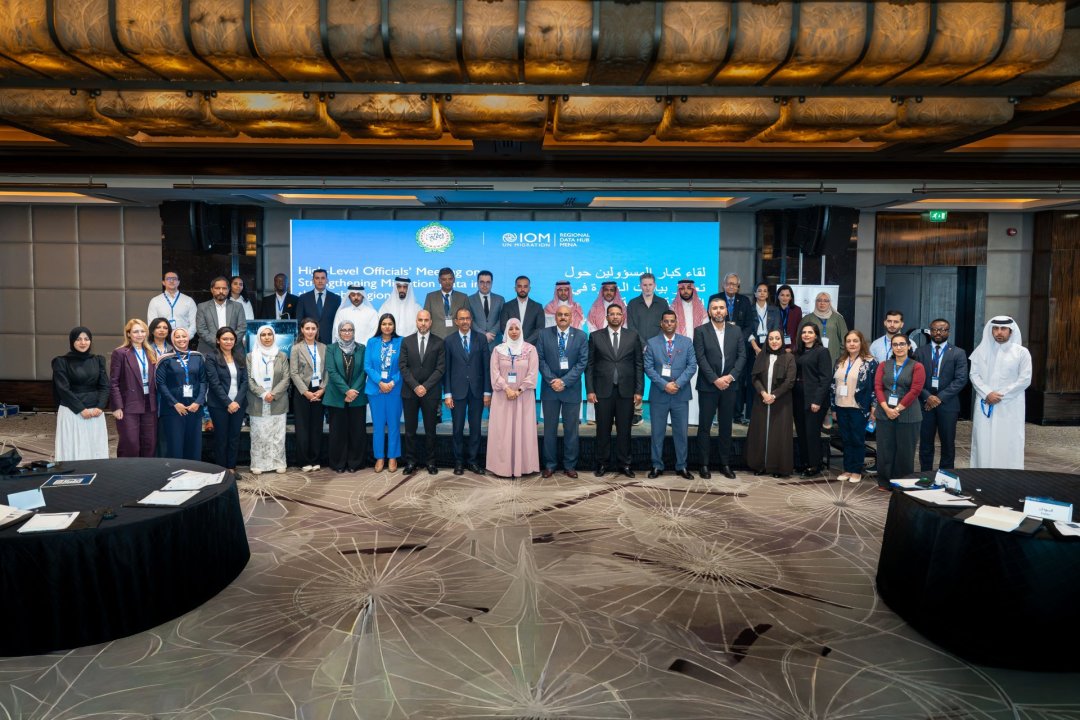
La Ligue des États arabes et l’Organisation internationale pour les migrations (OIM) ont officiellement lancé le Réseau arabe des données sur les migrations, le premier réseau arabe consacré aux données migratoires. Le lancement a eu lieu lors d’une cérémonie de signature au siège du Secrétariat général de la Ligue, au Caire, à l’occasion de l’adoption du premier plan d’action du Réseau pour la période 2026-2028.
Le Réseau constitue un mécanisme régional de coopération technique placé sous la direction des États arabes. Pour la première fois, il rassemble les offices nationaux de statistique et les organismes gouvernementaux chargés des données migratoires dans les 22 États arabes, au sein d’un cadre permanent d’action commune.
Les 22 États arabes accueillent environ 44,5 millions de migrants internationaux, soit près de 14,7 % du total mondial, tandis que 37,2 millions de personnes originaires des pays arabes vivent en dehors de leur pays d’origine, dont environ la moitié dans d’autres États arabes. Toutefois, les données migratoires restent dispersées entre plusieurs institutions et continuent de présenter des difficultés en matière de couverture, d’actualité et de comparabilité.
Le Réseau aidera les États arabes à harmoniser les concepts et les méthodologies, à échanger leurs expertises et à mieux comprendre les dynamiques migratoires dans les pays d’origine, de transit, de destination et de retour.
Le plan d’action a été signé par Mme Abeer Al-Jalahma, ministre plénipotentiaire et directrice du Département des statistiques et des bases de données de la Ligue des États arabes, et M. Justin MacDermott, directeur régional adjoint de l’OIM chargé des opérations pour le Moyen-Orient et l’Afrique du Nord. La cérémonie s’est déroulée en présence d’ambassadeurs et de représentants de missions diplomatiques, de directeurs généraux d’offices nationaux de statistique, de hauts responsables gouvernementaux ainsi que de partenaires régionaux et internationaux.
Elle a marqué la conclusion d’une réunion de deux jours de hauts responsables consacrée au renforcement des données migratoires dans la région arabe, tenue les 27 et 28 octobre. Cette rencontre a réuni des représentants de haut niveau de 13 États arabes : l’Algérie, Bahreïn, l’Égypte, l’Irak, la Jordanie, la Libye, la Mauritanie, le Maroc, le Qatar, l’Arabie saoudite, le Soudan, la Tunisie et le Yémen. Les participants ont examiné les priorités de l’action commune et contribué à l’élaboration du plan d’action avant son adoption.
« Le lancement du Réseau arabe des données sur les migrations marque une étape importante dans le processus de coopération statistique arabe. Pour la première fois, nos pays se réunissent autour d’une plateforme permanente consacrée aux données migratoires, dirigée par les États arabes et guidée par leurs priorités. Ce que nous avons mis en place aujourd’hui n’est pas simplement une nouvelle initiative, mais un langage statistique arabe commun au service des décideurs et qui reflète les réalités de nos populations », a déclaré Mme Abeer Al-Jalahma, ministre plénipotentiaire.
Pour l’OIM, Justin MacDermott a souligné : « Le lancement du Réseau arabe des données sur les migrations ne marque pas l’aboutissement de nos efforts, mais le début d’un nouveau chapitre de la coopération régionale, fondé sur la confiance, le partage des connaissances, l’appropriation nationale et l’action collective. »
Dans le cadre du plan d’action, le Réseau aura pour missions de :
– coordonner les travaux des équipes nationales de points focaux au sein des offices de statistique et des organismes gouvernementaux concernés ;
– harmoniser les concepts, les méthodologies et les classifications, et élaborer un cadre commun d’indicateurs aligné sur les Recommandations des Nations Unies de 2025 sur les statistiques des migrations internationales ;
– renforcer les capacités nationales, notamment dans les domaines des données administratives, de l’analyse géospatiale et de l’utilisation responsable de l’intelligence artificielle ;
– produire des analyses régionales conjointes, renforcer la protection des données et promouvoir leur partage responsable.
Les États arabes ont manifesté un engagement clair dès le lancement du Réseau, puisque dix pays ont déjà désigné leurs points focaux nationaux. Les délégations ont également présenté des propositions concrètes visant à développer davantage les mécanismes de fonctionnement du Réseau.
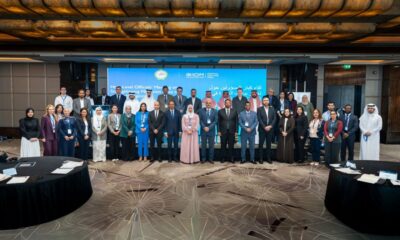
The League of Arab States and the International Organization for Migration (IOM) have formally launched the Arab Migration Data Network, the first Arab network dedicated to migration data. The launch took place at a signing ceremony at the headquarters of the League’s General Secretariat in Cairo, where the Network’s first Action Plan (2026-2028) was first adopted.
The Network is a regional mechanism for technical cooperation led by Arab States. For the first time, it brings together national statistical offices and government entities responsible for migration data across all 22 Arab States within a permanent framework for joint action.
The 22 Arab States host approximately 44.5 million international migrants, around 14.7 per cent of the global total, while 37.2 million people from Arab countries live outside their countries of origin, about half of them in other Arab States. Yet migration data remain spread across multiple institutions and continue to face challenges in coverage, timeliness and comparability.
The Network will help Arab States harmonize concepts and methodologies, exchange expertise, and build a clearer picture of migration across countries of origin, transit, destination and return.
The Action Plan was signed by H.E. Minister Plenipotentiary Abeer Al-Jalahma, Director of the Statistics and Databases Department at the League of Arab States, and Mr. Justin MacDermott, IOM Deputy Regional Director for Operations for the Middle East and North Africa. The ceremony was attended by ambassadors and representatives of diplomatic missions, directors-general of national statistical offices, senior government officials, and regional and international partners.
It concluded a two-day Senior Officials Meeting on Strengthening Migration Data in the Arab Region (27-28 October), which brought together high-level representatives from 13 Arab States: Algeria, Bahrain, Egypt, Iraq, Jordan, Libya, Mauritania, Morocco, Qatar, Saudi Arabia, Sudan, Tunisia and Yemen. Participants discussed priorities for joint action and helped shape the Action Plan ahead of its adoption.
“The launch of the Arab Migration Data Network marks a milestone in the journey of joint Arab statistical cooperation. For the first time, our countries are coming together around a permanent platform dedicated to migration data, led by Arab States and driven by their priorities. What we have built today is not simply a new initiative, but a shared Arab statistical language that serves decision-makers and reflects the realities of our people,” said H.E. Minister Plenipotentiary Abeer Al-Jalahma.
For IOM, Justin MacDermott noted: “The launch of the Arab Migration Data Network is not the culmination of our efforts; it is the beginning of a new chapter in regional cooperation, built on trust, shared knowledge, national ownership and collective action.”
Under the Action Plan, the Network will:
- coordinate the work of national focal point teams in statistical offices and relevant government entities;
- harmonize concepts, methodologies and classifications, and develop a common indicator framework aligne with the 2025 United Nations Recommendations on Statistics of International Migration;
- strengthen national capacities, including in administrative data, geospatial analysis and the responsible use of artificial intelligence; and produce joint regional analyses and strengthen data protection and responsible data sharing.
Arab States showed clear commitment from the outset, with 10 countries already designating national focal points. Delegations also presented practical proposals to further develop the Network’s working mechanisms.
Features
Gaza : Près de deux millions de personnes ont besoin d’une aide d’urgence en matière d’hébergement
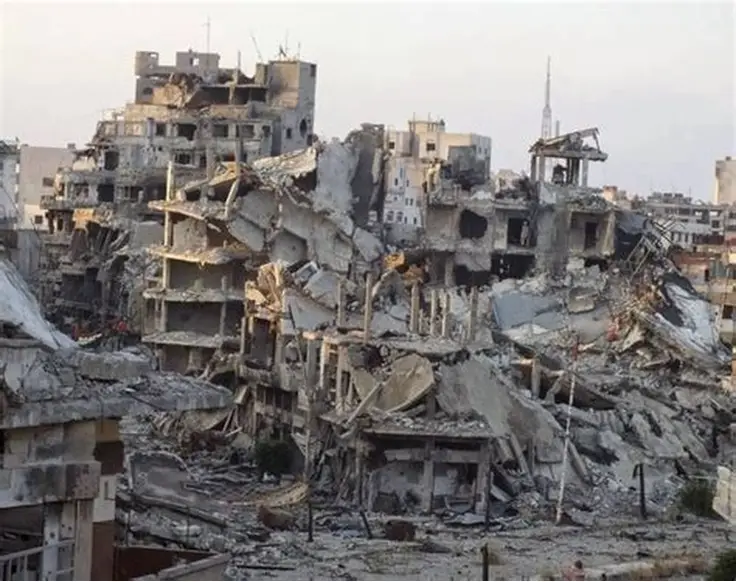
Près de deux millions de personnes, soit la quasi-totalité de la population de Gaza, ont toujours besoin d’une aide en matière d’hébergement, un an après l’annonce d’un cessez-le-feu. Alors que les pluies hivernales commencent, l’ensemble des approvisionnements prévus par les partenaires humanitaires intervenant dans le domaine de l’hébergement ne couvre qu’à peine 17 % des besoins identifiés pour l’hiver, a averti aujourd’hui Amy Pope, Directrice générale de l’Organisation internationale pour les migrations (OIM).
Après des années de déplacements et de destructions généralisées, les Palestiniens affrontent un quatrième hiver sans protection adéquate contre la pluie, les inondations et le froid. L’insuffisance des financements et les restrictions persistantes imposées par les autorités israéliennes à l’entrée de fournitures essentielles destinées aux abris empêchent les organisations humanitaires d’apporter une réponse à la hauteur des besoins.
« Les familles qui ont déjà subi des déplacements répétés et des pertes dévastatrices doivent pouvoir affronter l’hiver dans la sécurité et la dignité », a déclaré Pope. « Les matériaux destinés aux abris doivent pouvoir entrer rapidement, de manière prévisible et en quantités suffisantes pour répondre aux besoins. »
Plus de la moitié des tentes et des abris de fortune actuellement utilisés sont en mauvais état et doivent être remplacés. Les tentes sont conçues comme une mesure d’urgence temporaire et ne durent généralement que six à douze mois.
Faute d’autres solutions, de nombreuses familles vivent dans des bâtiments endommagés par la guerre qui présentent de graves risques pour leur vie. Le mois dernier seulement, des dizaines de personnes ont été tuées dans la ville de Gaza lorsqu’un bâtiment endommagé par la guerre s’est effondré. En août, un partenaire de l’OIM avait recensé plus de 3 600 structures jugées dangereuses et présentant un risque d’effondrement.
Le renforcement du phénomène El Niño devrait entraîner des précipitations plus abondantes, susceptibles de fragiliser davantage les bâtiments déjà dangereux, tandis que les systèmes de drainage fortement endommagés exposent les communautés aux inondations.
L’OIM et ses partenaires chargés de la gestion des sites ont recensé près de 1,8 million de personnes vivant dans des sites de déplacement, dont la plupart se trouvent dans des zones exposées aux risques d’inondation. Les eaux de crue pourraient endommager les abris, détruire les derniers biens des familles et contraindre les populations à se déplacer une nouvelle fois.
Environ 8 600 kits d’hébergement d’urgence de l’OIM sont prépositionnés à l’extérieur de Gaza et prêts à être acheminés, mais les autorités israéliennes continuent de leur refuser l’accès aux points de passage. Pendant ce temps, les équipes humanitaires utilisent, dans la mesure du possible, des matériaux disponibles localement et des matériaux récupérés. Ces efforts apportent un soutien temporaire limité, mais restent insuffisants pour répondre à l’ampleur des besoins en matière d’hébergement.
« Les solutions sont connues, les fournitures sont prêtes et les équipes humanitaires sont préparées à les acheminer », a déclaré Pope. « Un accès humanitaire immédiat et durable est essentiel pour protéger des vies, renforcer les abris endommagés et aider les familles à dépasser le stade des solutions temporaires. Toutes les parties doivent faciliter une action humanitaire fondée sur les principes humanitaires et soutenir une réponse à la hauteur de la gravité de la crise. »
L’OIM appelle à autoriser immédiatement et durablement l’entrée de tentes, de kits d’hébergement d’urgence, d’unités de logement de secours, de bois, d’outils et d’autres matériaux nécessaires pour renforcer les abris, réparer les habitations endommagées et aider les familles à trouver des logements plus sûrs.
Un accès prévisible aux équipements spécialisés, au carburant, aux pièces de rechange et aux matériaux de construction sera également essentiel pour permettre l’enlèvement des décombres et progresser vers un relèvement précoce.

Niger : des réfugiés poursuivent leur manifestation devant le centre du HCR à Agadez

Refugees continue protest at UNHCR centre in Niger’s Agadez

Jeff Crisp s’interroge sur la participation de l’OIM au programme américain d’expulsions vers des pays tiers

Jeff Crisp questions IOM’s involvement in US third-country deportation programme

Alarm Phone signale des appels de détresse de migrants au large de la Crète et le sauvetage de 53 personnes
-

 News Extra1 week ago
IOM’s Displacement Tracking Matrix monitors 97.2 million people in 2025
-
 News1 week ago
Libya repatriates hundreds of migrants, deploys reinforcements to Tobruk
-
News1 week ago
Libye : des centaines de migrants rapatriés, des renforts déployés à Tobrouk
-
 News1 week ago
Ebola:DRC confirms 10,000 cases, NRC seeks scale-up
-
 News Extra1 week ago
La Matrice de suivi des déplacements de l’OIM a suivi 97,2 millions de personnes en 2025
-
 News Extra4 days ago
SOS Humanity accuses Frontex of aiding migrant pushbacks to Libya
-
 Features1 week ago
League of Arab States, IOM launch Arab Migration Data Network
-
 News1 week ago
Ebola : la RDC confirme 10 000 cas, le NRC appelle à un renforcement urgent de la réponse