
News
“You are no longer considered human” – Incarceration of people on the move on the Western Mediterranean and Atlantic Route

Alarm Phone: Western Mediterranean and Atlantic Regional Analysis, 1 September 2024- 28 February 2025
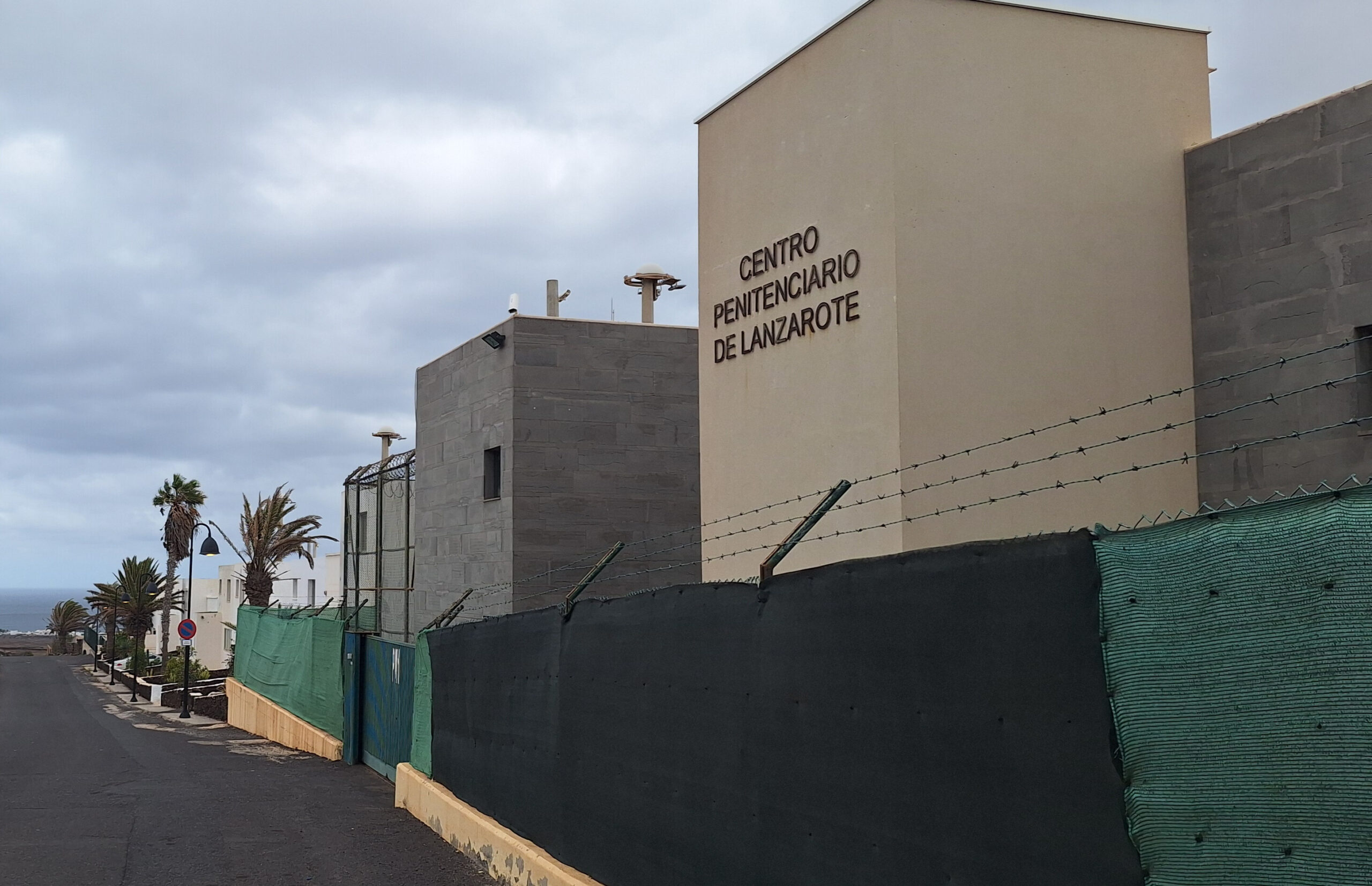
Tahíche Prison, Lanzarote, Canary Islands. Source: AP Canarias
1. Introduction
All along their migration paths, people on the move are confronted with many forms of violence by states and their representatives. The border regime, which forces people to travel along increasingly dangerous and sometimes deadly routes, works hand in hand with the incarceration regime.
Having already written a report on the criminalisation of people on the move some time ago, we wanted to participate in the movement that attempts to make visible the places used by states to hide the repression they exert on those who defy border regimes on a daily basis. Writing about incarceration, in the context of our work at Alarm Phone, is an integral part of our fight for freedom of movement for all. Prisons, and all other places which detain people, are part of a continuum of violence which we condemn. Borders, prisons, and other places of detention all form part of a racist, sexist, homophobic, ableist, and classist system of population control by states. In our fight for a world free from institutional violence, we must denounce all forms of incarceration and detention, including of people on the move and their allies. All of these places, from prisons to humanitarian camps, reproduce and participate in the global system of racial, social and economic apartheid that relies on the criminalisation of the people whom authorities wish to exclude from society, particularly racialised, migrating, trans and non-binary people, the poor and sex workers. We stand in solidarity with all prisoners, political or otherwise, who suffer violence at the hands of this carceral and punitive system.
In this report, we wish to address the violence associated with all forms of detention, in prison, in police custody, in humanitarian camps as well as in detention centres. These closed-off spaces are constantly being built and expanded in all the countries of the Western Mediterranean and Atlantic region. These enclosed spaces halt people’s journeys, either spontaneously or for long periods of time. As a tool of migration control, incarceration serves both to punish people on the move who have defied border regimes by exercising their freedom of movement, and to segregate and render invisible those who are considered undesirable in national territories. In addition to the violence of detention, which is described by the various authors writing in the following paragraphs, and the racism manifested in the policy and practice of arrest, incarceration and deportation, there is also the violence of absence, and that of being rendered invisible. As many members of Alarm Phone express, the first and foremost question is finding out who is locked up, where, and how the person feels. What are their needs? Do they need clothes, money, medication, books or any other object? Do they want to contact friends or family? Beyond the staggering numbers of people detained, it is a question of recreating a link between places of detention and the outside. A vital link which is often the only means of accessing the bare minimum (clothes, money for the canteen or to call their family, legal support, etc.).
Numerous criminal laws have been adopted, mainly since the 2000s, in order to imprison more and more and for longer periods of time – and particularly people on the move. Specifically, the laws to combat so-called people smugglers have led to the incarceration of thousands of people in Morocco, Spain, Senegal, Algeria, and Mauritania. In Spain and Morocco, for example, and particularly in the Canary Islands, a practice carried out by the authorities has now become widespread with the support of Frontex: Two people are arbitrarily arrested from each boat that arrives on the coast. Made the scapegoats of the violence of states’ border regime, these people risk up to several decades in prison. In Mauritania, as in Senegal, new detention centres for foreigners are being built: depriving people of their freedom and punishing them before deporting them. In Morocco, arbitrary arrests and roundups are a regular occurrence: People are arrested, sometimes locked up and forcibly moved to the south of the country and the Sahara. In Algeria, people on the move are arbitrarily taken back across the border to Niger or Mali and abandoned in the desert, endangering their lives.
In the face of all this violence, solidarity and resistance is being built and constantly strengthened. Every day, the members of Alarm Phone and our allies try to identify those who are imprisoned and detained and provide them with support, using the means available: from collecting clothes to seeking alternative legal support. With this report, we reaffirm our support for all those who suffer the violence of states’ border and prison regimes and continue the fight for freedom of movement for all!
2. Sea crossings and statistics
In 2024, Alarm Phone handled 146 cases along the Western Mediterranean and Atlantic routes, assisting at least 6,425 people on board these boats. According to UNHCR, 64,318 people arrived in Spain that year, meaning Alarm Phone supported approximately 10% of those who reached the country.
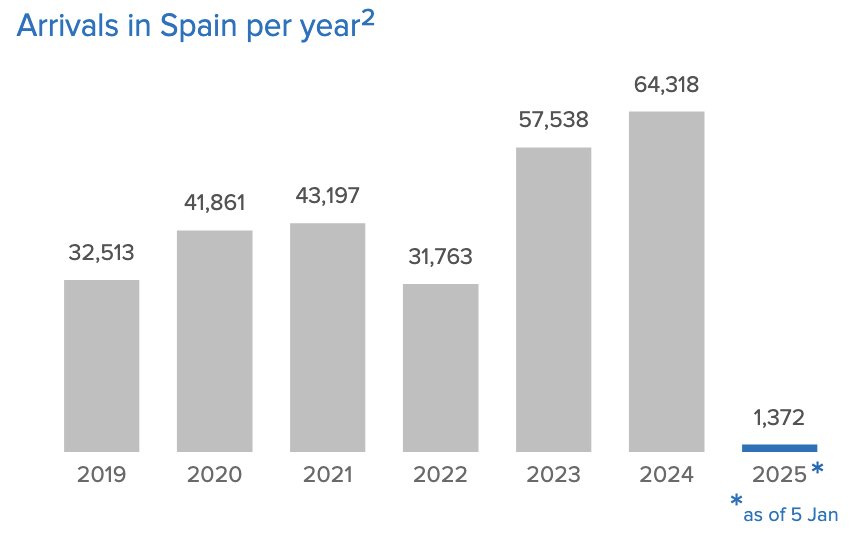
Figure 1: Arrivals in the Spanish state per year. Source: UNHCR SPAIN Weekly snapshot – Week 1 (30 Dec 2024 – 5 Jan 2025)
Between September 2024 and the end of February 2025, Alarm Phone handled 117 cases in the region, involving at least 5,932 people. Of these, 76 boats took the Atlantic route, 20 boats crossed the Alboran Sea, 40 boats departed from Algeria and one distress call came from the Strait of Gibraltar. During this period, 38 boats were rescued by Salvamento Marítimo, 19 boats arrived by themselves, 3 boats returned to shore, 11 boats were intercepted and 1 boat was rescued by a merchant vessel. However, the number of incidents in the Mediterranean and Atlantic regions remains alarmingly high. In the period of this analysis, 33 cases remain unclear and at least 6 shipwrecks occurred. This means at least 399 people have experienced shipwrecks, while the fate of 1,665 people remains unknown. We are aware of at least 154 missing persons, 135 survivors, and 76 confirmed deaths during the winter of 2024/2025.
Most of these tragedies happened on the most frequented route, the way across the Atlantic. It was – again – a record year of arrivals. 46,843 people made it to the Canary Islands – we welcome each and every one of them! This is not only significantly more than the 40,330 people in 2023 but also the highest number of all time. It is particularly noteworthy that arrivals can now peak at nearly any month of the year. The months with many departures due to favourable meteorological conditions are usually September to November; however, January and February of 2025 (as well as January and February of 2024) show that arrival numbers can also be very high in other months. The Salvamento Marítimo workers’ union CGT speaks of a “de-seasoning”, meaning crossings are not linked to certain seasons anymore. Yet, 2024 is also a record year of death. As the data from the NGO Caminando Fronteras show, 9,757 people died on the Atlantic route in 2024, the majority of deaths occurring between Mauritania and the Canary Islands. Unsurprisingly, this makes the Atlantic Route the most lethal crossing that we know of.
In every month we witnessed some devastating shipwreck. We mourn all the victims of the border regime and demand an end to the killing at sea. While we provide a more detailed list of the incidents in chapter 4, we want to highlight a few examples here to give a better picture of the extent/scale of these tragedies: Between 2 and 3 September, several boats that left from various points along the Algerian coast disappeared for several days. For some of them, there is no evidence of their arrival, so we fear that they are invisible shipwrecks and that their passengers have died tragically and have not been found or identified among the hundreds of corpses arriving on the coasts of Spain and Algeria every day. On 20 October 2024, another case from Senegal (Saloum/Djifèreon) saw 160-180 people reported missing. Alerts were sent to Mauritanian authorities, but there is no further information on their fate. (Source: Alarm Phone). On 26 November, eleven people left northern Morocco, attempting to reach Europe. While two survivors arrived in Almería, the fate of the remaining nine people is unknown. Our solidarity and thoughts go out to their families, who continue to wait for news. (Source: Alarm Phone). December was particularly deadly along the Atlantic and Algerian routes. A shipwreck resulted in bodies washing up on Algerian shores. In another distressing case, 18 people who left Tipaza, Algeria, on 29 December remain missing, despite authorities being informed. (Source: Alarm Phone). And the new year has begun just as tragically: On 2 January, a wooden boat that had departed from Nouakchott, carrying around 85-90 people, shipwrecked. Some survivors were found, and Alarm Phone is in contact with their relatives, trying to confirm names. (Source: Alarm Phone). Throughout the month of January, we received almost daily reports of bodies washed up on Algerian shores. Sometimes a dignified burial means a lot to the families of the people that went missing in the sea, and unfortunately, many of these bodies remain unidentified (Alarm Phone reported).
While the Atlantic route remains by far the most dangerous and most frequently chosen, Alarm Phone is being informed more and more about the tragedies occuring on the journey from Algeria. In the last months, several families have contacted Alarm Phone to report that they had lost contact with their loved ones who had departed on a boat from Algeria to Spain, either to the Balearic Islands or to some point on the Spanish mainland coast such as Alicante, Murcia or Almería. Many of the people come from Algeria, but we are aware of some people taking this route having started their journey from other places such as Somalia, Mali, Burkina Faso or Benin. Whether these developments can be interpreted to mean that there are more departures from Algeria or simply that more people in this region know about Alarm Phone and have built up enough trust to contact us cannot be determined with certainty.
The case is quite different when it comes to developments in the south of Morocco and in the Sahara, as members of Alarm Phone working there have reported that the places of departure have somewhat shifted. Due to the intense policing, daily harrassment and military deployments in the Sahara, many people looking for a crossing have now moved to Agadir. This is also mirrored in where departures take place: Since September 2024, only 2 out of 48 Alarm Phone cases in the Sahara and southern Morocco left from around Boujdour; all the others left from the Tarfaya, Tan-Tan and Guelmim areas. One of those notable exceptions was a horrible shipwreck of a boat that departed on 22 September 2024, with only 4 out of 60/61 people surviving. (Source: Alarm Phone). According to this shift in departures, the Canarian island of Lanzarote started receiving more people again, while previously most arrivals were in the westernmost island of El Hierro (due to many departures from Mauritania and Senegal).
3. Incarceration in the different countries of the WM
3.1. Morocco
In general, Morocco has an incarceration rate that is somewhat similar to its neighbouring countries in the North of Africa. Yet, two developments have caused NGOs and human rights defenders to raise the alarm: first of all, incarceration rates have grown in the past years, and secondly, a rather large percentage of prisoners (45%) is untried, meaning they are in prison awaiting trial. Furthermore, Morocco is under criticism for prison overcrowding, despite its 77 facilities all over the country and in the Sahara. According to the annual report published in November 2024 by the Moroccan Prison Observatory (OMP), these prisons run at an estimated 159% capacity, meaning that every detainee has only 1.75 square meters at their disposal. In addition, the report finds severe shortcomings when it comes to hygiene, the quality of food, and general facilities. Together with other civil society actors, the OMP calls for alternatives to incarceration. However, activists and journalists denouncing the injustice of incarceration often face heavy repression from authorities for this kind of work. Activists, journalists and others risk incarceration themselves.
According to official statistics from late 2023, only 1.5% of all prisoners are of foreign nationality. Out of those, 77% are African nationals, which would amount to roughly 1100 prisoners from African countries. Given that already the Laayoune prison has a very large group of West and Central African inmates (as AP members from Laayoune confirm), this can hardly be true. People on the move are incarcerated for a variety of reasons:
The 02-03 immigration act from 2003 stipulates that people on the move without a valid residence permit can receive several months of prison (Art. 42) or be held in custody before being deported (Art. 50). The law also contains provisions on the facilitation or organisation of migration, also punishable by several years of prison (Art. 52). Since its promulgation, the 02-03 immigration act has been severely criticised by activists since it criminalises people who exercise their right to freedom of movement. Harsh prison sentences are also provided by the 27-14 human trafficking act from 2016. Depending on the severity of the “crime”, prison sentences range from 5 to 10 years or even to a lifelong sentence.
As the different subchapters (3.1.1, 3.1.2, 3.1.3) show, people on the move are subjected to racist treatment in Moroccan prisons. Their basic needs (clothing, hygiene) are not sufficiently met, and they receive disproportionately harsh sentences due to a lack of legal council and interpreting.
In late 2022, Morocco’s General Delegation for Prison Administration and Reintegration already announced a 2022-2026 strategy for implementing better detention conditions (including e.g. better health care and psychological support) and enhancing social reintegration measures for prisoners. Given the dire problems outlined in the OMP 2024 report, there is an extensive need for action. However, if Morocco (like all other countries in the Western Med region) keeps imprisoning people for trumped-up charges, petty crimes and the mere exercise of their freedom of movement, we have serious doubts that building more prisons or installing better showers is going to change anything at all when it comes to the incarceration of people on the move.
3.1.1. North
In the Tanger region, people on the move are the frequent target of arbitrary arrests and pushbacks, following which they may be displaced to towns far from the border. Among these arrests and pushbacks, some people are detained on suspicion of offences related to illegal migration and given longer prison sentences if they are implicated in more serious crimes, such as organising convoys or drug smuggling. These charges are often made if people are caught with materials for preparing a departure or trying to climb the barrier at Ceuta, for example if found with life jackets, motor fuel or hooks for climbing the fence. Police will often also search phones for video or photo evidence of organising boat or drug and alcohol smuggling.
It is difficult to ascertain the precise number of departures from Tanger towards Spain since there is very high securitisation of the border and frequent arrests have reduced departures considerably, making it practically impossible for people on the move to launch a boat. Therefore, people are being forced to attempt the extremely dangerous Atlantic routes further south. Nevertheless, when boats are intercepted in the north, the police will search for 2-3 people to detain and accuse of being the ‘captain’, the smuggler or responsible for organising the voyage, in an attempt to scapegoat individuals for the violence of the border. This is hugely arbitrary and does not involve an investigation, for example the ‘captain’ suspect is often merely the person closest to the engine.
According to procedure, people are detained for a maximum of three days before they see a prosecutor who determines their charge; then they may be detained in a local prison before trial for an indeterminate period of time, which can be many months. There are four known prisons in and around Tanger: the old prison complex on the Mesnana/Boukhalef road was closed and replaced by a new prison opened in 2024, Tanger locale 2 prison, as part of the ongoing prison reform by the DGAPR. There are two more prisons in Hjar Nhal and one in Asilah. In the Tétouan prison, which is also awaiting new facilities, claims of mistreatment were raised last year, but denied by the authorities.
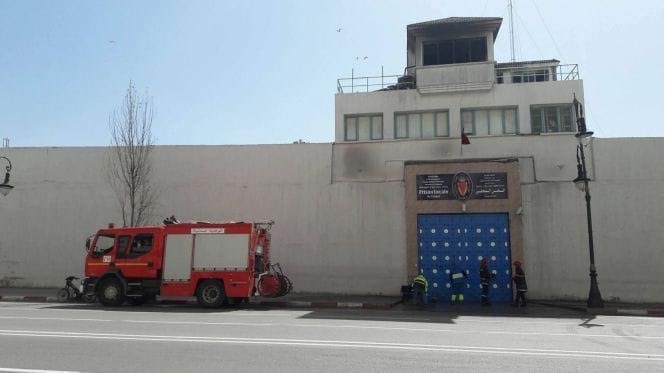
The old Tanger prison had been overcrowded and dilapidated for years. It was finally replaced by new facilities in 2024. Source: AP
In Tanger, Black people routinely face discrimination from the police and justice system, like elsewhere in Morocco. Mostly, prisoners are detained for organising journeys or driving boats, less for charges involving their legal residence status. Activists have heard testimonies of deplorable conditions in Tanger local 2 prison. As one activist described, ‘once you are found guilty of a crime you are no longer considered human’. There are reports of severe overcrowding, very limited space with sometimes as many as 60-70 people inhabiting each cell, and inadequate food. For people on the move, prison is very isolating as non-Moroccan nationals are often unable to receive visits or stay in touch with their families because of the prohibitive cost of telephone top-ups. As a result, many people leave prison with very poor mental and physical health. An activist in AP Tanger recently met a Guinean woman who was completely malnourished after being incarcerated. In January, there were also reports of measles outbreaks in Tanger locale 2 prison, further exemplifying the poor conditions inside prisons.
3.1.2. East
There is a high number of Moroccan-national unaccompanied children that arrive in Nador province without parents or relatives with the intention to cross to the Spanish peninsula. Lately, also groups consisting of underage girls, the youngest around 12 years old, were spotted among these so-called ‘harraga’. The local authorities frequently confine, if not to say incarcerate, these minors in the “Centre de Sauvegarde de l’Enfant” in Nador city under the pretext of protection (see also our report on conditions for minors in the Nador region). There is no access to appropriate educational or psychological programs; the minors are isolated from support networks and outside contacts. Material conditions are precarious; the diet is insufficient and unbalanced.
Foreign adult citizens are taken into custody for offences related to their migratory status (irregular entry, no residence permit, attempted border crossings). They are being locked up in informal detention centers, like the infamous Arekmane detention center in a village east of Nador city, or in police stations, awaiting deportations further away from the border zone. The Arekmane center is a former socio-educational centre but has been requisitioned by the authorities to lock up people on the move arrested near the coast. Not even the National Human Rights Council (CNDH) has access to it. (See also our previous report “The hidden battlefield” from 2019.)
Foreign nationals who are sentenced for border-related offences are being held in Nador prison. People are tried e.g. for accusations of ‘trafficking’, for supposedly organising ‘attacks’ on the border fences and in previous years also for being assumed captains, but sea crossings by foreign nationals are currently very rare. Arrests and accusations remain highly arbitrary. Sentences are harsh – just in November 2024, 14 foreign nationals who had been detained at the fence between Nador and Melilla were sentenced to 10 years in prison. “The conditions in prisons are deplorable” reports C., activist on the ground, who tries to channel support to the detainees.
“Officials overcrowed cells with up to 2 inmates per place, managers refuse to provide hygiene kits and clothing to migrant detainees, and food is of poor quality. There are reports of discrimination by managers against Black detainees by limiting their access to medical care and activities. There are also reports of violence and abuse of vulnerable prisoners. The authorities refuse to protect the rights of incarcerated migrants.”
There are reports of hunger strikes for better conditions, and apart from solidarity among the detainees, who often share their limited ressources, the communities and activists try to render support in any possible way. There are also independent organisations like AMDH Nador and GADEM who observe and monitor detention conditions, document human right violations and follow trials against people on the move in court.
3.1.3. South
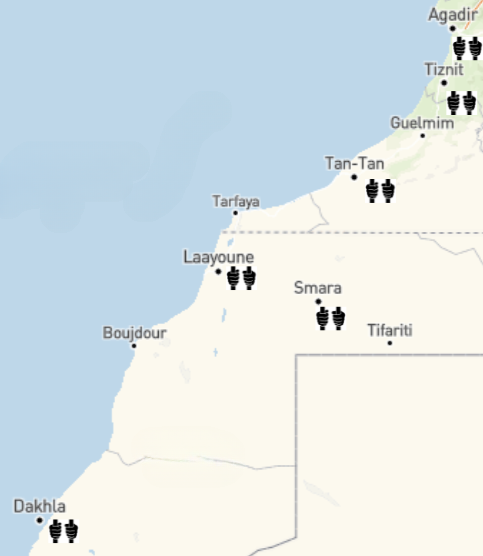
Location of prisons in the South of Morocco and the Sahara. Source: AP
In the South of Morocco and the Sahara, there are several large prisons where people on the move are being held: Dakhla, Laayoune, Smara (east of Laayoune), Bouizakarne (north of Guelmim), Tan-Tan and Aït Melloul (Agadir). In accordance with the new prison strategy adopted by Morrocan authorities (see the introduction), “reinsertion measures” are emphasized (e.g. in the Dakhla prison), for instance professional training for detainees. In addition, a new prison was opened in Laayoune in 2023, on the northern outskirts of the town. The notorious “Carcel Negra” (“Black Prison”) in the centre of Laayoune had been vastly overcrowded for years, with terrible living conditions. With the new prison, the living conditions have somewhat improved for the regular inmates; however, for people on the move, living and hygienic conditions remain intolerable. Since a lot of daily necessities (food, clothing, toileteries) are provided by family members or associations, people from countries such as Mali, Senegal and Ivory Coast are cut of from support. Instead, they have to rely on the little that local associations supporting people on the move can provide. AP Laayoune explains:
“Sometimes, there are prisoners who have only one piece of clothing that they live with for months without being able to change. That’s why associations sometimes call for donations. But these prisoners can only be visited by family members, and they are in the country of origin and thus do not have the financial means to come and help them. Sometimes, members of the consulates or certain associations are also granted access to the prisons, but that’s not always the case.”
Family members from other countries such as Senegal have already started self-organising to support their loved ones in prison; however, this work is incredibly difficult due to the lack of information and assistance from authorities.
Since criminalisation against people on the move is so prevalent, a large percentage of prisons in the South and Sahara is by now filled with people from West and Central Africa. The AP team in Laayoune explains how this process of criminalisation works:
“Hundreds of people are accused of being boat drivers or having organised illegalised crossings. They are prosecuted by the Moroccan criminal system in order to deter migration. They are accused of being smugglers, captains or responsible for navigation on a boat. Moroccan authorities never respect their right to an interpreter for the judicial proceedings. Sometimes, people are beaten so that they will divulge who was the captain. Often, people are accused without any proof just because whenever a boat is intercepted, the authorities need to find two or three people to arrest as ‘responsible’. The other boat passengers are sent to a detention centre for one or two weeks, before they are taken elsewhere in Morocco. Those accused of being the captain are taken to the police station and then to prison, where they wait for the trial for a period of two to four months. The judgement itself is completely arbitrary, and there is no defence lawyer; sometimes people are condemned by a judge on a video call. The sentences are absurd, mostly from 5 to 10 years of prison, sometimes even 15 years. When the accused is able to afford a lawyer, they can receive a prison sentence of 3 months to 3 years only. Sometimes families are able to provide funds for a lawyer, but that’s not often the case.”
3.2. Incarceration in Mauritania
Introduction
‘The country has become bogged down in the role of zealous guardian of a world order as absurd as a mirage.’ ELY Moustapha
In 2024, Mauritania was the main country of departure for boats bound for the Canary Islands (54% of the 658 vessels that arrived in 2024). Since 2021, the EU has strengthened its collaboration with Mauritania through a joint operational partnership (JOP), with a budget of 4.55 million euros. This project aims ‘to support the fight against migrant smuggling and the management of irregular migration in Mauritania’.
In this context, there has been an evolution in the legislative framework and in the means of depriving people on the move of their freedom
Culled from https://alarmphone.org/






Comment Udekwe Kennedy Obinna donne une voix aux migrants et leur offre une chance de construire un avenir plus sûr
Pour de nombreux jeunes Nigérians, le rêve d’une vie meilleure à l’étranger peut être suffisamment puissant pour faire oublier les dangers qui jalonnent les routes de la migration irrégulière.
Derrière les promesses d’emploi, d’éducation et de prospérité se cachent des histoires de traite des êtres humains, d’exploitation, de violences, de détention et, dans certains cas, de décès sur des routes migratoires dangereuses.
C’est dans cette réalité difficile que Udekwe Kennedy Obinna, fondateur de Migrants Lives Matter (MLM), a développé une mission humanitaire : veiller à ce que les jeunes et les autres personnes vulnérables disposent des informations, de la protection et du soutien nécessaires pour éviter de devenir victimes de trafiquants et de réseaux favorisant des migrations dangereuses.
À travers Migrants Lives Matter, Obinna continue de défendre la sécurité, la dignité, les droits et le bien-être des migrants et des personnes vulnérables, en menant des campagnes de sensibilisation dans les écoles, les communautés et d’autres espaces où les populations sont particulièrement exposées à la désinformation, au désespoir et à l’exploitation.
Son message est simple, mais urgent : personne ne devrait avoir à perdre sa dignité, sa liberté ou sa vie dans la quête d’un avenir meilleur.
Porter le message auprès des jeunes
L’un des piliers les plus importants du travail de MLM consiste à atteindre les jeunes avant que les trafiquants et les agents de migration qui font de fausses promesses ne les approchent.
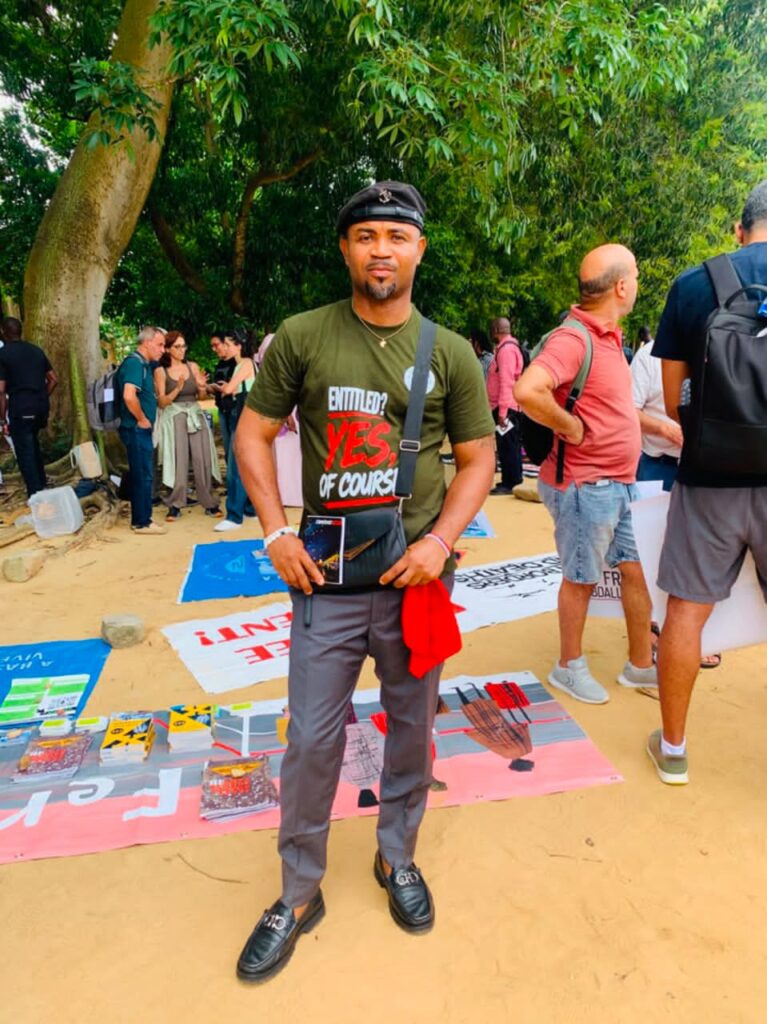
À Abuja et dans d’autres régions du Nigeria, l’organisation a organisé des ateliers de sensibilisation dans des établissements secondaires, afin d’informer les élèves sur les dangers cachés de la migration irrégulière et de la traite des êtres humains.
Ces séances ne se limitent pas à avertir les jeunes de ne pas voyager. Elles mettent en lumière les réalités souvent dissimulées derrière les offres attrayantes d’emploi et les opportunités à l’étranger.
Les élèves sont sensibilisés aux routes migratoires dangereuses, à l’exploitation, aux réseaux de traite et aux conséquences dévastatrices qui peuvent découler de décisions migratoires prises sans informations suffisantes.
Pour Obinna, la prévention commence par la connaissance.
En donnant aux élèves des informations fiables dès leur plus jeune âge, MLM cherche à leur permettre de reconnaître les signes avant-coureurs de la traite et de l’exploitation et de faire des choix éclairés concernant leur avenir.
Combattre les fausses promesses des trafiquants
Les trafiquants d’êtres humains prospèrent souvent là où règnent le désespoir, le chômage, la pauvreté et le manque d’information.
Ils exploitent les rêves.
La promesse d’un emploi bien rémunéré peut se transformer en travail forcé. Une offre d’aide pour faciliter un voyage peut devenir le début d’un parcours vers l’exploitation. Ce qui commence par l’espoir peut se terminer par des violences, des traumatismes et des pertes.
Migrants Lives Matter a fait de la lutte contre ces réalités une partie intégrante de sa mission, à travers des campagnes de sensibilisation à la migration et de lutte contre la traite des êtres humains.
L’organisation intervient auprès des écoles, des communautés et des populations vulnérables, en attirant l’attention sur les méthodes utilisées par les trafiquants et sur les dangers liés à la migration irrégulière.
À travers ses campagnes, MLM promeut une migration sûre, informée et régulière, encourageant les candidats à la migration à rechercher des informations fiables et à comprendre les risques avant de prendre des décisions susceptibles de changer leur vie.
L’objectif n’est pas de condamner les aspirations de ceux qui souhaitent migrer, mais de contribuer à faire en sorte que leurs rêves ne deviennent pas des voies menant à l’exploitation.
Au-delà de la sensibilisation : créer des alternatives
La vision humanitaire d’Obinna reconnaît également que la sensibilisation, à elle seule, peut ne pas suffire.
Pour un jeune confronté au chômage, aux difficultés financières ou à des opportunités limitées, connaître les dangers de la migration irrégulière ne suffit pas automatiquement à éliminer les pressions qui rendent ces voyages attrayants.
C’est pourquoi l’autonomisation des jeunes, leur engagement, le développement des compétences et les initiatives en faveur des moyens de subsistance font partie intégrante de la réponse plus large de MLM.
L’organisation cherche à aider les jeunes à prendre des décisions éclairées en matière de migration et d’emploi, tout en favorisant des opportunités susceptibles de réduire leur vulnérabilité face aux trafiquants et aux réseaux d’exploitation.
En encourageant l’acquisition de compétences et le développement de moyens de subsistance, MLM espère s’attaquer à certaines des conditions qui poussent les personnes vulnérables vers des routes migratoires dangereuses et incertaines.
Il s’agit d’une approche qui considère la prévention non seulement comme le fait de dire aux gens ce qu’ils ne doivent pas faire, mais aussi comme un moyen de les aider à identifier des alternatives plus sûres et plus durables.
Atteindre les communautés, protéger les personnes vulnérables
Le travail de Migrants Lives Matter dépasse les salles de classe.
À travers des programmes de proximité communautaire, l’organisation aborde les questions liées à la traite, à l’exploitation, à la migration irrégulière et aux droits des migrants, tout en encourageant les communautés à devenir des acteurs actifs de la protection des personnes vulnérables.
L’organisation fournit également une protection et un soutien en matière d’orientation aux migrants vulnérables et aux victimes, en mettant les personnes dans le besoin en relation avec les services d’aide appropriés et les institutions compétentes lorsque celles-ci sont en mesure d’apporter leur assistance.
Pour les survivants et les migrants vulnérables, le chemin vers la reconstruction peut être difficile. Les interventions de MLM comprennent également, selon les ressources disponibles, un soutien à la réintégration, dans le cadre des efforts visant à aider les personnes touchées à reconstruire leur vie.
L’organisation comprend que sortir une personne de l’exploitation n’est que le début. Les survivants peuvent encore avoir besoin de protection, de soutien, de compétences et d’opportunités afin d’éviter d’être à nouveau exposés à des situations de vulnérabilité.
Donner une voix aux migrants
Au cœur du travail d’Obinna se trouve un engagement en faveur des droits et de la dignité des migrants.
Migrants Lives Matter continue de plaider pour une meilleure sensibilisation du public aux droits des migrants, la prévention de la traite des êtres humains et la nécessité de mettre en place des systèmes migratoires plus sûrs.
L’organisation mène également des recherches et documente les défis liés à la migration et à la traite des êtres humains au Nigeria, contribuant ainsi à une meilleure compréhension des expériences et des risques auxquels sont confrontés les migrants et les populations vulnérables.
À travers des partenariats avec des écoles, des agences gouvernementales, des organisations de la société civile, des dirigeants communautaires et d’autres acteurs, MLM cherche à construire un réseau plus solide de protection et de réponse.
La conviction est que la lutte contre la traite des êtres humains et les migrations dangereuses ne peut être remportée par une seule organisation.
Elle nécessite des communautés informées, des institutions réactives, des jeunes autonomisés et des survivants bénéficiant d’un accompagnement.
Une mission humanitaire porteuse d’un message clair
À une époque où les récits de Nigérians et d’autres Africains tombant entre les mains de trafiquants ou risquant leur vie sur des routes migratoires dangereuses continuent de susciter des inquiétudes, le travail porté par Udekwe Kennedy Obinna à travers Migrants Lives Matter véhicule un message de prévention, de protection et d’espoir.
Ses interventions reposent sur la conviction que chaque jeune doit avoir accès à des informations fiables avant de prendre une décision concernant la migration, que chaque victime mérite protection et soutien, et que chaque migrant mérite de voir sa dignité et ses droits respectés.
À travers la sensibilisation dans les écoles, l’engagement communautaire, le plaidoyer, l’autonomisation des jeunes, la protection, l’orientation vers les services appropriés, la recherche et la collaboration, Migrants Lives Matter construit progressivement une réponse à certains des défis humanitaires liés à la migration et à la traite des êtres humains au Nigeria.
Pour Obinna, la mission va finalement au-delà de la migration.
Il s’agit de protéger les rêves afin qu’ils ne se transforment pas en tragédies.
Il s’agit de faire en sorte que la vulnérabilité ne devienne pas une opportunité pour les trafiquants.
Et il s’agit de donner aux jeunes et aux personnes vulnérables quelque chose qui pourrait les sauver de l’exploitation et du danger : la connaissance, le soutien et le pouvoir de choisir un avenir plus sûr.
News
Fighting for the vulnerable: How Udekwe Kennedy Obinna Is giving migrants a voice and a chance at safer futures
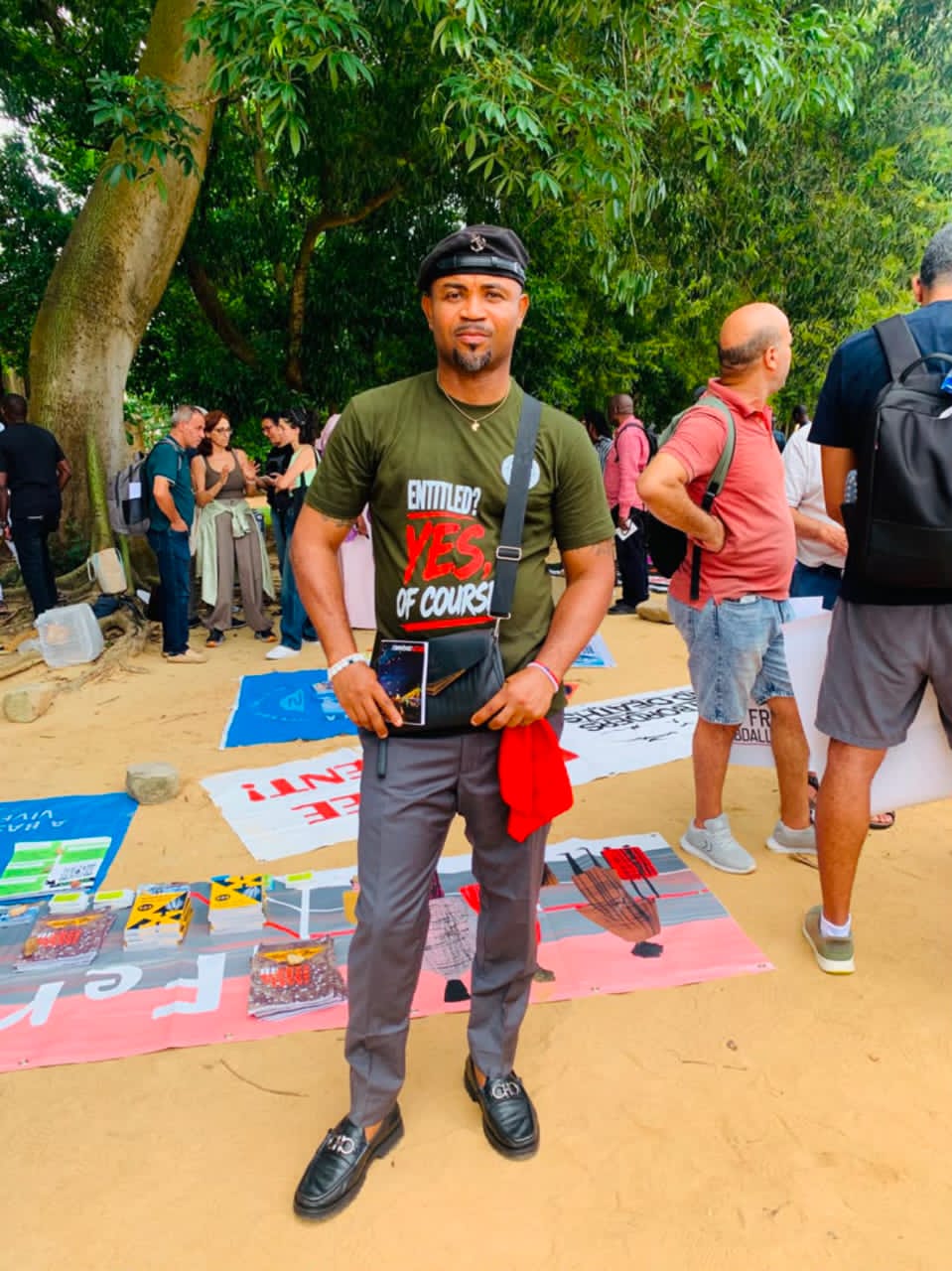
For many young Nigerians, the dream of a better life abroad can be powerful enough to overshadow the dangers that lie along the road to irregular migration.
Behind promises of jobs, education and prosperity are stories of human trafficking, exploitation, abuse, detention and, in some cases, death on dangerous migration routes.
It is within this difficult reality that Udekwe Kennedy Obinna, founder of Migrants Lives Matter (MLM), has carved out a humanitarian mission: to ensure that young people and other vulnerable persons have the information, protection and support needed to avoid becoming victims of traffickers and unsafe migration.
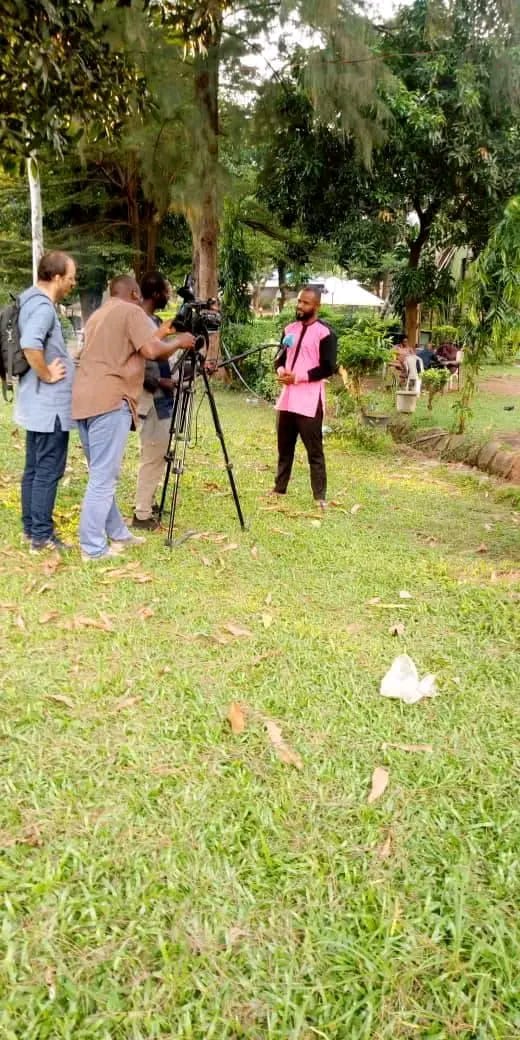
Through Migrants Lives Matter, Obinna has continued to champion the safety, dignity, rights and well-being of migrants and vulnerable persons, taking awareness campaigns into schools, communities and other spaces where people are most exposed to misinformation, desperation and exploitation.
His message is simple but urgent: no one should have to lose their dignity, freedom or life in the search for a better future.
Taking the Message to the Young
One of the most important pillars of MLM’s work is reaching young people before traffickers and migration agents with false promises get to them.
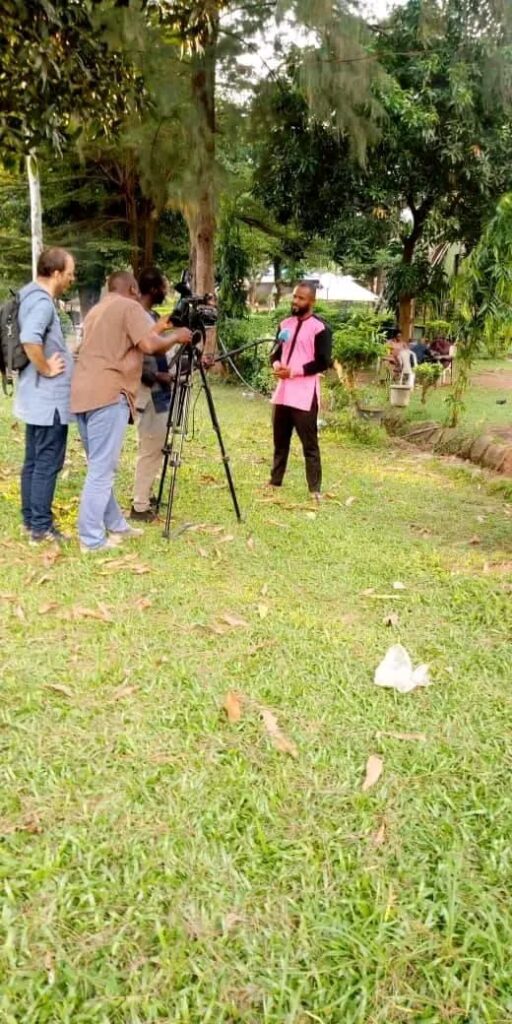
Across Abuja and other parts of Nigeria, the organisation has conducted sensitisation workshops in secondary schools, educating students about the hidden dangers of irregular migration and human trafficking.
The sessions go beyond simply warning young people not to travel. They expose the realities that are often concealed behind attractive offers of employment and opportunities abroad.
Students are educated about unsafe migration routes, exploitation, trafficking networks and the devastating consequences that can follow poorly informed migration decisions.
For Obinna, prevention begins with knowledge.
By equipping students with accurate information at an early stage, MLM seeks to ensure that they can recognise the warning signs of trafficking and exploitation and make informed choices about their future.
Challenging the False Promises of Traffickers
Human traffickers often thrive where there is desperation, unemployment, poverty and a lack of information.
They prey on dreams.
A promise of a good job can become forced labour. An offer of assistance with travel can become a journey into exploitation. What begins as hope can end in abuse, trauma and loss.
Migrants Lives Matter has made it part of its mission to confront these realities through migration awareness and anti-human trafficking campaigns.
The organisation engages schools, communities and vulnerable populations, drawing attention to the methods used by traffickers and the dangers associated with irregular migration.
Through its campaigns, MLM promotes safe, informed and regular migration, encouraging prospective migrants to seek accurate information and understand the risks before making life-changing decisions.
The goal is not to condemn the aspirations of those who wish to migrate, but to help ensure that their dreams do not become pathways to exploitation.
Beyond Awareness, Building Alternatives
Obinna’s humanitarian vision also recognises that awareness alone may not be enough.
For a young person facing unemployment, financial hardship or limited opportunities, knowing the dangers of irregular migration does not automatically remove the pressures that make such journeys attractive.
This is why youth empowerment, engagement, skills development and livelihood initiatives form part of MLM’s broader response.
The organisation seeks to help young people make informed decisions about migration and employment while promoting opportunities that can reduce their vulnerability to traffickers and exploitative networks.
By encouraging skills acquisition and livelihood development, MLM hopes to address some of the conditions that push vulnerable persons towards dangerous and uncertain migration routes.
It is an approach that sees prevention not merely as telling people what not to do, but also helping them identify safer and more sustainable alternatives.
Reaching Communities, Protecting the Vulnerable
The work of Migrants Lives Matter extends beyond classrooms.
Through community outreach programmes, the organisation addresses issues of trafficking, exploitation, irregular migration and migrant rights, while encouraging communities to become active participants in protecting vulnerable people.
The organisation also provides protection and referral support for vulnerable migrants and victims, linking those in need with appropriate support services and relevant institutions where assistance is available.
For survivors and vulnerable migrants, the path to recovery can be difficult. MLM’s interventions also include reintegration support, subject to available resources, as part of efforts to help affected persons rebuild their lives.
The organisation understands that rescue from exploitation is only the beginning. Survivors may still need protection, support, skills and opportunities to prevent them from being pushed back into situations of vulnerability.
Giving Migrants a Voice
At the heart of Obinna’s work is a commitment to the rights and dignity of migrants.
Migrants Lives Matter continues to advocate greater public awareness of migrant rights, the prevention of human trafficking and the need for safer migration systems.
The organisation also carries out research and documentation on migration and trafficking-related challenges in Nigeria, contributing to a better understanding of the experiences and risks confronting migrants and vulnerable populations.
Through partnerships with schools, government agencies, civil society organisations, community leaders and other stakeholders, MLM is seeking to build a stronger network of protection and response.
The belief is that the fight against trafficking and dangerous migration cannot be won by one organisation alone.
It requires communities that are informed, institutions that are responsive, young people who are empowered and survivors who are supported.
A Humanitarian Mission With a Clear Message
At a time when stories of Nigerians and other Africans falling into the hands of traffickers or risking their lives on dangerous migration routes continue to raise concern, the work being championed by Udekwe Kennedy Obinna through Migrants Lives Matter carries a message of prevention, protection and hope.
His interventions are rooted in the conviction that every young person deserves access to information before making a migration decision, every victim deserves protection and support, and every migrant deserves to have his or her dignity and rights respected.
Through school sensitisation, community engagement, advocacy, youth empowerment, protection, referrals, research and collaboration, Migrants Lives Matter is steadily building a response to some of the humanitarian challenges surrounding migration and human trafficking in Nigeria.
For Obinna, the mission is ultimately about more than migration.
It is about protecting dreams from becoming tragedies.
It is about ensuring that vulnerability does not become a trafficker’s opportunity.
And it is about giving young people and vulnerable persons something that could save them from exploitation and danger: the knowledge, support and power to choose a safer future.
News
Une militante sénégalaise transforme la mort de son frère sur la route migratoire de l’Atlantique en combat pour le changement
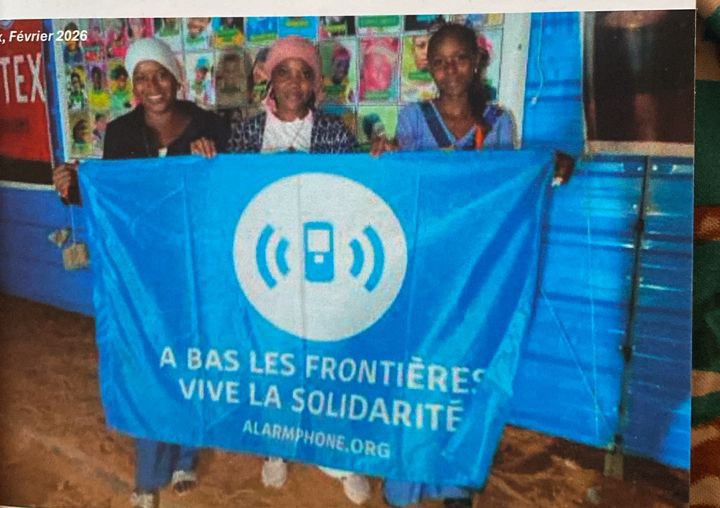
La mort de son jeune frère, Mbaye Diop, lors d’une traversée de l’Atlantique vers l’Espagne a transformé la vie de Ndeye Fall Dieye. D’abord marquée par le deuil et les questions restées sans réponse, son existence est désormais consacrée à une campagne visant à faire en sorte que les migrants qui meurent sur des routes dangereuses ne soient pas oubliés.
Diop faisait partie des migrants ayant perdu la vie après le naufrage, en avril 2024, d’une embarcation transportant des personnes vers les îles Canaries, au large de l’île d’El Hierro.
Pour Dieye, la tragédie a commencé par une conversation téléphonique avec son frère, qui allait devenir leur dernier échange.
« La dernière fois que je lui ai parlé, c’était juste avant qu’il parte avec ses compagnons pour traverser l’océan », se souvient-elle, décrivant les jours qui ont suivi comme une période de peur intense et d’incertitude.
Pendant plus d’une semaine, la famille a attendu désespérément des nouvelles. Finalement, elle a appris que l’embarcation avait connu un drame près des îles Canaries.
« Tout ce que nous avons reçu comme réponse, c’était cette image glaçante d’une pirogue en train de chavirer », raconte-t-elle. « Cette image n’a fait qu’accroître notre angoisse, nos doutes et nos questions sans fin. »
Selon Dieye, son frère n’avait pas quitté son foyer de manière irréfléchie. Il poursuivait ce qu’il croyait être une chance d’avoir un avenir meilleur.
Le football, explique-t-elle, était sa plus grande passion, et il rêvait de trouver des opportunités au-delà des difficultés et de l’incertitude économique qui l’entouraient.
« Il ne partait pas sur un coup de tête », affirme-t-elle. « Pour lui, le football, c’était tout. Il voulait un terrain plus vaste, un avenir meilleur et un moyen de sortir de la pauvreté. »
Mais l’océan a englouti ces rêves.
Un deuil qui refuse de disparaître
Plus de deux ans après sa mort, Dieye affirme que la douleur reste profondément ancrée dans son quotidien.
Elle raconte qu’il lui arrive de saisir instinctivement son téléphone, pensant qu’elle pourrait encore appeler son frère, même si elle sait qu’il ne répondra jamais. À d’autres moments, une notification ou un souvenir fait naître en elle, l’espace d’un instant, l’espoir douloureux qu’il soit peut-être encore en vie.
Selon elle, le deuil est d’autant plus difficile que certaines personnes s’attendent à ce que les familles « tournent la page ».
« Les souvenirs restent intacts dans nos esprits », dit-elle. « Les gens nous demandent d’oublier, mais c’est impossible. »
Son frère, ajoute-t-elle, était bien plus qu’un simple frère.
« Mbaye était mon petit frère, mon confident, mon autre moitié », confie-t-elle.
Sa présence, explique-t-elle, continue de revenir dans ses rêves, où elle a brièvement l’impression qu’il est toujours vivant, avant de se réveiller face à la réalité de son absence.
Trouver de la force auprès d’autres familles endeuillées
Plutôt que de porter seule son chagrin, Dieye a finalement trouvé du soutien auprès d’autres familles ayant perdu des proches sur les routes migratoires.
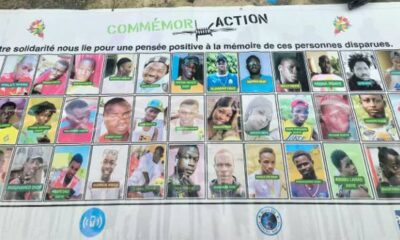
À travers des réseaux tels que le Collectif des Victimes de la Migration au Sénégal (COVES) et le mouvement CommémorAction, elle a rencontré d’autres mères, pères, sœurs et proches confrontés à des épreuves similaires.
Ces rencontres ont offert aux familles un espace où elles peuvent parler ouvertement de leurs pertes, partager leurs souvenirs et s’opposer à ce qu’elles considèrent comme la réduction des décès de migrants à de simples statistiques.
« Pouvoir parler de mon frère et de sa passion pour le football avec d’autres mères et sœurs qui partagent la même douleur nous aide à transformer notre immense chagrin en une force collective », explique-t-elle.
Dieye a participé à plusieurs activités commémoratives au Sénégal, notamment à un important rassemblement à Dakar, au cours duquel des familles ont allumé des bougies et rendu hommage à leurs proches morts en tentant d’emprunter des routes migratoires dangereuses.
L’objectif, dit-elle, est de faire en sorte que les noms, les visages et les histoires des disparus ne sombrent pas dans le silence.
Porter le combat au-delà du Sénégal
Sa recherche de solidarité l’a également conduite au Cameroun, où elle a rencontré des familles ayant vécu des pertes similaires.
Cette visite, explique-t-elle, a renforcé sa conviction que le drame vécu par sa famille s’inscrivait dans une crise beaucoup plus vaste, qui touche des communautés à travers l’Afrique et au-delà.
« C’est là que j’ai véritablement compris que ma tragédie n’était pas un cas isolé », affirme Dieye.
Lors de rencontres et d’échanges avec des familles endeuillées, les participants ont partagé des récits de pauvreté extrême, d’isolement, de familles brisées et de pressions qui poussent souvent les jeunes à entreprendre des voyages dangereux.
Certains parents, raconte-t-elle, se reprochaient de ne pas avoir été capables d’offrir suffisamment d’opportunités à leurs enfants.
Dieye et d’autres militants ont cherché à remettre en question ce sentiment de culpabilité, estimant que les familles ne devraient pas être tenues responsables de conditions générales qui donnent à certains jeunes le sentiment de ne pas avoir d’avenir dans leur propre pays.
« Les parents ne sont pas responsables », affirme-t-elle. « Les vrais problèmes sont la fermeture des frontières, les inégalités et le manque de perspectives pour notre jeunesse. »
« L’océan ne doit pas avoir le dernier mot »
Au cœur de cette campagne se trouve une demande de reconnaissance, de mémoire et d’une plus grande attention aux circonstances qui poussent des milliers de jeunes Africains à risquer leur vie sur les routes terrestres et maritimes.
Dieye estime que la pauvreté, les inégalités, la pression sociale et les politiques migratoires restrictives ont créé des conditions dans lesquelles de nombreux jeunes considèrent les voyages dangereux comme leur seule voie vers une vie digne.
Elle souligne ainsi que les commémorations et les campagnes ne consistent pas uniquement à pleurer les morts, mais aussi à remettre en question les conditions qui continuent d’exposer les migrants au danger.
Lors d’une dernière cérémonie commémorative réunissant des familles de différents pays, Dieye a déclaré que les frontières nationales semblaient disparaître alors que les participants se retrouvaient autour d’une expérience commune de la perte.
Aujourd’hui, dit-elle, la mémoire de son frère fait partie d’un combat plus vaste.
« Mon frère ne vit plus seulement dans nos regrets », affirme-t-elle. « Il continue de vivre à travers nos luttes. »
Aux côtés des familles qui ont perdu des frères, des fils, des filles et d’autres êtres chers sur les routes migratoires, Dieye affirme qu’elle continuera à marcher, à prendre la parole et à commémorer les morts.
« Nous continuerons à marcher, à nous rassembler et à nous souvenir », dit-elle, « afin que leur mémoire éclaire notre chemin et que l’océan n’ait jamais le dernier mot. »

Défendre les plus vulnérables :

Fighting for the vulnerable: How Udekwe Kennedy Obinna Is giving migrants a voice and a chance at safer futures

Une militante sénégalaise transforme la mort de son frère sur la route migratoire de l’Atlantique en combat pour le changement
Senegalese activist turns brother’s death on Atlantic migration route into campaign for change

La déportation traumatisante d’Abdulai Daramy soulève des inquiétudes concernant l’accord avec les États-Unis
-
 Features2 weeks ago
Sea-Watch 5 découvre huit corps dans un état avancé de décomposition
-
 News Extra2 weeks ago
Colombia: Conflict-affected families lose everything again after deadly earthquake
-

 News2 weeks ago
Trois autres corps sans vie retrouvés après les 11 découverts par SOS Méditerranée
-
News2 weeks ago
Three more bodies found in Mediterranean after 11 discovered by SOS Méditerranée
-
 Features2 weeks ago
Un séisme meurtrier aggrave la grave crise humanitaire en Colombie
-
News Extra2 weeks ago
Colombie : les familles touchées par le conflit perdent une nouvelle fois tout après le séisme meurtrier
-
 News Extra2 weeks ago
Des manifestations éclatent après la mort de migrants dans le naufrage d’un bateau
-
Features2 weeks ago
Deadly earthquake compounds Colombia’s severe humanitarian crisis