
Features
Shipwreck where 4 children, others died was violent pushback gone terribly wrong not accident- Aegean Boat Report


A recent incident where 18 people drowned in two separate incidents north of the Greek island of Lesvos, was not an accident, Aegean Boat Report has revealed.
In a post on its X handle on Saturday, April 5, 2025, Aegean Boat Report described the sad incident as a violent pushback gone terribly wrong.
The full statement reads:
Yesterday we brought devastating news, 18 people drowned in two separate incidents north of the Greek island of Lesvos. Today, disturbing news is starting to emerge from Lesvos, that the shipwreck where 8 people drowned, 4 of them small children, was not an accident, rather a violent pushback gone terribly wrong. “The initial information about yesterday’s wreck in Lesvos state that a port boat approached the boat and began to hit them with the ruckus.
The bottom of the boat was torn and everyone was in the sea. Locals state that with such low temperatures it is hardly possible for anyone to stay alive for a long time at sea. So the harbor boat was logically on site and rescued 23 of them. 7 dead so far and even at this moment the search operation is still continuing in the area. Yet another child is missing.”
It’s not unheard of, nor unusual, that the Greek coast guard use brutal force in their efforts to stop boat carrying refugees to reach the shores on the Greek islands. This has been documented over and over again, without any consecvenses to the perpetrators. There has been many shipwrecks over the last 4 years in these waters, hundreds of people have died, as a direct result of Greek violent pushback tactics. Instead of investigating these shipwrecks, and take actions against Greece, the European Commission has not only looked the other way, but also financed these crimes against humanity.
European taxpayers money have been used to directly financed the killings of men, women and children in Greek waters, in full understanding and approval by the commission, and especially it’s president Ursula Gertrud von der Leyen. Greek authorities were quickly out in the press yesterday and immediately put the blame of the shipwreck on “ruthless smugglers in Turkey”. They also arrested one of the survivors, only hours after they were taken to land, a 20 year old Afghan man, probably charging him with human trafficking, endangering the lives of all onboard, and the deaths of 8 people. If not properly represented by a real lawyer, he will stay in jail for the rest of his life for crimes he didn’t commit. In fact those who should have been arrested, and charged for endangering the lives of the passengers, and the killing of 8 people, amongst them 4 small children, is the captain and crew of the Greek coast guard vessel that tried to push the group back toward Turkish waters. We have been informed that the boat that tried to push them back, whose crew beat them with sticks, that lead to the sinking of the fragile rubber boat, killing 8 people, was a Lambro 57 coastal patrol boat carrying ID number LS-602, belonging to the Hellenic Coast Guard on Lesvos, the boat also participated in the rescue operation.
This is easily proven, since the boat that was first on scene pretending to “rescue”, also took the survivors back to the Schengen port in Petra, medical personnel and ambulances were present, they know what boat took the people inn, it must have been quite a few witnesses present. This is for journalists and investigators, who are actually looking for the truth about what really happened that night, quite straight forward. Interviewing the survivors, take statements from all present on arrival in port, and the crew of the LS-602. There will definitely be contradicting statements, only problem is that Greek authorities wants to bury the truth, and locks up survivors to try to keep a lid on it.
They will carry out their own “investigation”, that has the same result every single time. “The Greek coast guard did a great effort in rescuing people, and the smugglers in Turkey are to blame for everything”. Just look up every single so called “investigation” undertaken by the Greek coast guard on these shipwrecks the last five years, you will find nothing that indicates any wrongdoing by Greek authorities. It’s not a question of if a new shipwreck will happen, it’s only a matter of when, where and how many..


A Libyan human rights organization has raised alarm over what it describes as a sharp increase in violations against migrants, refugees, asylum seekers, and foreign workers across Libya since the beginning of June 2026.
In a statement released this week, Libya Crimes Watch (LCW) said it has documented widespread arrests, raids on migrant residences, forced evictions, and physical and verbal assaults in both eastern and western parts of the country. The group also reported a surge in hate speech and incitement to violence targeting migrant communities.
According to LCW, its field teams have monitored large-scale arrest campaigns in several cities, including Tripoli, Benghazi, Ajdabiya, and Al-Bayda. Those detained reportedly include women and children. The organization said it has also documented incidents in which migrants were forcibly removed from their homes and subjected to abuse, including individuals with existing health conditions.
LCW alleged that the operations are being carried out by security agencies and armed groups affiliated with authorities in both eastern and western Libya. The group named the Libyan Arab Armed Forces (LAAF), the Directorate for Combatting Illegal Migration (DCIM), and the General Directorate of Security Operations (GDSO), among others, as entities involved in the campaigns.
The organization further expressed concern over what it described as the involvement of civilians in some raids and assaults. It also cited widespread anti-migrant rhetoric on social media and in local media outlets, including platforms it said are aligned with authorities and official institutions. According to LCW, such messaging has contributed to increased hostility toward migrants and encouraged participation in actions targeting them.
One Sudanese migrant, identified by the pseudonym “Inas” for security reasons, recounted an alleged attack on her family. She told LCW that armed men entered their home, assaulted family members, used racist language, and forced them from the property before stealing their belongings.
“We are now on the street with nowhere to go,” she said, according to the statement. “We have a sick family member who needs care, and we have found no organization to help or protect us.”
LCW said Libyan authorities in both the east and west bear legal responsibility for protecting migrants, refugees, and asylum seekers and ensuring respect for their rights under international human rights law. The organization called for an immediate end to abuses, protection against violence and forced evictions, and a halt to deportations or forced returns that could expose individuals to persecution or other harm.
The group also urged the Office of the Libyan Attorney General to stop detaining people solely on the basis of their migration or asylum status and to investigate all reported violations. LCW called for those responsible for abuses, including individuals who ordered, participated in, or facilitated them, to be held accountable through fair and independent legal proceedings.
In addition, the organization appealed to international bodies, including the United Nations Support Mission in Libya (UNSMIL), the International Organization for Migration (IOM), and the United Nations High Commissioner for Refugees (UNHCR), to take urgent measures to protect migrants, refugees, and asylum seekers at risk in Libya.
The allegations have not been independently verified, and Libyan authorities had not publicly responded to the claims at the time of the statement’s release.
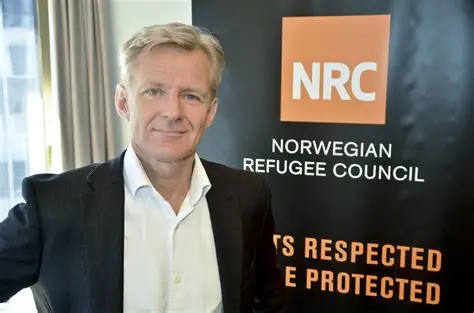
The Democratic Republic of Congo has appeared on the Norwegian Refugee Council’s (NRC) annual list of top neglected displacement crises, for the tenth year running, and the neglect is deepening.
“This is a testament to the world’s failure to respond to crises that are not regarded as strategically important for rich countries,” said NRC’s Secretary General Jan Egeland. “Millions of people are being abandoned because we have chosen not to act, not because we cannot. The uncomfortable truth is that this neglect is a choice, and something we can choose to end.”
In 2025, just 27.4 per cent of the funding required to respond to the crisis in DR Congo was provided, the lowest rate in 10 years, leaving over 21 million people in need with no or drastically reduced assistance. A decade ago, the international community was providing 55 US dollars per person in need in DR Congo. Today that figure has collapsed to under 33 US dollars.
Countries such as Burkina Faso, Cameroon, Central African Republic, Mali and Nigeria have all featured on the list six or more times, pointing to a systemic pattern of deliberate neglect rather than isolated failure.
“Donor governments have been presented with evidence of neglect, year after year. Yet those in power still choose to prioritise military and strategic investments and underfund, deprioritise and sideline the victims of these crises. It is a failure of our humanity,” said Egeland.
The report is the tenth edition of NRC’s Neglected Displacement Crises Report, tracking how responses continue to fall short of the scale of suffering.
Sudan tops the list
The 10 most neglected crises for 2025 are Sudan, the Democratic Republic of Congo, Colombia, Yemen, Afghanistan, Honduras, Ecuador, Cameroon, Nigeria and Mozambique, spanning three continents and tens of millions of people the world continues to ignore.
The Neglected Displacement Crises Report assesses each crisis across four indicators: media coverage, funding, political attention, and scale of displacement. A lower score indicates a larger gap between the scale of human suffering and the adequacy of international response.
Sudan tops this year’s list. More than 9 million people are internally displaced, and up to 4 million have fled to neighbouring countries. Nearly 19.5 million people inside Sudan are facing hunger, yet the international response remains wholly inadequate to that scale of suffering.
“It is incomprehensible that a displacement crisis of similar proportions to the crises in Syria and Ukraine at their peak can continue to worsen almost unnoticed,” Egeland said. “Just as needs in Sudan skyrocketed last year and famine kept spreading, the funding was cut. Many displaced people receive no international support and are left to beg for assistance from other displaced people who no longer have anything more to share.”
A decade of the same pattern
Since NRC began publishing this report 10 years ago, 27 crises across four continents have appeared on the list, and the pattern is unambiguous. The African continent features the most consistently. From the Sahel region to the Horn of Africa, from the Great Lakes to West Africa, many of these are cases of prolonged or repeated displacement. Across the board, neglect coincides with access restrictions for humanitarians. With rare exceptions, the crises that were ignored a decade ago are still being ignored today. In DR Congo, the Ebola outbreak now spreading across eastern parts of the country — declared a public health emergency of international concern by WHO in May 2026 — is unfolding in communities already devastated by years of displacement and humanitarian neglect.
“Behind every statistic in eastern DR Congo are families who have endured years of violence, repeated displacement, and deep uncertainty about their future,” said Eric Batonon, NRC’s country director in the Democratic Republic of Congo. “While attention shifts from one global emergency to another, millions of Congolese continue to live without adequate protection, assistance, or hope. The fact that DR Congo remains among the world’s most neglected crises for the tenth consecutive year should serve as a wake-up call to the international community.”
What NRC is calling for
The gap between needs and available humanitarian funding is increasing as a result of brutal humanitarian funding cuts. This is affecting the neglected crises particularly hard, as these crises are already characterised by less available funding per person in need.
NRC urges donor governments to fund crises based on humanitarian need and scale of displacement, not geopolitical interest. It calls on political leaders and diplomats to engage seriously with the root causes of protracted displacement, many of which persist precisely because they are seen as having little geopolitical importance. It also calls on media organisations to report on these crises with the consistency and depth they demand as ongoing emergencies.
“The crises ignored today will demand a larger, costlier and more complex response tomorrow,” said Egeland. “The world does not lack for skills nor resources. Be it arranging football World Cups, or pioneering space exploration: our ability to organise and overcome challenges is almost without limit. We can and must finally take the decision to end the neglect that has caused such deep suffering for millions of people”.
Features
Ebola: Border closures alone risk driving movement underground and increasing transmission risks

The International Organization for Migration (IOM) has urged governments and partners to strengthen urgently cross-border coordination to contain the ongoing Bundibugyo virus disease (Ebola) outbreak, warning that border closures alone risk driving movement underground and increasing transmission risks.
Latest World Health Organization (WHO) figures show 116 suspected cases, 321 confirmed cases, 48 deaths, and six recovered cases in the Democratic Republic of the Congo (DRC). In Uganda, there have been nine confirmed cases, and one death to date.
“Viruses do not stop at borders, and neither should our response,” said Ugochi Daniels, IOM Deputy Director General for Operations. “When borders close, people often continue moving through informal routes where health screening and surveillance are limited. The most effective response is coordinated action that keeps mobility visible, safe and monitored.”
IOM warns that reactive border closures can reduce visibility of population movements, undermining health screening, surveillance, contact tracing and early detection efforts. Evidence from previous health emergencies shows that movement restrictions do not stop mobility but often redirect it towards informal and less-monitored routes.
This is the 17th Ebola outbreak recorded in the DRC and the third largest on record, highlighting both the recurring nature of the disease and the importance of sustained preparedness.
The outbreak is unfolding in one of the world’s most complex humanitarian contexts. Eastern DRC is already affected by conflict and large-scale displacement. As of March 2026, 3.6 million people have been internally displaced in the country, including nearly 922,000 displaced in Ituri Province alone, where the outbreak is centred.
The confirmation of cross-border transmission between DRC and Uganda further highlights the urgency of coordinated regional action, particularly in areas where daily cross-border movement is essential for trade, livelihoods and access to basic services.
Data from IOM’s Flow Monitoring Registry at key formal and informal crossing points—including Cyanika, Busunga, Bunagana, Mpondwe, Goli, Vurra, Busanza and Ntoroko—shows that cross-border mobility continues despite restrictions, including through informal routes, reinforcing the need for data-driven and coordinated response measures.
People living in displacement sites, border communities and conflict-affected areas face heightened vulnerability due to limited access to healthcare, clean water and other essential services, increasing the risk of undetected transmission.
IOM is supporting governments and partners in DRC, Uganda and neighbouring countries by strengthening border health operations, population mobility mapping, disease surveillance, risk communication and community engagement in high-mobility areas.
Understanding where, why and how people move remains critical to preventing further spread. Public health measures must be informed by mobility patterns and coordinated across borders to ensure effective containment while avoiding unintended consequences that push movement out of sight.
Significant funding gaps continue to constrain the scale and speed of response efforts, including preparedness activities across the region.
IOM welcomes the swift financial contribution from the United States, which is helping to strengthen frontline response efforts and save lives. Close coordination with the African Union, Africa Centres for Disease Control and Prevention, WHO and United Nations partners remains essential to containing the outbreak.
While Ebola is a preventable and containable disease, additional resources are urgently needed to sustain surveillance systems, maintain border health operations, strengthen community-based prevention efforts and expand support in displacement settings.

Rights group reports rise in abuses, hate speech against migrants in Libya

New rescue vessel Aurora 2: Sea-Watch’s response to political blockades of civilian sea rescue
Sea-Watch strongly criticises EU response following attack on Sea-Watch 5

Court annuls 20-day administrative detention imposed on Ocean Viking

Neglect deepens as DRC appears on NRC’s list of top neglected displacement for 10 years
-
 News1 week ago
War has devastated life for millions of refugees, displaced
-
 Features1 week ago
Netherlands, IOM reaffirm partnership including new multi-year funding commitment
-
 Features1 week ago
Stabilization gains open pathway to development in Central African Republic: IOM Chief of Staff
-
 News Extra1 week ago
West and Central Africa urges more climate funding as displacement rises
-
 News Extra1 week ago
Diaspora remittances point to untapped potential in crisis response: New IOM report
-
 Features3 days ago
Ebola: Border closures alone risk driving movement underground and increasing transmission risks
-
 News Extra4 days ago
Nigeria leads Liberia, Ghana, others as US set to deport migrants
-
 Features4 days ago
Haiti hosts over 1million displaced persons