
News Extra
Ramfel, Adjei win landmark ruling against Home Office

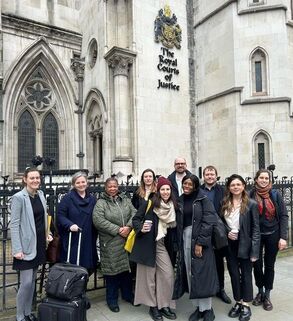
The High Court has ruled that the Secretary of State for the Home Department’s (SSHD) failure to provide people on ‘3C leave’ with the means to prove their immigration status is unlawful, Ramfel, a legal charity that supports vulnerable migrants living, providing casework support on a range of legal issues, including immigration and asylum, destitution support, and crisis intervention services, said in a statement.
Echoing the problems encountered by members of the Windrush generation, people on ‘3C leave’ – an automatic form of immigration status when a person applies in-time to extend their visa – are given no proof of their status, even though they are “entitled to remain here on exactly the same terms, as regards benefits or entitlements, as they had enjoyed during their previous period of […] leave”. This leaves potentially hundreds of thousands of people wrongly classified as lacking immigration status and trapped by the government’s ‘hostile environment’ policies.
Evidence from Ms Adjei, RAMFEL and others showed that this lack of proof of status led to serious hardships for a significant number of people – including loss of job offers and suspensions from employment, problems with renting and accessing higher education – was accepted by the court:
“the evidence clearly establishes that a substantial number of those on section 3C leave suffer real hardship through being unable to provide immediate documentary proof of their immigration status and attendant rights”. [paragraph 197]
Further,“[w]here these problems bite, the consequences are very severe indeed.”[200]
The court ruled that despite the SSHD’s broad discretion in how to administer the immigration system, the failure to provide digital proof of status to those on 3C leave was irrational and therefore unlawful. The decision frustrated the purpose of 3C leave and indeed the aim of the hostile environment itself:
“The underlying purpose of the legislative framework is that there should be a hostile and unwelcoming environment for those who are unlawfully present and so who are undocumented. The corollary of this is that those who are lawfully here should not face the hostile environment. That can only happen if they are documented.” [204]
In a further indictment of the SSHD’s failures, the Court held he had breached his duties to safeguard and promote the welfare and best interests of children impacted by 3C leave. This speaks to the failure to identify and acknowledge the serious harm caused to thousands of families due to this counter-productive and failed policy and the SSHD’s refusal to take simple and reasonable steps to protect people with valid immigration status, including British citizen children.
The Judge accepted that the SSHD had long been on notice of these problems [91]. In September 2022, RAMFEL published a report estimating that 40,000 people a year could be wrongly suspended from or denied access to employment whilst on 3C leave. Despite this, the SSHD took no steps to address the problem. Ms Adjei, a former RAMFEL client who had been suspended from work as she had no document to show her employer, and RAMFEL issued judicial review proceedings to challenge this failure and compel the SSHD to take action. The court agreed with them, concluding that:
“this is a case in which the SSHD can take a straightforward step to avoid hardship for a substantial number of people, with no negative consequences for the Home Office or for the immigration regime.” [211]
The “ultimate consequence” of the order given by the court is that the SSHD is now compelled to take positive steps to “provide all those on Section 3C leave with a means of proving their status” [191]
Ms Adjei said this of the court’s decision:
“What I went through while waiting for my visa to be extended by the Home Office was really stressful. I was unable to prove that I had the right to work so was suspended from my employment as a healthcare support worker twice, without any notice. I have two children and have to budget very carefully so we suffered real hardship when my wages suddenly stopped. I had to borrow money and visit a food bank just to get by. It was humiliating and scary as I didn’t have any way to prove to my employer that I still had the correct immigration status and the right to work. I am very happy that the court has made this ruling. It means that people like me who have to apply to extend their visas over and over, and who often have to wait a long time for an answer, will now be able to prove that we have the rights we say we have.”
Nick Beales, Head of Campaigning at RAMFEL, stated:
“Time and again, the government’s hostile environment traps and targets people with every right to be in the UK. They assured us they had learned from the Windrush scandal, but these words were clearly hollow. People on 3C leave have had their lives disrupted for years because they have been unable to prove their immigration status. The government knew this, and in the court’s view could easily fix it. That they refused to do so demonstrates that not only have they learned nothing from Windrush but have prioritised appearing tough over managing a fair and functional immigration system. Whatever the outcome in the general election, the next government must end the hostile environment, as this framework is what continues to cause scandals such as this.”
Janet Farrell, partner at Bhatt Murphy solicitors who represented the Claimants said:
“This is a significant victory for my clients and all those who, through no fault of their own, are left undocumented in an environment which demands proof of immigration status in order to access work, housing and healthcare or hold a driving licence or bank account. Without the means to prove their legal entitlements under section 3C of the Immigration Act 1971, the Home Office left them vulnerable to the vagaries of the hostile environment, a system which, by design, is intended to make life as difficult as possible for those without proof of lawful status. My clients urge the Home Secretary to take the urgent steps necessary to remedy this and to provide those with legal rights under section 3C the means to prove them.”









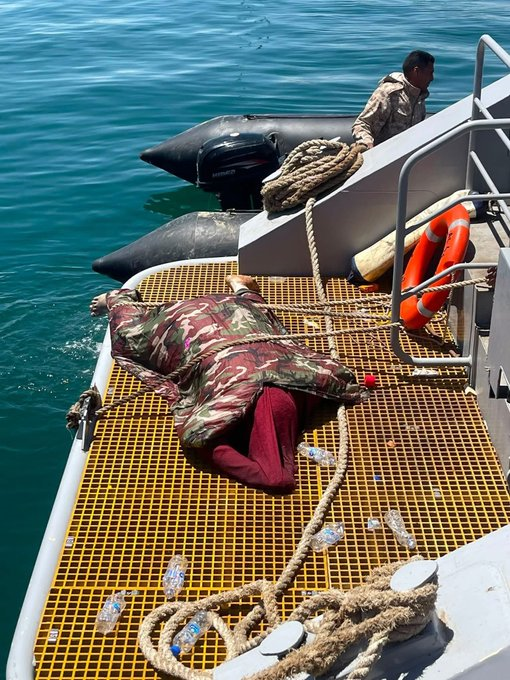
The Executive Director of Refugees in Libya, David Yambio, has mourned the death of a migrant whose body was recovered off the coast of Benghazi after reportedly being stranded at sea for 14 days, describing the incident as a stark reminder of the dangers faced by people fleeing conflict and persecution.
In a post on X, Yambio reflected on his own experience in Libya, saying that while detained in the North African country, he had often hoped that, if he were to die, it would be at sea rather than at the hands of violent militias.
According to him, the sea represented the only place where many migrants retained a sense of dignity, as they risked everything in pursuit of safety and international protection.
Yambio questioned what he described as a deeper humanitarian tragedy, arguing that many people seeking refuge would rather face the dangers of the Mediterranean than remain exposed to violence by armed groups in Libya.
He also criticised what he called Europe’s role in arming militias and accused African leaders of remaining silent in the face of abuses against migrants.
The activist said the photograph accompanying his post showed one of several people seeking protection who had been stranded at sea for two weeks. He noted that the man’s body, along with those of two others, was recovered off the coast of Benghazi a few days ago.
Ending his post on a poignant note, Yambio said the deceased asylum seeker had been portrayed as an “invader,” underscoring what he believes is the dehumanisation of migrants fleeing in search of safety.
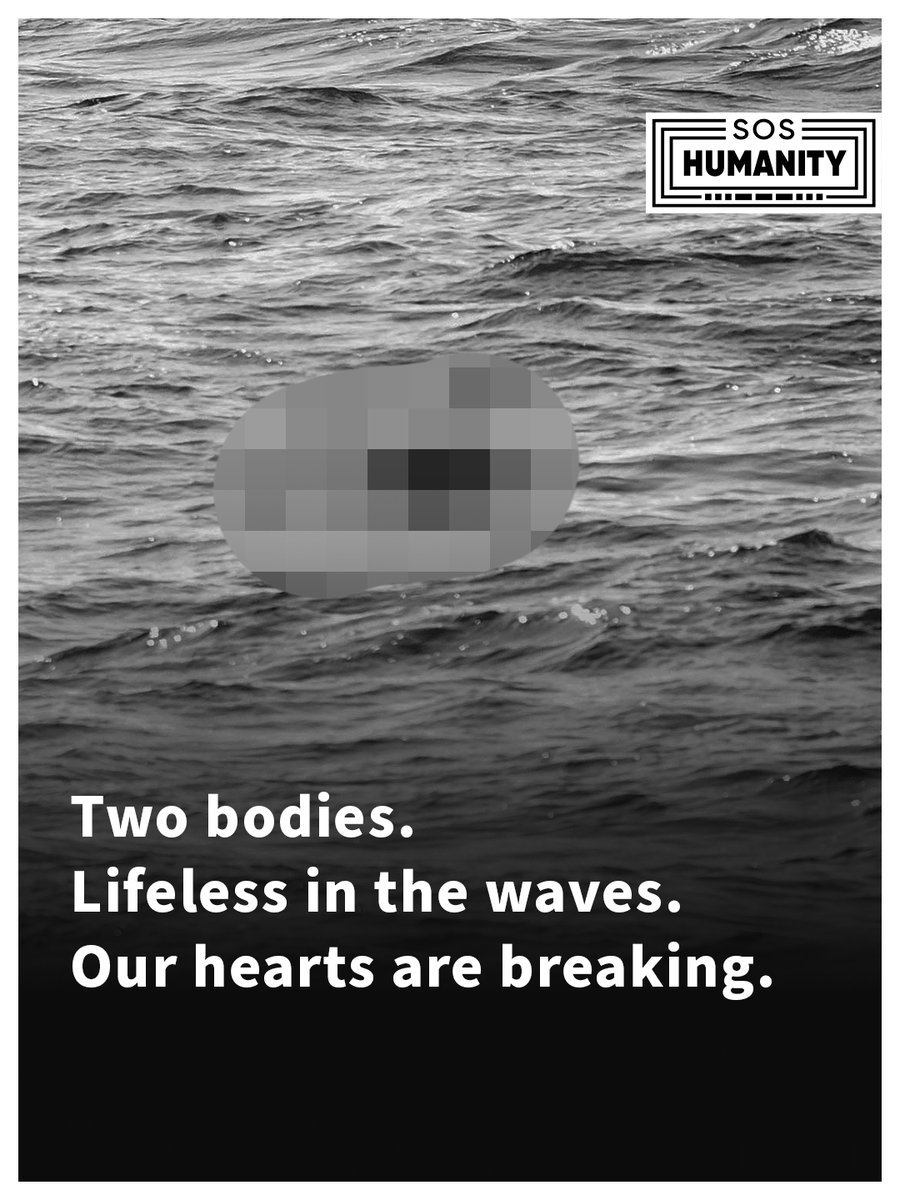
At least 50 migrants are feared dead or missing after a boat carrying about 60 people capsized off the eastern coast of Libya while attempting to cross the Mediterranean Sea to Europe, authorities have said.
The vessel overturned on Tuesday near Bardaa Island, off the coastal city of Tobruk, according to the Coast Guard in eastern Libya.
Officials said 10 passengers, including some women and children, survived by swimming to Bardaa Island. Search and rescue operations were still ongoing as authorities continued efforts to locate the remaining passengers.
The latest disaster is another in a series of deadly shipwrecks involving migrants departing from Libya, a major transit hub for people seeking to reach Europe in search of safety and better economic opportunities.
Just last month, another migrant boat sank off eastern Libya, leaving 51 people dead or missing.
Since the 2011 NATO-backed uprising that overthrew longtime ruler Moammar Gadhafi, Libya has remained politically unstable, making it a key departure point for migrants fleeing conflict, persecution and poverty across Africa and the Middle East.
Human traffickers frequently load migrants onto overcrowded and unseaworthy boats for the dangerous Mediterranean crossing, a route that has claimed thousands of lives over the years and remains one of the world’s deadliest migration corridors.
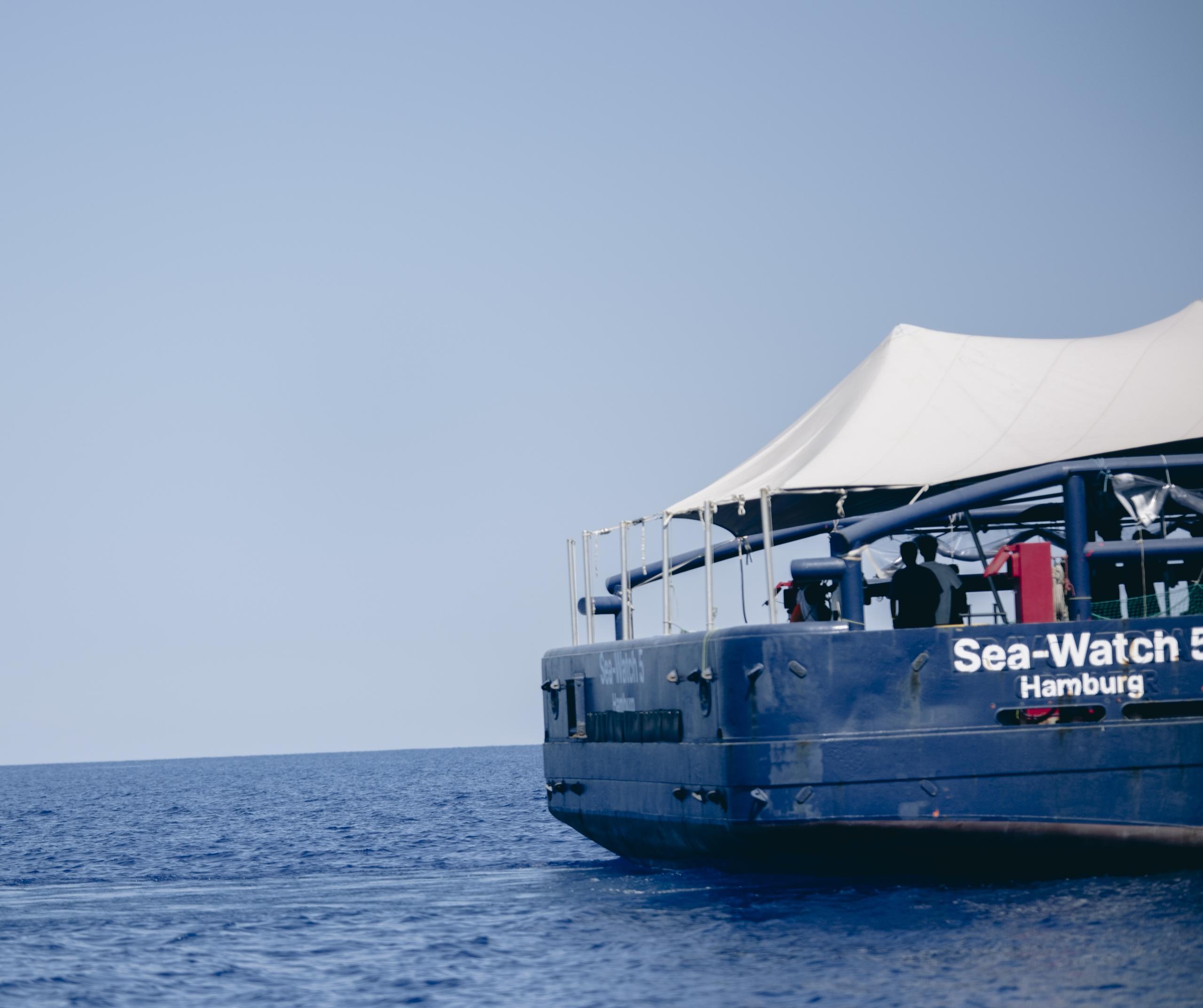
Sea-Watch International has announced that its rescue vessel, Sea-Watch 5, has returned to operations in the central Mediterranean after what it described as an attack by Libyan militias in May, saying it has already rescued 52 people in two separate operations.
In a post published on its verified X account, @seawatch_intl, the humanitarian organisation said 40 people were rescued on the first day of operations, followed by another 12 the next day. It added that one of the survivors, a pregnant woman, requires urgent medical care.
Sea-Watch also claimed that an average of eight people die every day while attempting to cross the Mediterranean Sea, renewing its criticism of European migration policies and rescue coordination.
The organisation accused the Italian government of assigning its rescue vessel to the northern port of Marina di Carrara, which it said is more than four days away from the rescue zone. According to Sea-Watch, the practice keeps humanitarian rescue ships away from areas where migrants are most at risk.
“To ensure that as few rescue ships as possible are in the rescue area, Italy sends us to the northern port Marina di Carrara, 4+ days away,” the group wrote, describing the decision as “cruel and irresponsible.”
Sea-Watch argued that the lengthy journey delays the disembarkation of rescued migrants and reduces the number of rescue vessels available to respond to emergencies at sea.
The organisation also directly criticised Italian Prime Minister Giorgia Meloni over the country’s migration policies, questioning the government’s approach to search-and-rescue operations in the Mediterranean.
Italian authorities have previously defended the assignment of distant ports to humanitarian vessels, saying the measure is part of efforts to manage migrant arrivals and coordinate disembarkation procedures.

ICC confirmation of 17 charges against El-Hishri draws praise from rights groups

Expert raises questions over UNHCR’s strategic direction after new leadership appointments

UN appoints new senior leadership for UNHCR

Migrant advocate laments death of asylum seeker, condemns Libya abuses

50 die as boat carrying about 60 people capsizes
-
 News2 weeks ago
Favour Henshaw appointed administrator of Platform for Cooperation on Mixed Migration
-
 News3 weeks ago
Former UNHCR official sparks debate with ‘there is no such thing as a race’ comment
-
 News2 weeks ago
Lampedusa: built to accommodate 400 people, now holds thousands of migrants
-

 News Extra2 weeks ago
Pope urges European leaders to make greater investment in developing migrants’ countries of origin
-

 News7 days ago
IYAMIDR commends Okpebholo for ₦1m support to South Africa returnees
-
 Features3 weeks ago
1,500 young Chadians to benefit from EU, IOM funds
-
 News2 weeks ago
World silent as drone strikes, extreme hunger ravage El Obeid families
-
Features2 weeks ago
Lampedusa: Pope’s visit powerful reaffirmation migrants, refugees must remain at centre of global efforts