
Features
Empowering refugees in Uganda to tackle gender-based violence

After seeing the impact of gender-based violence in her native Rwanda and as a refugee in Uganda, Chantal Mukeshimana now works to address the issue in her community with support from a UN-led initiative.
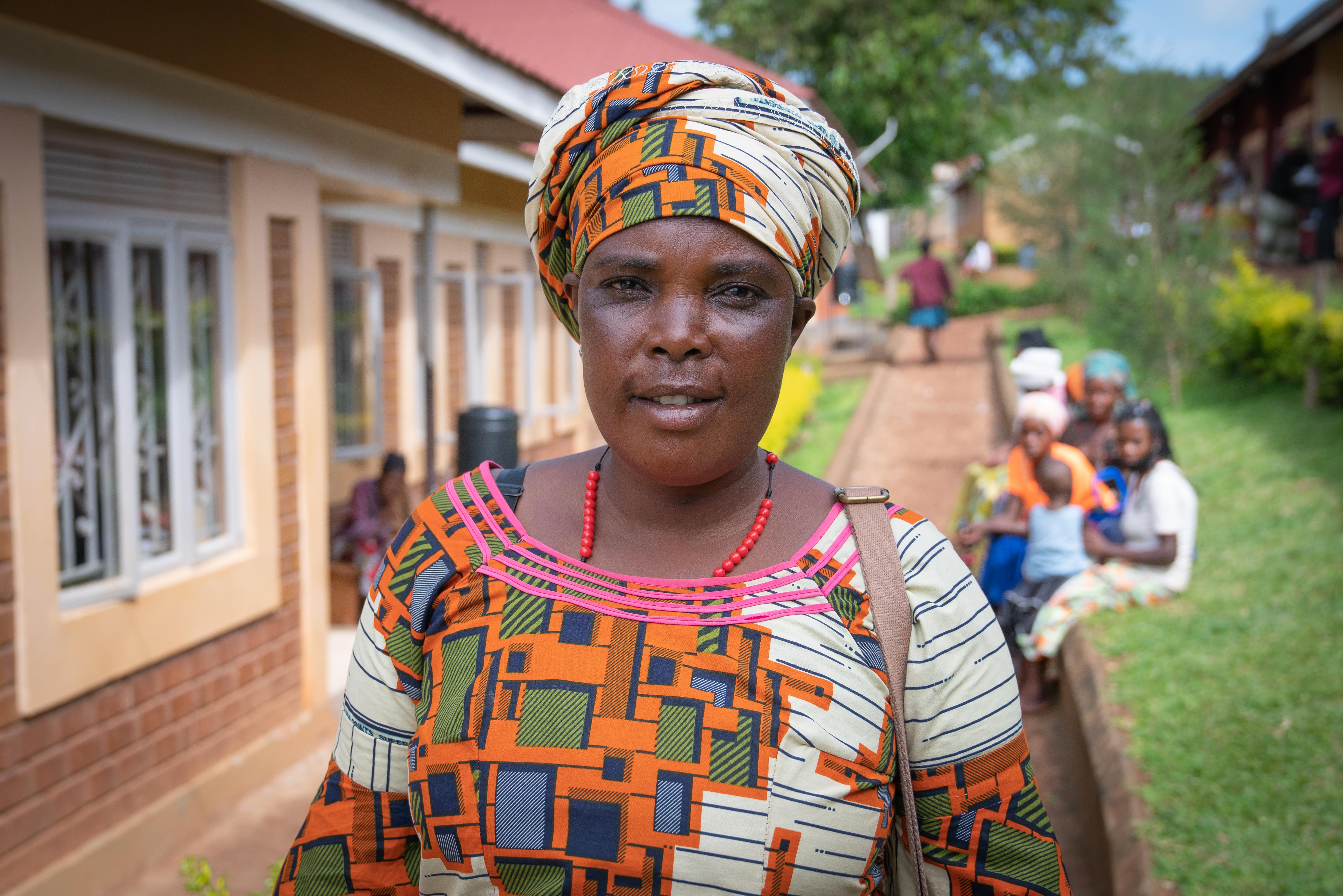
Chantal Mukeshimana, a refugee from Rwanda, works to combat gender-based violence in Uganda’s Kyaka II refugee settlement.© Spotlight Initiative/Timothy Webster
Chantal Mukeshimana understands how violence can shape a person; she has lived in its shadow for more than 50 years.
As a child, her parents fought frequently and her father often denied the children essentials like food and clothing. Then, as a young woman, she watched as many of her female peers were raped and beaten during escalating tribal conflicts in her native Rwanda. She married young, hoping that a husband might protect her from the sexual violence that had become commonplace.
“Society was collapsing, and women and girls were being assaulted and raped,” she said of the time leading up to the 1994 Genocide against the Tutsi in Rwanda. “I was terrified.”
Perpetrators faced few repercussions.
“People knew that even if they raped their neighbour’s wife, she would not report them and they would not be punished. The [social and justice] structures were not functioning, systems had broken down,” Mukeshimana said.
© Spotlight Initiative
Women and children are especially vulnerable during conflict and other crises, with 70 per centLink is external of women and girls in humanitarian crises experiencing gender-based violence. Women who are refugees can experience violence in their countries of origin, in transit and in their host countries.
Insufficient resources
Mukeshimana and her husband arrived in Uganda in 1999. Today, they live in Kyaka II, a refugee settlement in Kyegegwa District that is home to more than 120,000 refugees from the Democratic Republic of the Congo, Rwanda, Burundi and other countries. In recent years, instability in neighbouring countries has seen the settlement’s population grow, creating the kind of conditions where gender-based violence can thrive.
“In the refugee community there are a number of factors that make people more vulnerable to sexual and gender-based violence,” Mukeshimana said. “Key among them: unequal power relations between the genders combined with insufficient resources. Families are always fighting because there is not enough food and there is not enough land.”
When this happens, women and children are often the ones who suffer.
“When resources are not enough, men [can react] by abusing women, fighting and by not providing the same resources to girls as boys,” she continued. “[Violence becomes a way] of controlling women, settling scores and demanding respect.”
Change from within
When Mukeshimana arrived at the refugee settlement, she received psychosocial counselling to help her process her experiences in Rwanda. Afterwards, she decided she wanted to help others.
She attended a Spotlight InitiativeLink is external-supported training course implemented by Alight Link is externalthrough UNHCR, the UN Refugee Agency, that equips activists with the skills they need to report and reduce violence within communities. Since 2019, the initiative has helped almost 900 people in Uganda to complete training on how to assist women and girls experiencing violence.
Spotlight Initiative aims to eliminate violence against women and girls through programmes that address the key drivers of violence. It promotes laws and policies that prevent violence, strengthens institutions, encourages gender-equitable social norms, supports women’s movements and provides essential services to survivors of violence.
In Mukeshimana’s case, she learned the skills she needed to become an activist in her own community.
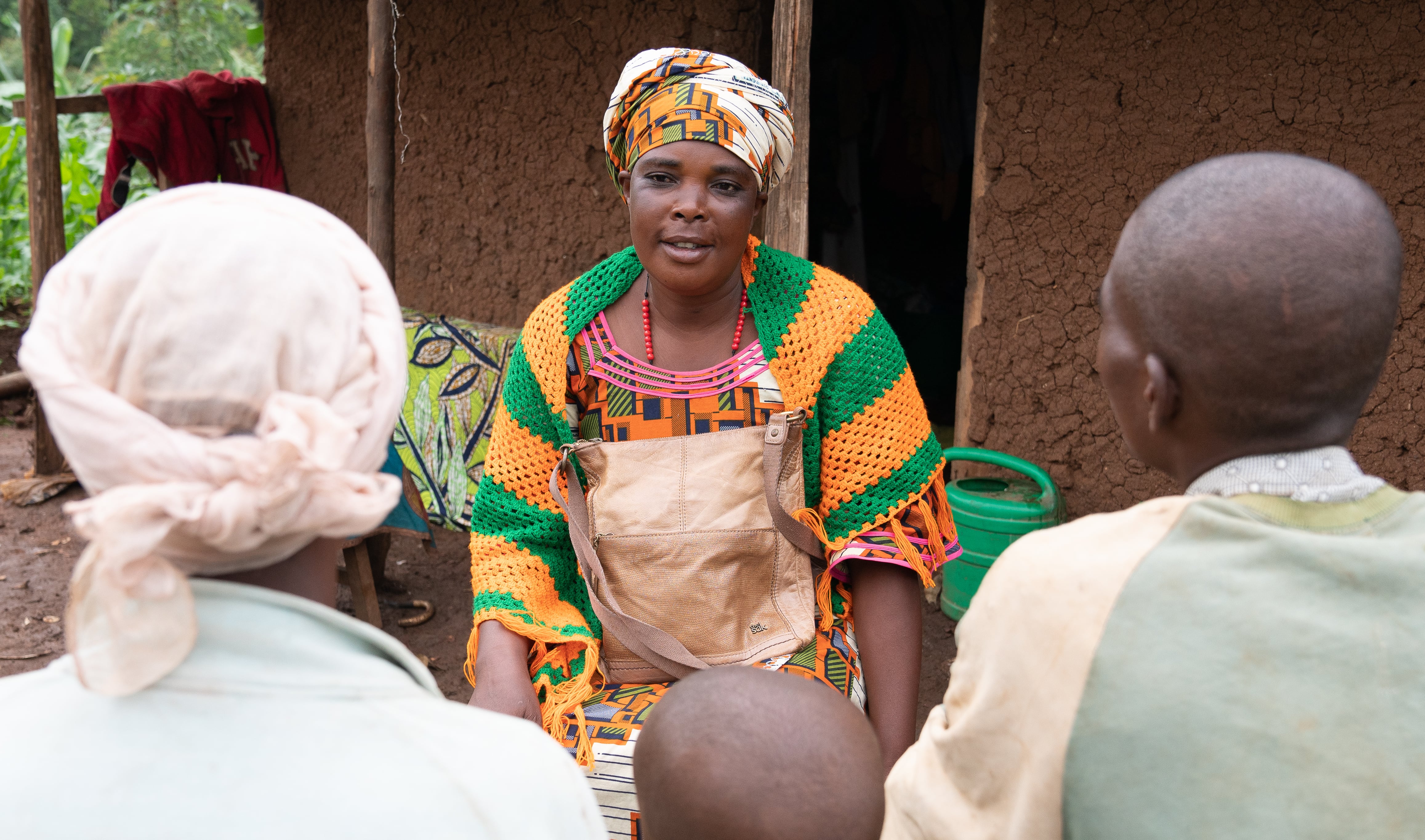
Chantal Mukeshimana offers counselling to a married couple living in Kyaka II refugee settlement..© Spotlight Initiative/Timothy Webster
“The training opened the doors for me because I was equipped with the knowledge and the skills to support women,” she said. “We were trained on family counselling and on how families can make the best use of their little resources through joint planning between men and women.”
“We also learned how to support communities through referral pathways, for example if women require medical attention or psychiatric care.”
She set up women’s groups to share her knowledge and started conducting home visits to help men and women discuss their issues and resolve them through dialogue.
“I see families around me that are supported and happy. Girls are going [back] to school, even those who had dropped out. I see women who used to be dependent on their husbands who are now self-reliant.”
“Things are not how they used to be. We are making a difference here.”







Features
Beyond victim label: Nigerians turn stage into declaration of dignity at World Social Forum
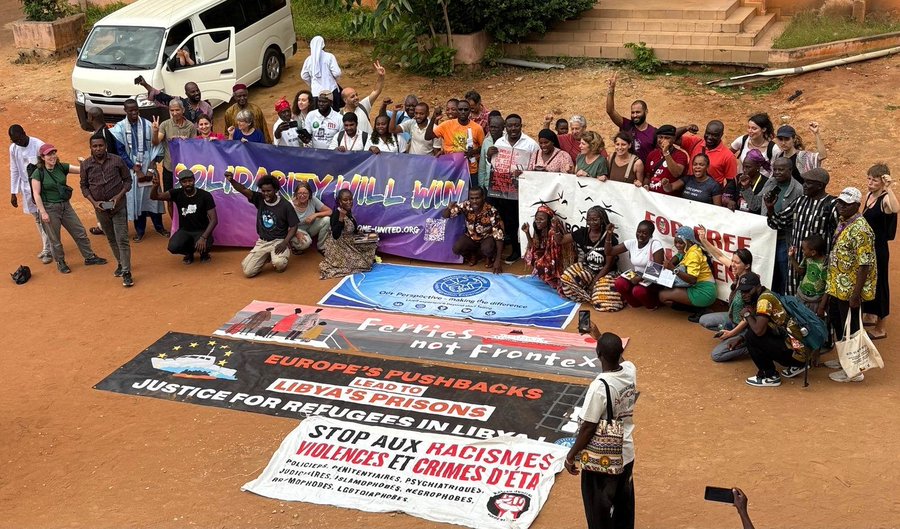
What began as a drama performance at the World Social Forum in Cotonou ended with something far more powerful than applause.
The audience rose to its feet.
For a group of Nigerians whose lives have been shaped by migration, return, survival and the struggle to rebuild, the standing ovation was not merely recognition of a theatrical performance. It was an acknowledgment of a message that demanded to be heard: survivors and returnees are not merely stories to be told. They are experts, leaders and essential voices in shaping the solutions that affect their lives.
The drama confronted one of the most persistent stereotypes surrounding migrants and survivors — the assumption that vulnerability defines them.
It does not.
Through creative expression, the Nigerian performers challenged institutions, organisations and other actors who have historically spoken for returnees and survivors while relegating them to the margins of decision-making.
Their message was uncompromising: do not invite us merely to tell our stories. Invite us to the table.
Turning lived experience into expertise
For Ejike, the performance was a deliberate protest against the different groups that have neglected or relegated returnees and survivors.
But it was also an educational moment.
The drama challenged the audience to rethink how they relate to survivors — not simply as beneficiaries of interventions, but as people whose lived experiences have given them knowledge that cannot be acquired from reports, statistics or policy documents alone.
“We possess expertise through lived experience,” was at the heart of the message.
Even the performers’ T-shirts became part of the protest. The inscriptions ridiculed the labels that society and institutions have placed on survivors and returnees, turning those labels back on themselves and declaring that the people who once carried them now understand their own realities differently.
The invitation was clear: work with us beyond storytelling. Recognise us as experts because we have lived the experience.
Breaking the stereotype of vulnerability
Esther captured another central theme of the performance: the rejection of the idea that survivors are permanently vulnerable and therefore incapable of leadership.
The drama confronted victim-blaming and the tendency to see migrants primarily through the lens of what happened to them.
But an experience of exploitation, displacement, irregular migration or survival does not erase a person’s talents, intelligence or leadership capacity.
Instead, the performers argued, those experiences can become an asset.
Their knowledge is grounded in reality. Their perspectives are informed by what policies and programmes often attempt to address from a distance.
Experience is not a weakness. It is expertise.
“Nothing about us without us”
Chylian’s reflection on the drama sharpened the performance’s most provocative challenge: who gets to define the conversation about migrants?
The performers rejected the power dynamics that reduce migrants’ lived experiences to compelling stories while excluding them from the spaces where decisions are made.
Storytelling, they argued, cannot substitute for genuine participation.
That distinction is crucial.
A survivor can be invited to a conference, given a microphone and asked to recount a painful journey — yet still have no meaningful influence over the programme, policy or intervention being discussed.
The Nigerian performers challenged precisely this kind of tokenistic inclusion.
Their message was simple: we reject inclusion into spaces created in our name without us.
“We wear the shoes and know where it hurts most.”
Therefore, they want more than sympathy. They want space to define their demands, participate in decision-making and determine what meaningful solidarity should look like.
Reintegration must restore dignity
For Blessing, the drama also confronted the meaning of reintegration.
Returning home should never mean surrendering one’s rights, freedom or dignity.
True reintegration, the performers argued, must involve informed choices, respect, family connections, psychosocial support and opportunities that reflect what survivors actually want — rather than programmes designed for them without their voices.
This is where the performance moved beyond theatre and became an advocacy statement.
Reintegration is not simply bringing someone back home.
It is about creating the conditions for that person to rebuild a life with dignity and on their own terms.
And that cannot happen when survivors are treated merely as recipients of assistance.
Their voices must be at the centre.
The standing ovation was a message too
When the performance ended and participants from across the world rose in applause, the moment carried significance beyond the success of the Nigerian performers.
The standing ovation suggested that the message had crossed borders.
On a stage in Cotonou, the performers had challenged an entire system of thinking: the belief that those who have suffered should remain confined to the identity of victims; the belief that professionals and institutions always know better; and the belief that telling a survivor’s story is equivalent to giving that survivor a voice.
The Nigerians offered a different vision.
One in which survivors are not defined by their wounds.
One in which returnees are not reduced to statistics.
One in which lived experience is recognised as a legitimate form of expertise.
One in which leadership is not reserved for those who have never walked the difficult paths being discussed.
And one in which the people most affected by migration policies and reintegration programmes have a decisive role in shaping them.
The performance therefore left the audience with a question that cannot easily be dismissed:
If decisions are being made about us, why shouldn’t we be the ones helping to make them?
The answer from the Nigerian performers was unmistakable.
Nothing about us without us.
Beyond the victim label is a human being with skills, knowledge, talent, aspirations and the capacity to lead.
Beyond the story is an expert.
Beyond survival is possibility.
And beyond the applause is a demand for meaningful participation.

At the World Social Forum, conversations about migration took on a deeply personal dimension as participants from Nigeria and Senegal shared stories of family members who disappeared or died while attempting to migrate.
For them, migration is not simply a question of borders, policies or statistics. It is also about the families left behind—families forced to live with grief, uncertainty and unanswered questions.
For Nigerian participant Purity, speaking about migration meant revisiting the painful story of her brother Nicholas, who left Nigeria in 2012 and has not questions that have remained with the family been heard from for more than 13 years.
Nicholas left behind a young family and two children. His first child was only three years old, while his second was six months old.
He hoped to travel through Libya and eventually reach Europe in search of better opportunities and a future for himself and his family.
But after he left Nigeria, communication stopped.
There was no phone call. No message. No explanation of what happened to him.
For more than a decade, his family has been left with questions that have no answers.
“Is he alive? Where is he? What happened to him? Does he remember us?” Purity said, describing the questions that have remained with the family throughout the years.
The pain of not knowing
For families of missing migrants, grief does not always come with certainty.
When a loved one dies, families may eventually have the opportunity to mourn, hold a funeral and begin the difficult process of accepting the loss. But when someone disappears, there is no such closure.
Purity said Nicholas’s children have grown up without their father. The child who was three when he left is now an adult, while the child who was onlymemoration, she concluded, must also become an opportunity to question the policies and systems that continue to put migrants’ia Dieye of Senegal, the pain of migration became personal when her younger brother, Mbaye, died while attempting to reach the sometimes appears in her dreams, giving her brief moments in which it feels as though he is still alive before families, the issue is therefore bigger than individual decisions to migrate. They want governments and institutions to examine the conditions that make dangerous journeys appear to young people as their only route towards six months old has grown up without the chance to know their father as they should have.
More than 13 years later, his absence continues to shape the family.
“Sometimes people may think that after 13 years a family should have moved on,” Purity said. “But time does not automatically remove uncertainty.”
She said Nicholas’s story has changed the way she understands migration.
“Behind every missing migrant is a family,” she said. “Behind every migration journey is a human being with people who love them and people who are waiting for them.”
That understanding, she said, is why families of missing migrants must be included in conversations about migration.
They need systems that can help them search for missing relatives, access information and receive emotional and psychosocial support while they live with uncertainty.
Speaking about Nicholas remains painful, but Purity said she continues to tell his story because she does not want him to be forgotten.
“Nicholas is not just a missing migrant,” she said. “He is a brother, a father, a son and a member of our family.”
For 13 years, the family has waited.
For 13 years, they have wondered.
And for 13 years, Nicholas has remained in their hearts.
From remembrance to accountability
For Rita, another Nigerian participant, the Forum provided a different but equally important lesson: remembering migrants who died or disappeared should also involve demanding answers.
Through her work with FREMNET, Rita has participated in activities remembering migrants who left home and never returned.
Families and advocates have held candlelight events and prayers for those who died along migration routes and those whose whereabouts remain unknown.
But at the World Social Forum, Rita encountered people organising specifically around missing migrants, and she said their approach changed her understanding of commemoration.
“What really touched me was that their work is not only about remembering these people,” she said.
“They are also asking questions and demanding justice.”
The discussions pushed her to look beyond remembrance and ask why migrants are forced to take dangerous journeys in the first place.
Why do people have to risk their lives at sea or crossing deserts?
What policies and systems make migration more dangerous?
And what can be changed so that other families do not experience the same pain?
For Rita, that was one of the most important lessons from the Forum.
“Remembering those we lost is important, but we cannot stop there,” she said.
Commemoration, she concluded, must also become an opportunity to question the policies and systems that continue to put migrants’ lives at risk.
A Senegalese family’s journey from hope to grief
For Alia Dieye of Senegal, the pain of migration became personal when her younger brother, Mbaye, died while attempting to reach the Canary Islands.
Mbaye, she recalled, was not simply a young man taking a reckless gamble. He was pursuing what he believed was a chance at a better life.
Football was his passion. He dreamed of opportunities beyond the poverty and economic uncertainty around him.
“He was not leaving on a whim,” Dieye said. “For him, football was everything. He wanted a bigger field, a better future and a way out of poverty.”
But the journey ended in tragedy.
The family spent more than a week desperately waiting for news after the boat carrying Mbaye encountered disaster near the Canary Islands.
Eventually, what reached them was an image of a capsized pirogue.
“All we received as an answer was the chilling image of a pirogue capsizing,” Dieye said, recalling the anxiety and unanswered questions that followed.
Grief without an expiration date
More than two years after Mbaye’s death, Dieye said the loss continues to affect her everyday life.
At times, she instinctively reaches for her phone, imagining she might call her brother. A notification or a memory can briefly revive the impossible hope that he might still be alive.
“The memories remain intact in our minds,” she said. “People ask us to forget, but that is impossible.”
Mbaye was not only her brother, she said.
“Mbaye was my little brother, my confidant, my other half.”
She said he sometimes appears in her dreams, giving her brief moments in which it feels as though he is still alive before she wakes to the reality of his absence.
Rather than carry the grief alone, Dieye found strength among other families who had experienced similar losses.
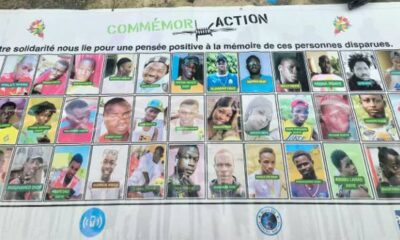
Through networks including the Collective of Victims of Migration in Senegal (COVES) and the CommémorAction movement, she met mothers, fathers, sisters and other relatives mourning loved ones lost along migration routes.
Those gatherings created spaces where families could talk about their experiences, remember their relatives and challenge the tendency to reduce migrant deaths to numbers.
“Being able to talk about my brother and his passion for football with other mothers and sisters who share the same pain helps us transform our enormous grief into collective strength,” she said.
In Senegal, families have organised commemorations, including candlelight gatherings in Dakar, to ensure that those who died or disappeared are remembered by name and story.
‘Every missing person has a family’
The issue was also discussed during a commemoration panel at the World Social Forum focused on missing family members.
Participants spoke about the trauma of families searching for loved ones who disappeared during migration and called for truth, accountability and justice.
“Every missing person has a family, a story and a voice that must not be forgotten,” participants said.
They remembered missing migrants, stood with their families and demanded truth, justice and accountability.
The gathering then observed a minute of silence for missing migrants.
For families like Purity’s and Dieye’s, such moments of remembrance are significant because they affirm that their loved ones have not been forgotten.
But the participants also want commemoration to lead to action.
A crisis that crosses borders
Dieye’s advocacy eventually took her beyond Senegal to Cameroon, where she met families who had experienced similar losses.
The encounters helped her understand that her family’s tragedy was part of a much wider crisis affecting communities across Africa.
Families spoke about poverty, isolation, broken family structures and the pressures that push young people towards dangerous migration routes.
Some parents blamed themselves for being unable to provide better opportunities for their children.
But Dieye and other activists challenged that sense of guilt.
“The parents are not responsible,” she said. “The real problems are closed borders, inequality and the lack of prospects for our young people.”
For the families, the issue is therefore bigger than individual decisions to migrate. They want governments and institutions to examine the conditions that make dangerous journeys appear to young people as their only route towards a dignified future.
‘The ocean must not have the last word’
At the heart of the campaign is a demand that the dead and missing be remembered as people—not statistics.
Dieye argues that poverty, inequality, social pressure and restrictive migration policies have combined to create circumstances in which young Africans are willing to risk their lives on dangerous land and sea routes.
For her, remembering the dead must therefore go hand in hand with confronting the conditions that contributed to their deaths.
At a final commemoration involving families from different countries, national borders appeared to fade as participants united around a shared experience of loss.
Today, Dieye said, her brother’s memory has become part of a broader struggle for justice.
“My brother no longer lives only in our regrets,” she said. “He continues to live through our struggles.”
Alongside families who have lost sons, daughters, brothers and other loved ones, she says she will continue to march, speak and commemorate.
“We will continue to walk, gather and remember,” she said, “so that their memories can light our path and so that the ocean will never have the last word.”

At the World Social Forum in Cotonou, Nigerian return migrants questioned the promise of reintegration, arguing that returning people home without addressing trauma, poverty, stigma and the reasons they left is not the same as helping them rebuild their lives.
For many migration programmes, the story appears simple: a migrant leaves, encounters difficulties, returns home and receives support to start again.
But for Nigerian return migrants who gathered at the World Social Forum in Cotonou in 2026, the reality is far more complicated.
Behind the language of assisted voluntary return and reintegration are stories of detention, coercion, trauma, stigma, inadequate training, failed businesses and a painful question that echoed through the panel discussion:
Reintegration into what?
The participants did not speak as statistics or beneficiaries of migration programmes. They spoke as people who had lived through the migration system and returned to confront many of the same social and economic conditions that had pushed them to leave.
Their central argument was stark: physical return is not reintegration.
And where programmes present packages, training or financial assistance as evidence of successful reintegration while deeper problems remain unresolved, they described the process as a “reintegration façade.”
“I Was Sent on My Way”
For Udo, the failure began almost immediately after returning to Nigeria.
He said he came back in a severely distressed mental state after being held in what he described as a notorious detention centre. What he needed, he said, was medical attention, psychological support and time to recover.
Instead, he was lodged for one night.
The following morning, he was sent on his way.
Two months later, he was recalled for business training and given a small amount of money to start a business he had no prior knowledge of. He was also paired with people he did not know as business partners.
For Udo, the arrangement was almost destined to fail.
The experience, he said, destroyed much of the confidence he had left in the reintegration process.
His story exposes one of the central weaknesses raised at the Forum: support cannot be meaningful if it is disconnected from the person’s actual condition, skills, interests and circumstances.
A returnee who has just emerged from detention and trauma may need counselling before entrepreneurship. Someone without business experience may require sustained training and mentorship rather than a small start-up grant. And someone whose original reasons for migrating remain unchanged may find little reason to believe that returning home has solved anything.
“The push factor of my migration was still evident and untreated,” Ude’s testimony suggested.
That, for him, was the fundamental contradiction.
He had been returned.
But he had not been rebuilt.
When “Voluntary” Does Not Feel Voluntary
For several participants, the problem begins even before reintegration—with the word “voluntary.”
Rhoda questioned whether a return can genuinely be called voluntary when a migrant is detained and returning home appears to be the only available route out.
“If someone is in detention and the only option available to them to leave that situation is to return to their country, can we really say that the return is voluntary?” she asked.
Awe offered an even more personal account.
He described his return from Libya as anything but voluntary, saying he was confronted with conditions in which remaining appeared to mean risking his life.
He recalled being presented with two choices: return to Nigeria or remain in Libya amid violence and insecurity.
“I had to return back instead of staying in Libya to die,” his testimony stated.
For the participants, such experiences challenge the neat language often used to describe return programmes.
A decision made under detention, fear, violence, insecurity or the absence of realistic alternatives may technically be recorded as a return, but the participants argued that the circumstances surrounding that decision matter.
Consent cannot be understood separately from the conditions under which it is given.
The Business Package Is Not the Person
Another major criticism centred on the economic component of reintegration.
The participants questioned a model in which returnees are frequently directed towards small businesses and short vocational courses, as though entrepreneurship were a universal solution to the complex consequences of migration.
Rhoda put the question simply:
Why should entrepreneurship be the answer for everybody?
Some returnees want employment. Others want to return to school. Some want to learn technology, pursue a profession or develop a completely different career.
The problem, she argued, is what happens when programmes are designed for returnees without being designed with them.
Olu made the same point from a broader perspective.
For him, reintegration must empower migrants rather than become a mechanism for discouraging migration.
People with lived experience, he argued, must be involved in shaping migration and reintegration policies.
“Nothing about migrants without the voice of migrants,” was the principle underpinning his intervention.
Ido was particularly critical of the vocational training component of reintegration programmes.
He argued that training lasting only a few days or a few months cannot necessarily produce competent artisans or professionals capable of sustaining themselves in competitive markets.
He cited examples of returnees being trained as tailors, barbers, hairstylists and solar-energy installers within very short periods.
The question is not whether these skills are useful.
It is whether the intervention provides enough time, equipment, mentorship, market access and follow-up for those skills to become sustainable livelihoods.
A sewing machine, barbering kit or business grant may make for an attractive programme statistic.
But a returnee’s survival cannot be measured by the number of items contained in a reintegration package.
The Trauma That Does Not Appear in the Package
Perhaps the most persistent concern raised at Cotonou was the psychological dimension of return.
Immaculate argued that reintegration must recognize the whole person.
A migrant may return carrying trauma from detention, violence, exploitation, disappointment and dangerous journeys. Those experiences do not disappear at the border.
Yet economic support can sometimes dominate reintegration programmes while psychosocial care receives less attention.
The result can be a person who has technically received “reintegration assistance” but remains emotionally and socially unable to rebuild.
Immaculate posed a series of questions that go beyond whether a package has been delivered:
Is the business sustainable?
Does the returnee have access to counselling?
Is the family supportive?
Are there employment opportunities?
Has the community accepted the person?
And what happens when the initial assistance runs out?
These questions point to a different definition of reintegration—one based not on delivery of assistance, but on whether a person’s life is actually improving.
From Survivor to “Success Story”
Ife and Ewa raised another uncomfortable dimension: the way return migrants’ stories can be used by institutions and campaigns.
Ife described a situation in which migrants are invited to recount experiences of trauma, only for those stories to become tools for discouraging others from migrating.
The returnee’s suffering becomes a campaign message.
The migrant’s pain becomes evidence.
The survivor becomes a warning.
But what happens to the person behind the story?
Ife challenged the tendency to portray migrants primarily as helpless victims, arguing that their skills, knowledge, resilience and capacity to create change are frequently overlooked.
The labels can be damaging.
Returnees may be described as victims, greedy, ungrateful, entitled, unruly or insatiable, while their abilities and aspirations disappear behind the label.
The participants called for a shift from the victim narrative towards one that recognizes return migrants as people with agency.
That does not mean denying the trauma they experienced.
It means refusing to allow trauma to become their entire identity.
“They Covered Their Noses”
Ewa’s testimony brought the issue of stigma into sharp focus.
She recalled returning to Nigeria in 2017 and encountering people who presented themselves as humanitarians but responded to survivors with discrimination.
She remembered people covering their noses because they believed survivors smelled.
It was a small gesture, but for her it represented something much larger: the humiliation that can accompany return.
Instead of being welcomed with dignity, survivors can return to judgment.
Some are told they were greedy.
Others are told they should never have travelled.
Some are made to feel that the abuse, exploitation or violence they experienced was ultimately their own fault.
For survivors, such attitudes can compound trauma rather than heal it.
Ewa also recounted experiences in which organizations allegedly took returnees to rehabilitation centres without adequate consent, restricted communication with families and placed people in skills programmes they had not chosen.
She said she had to fight for her own release before she could return to her family.
Her account raises a fundamental principle for reintegration programmes:
Support should never become another form of control.
A System Designed Without the People It Claims to Help?
Ara described reintegration as a mechanism that can be used to control migrants and consolidate power rather than provide the support promised.
Ido went further, arguing that the concept of reintegration can allow European migration policies to distance themselves from the consequences of those policies while responsibility is shifted onto African governments.
His criticism reflects a broader concern expressed during the Forum about externalization—the shifting of migration-control responsibilities beyond Europe’s borders.
For the participants, this creates a troubling sequence.
Movement is restricted.
People become stranded or detained.
They return under difficult circumstances.
They receive limited assistance.
Their stories are then used to discourage other migrants from making similar journeys.
And all of this can be presented as a successful reintegration intervention.
Ife captured the contradiction bluntly:
After restricting people’s freedom of movement and returning them under difficult circumstances, institutions then use their experiences to advance migration-control agendas—and call that reintegration.
Reintegration Must Begin With Listening
The Nigerian participants at the World Social Forum were not simply rejecting support.
They were demanding a different kind of support.
One that begins with listening.
One that recognizes that returnees are not identical.
One that does not assume that everyone wants to become an entrepreneur.
One that provides psychosocial support alongside economic assistance.
One that offers meaningful training rather than short courses designed primarily to tick programme boxes.
One that includes long-term follow-up.
One that respects consent and freedom of choice.
And, above all, one that allows returnees to participate in designing the interventions that are supposed to rebuild their lives.
The participants’ argument is ultimately about accountability.
A reintegration programme should not be judged simply by how many people returned, how many received packages, how many attended training or how many businesses were launched.
The more difficult questions are:
Did the person recover?
Did the business survive?
Did they find meaningful work?
Did their mental health improve?
Did their family and community accept them?
Did they regain control over their lives?
And are the conditions that drove them to migrate still there?
If the answer to these questions is no, then a return may have taken place—but reintegration remains incomplete.
The Question Cotonou Leaves Behind
The debate at the World Social Forum did not end with a rejection of reintegration.
Instead, it demanded that the word itself be taken more seriously.
For Ude, reintegration failed because a traumatized person was given inadequate support and expected to build an unfamiliar business.
For Rhoda, the word “voluntary” deserves scrutiny when people make decisions under detention or extreme pressure.
For Awe, return was a choice made against the backdrop of danger.
For Ido, short vocational training and inadequate economic interventions cannot deliver the independence programmes promise.
For Immaculate, reintegration must extend beyond a package to encompass mental health, family, community, employment and sustainability.
For Olu, migrants with lived experience must have a seat at the table.
For Ife, returnees must not be reduced to stories of suffering that serve other people’s agendas.
For Ewa, dignity must be at the centre of the return experience.
And for Ara, the power dynamics behind reintegration must be confronted.
Together, their testimonies point towards one uncomfortable conclusion:
A person cannot be reintegrated simply because they have been returned.
Reintegration is not a suitcase handed over at the airport.
It is not a cash grant.
It is not a three-month skills course.
It is not a photograph of a returnee receiving equipment.
And it is certainly not a success story written before the returnee has had the chance to rebuild.
True reintegration must mean restoring agency, dignity, opportunity, belonging and hope.
Until those things become central to the process, the question raised in Cotonou will remain difficult to escape:
Reintegration into what?

Beyond victim label: Nigerians turn stage into declaration of dignity at World Social Forum

WSF: Nigerian, Senegalese participants mourn missing, dead family members
Reintegration or a facade? Nigerian returnees challenge promise of starting again

How WSF changed ways participants see migration

Défendre les plus vulnérables :
-
 News Extra3 weeks ago
La Libye intercepte 87 migrants alors que trois personnes meurent et que plusieurs autres sont portées disparues
-
News Extra2 weeks ago
Des manifestations éclatent après la mort de migrants dans le naufrage d’un bateau
-
 News3 weeks ago
La Méditerranée transformée en « cimetière par politique » — Chercheur
-
News3 weeks ago
Libya Intercepts 87 migrants as three die, several others missing
-
News3 weeks ago
Mediterranean turned to cemetery by policy – Researcher
-
 News Extra2 weeks ago
Alarm Phone rend hommage aux migrants morts en Méditerranée et exige des voies de passage sûres
-
News2 weeks ago
Alarm Phone pays tribute to migrants who died crossing Mediterranean, demands safe passage
-
 Uncategorized2 weeks ago
Refugees in Libya raises alarm over alleged sexual harassment of minor