
Features
Migrants beware: UK criminalises nitrous oxide from November


Migrants, especially those of African descent in the UK should steer clear of using nitrous oxide popularly known as laughing gas.
Beginning from November 8, 2023, being in possession of nitrous oxide in the United Kingdom for the purpose of being high will be ilegal.
The UK Home Office made this known warning that those caught breaking the law will face the prescribed punishment.
The Home Office said: “From 8 November being in possession of nitrous oxide to produce a ‘high’ will be illegal. Those breaking the law could receive ⤵️
💷 Unlimited fine
🧹 Community punishment
👮 Prison sentence for repeat serious offenders
Nitrous oxide is a colourless gas, also known as ‘laughing gas’. It can be misused for its psychoactive effects – or to ‘get a high’ – by inhalation.
What changes to the law have been made?
It is already illegal to produce, supply, import or export nitrous oxide for psychoactive purposes. There is also a responsibility on suppliers to not be reckless as to whether someone might be buying from their legitimate business to misuse the drug.
We are updating the law to also make possession of nitrous oxide illegal, unless for a legitimate reason, making it a Class C drug under the Misuse of Drugs Act 1971.
It will be a criminal offence to be found in possession of the drug where it’s intended use is to be inhaled for psychoactive effects, or ‘to get high’.
From 8 November, those found in unlawful possession will face either an unlimited fine, a visible community punishment, or a caution – which would appear on their criminal record – and for repeat serious offenders, a prison sentence of up to two years.
The penalty for supply or production will double, to up to 14 years in prison.
Why have we made these changes?
We have been growing increasingly concerned about misuse of nitrous oxide and its impacts.
Heavy nitrous oxide use can result in serious health harms such as neurological damage and even death due to the risk of falling unconscious and/or suffocating from the lack of oxygen.
Associated antisocial behaviour causes wider harm felt by communities and to the environment. This includes group gatherings to abuse the drug in public spaces, such as children’s parks or high streets, and subsequent littering of the discarded canisters. There have also been several deaths connected to drug driving incidents.
In 2020/21, nitrous oxide was the third most used drug among 16- to 59-year-olds in England and Wales according to NHS data. A separate ONS report suggested that equates to around 230,000 young people who inhaled this harmful substance in England and Wales in the year ending June 2022.
Didn’t the Advisory Council on the Misuse of Drugs (ACMD) recommend against making it a Class C drug as there was not enough evidence of health harms?
The ACMD did highlight anecdotal reports of an increase in both social and neurological harms, including the risk of neurological harm it presents to users when consumed in extreme volumes.
The government is entitled and expected to take a broader view and consider other relevant factors. We know that visible drug use is one of the biggest issues of antisocial behaviour people are concerned about in their local areas and it is clear the harms of nitrous oxide misuse are being felt by communities.
There is still more evidence to collect about the full extent of the harms of nitrous oxide, so we have gone further than the ACMD advice, taking precautionary, preventative action to keep people safe and crack down on antisocial behaviour.
What is a legitimate use of nitrous oxide?
There are a broad range of legitimate uses of nitrous oxide, for example pain relief in medical settings, including dentistry. It is also used legitimately in industry, for manufacturing and technical processes, such as food packaging, but also in catering, as a whipped cream propellant. Hobbyists also use it in activities such as drag racing and model rocketry.
Will people need a licence to prove they are lawfully possessing or consuming Nitrous Oxide?
Licences to legitimately use nitrous oxide will not be required, as this would place an undue burden on a large number of industries and individuals who need to use it for legitimate purposes.
How will people prove they are lawfully possessing or consuming nitrous oxide?
This will be a matter for police to investigate, however it is right to expect individuals to put forward a robust case and evidence to prove they have legitimate plans to use the nitrous oxide in their possession.
Anyone who plans to inhale the drug themselves for psychoactive effect, or suppliers or producers who turn a blind eye to buyers of their products will be committing offences.
What size cannisters are illegal to possess without legitimate reason?
All sizes of nitrous oxide cannisters are illegal if the supplier or owner does not have a legitimate reason.
What should you do if you see someone i?
You can report antisocial behaviour by contacting your local neighbourhood policing team via https://www.police.uk/
Call 101 to contact the police and report a crime that is not an emergency.
You can also contact Crimestoppers to report a crime anonymously. They will pass the information about the crime to the police at www.crimestoppers-uk.org
Telephone: 0800 555 111
What should people struggling with drug addiction do?
You should speak to your GP or phone 111 for advice on healthcare matters.
FRANK, the Government’s free national drugs information and advice service, provides information on nitrous oxide. It outlines the harms associated with nitrous oxide, such as dizziness, vitamin B deficiency and nerve damage that can result from heavy long-term use. It has been recently updated to reflect new and emerging patterns of use, such as the use of larger cannisters.
You can call the Frank drugs helpline on 0300 123 6600.
What are you doing to tackle illegal supply of nitrous oxide?
The government is determined to crack down on the organised criminals behind illicit drugs supply.
Through our 10-year Drug Strategy, we have stepped up our response, attacking all stages of the supply chain to make the UK a significantly harder place for organised crime groups to operate in. As part of our ‘supply attack plan’, we are tackling the supply of drugs upstream, securing the border, and disrupting the highest harm organised crime groups.
The sale of illegal drugs online is listed as a priority harm in the Online Safety Bill. This ground-breaking piece of legislation will compel tech companies to consider the risks associated with all elements of their services and take action to keep users safe. All companies in scope of the Online Safety Bill will need to take action to prevent illegal content on their platforms and sites.






A Libyan human rights organization has raised alarm over what it describes as a sharp increase in violations against migrants, refugees, asylum seekers, and foreign workers across Libya since the beginning of June 2026.
In a statement released this week, Libya Crimes Watch (LCW) said it has documented widespread arrests, raids on migrant residences, forced evictions, and physical and verbal assaults in both eastern and western parts of the country. The group also reported a surge in hate speech and incitement to violence targeting migrant communities.
According to LCW, its field teams have monitored large-scale arrest campaigns in several cities, including Tripoli, Benghazi, Ajdabiya, and Al-Bayda. Those detained reportedly include women and children. The organization said it has also documented incidents in which migrants were forcibly removed from their homes and subjected to abuse, including individuals with existing health conditions.
LCW alleged that the operations are being carried out by security agencies and armed groups affiliated with authorities in both eastern and western Libya. The group named the Libyan Arab Armed Forces (LAAF), the Directorate for Combatting Illegal Migration (DCIM), and the General Directorate of Security Operations (GDSO), among others, as entities involved in the campaigns.
The organization further expressed concern over what it described as the involvement of civilians in some raids and assaults. It also cited widespread anti-migrant rhetoric on social media and in local media outlets, including platforms it said are aligned with authorities and official institutions. According to LCW, such messaging has contributed to increased hostility toward migrants and encouraged participation in actions targeting them.
One Sudanese migrant, identified by the pseudonym “Inas” for security reasons, recounted an alleged attack on her family. She told LCW that armed men entered their home, assaulted family members, used racist language, and forced them from the property before stealing their belongings.
“We are now on the street with nowhere to go,” she said, according to the statement. “We have a sick family member who needs care, and we have found no organization to help or protect us.”
LCW said Libyan authorities in both the east and west bear legal responsibility for protecting migrants, refugees, and asylum seekers and ensuring respect for their rights under international human rights law. The organization called for an immediate end to abuses, protection against violence and forced evictions, and a halt to deportations or forced returns that could expose individuals to persecution or other harm.
The group also urged the Office of the Libyan Attorney General to stop detaining people solely on the basis of their migration or asylum status and to investigate all reported violations. LCW called for those responsible for abuses, including individuals who ordered, participated in, or facilitated them, to be held accountable through fair and independent legal proceedings.
In addition, the organization appealed to international bodies, including the United Nations Support Mission in Libya (UNSMIL), the International Organization for Migration (IOM), and the United Nations High Commissioner for Refugees (UNHCR), to take urgent measures to protect migrants, refugees, and asylum seekers at risk in Libya.
The allegations have not been independently verified, and Libyan authorities had not publicly responded to the claims at the time of the statement’s release.
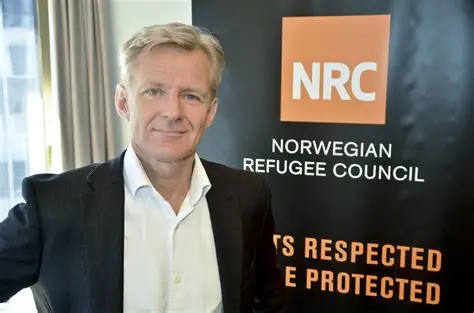
The Democratic Republic of Congo has appeared on the Norwegian Refugee Council’s (NRC) annual list of top neglected displacement crises, for the tenth year running, and the neglect is deepening.
“This is a testament to the world’s failure to respond to crises that are not regarded as strategically important for rich countries,” said NRC’s Secretary General Jan Egeland. “Millions of people are being abandoned because we have chosen not to act, not because we cannot. The uncomfortable truth is that this neglect is a choice, and something we can choose to end.”
In 2025, just 27.4 per cent of the funding required to respond to the crisis in DR Congo was provided, the lowest rate in 10 years, leaving over 21 million people in need with no or drastically reduced assistance. A decade ago, the international community was providing 55 US dollars per person in need in DR Congo. Today that figure has collapsed to under 33 US dollars.
Countries such as Burkina Faso, Cameroon, Central African Republic, Mali and Nigeria have all featured on the list six or more times, pointing to a systemic pattern of deliberate neglect rather than isolated failure.
“Donor governments have been presented with evidence of neglect, year after year. Yet those in power still choose to prioritise military and strategic investments and underfund, deprioritise and sideline the victims of these crises. It is a failure of our humanity,” said Egeland.
The report is the tenth edition of NRC’s Neglected Displacement Crises Report, tracking how responses continue to fall short of the scale of suffering.
Sudan tops the list
The 10 most neglected crises for 2025 are Sudan, the Democratic Republic of Congo, Colombia, Yemen, Afghanistan, Honduras, Ecuador, Cameroon, Nigeria and Mozambique, spanning three continents and tens of millions of people the world continues to ignore.
The Neglected Displacement Crises Report assesses each crisis across four indicators: media coverage, funding, political attention, and scale of displacement. A lower score indicates a larger gap between the scale of human suffering and the adequacy of international response.
Sudan tops this year’s list. More than 9 million people are internally displaced, and up to 4 million have fled to neighbouring countries. Nearly 19.5 million people inside Sudan are facing hunger, yet the international response remains wholly inadequate to that scale of suffering.
“It is incomprehensible that a displacement crisis of similar proportions to the crises in Syria and Ukraine at their peak can continue to worsen almost unnoticed,” Egeland said. “Just as needs in Sudan skyrocketed last year and famine kept spreading, the funding was cut. Many displaced people receive no international support and are left to beg for assistance from other displaced people who no longer have anything more to share.”
A decade of the same pattern
Since NRC began publishing this report 10 years ago, 27 crises across four continents have appeared on the list, and the pattern is unambiguous. The African continent features the most consistently. From the Sahel region to the Horn of Africa, from the Great Lakes to West Africa, many of these are cases of prolonged or repeated displacement. Across the board, neglect coincides with access restrictions for humanitarians. With rare exceptions, the crises that were ignored a decade ago are still being ignored today. In DR Congo, the Ebola outbreak now spreading across eastern parts of the country — declared a public health emergency of international concern by WHO in May 2026 — is unfolding in communities already devastated by years of displacement and humanitarian neglect.
“Behind every statistic in eastern DR Congo are families who have endured years of violence, repeated displacement, and deep uncertainty about their future,” said Eric Batonon, NRC’s country director in the Democratic Republic of Congo. “While attention shifts from one global emergency to another, millions of Congolese continue to live without adequate protection, assistance, or hope. The fact that DR Congo remains among the world’s most neglected crises for the tenth consecutive year should serve as a wake-up call to the international community.”
What NRC is calling for
The gap between needs and available humanitarian funding is increasing as a result of brutal humanitarian funding cuts. This is affecting the neglected crises particularly hard, as these crises are already characterised by less available funding per person in need.
NRC urges donor governments to fund crises based on humanitarian need and scale of displacement, not geopolitical interest. It calls on political leaders and diplomats to engage seriously with the root causes of protracted displacement, many of which persist precisely because they are seen as having little geopolitical importance. It also calls on media organisations to report on these crises with the consistency and depth they demand as ongoing emergencies.
“The crises ignored today will demand a larger, costlier and more complex response tomorrow,” said Egeland. “The world does not lack for skills nor resources. Be it arranging football World Cups, or pioneering space exploration: our ability to organise and overcome challenges is almost without limit. We can and must finally take the decision to end the neglect that has caused such deep suffering for millions of people”.
Features
Ebola: Border closures alone risk driving movement underground and increasing transmission risks

The International Organization for Migration (IOM) has urged governments and partners to strengthen urgently cross-border coordination to contain the ongoing Bundibugyo virus disease (Ebola) outbreak, warning that border closures alone risk driving movement underground and increasing transmission risks.
Latest World Health Organization (WHO) figures show 116 suspected cases, 321 confirmed cases, 48 deaths, and six recovered cases in the Democratic Republic of the Congo (DRC). In Uganda, there have been nine confirmed cases, and one death to date.
“Viruses do not stop at borders, and neither should our response,” said Ugochi Daniels, IOM Deputy Director General for Operations. “When borders close, people often continue moving through informal routes where health screening and surveillance are limited. The most effective response is coordinated action that keeps mobility visible, safe and monitored.”
IOM warns that reactive border closures can reduce visibility of population movements, undermining health screening, surveillance, contact tracing and early detection efforts. Evidence from previous health emergencies shows that movement restrictions do not stop mobility but often redirect it towards informal and less-monitored routes.
This is the 17th Ebola outbreak recorded in the DRC and the third largest on record, highlighting both the recurring nature of the disease and the importance of sustained preparedness.
The outbreak is unfolding in one of the world’s most complex humanitarian contexts. Eastern DRC is already affected by conflict and large-scale displacement. As of March 2026, 3.6 million people have been internally displaced in the country, including nearly 922,000 displaced in Ituri Province alone, where the outbreak is centred.
The confirmation of cross-border transmission between DRC and Uganda further highlights the urgency of coordinated regional action, particularly in areas where daily cross-border movement is essential for trade, livelihoods and access to basic services.
Data from IOM’s Flow Monitoring Registry at key formal and informal crossing points—including Cyanika, Busunga, Bunagana, Mpondwe, Goli, Vurra, Busanza and Ntoroko—shows that cross-border mobility continues despite restrictions, including through informal routes, reinforcing the need for data-driven and coordinated response measures.
People living in displacement sites, border communities and conflict-affected areas face heightened vulnerability due to limited access to healthcare, clean water and other essential services, increasing the risk of undetected transmission.
IOM is supporting governments and partners in DRC, Uganda and neighbouring countries by strengthening border health operations, population mobility mapping, disease surveillance, risk communication and community engagement in high-mobility areas.
Understanding where, why and how people move remains critical to preventing further spread. Public health measures must be informed by mobility patterns and coordinated across borders to ensure effective containment while avoiding unintended consequences that push movement out of sight.
Significant funding gaps continue to constrain the scale and speed of response efforts, including preparedness activities across the region.
IOM welcomes the swift financial contribution from the United States, which is helping to strengthen frontline response efforts and save lives. Close coordination with the African Union, Africa Centres for Disease Control and Prevention, WHO and United Nations partners remains essential to containing the outbreak.
While Ebola is a preventable and containable disease, additional resources are urgently needed to sustain surveillance systems, maintain border health operations, strengthen community-based prevention efforts and expand support in displacement settings.

Rights group reports rise in abuses, hate speech against migrants in Libya

New rescue vessel Aurora 2: Sea-Watch’s response to political blockades of civilian sea rescue
Sea-Watch strongly criticises EU response following attack on Sea-Watch 5

Court annuls 20-day administrative detention imposed on Ocean Viking

Neglect deepens as DRC appears on NRC’s list of top neglected displacement for 10 years
-
 News1 week ago
War has devastated life for millions of refugees, displaced
-
 Features1 week ago
Netherlands, IOM reaffirm partnership including new multi-year funding commitment
-
 Features1 week ago
Stabilization gains open pathway to development in Central African Republic: IOM Chief of Staff
-
 News Extra1 week ago
West and Central Africa urges more climate funding as displacement rises
-
 News Extra1 week ago
Diaspora remittances point to untapped potential in crisis response: New IOM report
-
 Features3 days ago
Ebola: Border closures alone risk driving movement underground and increasing transmission risks
-
 News Extra5 days ago
Nigeria leads Liberia, Ghana, others as US set to deport migrants
-
 Features4 days ago
Haiti hosts over 1million displaced persons