
News
Former UNHCR official sparks debate with ‘there is no such thing as a race’ comment

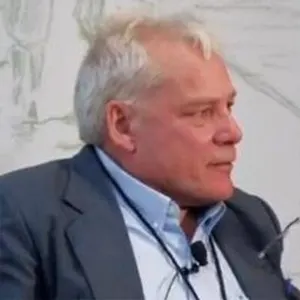
A former United Nations High Commissioner for Refugees (UNHCR) Head, Policy Development and Evaluation, Jeff Crisp, has stirred discussion on social media after declaring that there is “no such thing as a race.”
In a post shared on X, Crisp argued that all human beings belong to the same species and are capable of reproducing with one another, making the concept of separate races scientifically unfounded.
“For the record. There is no such thing as a ‘race’. We are all humans, able to procreate with each other. And consequently there is no such thing as a ‘mixed race person’. There are just people with a multitude of different skin colours and physical characteristics,” he wrote.
The post has generated widespread reactions, with users debating the distinction between the biological and social meanings of race.
Modern scientific research broadly supports the view that humans do not comprise separate biological races. Genetic studies have found that all living humans belong to a single species, Homo sapiens, and share more than 99.9 per cent of their DNA. The genetic differences that do exist are generally greater within populations than between them, leading many scientists to conclude that traditional racial categories lack a biological basis.
However, experts note that while race is not considered a valid biological classification, it remains a powerful social construct. Societies have historically used racial categories to classify people based on physical traits such as skin colour, facial features and hair texture, with these classifications often influencing access to opportunities, treatment under the law and lived experiences.
As a result, scholars distinguish between the scientific consensus that biological races do not exist in humans and the social reality that race continues to shape politics, economics and everyday life around the world.
Crisp’s comments have added to the longstanding global conversation on genetics, identity and the role of race in society.




News
Jeff Crisp s’interroge sur la représentation des migrants à la Conférence de Vienne sur les migrations
L’ancien responsable de la politique et de l’évaluation au HCR, Jeff Crisp, s’est interrogé sur la représentation des migrants à la prochaine Conférence de Vienne sur les migrations 2026, demandant combien de migrants y participeront par rapport aux responsables chargés des affaires intérieures, de la sécurité et du contrôle des frontières.
Crisp a soulevé cette question en réaction à une publication du Centre international pour le développement des politiques migratoires (ICMPD), annonçant l’ouverture des inscriptions pour suivre en ligne sa conférence annuelle phare.
« Combien de migrants seront présents à cette conférence ? Et combien de responsables des affaires intérieures, de la sécurité et du contrôle des frontières ? », a écrit Crisp.
L’ICMPD a indiqué que la 11e édition de la Conférence de Vienne sur les migrations se tiendra les 16 et 17 novembre et réunira des décideurs de haut niveau, des praticiens et des experts d’Europe et d’ailleurs pour un échange de haut niveau sur les politiques migratoires.
Dans sa publication, l’organisation n’a pas précisé combien de migrants ou de représentants d’organisations dirigées par des migrants participeraient à la conférence.
L’intervention de Crisp attire l’attention sur la composition des forums consacrés aux politiques migratoires, notamment sur la mesure dans laquelle les personnes ayant une expérience directe de la migration y sont représentées aux côtés des responsables gouvernementaux et des professionnels des politiques migratoires.
La Conférence de Vienne sur les migrations est organisée chaque année par l’ICMPD, une organisation internationale qui travaille avec les gouvernements et d’autres parties prenantes sur les politiques migratoires et de mobilité.
La conférence de 2026 doit se tenir à Vienne, avec un accès en ligne disponible pour les participants inscrits.
Former UNHCR policy chief Jeff Crisp has questioned the representation of migrants at the forthcoming Vienna Migration Conference 2026, asking how many migrants will participate compared with officials responsible for interior affairs, security and border control.
Crisp raised the question in response to a post by the International Centre for Migration Policy Development (ICMPD) announcing that registration had opened for the livestream of its annual flagship conference.
“How many migrants will be at this conference? And how many officials from the interior, security and border control establishment?” Crisp wrote.
ICMPD said the 11th edition of the Vienna Migration Conference will be held on November 16 and 17, bringing together senior decision-makers, practitioners and experts from Europe and beyond for a high-level exchange on migration policy.
The organisation did not indicate in the post how many migrants or representatives of migrant-led organisations would participate in the conference.
Crisp’s intervention draws attention to the composition of migration-policy forums, particularly the extent to which people with direct experience of migration are represented alongside government officials and policy practitioners.
The Vienna Migration Conference is organised annually by ICMPD, an international organisation that works with governments and other stakeholders on migration and mobility policy.
The 2026 conference is scheduled to take place in Vienna, with livestream access available to registered participants.

The UN refugee agency, UNHCR, has expressed concerns over Malaysia’s recent return of 1,476 people to Myanmar amid the country’s continuing conflict and dire human rights and humanitarian situation.
The UNHCR Assistant High Commissioner for Protection Edem Wosorn., in a statement said: “We are concerned by these returns at a time when people sent back to Myanmar may face serious risks, and some within the group may be in need of international protection.
“While authorities say the returns are voluntary, those returned had been held in immigration detention. This raises serious questions about whether decisions to return were genuinely free and informed. UNHCR did not have access to the individuals to assess this.”
UNHCR said it fully recognizes Malaysia’s sovereign responsibility to manage asylum and migration. However, it urged Malaysia to ensure that all returns are subject to robust safeguards, including individual assessments and access to protection procedures. Decisions to return must be voluntary and assessed outside detention settings.
Under the principle of non-refoulement, no one should be returned to a country where they may face persecution, torture or other serious threats to their life or freedom.
Until conditions in Myanmar allow for safe, dignified and sustainable returns, States must continue to provide access to asylum and uphold international protection obligations.
UNHCR added that it remains ready to work with Malaysia to strengthen national asylum and protection arrangements.
“Greater regional and international support is needed to advance a political solution to the crisis and end the hostilities in Myanmar. UNHCR calls on the international community to maintain support for countries in the region hosting refugees from Myanmar.”

Jeff Crisp s’interroge sur la représentation des migrants à la Conférence de Vienne sur les migrations
Jeff Crisp questions migrant representation at Vienna Migration Conference

Le HCR dénonce le renvoi par la Malaisie de 1 476 personnes au Myanmar

UNHCR decries Malaysia’s return of 1,476 people to Myanmar

Deux morts, six disparus après le sauvetage de 28 personnes par le navire de Sea-Watch
-

 News Extra3 weeks ago
Osemene pledges inclusive leadership, stronger anti-trafficking action as NACTAL President-Elect
-

 News3 weeks ago
Osita Osemene emerges NACTAL president with 95.65% votes
-
News Extra3 weeks ago
Osemene promet un leadership inclusif et une action renforcée contre la traite en tant que président élu de NACTAL
-

 News3 weeks ago
Osita Osemene élu président de NACTAL avec 95,65 % des voix
-
 Features1 week ago
Retour volontaire assisté, assistance post-arrivée et réintégration : le rôle de l’OIM expliqué
-
 Interviews2 weeks ago
The Jamboree and Re-Exodus Fund: A Failed Reintegration Promise for Returnee Migrants
-

 Features1 week ago
Assisted Voluntary Return, Post-Arrival Assistance, and Reintegration: IOM’s Role Explained
-

 Features1 week ago
IOM explains work in countries receiving third-country nationals