
News Extra
Leading scholars, policymakers, practitioners to grace 2nd CEAUP migration conference

Leading scholars, policymakers, and practitioners from around the world will gather in Porto from July 1–3, 2026, for the 2nd CEAUP International Conference on Migration, hosted at the University of Porto partner location at Instituto Pernambuco Porto Brasil.
The event will take place at Instituto Pernambuco Porto, Rua das Estrelas 143, Porto, Portugal.
Organized by the Migration Observatory Lab at the Center for African Studies of the University of Porto, in collaboration with international partners including Obafemi Awolowo University (OAU), Nigeria, the conference will focus on the theme:
“Migration and Artificial Intelligence: Governance, Ethics, and Future Pathways.”
The conference will examine the evolving intersection of migration and artificial intelligence, with particular emphasis on how emerging technologies are reshaping migration governance, ethical standards, and future global mobility trends. Through a series of panels, keynote sessions, and discussions, participants will engage with some of the most pressing global challenges and opportunities in this field.
Akinwale Roy Ojomo, lead researcher and convener of the conference, stated that:
> “The urgency in creating innovative ideas supported by AI technology is the reason we are gathering in Porto, Portugal this year.”
One of the keynote speakers, Dr. Koko Warner, Director at the IOM Global Data Institute in Geneva, will discuss how big data can help address migration challenges in Europe.
Bisi Obateru, founder of Just I Guide, a U.S.-based company, will present practical solutions on the use of AI in processing immigration protocols online.
Numerous abstracts have been received, and key practitioners have confirmed their participation in the hybrid event. In addition to in-person attendance, participants will have the opportunity to join virtually.
The three-day conference is expected to attract an international audience of researchers, institutional representatives, and professionals, fostering dialogue, collaboration, and knowledge exchange.
Invitations have been sent to AIMA and the European Union for goodwill messages, particularly in light of the recent rollout of the EU Pact on Migration and Asylum.
The conference will also witness the launch of the JAPA Process Theory and Modeling, a strategy designed to help countries of origin create information portals for legal migration pathways and reduce irregular migration.
The organisers can be reached through any of the following:
Email:
Phone: +351 920 658 116

L’agence des Nations Unies pour les réfugiés, le HCR, s’est inquiétée du récent renvoi par la Malaisie de 1 476 personnes au Myanmar, alors que le conflit se poursuit dans le pays et que la situation en matière de droits humains et sur le plan humanitaire demeure extrêmement grave.
Dans une déclaration, le Haut-Commissaire adjoint du HCR chargé de la protection, Edem Wosorn, a déclaré : « Nous sommes préoccupés par ces renvois, car les personnes renvoyées au Myanmar pourraient être exposées à de graves risques, et certaines d’entre elles pourraient avoir besoin d’une protection internationale.
« Bien que les autorités affirment que ces retours sont volontaires, les personnes renvoyées étaient détenues dans des centres d’immigration. Cela soulève de sérieuses questions quant au caractère véritablement libre et éclairé des décisions de retour. Le HCR n’a pas eu accès à ces personnes pour pouvoir l’évaluer. »
Le HCR a déclaré reconnaître pleinement la responsabilité souveraine de la Malaisie en matière de gestion de l’asile et des migrations. Il a toutefois exhorté la Malaisie à veiller à ce que tous les retours soient soumis à de solides garanties, notamment à des évaluations individuelles et à un accès aux procédures de protection. Les décisions de retour doivent être volontaires et évaluées en dehors de tout contexte de détention.
En vertu du principe de non-refoulement, nul ne devrait être renvoyé dans un pays où il pourrait être exposé à des persécutions, à la torture ou à d’autres menaces graves pour sa vie ou sa liberté.
Tant que les conditions au Myanmar ne permettront pas des retours sûrs, dignes et durables, les États doivent continuer à garantir l’accès à l’asile et à respecter leurs obligations en matière de protection internationale.
Le HCR a ajouté qu’il restait prêt à travailler avec la Malaisie afin de renforcer les dispositifs nationaux d’asile et de protection.
« Un soutien régional et international accru est nécessaire pour faire progresser une solution politique à la crise et mettre fin aux hostilités au Myanmar. Le HCR appelle la communauté internationale à maintenir son soutien aux pays de la région qui accueillent des réfugiés du Myanmar. »
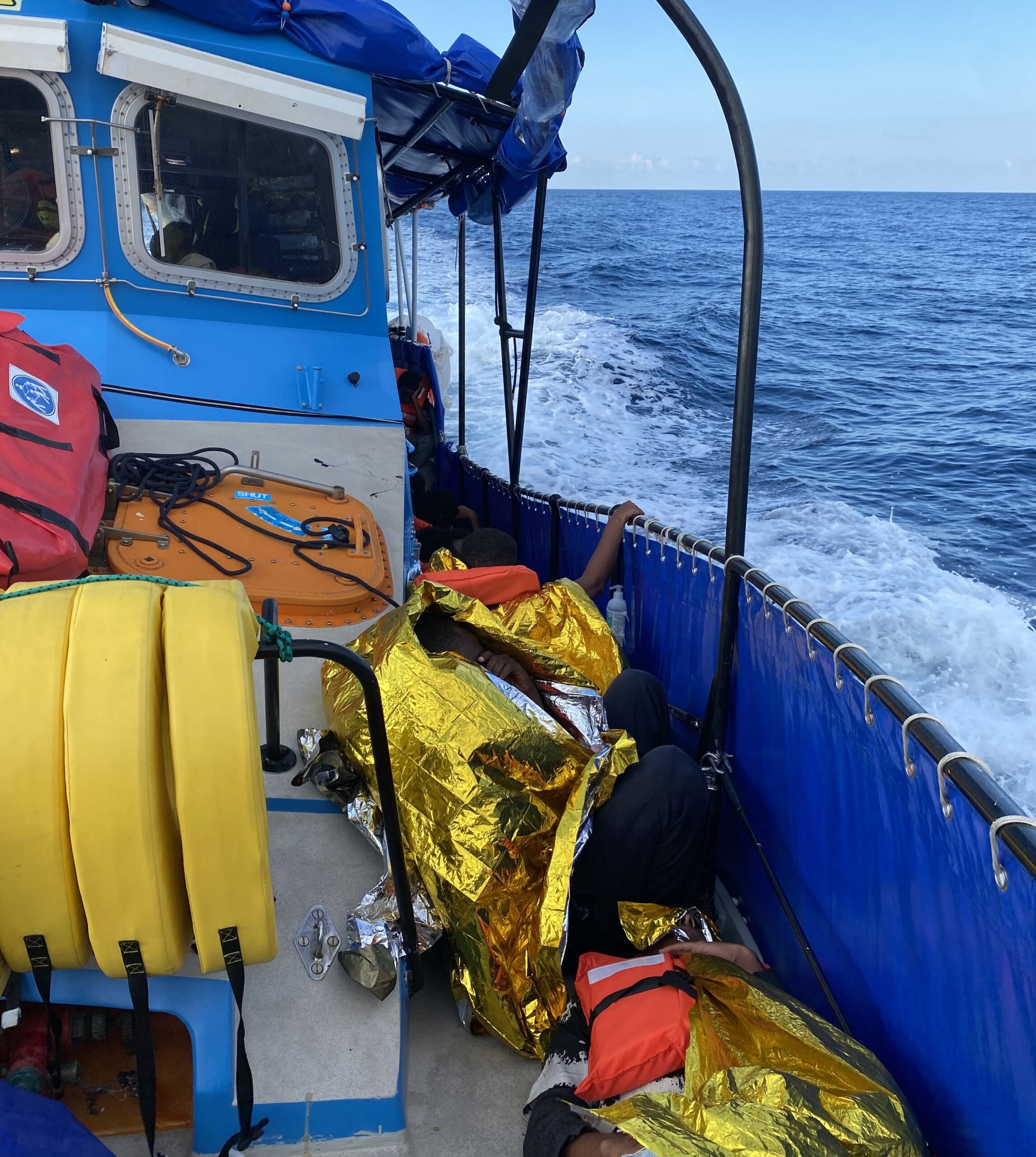
L’équipage de sauvetage de Sea-Watch affirme avoir secouru 28 personnes après un naufrage dans les eaux internationales tôt le 29 septembre, récupérant deux corps et apprenant auprès des survivants qu’au moins six personnes sont toujours portées disparues, dont trois enfants d’une même famille.
Selon Sea-Watch, son navire de sauvetage Aurora a découvert une embarcation pneumatique presque dégonflée vers 4 heures du matin, après que la ligne d’urgence civile Alarm Phone eut alerté les autorités de la présence du bateau.
Cinq survivants et deux corps, dont celui d’un enfant, ont été retrouvés à bord de l’embarcation pneumatique, a indiqué l’organisation.
Sea-Watch a déclaré que les 23 autres survivants du naufrage avaient atteint la plateforme gazière Hasdrubal, située dans les eaux internationales relevant de la zone de recherche et de sauvetage de la Tunisie.
Avec l’autorisation du Centre tunisien de coordination des opérations de sauvetage maritime, l’Aurora s’est ensuite dirigé vers la plateforme, où son équipage a distribué des gilets de sauvetage et embarqué les autres survivants. Sea-Watch a indiqué qu’un jeune enfant figurait parmi les personnes secourues.
L’organisation a déclaré que les survivants avaient signalé la disparition d’au moins six personnes, dont trois enfants d’une même famille. Elle a ajouté qu’il n’était pas encore établi si l’enfant dont le corps a été récupéré était l’un des trois enfants portés disparus.
Les autorités italiennes ont ensuite désigné Lampedusa comme port sûr pour le navire, et l’Aurora fait actuellement route vers cette destination, selon Sea-Watch.
La porte-parole de Sea-Watch, Julia Winkler, a lié cet incident aux critiques de l’organisation à l’égard des politiques migratoires européennes, affirmant que les gouvernements présentaient la baisse du nombre d’arrivées comme un succès alors que des personnes continuaient de mourir ou de disparaître en mer.
Sea-Watch a également appelé à la mise en place d’un programme européen de sauvetage maritime géré par les États, estimant que le sauvetage en mer constitue une obligation plutôt qu’une mesure laissée à la discrétion des autorités.
L’organisation affirme que plus de 1 970 personnes sont mortes ou portées disparues en Méditerranée en 2026 alors qu’elles cherchaient à obtenir une protection. Ce chiffre, ainsi que l’évaluation faite par Sea-Watch des politiques européennes de dissuasion migratoire, constitue des affirmations de l’organisation qui n’ont pas été vérifiées de manière indépendante dans les informations fournies.
A Sea-Watch rescue crew says it rescued 28 people from a shipwreck in international waters early on September 29, recovering two bodies and learning from survivors that at least six people remain missing, including three children from the same family.
According to Sea-Watch, its rescue vessel Aurora found a nearly deflated rubber boat at about 4 a.m. after the civilian emergency hotline Alarm Phone alerted authorities to the boat.
Five survivors and two bodies, including the body of a child, were found on the rubber boat, the organisation said.
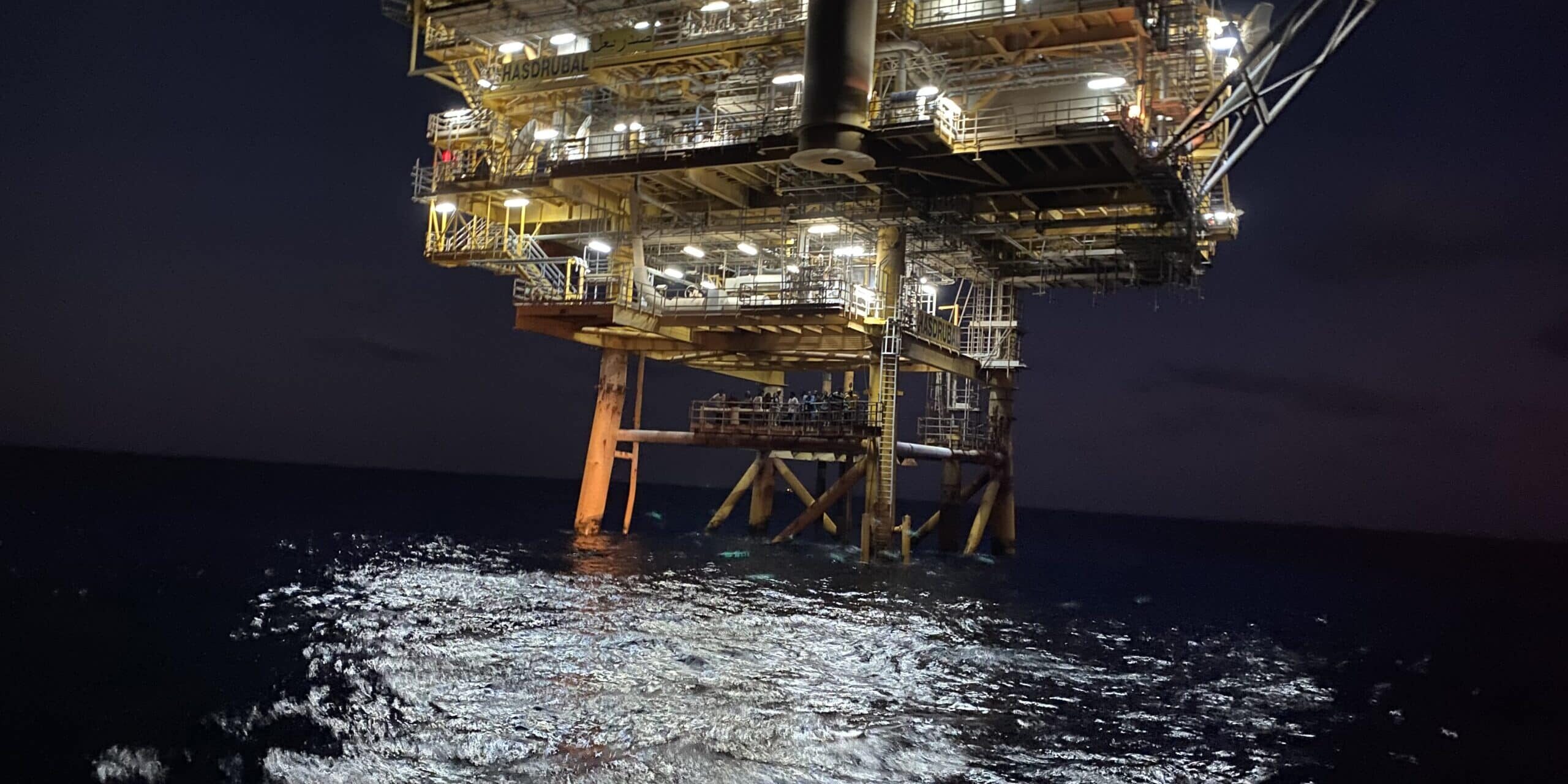
Sea-Watch said the other 23 survivors from the shipwreck had reached the Hasdrubal gas platform, which is located in international waters within Tunisia’s search and rescue zone.
With permission from the Tunisian Maritime Rescue Coordination Centre, the Aurora then proceeded to the platform, where its crew distributed life jackets and brought the remaining survivors aboard. Sea-Watch said a small child was among those rescued.
The organisation said survivors reported that at least six people were missing, including three children from one family. It added that it was not yet known whether the child whose body was recovered was one of the three missing children.
The Italian authorities subsequently assigned Lampedusa as the vessel’s safe port, and the Aurora is now heading there, according to Sea-Watch.
Sea-Watch spokesperson Julia Winkler linked the incident to the organisation’s criticism of European migration policies, saying governments were presenting declining arrival figures as a success while people continued to die or disappear at sea.
Sea-Watch also called for a state-run European maritime rescue programme, describing maritime rescue as an obligation rather than a discretionary measure.
The organisation said more than 1,970 people had died or gone missing in the Mediterranean in 2026 while seeking protection. That figure and Sea-Watch’s assessment of European deterrence policies are claims made by the organisation and were not independently verified in the information provided.

Jeff Crisp s’interroge sur la représentation des migrants à la Conférence de Vienne sur les migrations
Jeff Crisp questions migrant representation at Vienna Migration Conference

Le HCR dénonce le renvoi par la Malaisie de 1 476 personnes au Myanmar

UNHCR decries Malaysia’s return of 1,476 people to Myanmar

Deux morts, six disparus après le sauvetage de 28 personnes par le navire de Sea-Watch
-

 Features1 week ago
Retour volontaire assisté, assistance post-arrivée et réintégration : le rôle de l’OIM expliqué
-

 Interviews2 weeks ago
The Jamboree and Re-Exodus Fund: A Failed Reintegration Promise for Returnee Migrants
-

 Features1 week ago
Assisted Voluntary Return, Post-Arrival Assistance, and Reintegration: IOM’s Role Explained
-

 Features1 week ago
IOM explains work in countries receiving third-country nationals
-

 Features1 week ago
L’OIM explique son travail dans les pays qui accueillent des ressortissants de pays tiers
-
 News1 week ago
Yémen :21 573 ménages déplacés dans sept gouvernorats
-
 News Extra1 week ago
Ebola: Amy Pope seeks urgent support as DRC faces largest outbreak
-
 Features1 week ago
IOM helps more than 81,000 migrants return home from 115 countries