
News
Human trafficking strips people of their rights, choices, futures- Amy Pope


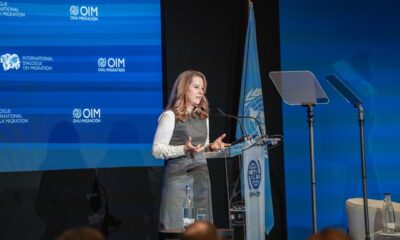
Human trafficking strips people of their rights, choices, and futures- the Director General of International Migration (IOM) Amy Pope has said.
This is as IOM has launched Anyone a Victim, a global campaign that calls for stronger action to prevent human trafficking and expand support for survivors. The initiative seeks to mobilize public engagement, raise critical funds for protection programmes, and highlight that trafficking remains a widespread human rights violation worldwide.
“Human trafficking strips people of their rights, choices, and futures,” said Amy Pope, IOM Director General. “Its impact does not end when the exploitation stops. It can shape someone’s life for years. Every survivor should have access to safety, justice, and long-term support, and communities need the tools to prevent exploitation before it occurs. This campaign is a reminder that protecting people is not optional. It is a shared responsibility and a reflection of the societies we want to build.”
An estimated 50 million people are living in situations of forced labour, trafficking, or forced marriage, and many are pushed into danger by conflict, disasters, and economic instability. These pressures limit safe options for movement, increase people’s reliance on unsafe pathways, and expose those already facing inequality to even greater risks. Trafficking thrives where protection systems are weak and where people lack the means to secure safety, dignity, and stable livelihoods.
The global campaign Anyone a Victim brings survivor experiences to the forefront and challenges misconceptions about who is at risk. It highlights often overlooked stories and shows that trafficking affects people of all ages and backgrounds, encouraging public support for programmes that offer safety, assistance, and recovery.
Through this effort, IOM aims to build a broader movement that strengthens prevention and ensures that survivors are heard and supported. The campaign reflects the growing need for rights-based and community-centred approaches across countries of origin, transit, and destination.
At the same time, many survivors face stigma or fear reporting their experiences, while others struggle to access the services that can help them recover and regain control of their lives. By sharing lived experiences publicly, the campaign seeks to build understanding, counter harmful assumptions, and encourage collective action against exploitation.
The campaign features the voices of several IOM Goodwill Ambassadors, including Sir Mo Farah, a survivor of human trafficking and IOM Global Goodwill Ambassador, who joins fellow Global Goodwill Ambassador America Ferrera and IOM National Goodwill Ambassador Kofi Kinaata in raising awareness. This year, IOM also welcomes Pritika Swarup as a Global Advocate, drawing on her public outreach experience to work alongside IOM’s advocates in engaging audiences and driving action.
“I survived trafficking because someone eventually saw me, believed me, and helped me find safety,” Sir Mo Farah said. “No child or adult should feel invisible or unprotected. Trafficking is not about a single moment. It leaves lasting marks on people’s lives, but those marks do not need to define them. When communities listen to survivors and invest in their recovery, healing becomes possible. My hope is that this campaign inspires people everywhere to stand with those who have been silenced for too long.”
Through the campaign, IOM reaffirms its commitment to supporting survivors, strengthening community protection, and promoting safe pathways that reduce the risks of exploitation in all its forms. The Organization works with governments, civil society partners, and affected communities to develop solutions that uphold rights, expand access to essential services, and help people rebuild with dignity and stability.



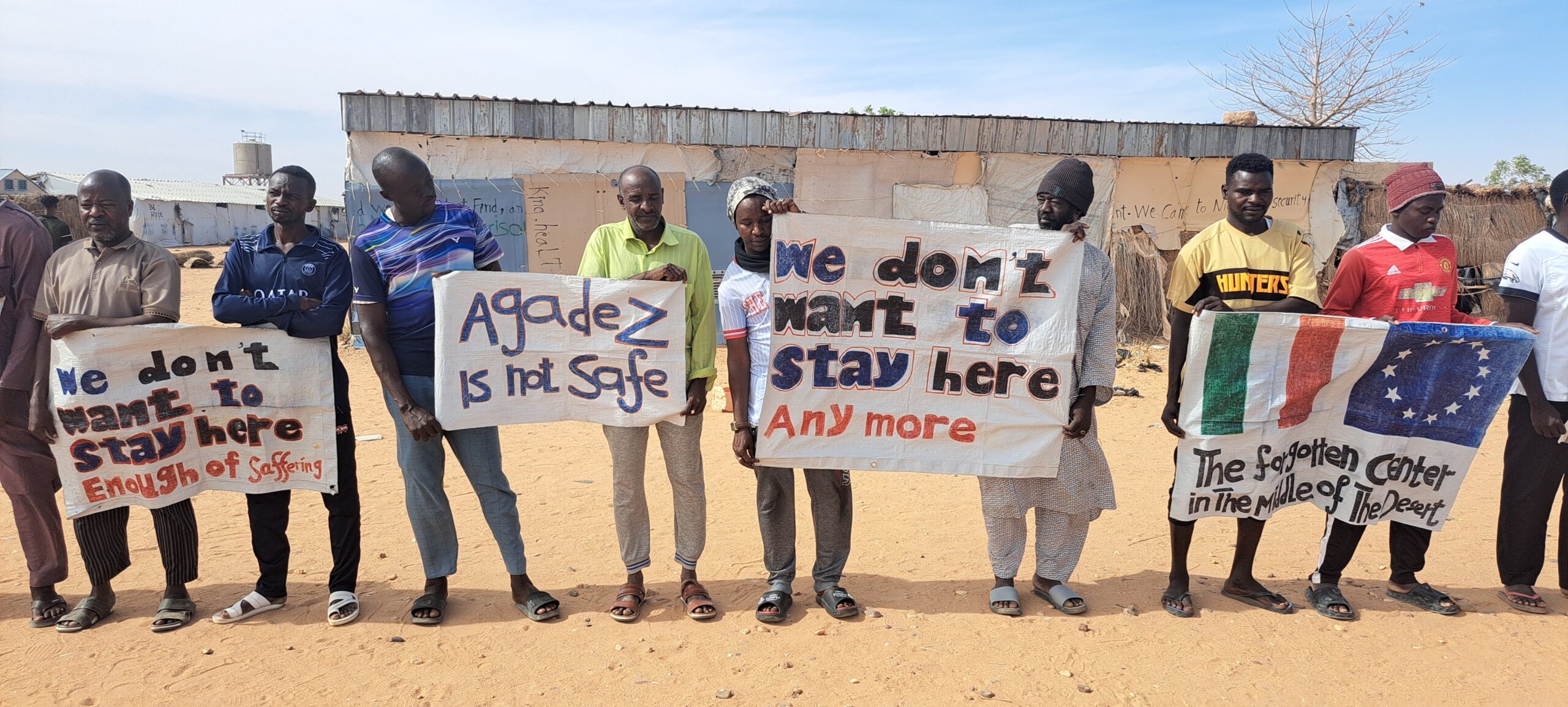
Des réfugiés installés au centre humanitaire d’Agadez, au Niger, poursuivent une manifestation pacifique devant les bureaux du Haut-Commissariat des Nations unies pour les réfugiés (HCR), accusant les organisations humanitaires d’ignorer leur situation et de ne pas répondre à leurs revendications.
Les réfugiés, regroupés sous le nom de Refugees in Niger, affirment manifester depuis plus de deux ans pour dénoncer leurs conditions de vie et ce qu’ils considèrent comme un manque d’engagement des organisations humanitaires en faveur de la protection de leurs droits.
Dans une série de publications sur X entre le 1er et le 5 novembre, le groupe a indiqué que la manifestation avait atteint son 771e jour au 2 novembre, ajoutant que la situation au centre s’était considérablement détériorée.
Il a décrit les conditions de vie comme extrêmement difficiles, soulignant que les réfugiés manquaient de produits de première nécessité et faisaient face à un avenir incertain.
« La situation à Agadez est devenue catastrophique. Les réfugiés souffrent énormément, vivent dans des conditions déplorables et leur sort demeure incertain depuis leur arrivée au centre », a déclaré le groupe dans une publication du 2 novembre.
Les manifestants ont également accusé le HCR et d’autres organisations humanitaires de garder le silence malgré la durée de leur mobilisation et leurs appels répétés à l’aide.
Dans une autre publication datée du 5 novembre, le groupe a indiqué que la manifestation pacifique se poursuivait toujours devant les bureaux du HCR, exprimant sa frustration face à ce qu’il a qualifié d’inaction persistante des organisations humanitaires alors que les réfugiés continuent de vivre dans des conditions difficiles.
Le groupe a attiré l’attention sur les revendications des réfugiés concernant leurs droits et l’amélioration de leurs conditions de vie, appelant les organisations humanitaires à répondre à leurs préoccupations.
Le HCR n’avait pas encore réagi aux accusations contenues dans les publications citées.
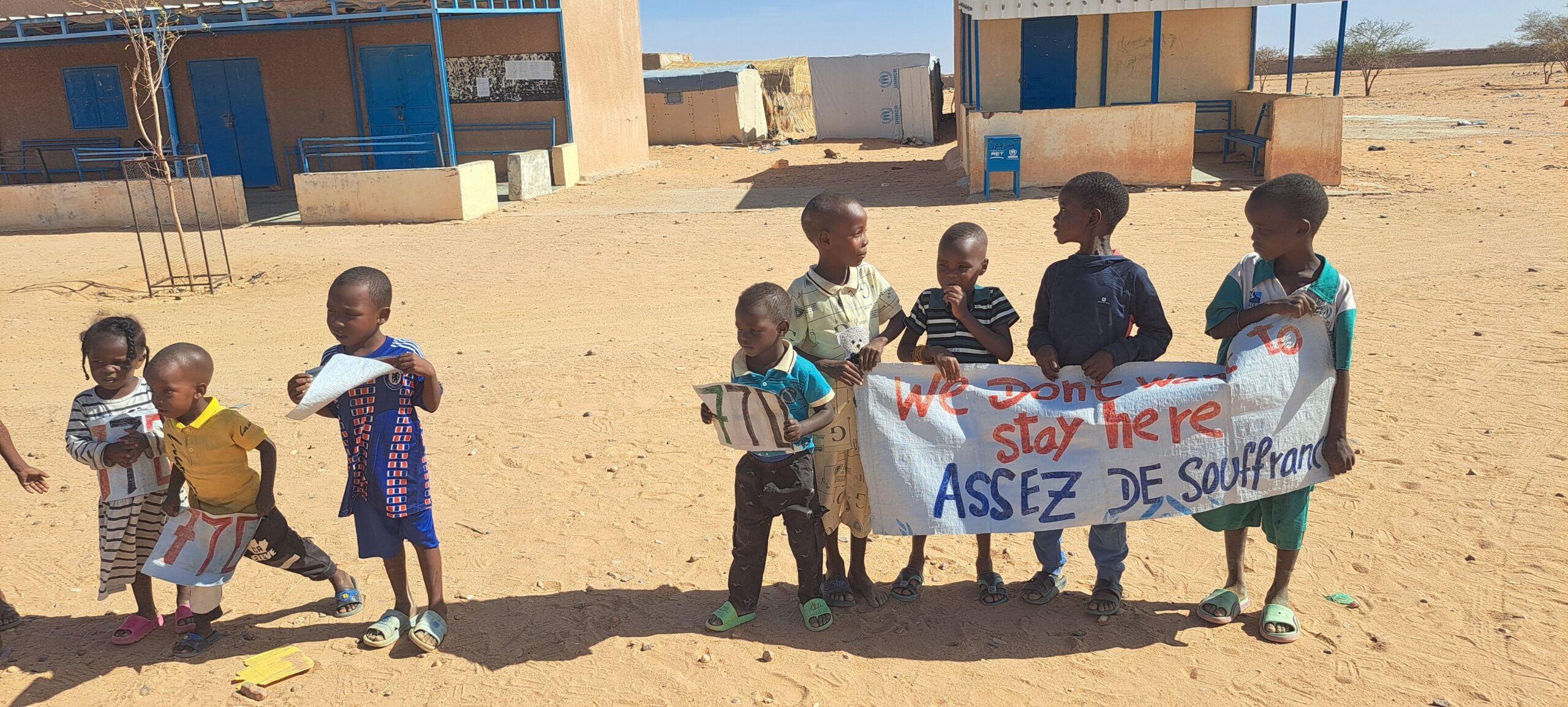
Refugees at the Agadez Humanitarian Centre in Niger have continued a peaceful protest outside the office of the United Nations High Commissioner for Refugees (UNHCR), accusing humanitarian organisations of ignoring their plight and failing to address their demands.
The refugees, under the group Refugees in Niger, said they had been protesting for more than two years over their living conditions and what they described as the lack of efforts by humanitarian agencies to protect their rights.
In a series of posts on X between November 1 and 5, the group said the protest had entered its 771st day as of November 2, adding that the situation at the centre had deteriorated significantly.
It described conditions as dire, saying the refugees lacked basic necessities and faced an uncertain future.
“The situation in Agadez has become catastrophic. Refugees are suffering immensely, living in dire conditions, and their fate has remained unknown since their arrival at the centre,” the group said in a post on November 2.
The protesters also accused UNHCR and other humanitarian organisations of remaining silent despite their prolonged demonstrations and appeals for assistance.
In another post on November 5, the group said the peaceful protest was still ongoing outside the UNHCR office, expressing frustration over what it described as the continued inaction of humanitarian organisations while refugees endured difficult conditions.
The group called attention to the refugees’ demands for their rights and improved living conditions, urging humanitarian organisations to address their concerns.
The UNHCR had not responded to the allegations in the posts cited.
Migration expert Jeff Crisp has questioned the International Organization for Migration’s (IOM) decision to participate in the implementation of a United States programme involving the deportation of migrants to third countries.
Crisp also raised concerns over what he described as a racially based relocation programme targeting white South Africans.
In a post on X on November 2, Crisp said he was seeking clarification on IOM’s involvement in the two programmes.
“I am trying to understand IOM’s decision to be involved in the implementation of the US programme of 3rd country deportations and its racially-based relocation programme for white South Africans,” he wrote.
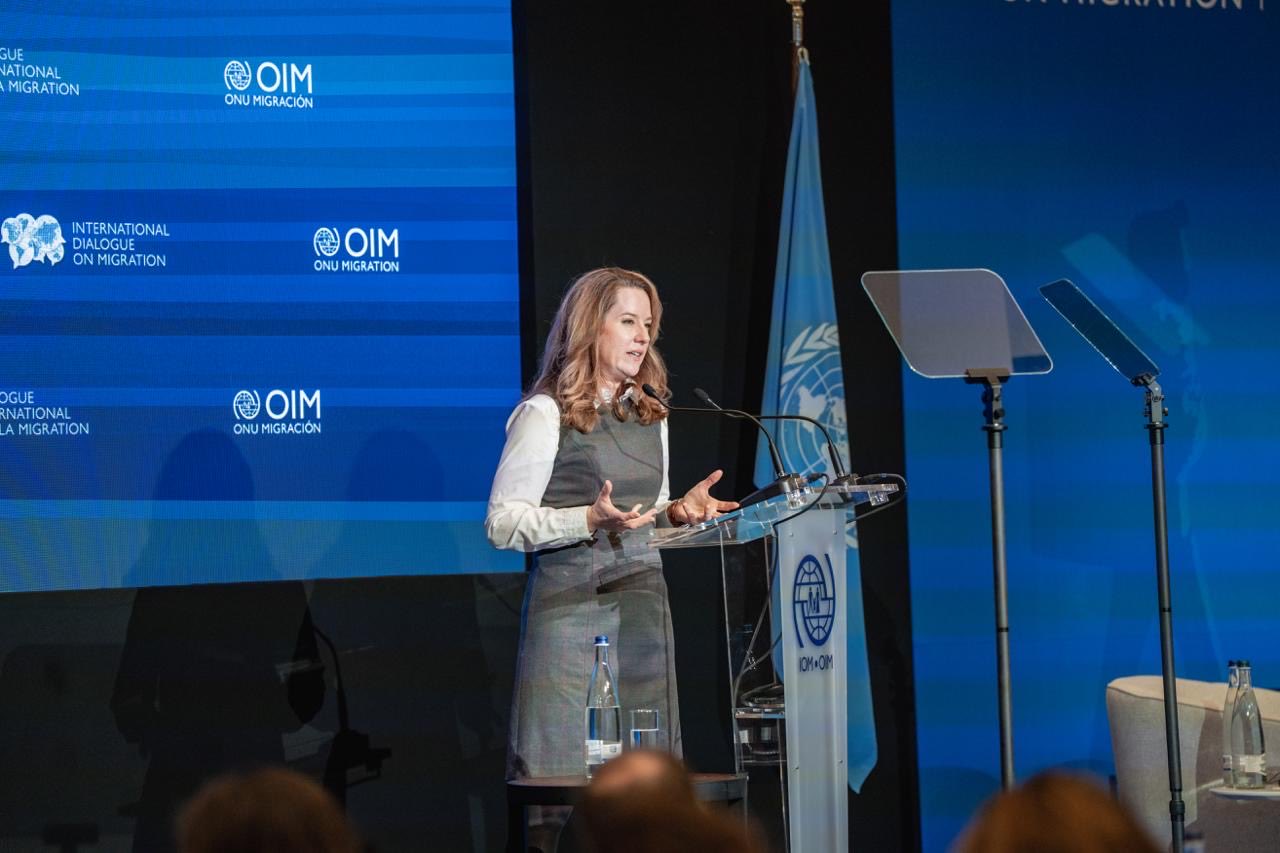
His comments were made in response to a post by IOM Director-General Amy Pope, who was discussing the importance of building public trust in migration governance.
In her post, Pope said trust in migration could not be established through facts and figures alone, stressing the need for transparency, public participation and accountability in institutional decision-making.
“Trust in migration isn’t built with facts and figures alone. It’s built when people understand decisions, can help shape them, and see that institutions follow through,” she wrote.
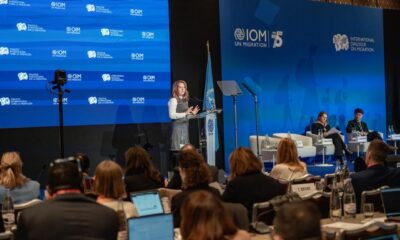
Pope added that the issues were central to discussions at the 2026 International Dialogue on Migration (#IDM2026), taking place in Geneva.
Crisp’s response raises questions about IOM’s role in implementing migration policies and deportation arrangements pursued by the US government.

Niger : des réfugiés poursuivent leur manifestation devant le centre du HCR à Agadez

Refugees continue protest at UNHCR centre in Niger’s Agadez

Jeff Crisp s’interroge sur la participation de l’OIM au programme américain d’expulsions vers des pays tiers

Jeff Crisp questions IOM’s involvement in US third-country deportation programme

Alarm Phone signale des appels de détresse de migrants au large de la Crète et le sauvetage de 53 personnes
-
 News Extra1 week ago
IOM’s Displacement Tracking Matrix monitors 97.2 million people in 2025
-
 News1 week ago
Libya repatriates hundreds of migrants, deploys reinforcements to Tobruk
-
News1 week ago
Libye : des centaines de migrants rapatriés, des renforts déployés à Tobrouk
-
 News1 week ago
Ebola:DRC confirms 10,000 cases, NRC seeks scale-up
-
 News Extra1 week ago
La Matrice de suivi des déplacements de l’OIM a suivi 97,2 millions de personnes en 2025
-
 News Extra4 days ago
SOS Humanity accuses Frontex of aiding migrant pushbacks to Libya
-
 Features1 week ago
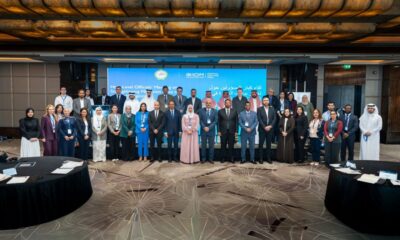
League of Arab States, IOM launch Arab Migration Data Network
-
 News1 week ago
Ebola : la RDC confirme 10 000 cas, le NRC appelle à un renforcement urgent de la réponse