
News Extra
Joint statement by the Solutions Champions marking 27 years of the Guiding Principles on Internal Displacement

Today, (April 17 2025), marks the 27th anniversary of the Guiding Principles on Internal Displacement – a landmark framework that defines the rights of internally displaced persons (IDPs) and outlines the responsibilities of national governments and other authorities to protect and support them. Since their acknowledgment by the UN Commission on Human Rights in 1998, the Principles have served as a foundation for national and international responses. They have shaped domestic laws, informed policies and supported efforts to uphold the rights and dignity of millions of IDPs around the world.
Yet despite this progress, internal displacement continues to rise at an alarming rate. Today, 76 million people are displaced within their own countries due to conflict, violence, disasters, and increasingly the impacts of extreme weather shocks. Millions of people have remained trapped in protracted displacement for years or even decades. This growing global crisis calls for a renewed commitment to the Guiding Principles and support for governments to meet their responsibilities to provide protection, assistance, and long-term solutions.
At the heart of the Guiding Principles is the concept of “sovereignty as responsibility”. IDPs are citizens or residents of their country, and national authorities have a duty to protect their rights and promote durable solutions in line with their wishes and international standards.
Solutions require strong national leadership, inclusive planning and long-term investments to help people regain self-reliance and rebuild their lives in dignity and peace. At a time when humanitarian needs are surging and resources decreasing, we are concerned about the risk of reversing hard-won gains on addressing internal displacement achieved over the past years. Now more than ever, we need to foster long-term solutions, stability and inclusion.
As the United Nations’ Solutions Champions, and guided by the Secretary-General’s Action Agenda on Internal Displacement, we reaffirm our shared commitment to support IDPs and host communities in moving from crisis to lasting recovery, peace and development. We will seek to advance cost-effective actions from the onset of a crisis, provide support to national leadership wherever possible, strengthen local capacities and ensure the voices of IDPs guide the support they receive. We will also do more to reduce the risk of future displacement through early warning systems, support for local confict and resolution mechanisms, disaster risk reduction, and building resilience to extreme weather shocks.
We also urge governments to integrate the Guiding Principles into national laws and policies, and to lead on the design and financing of sustainable solutions. IDPs must be included in national development strategies and efforts to achieve the Sustainable Development Goals to ensure that no one is left behind. Finally, we further encourage governments that have already taken steps in this direction to continue their leadership and share good practices to support others.
This anniversary is a moment for reflection and action. Displacement should not mean despair. Solutions are possible – but only if we act together, and act now.
Signed,
The Solutions Champions:
IOM Director General
UNDP Administrator
N High Commissioner for Refugees
Emergency Relief Coordinator
Special Rapporteur on the Human Rights of IDPs
Assistant Secretary-General for Peacebuilding Support






News Extra
Le défenseur des droits humains Mwanje appelle à mettre fin aux accords de « paiement contre confinement » lors du Forum social mondial
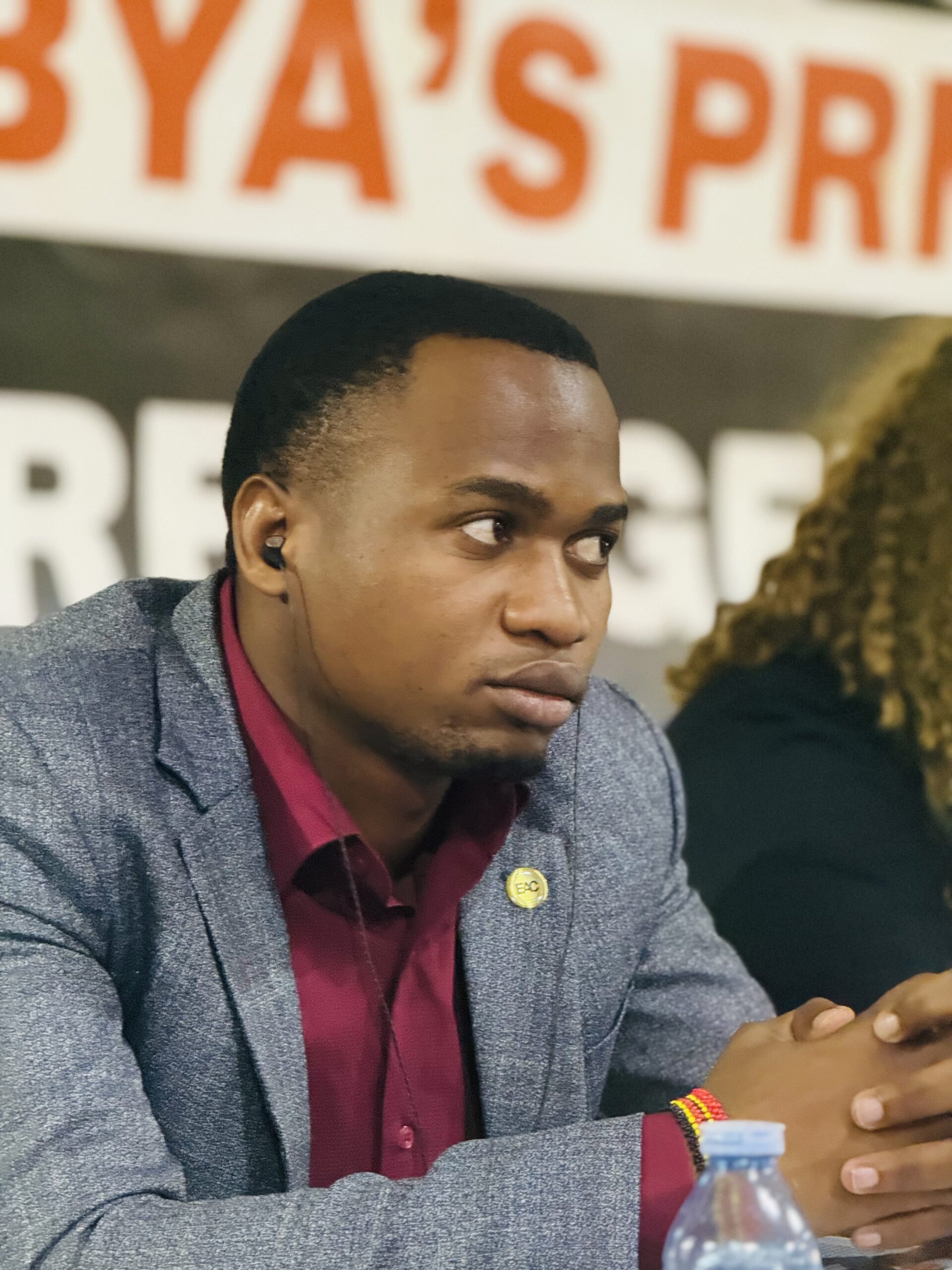
Le juriste ougandais et défenseur des droits humains, Mwanje Gideon, a appelé à mettre fin aux politiques migratoires qui permettent aux pays riches de transférer leurs responsabilités en matière de protection des réfugiés à des nations plus pauvres par le biais d’accords financiers et diplomatiques.
Mwanje a lancé cet appel lors du Forum social mondial (FSM) 2026 à Cotonou, au Bénin, où il est intervenu lors d’une table ronde de haut niveau intitulée : « Les refoulements de l’Europe conduisent les réfugiés dans les prisons de Libye : mettre fin aux accords de paiement contre confinement ».
Dans son intervention, Mwanje a critiqué ce qu’il a décrit comme l’externalisation croissante du contrôle migratoire par les riches pays occidentaux, avertissant que de tels accords transfèrent la charge de la protection internationale des pays développés vers les nations d’accueil plus pauvres.
« Lorsque les pays du Nord global concluent des accords de “paiement contre confinement”, sous-traitant leurs obligations juridiques internationales à des pays en développement, nous devons appeler cela par son vrai nom : une forme moderne de traite des esclaves », a déclaré Mwanje dans son discours du 6 août.
Il a estimé que les demandeurs d’asile étaient de plus en plus traités comme des marchandises dans les accords internationaux sur les migrations, les pays en développement recevant des aides financières, des financements pour les infrastructures ou un soutien diplomatique en échange de la prise en charge des migrants et des réfugiés.
Mwanje a utilisé l’analogie d’un riche homme d’affaires, « M. Sterling », pour expliquer cette pratique, comparant les pays riches à des propriétaires qui paient leurs voisins plus pauvres afin d’empêcher les migrants en situation de détresse d’atteindre leurs frontières.
« C’est cela, l’externalisation », a-t-il déclaré, estimant que cette politique ne résout pas les pressions migratoires, mais les transfère simplement vers des endroits où les pays riches sont moins susceptibles d’en voir les conséquences.
Le représentant de l’Afrique de l’Est a également averti que l’externalisation avait de graves conséquences pour les pays de la Communauté d’Afrique de l’Est (EAC), qui accueillent déjà d’importantes populations de réfugiés.
Selon lui, la région est de plus en plus exposée aux accords bilatéraux de paiement contre confinement et aux mécanismes de traitement des demandes d’asile hors du territoire, à la sous-traitance du contrôle migratoire aux pays de transit ainsi qu’à l’érosion des principes régionaux en matière d’asile.
Il a cité l’Ouganda et le Kenya comme exemples de pays qui accueillent déjà des millions de réfugiés tout en subissant des pressions pour assumer des responsabilités supplémentaires sans bénéficier d’un soutien structurel adéquat ni de mécanismes financiers durables.
Mwanje a également souligné l’importance du principe de non-refoulement, qui interdit le retour ou le transfert de réfugiés et de demandeurs d’asile vers des lieux où ils risquent d’être persécutés ou de subir de graves préjudices.
Il a fait valoir que les États ne pouvaient pas se soustraire à leurs obligations internationales simplement en transférant le traitement des demandes d’asile vers des pays tiers.
Selon le rapport, l’intervention de Mwanje a suscité un fort soutien des participants, qui lui ont réservé une longue ovation debout ainsi que des applaudissements nourris.
Au cours du forum, il a également échangé avec plusieurs organisations internationales, notamment Alarm Phone, Refugees in Libya, Borderline-Europe, EuroMed Rights et Afrique-Europe-Interact.
Ces organisations ont par la suite publié une déclaration commune intitulée « Nos corps ne sont pas des marchandises », dénonçant la marchandisation du contrôle migratoire et appelant à mettre fin aux accords de paiement contre confinement.
La déclaration s’est également opposée à la criminalisation de la mobilité et à la transformation de certaines régions d’Afrique du Nord et de l’Est en zones tampons pour les politiques migratoires européennes, tout en exhortant les États à respecter le principe de non-refoulement.
La mission de Mwanje au FSM, qui s’est déroulé du 2 au 10 août 2026, a également abouti à des recommandations visant à renforcer les réseaux régionaux de défense juridique, à accroître la mobilisation des jeunes et des étudiants en faveur des droits des réfugiés et à renforcer la responsabilité des gouvernements africains impliqués dans des accords migratoires avec des puissances étrangères.
Selon le rapport, cette mission a contribué à renforcer la voix de l’Afrique de l’Est dans les débats internationaux sur les migrations, la protection des réfugiés et l’externalisation des frontières.
Je peux aussi vous proposer une version française plus journalistique et naturelle, adaptée à la publication dans un média francophone.
News Extra
Human rights advocate Mwanje calls for end to ‘cash-for-containment’ deals at World Social Forum
Ugandan legal scholar and human rights advocate, Mwanje Gideon, has called for an end to migration policies that allow wealthy countries to transfer their refugee protection responsibilities to poorer nations through financial and diplomatic arrangements.
Mwanje made the call at the World Social Forum (WSF) 2026 in Cotonou, Benin, where he spoke on a high-level panel titled, “Europe’s Pushbacks Lead to Libya’s Prisons for Refugees: Stopping Cash-for-Containment Deals.”
In his intervention, Mwanje criticised what he described as the growing externalisation of migration control by wealthy Western nations, warning that such arrangements shift the burden of international protection from developed countries to poorer host nations.
“When Global North nations strike ‘cash-for-containment’ deals, outsourcing their international legal obligations to developing countries, we must call it what it truly is—a modern slave trade,” Mwanje said in his address on August 6.
He argued that asylum seekers were increasingly being treated as commodities in international migration agreements, with developing countries receiving financial packages, infrastructure funding or diplomatic leverage in exchange for taking responsibility for migrants and refugees.
Mwanje used an analogy involving a wealthy businessman, “Mr. Sterling,” to explain the practice, likening wealthy countries to property owners who pay poorer neighbours to prevent desperate migrants from reaching their borders.
“That is externalization,” he said, arguing that the policy does not resolve migration pressures but merely transfers them to places where wealthy countries are less likely to witness the consequences.
The East African representative also warned that externalisation was having serious implications for countries in the East African Community, which already host large refugee populations.
According to him, the region is increasingly being exposed to bilateral cash-for-containment and offshore asylum-processing arrangements, the subcontracting of migration control to transit countries, and the erosion of regional asylum principles.
He cited Uganda and Kenya as examples of countries already hosting millions of refugees while facing pressure to assume additional responsibilities without adequate structural support or sustainable financial arrangements.
Mwanje further stressed the importance of the principle of non-refoulement, which prohibits the return or transfer of refugees and asylum seekers to places where they face persecution or serious harm.
He argued that states could not evade their international obligations simply by transferring asylum processing to third countries.
The report said Mwanje’s intervention attracted strong support from participants, culminating in a prolonged standing ovation and sustained applause from delegates.
During the forum, he also engaged with international organisations including Alarm Phone, Refugees in Libya, Borderline-Europe, EuroMed Rights and Afrique-Europe-Interact.
The organisations subsequently issued a joint declaration under the theme “Our Bodies Are Not Commodities,” condemning the monetisation of migration control and calling for an end to cash-for-containment arrangements.
The declaration also opposed the criminalisation of movement and the transformation of parts of North and East Africa into buffer zones for European migration policies, while urging states to respect the principle of non-refoulement.
Mwanje’s mission to the WSF, which ran from August 2 to 10, 2026, also resulted in recommendations for stronger regional legal defence networks, increased youth and student advocacy on refugee rights, and greater accountability for African governments involved in migration agreements with foreign powers.
The report said the mission helped elevate East Africa’s voice in international debates on migration, refugee protection and the externalisation of borders.
News Extra
BOZA FII exige la fin des refoulements financés par Frontex et appelle à une justice migratoire
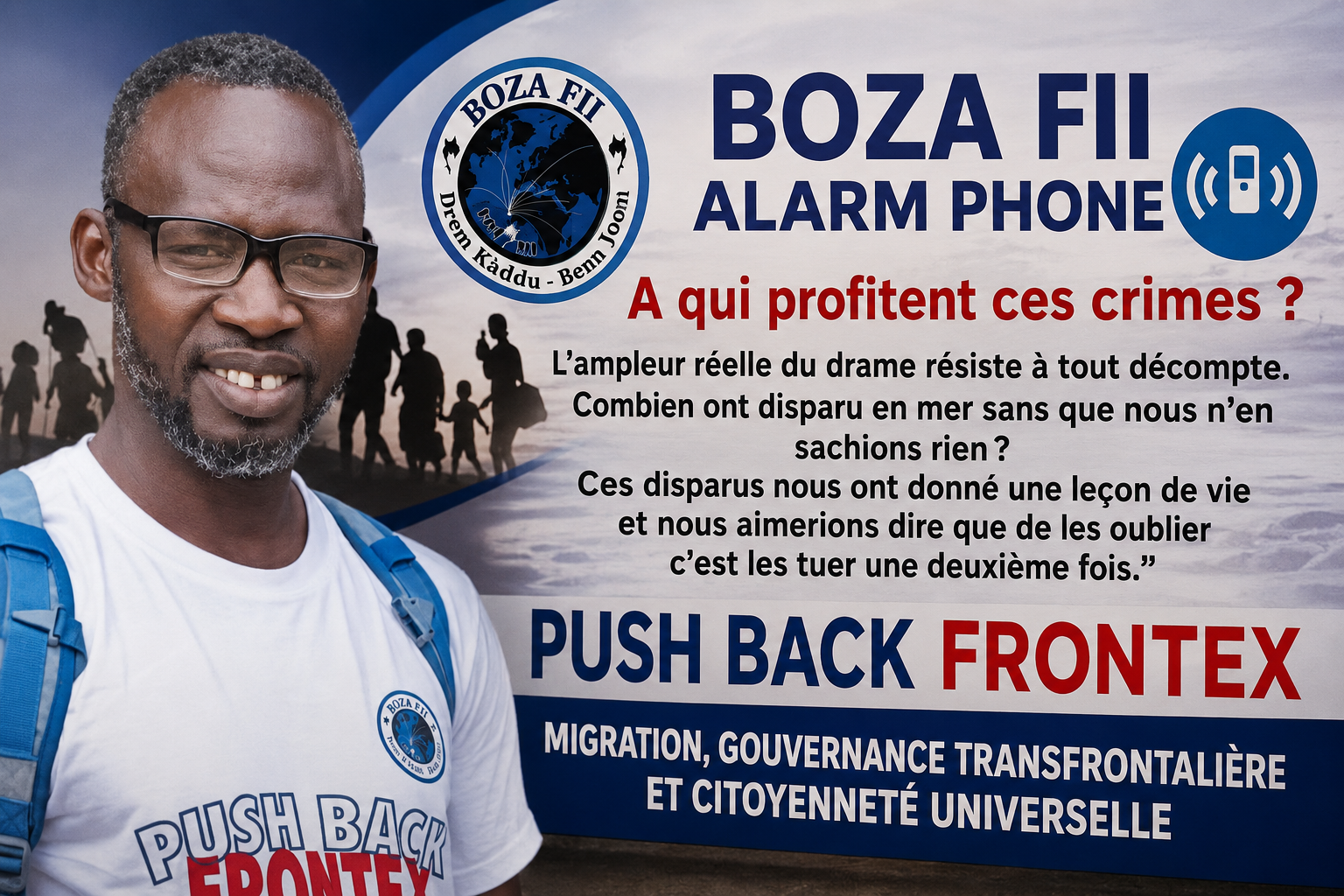
Le mouvement BOZA FII a renouvelé son appel à mettre immédiatement fin à ce qu’il qualifie de refoulements financés par Frontex, exigeant davantage de transparence dans les accords migratoires entre les pays européens et africains, ainsi qu’un système migratoire qui place la dignité humaine au-dessus du contrôle des frontières.
S’exprimant lors de la cinquième édition de la campagne « 72H Push-back Frontex » à Sokone, un représentant du mouvement a déclaré que la lutte contre les politiques migratoires restrictives était étroitement liée au combat plus large pour la démocratie, la bonne gouvernance et les droits humains.
L’intervenant a accusé les politiques européennes de contrôle des frontières de transformer la mer Méditerranée, les frontières et les routes migratoires désertiques en ce qu’il a décrit comme des « cimetières à ciel ouvert », estimant que les refoulements exposent les migrants à des dangers et violent le droit international.
« Frontex n’est pas simplement une agence de surveillance ; c’est le bras armé d’une Europe forteresse qui a choisi de refouler les personnes en détresse plutôt que de leur tendre la main », a déclaré l’intervenant.
Il a souligné que les migrants ne devraient pas être considérés comme des menaces pour la sécurité, affirmant que nombre d’entre eux sont victimes d’un système mondial et de circonstances indépendantes de leur volonté.
Selon lui, le mouvement BOZA FII repose sur deux principes fondamentaux : le droit des personnes à rester dans leur pays d’origine dans des conditions garantissant une vie digne, et le droit de circuler librement.
L’intervenant a également établi un lien entre les migrations, la mauvaise gouvernance et les difficultés démocratiques dans les pays africains, notamment au Togo. Il a affirmé que la mauvaise gouvernance et la concentration des richesses entre les mains d’une minorité poussent souvent les jeunes à chercher des opportunités ailleurs, parfois au péril de leur vie.
« La mauvaise gouvernance est le premier passeur de nos jeunes », a-t-il déclaré, ajoutant que la lutte contre Frontex devait également inclure des exigences de reddition de comptes envers les dirigeants africains.
Il a exhorté les gouvernements africains à ne pas sacrifier leurs citoyens « sur l’autel » de la diplomatie migratoire et a encouragé les militants de BOZA FII à rester engagés dans la campagne.
BOZA FII a formulé trois principales revendications : la cessation immédiate du financement des refoulements par Frontex, la transparence totale des accords migratoires entre l’Europe et les États africains, ainsi que l’instauration d’une véritable justice migratoire donnant la priorité aux êtres humains plutôt qu’aux barrières frontalières.
L’intervenant a conclu par un appel à la solidarité internationale et à la poursuite du combat pour la dignité des peuples.
« On ne repousse pas la pauvreté avec des murs ; on la guérit par la justice. »

Défendre les plus vulnérables :

Fighting for the vulnerable: How Udekwe Kennedy Obinna Is giving migrants a voice and a chance at safer futures

Une militante sénégalaise transforme la mort de son frère sur la route migratoire de l’Atlantique en combat pour le changement
Senegalese activist turns brother’s death on Atlantic migration route into campaign for change

La déportation traumatisante d’Abdulai Daramy soulève des inquiétudes concernant l’accord avec les États-Unis
-
 Features3 weeks ago
Sea-Watch 5 découvre huit corps dans un état avancé de décomposition
-

 News3 weeks ago
Trois autres corps sans vie retrouvés après les 11 découverts par SOS Méditerranée
-
News3 weeks ago
Three more bodies found in Mediterranean after 11 discovered by SOS Méditerranée
-
 News Extra3 weeks ago
Colombia: Conflict-affected families lose everything again after deadly earthquake
-
 Features3 weeks ago
Un séisme meurtrier aggrave la grave crise humanitaire en Colombie
-
News Extra3 weeks ago
Colombie : les familles touchées par le conflit perdent une nouvelle fois tout après le séisme meurtrier
-
 News Extra2 weeks ago
Des manifestations éclatent après la mort de migrants dans le naufrage d’un bateau
-
Features3 weeks ago
Deadly earthquake compounds Colombia’s severe humanitarian crisis