
News
Leaked EU memo reveals Malta ‘refuses’ to cooperate in migrant rescue missions


Leaked documents from an EU military operation suggest Malta “refuses” to participate in migrant rescue missions in its designated search and rescue area.
An internal memo from the EU’s special naval mission in the Mediterranean, known as IRINI, references what it terms as Malta’s lack of cooperation in migrant rescue operations.
The memo, dated September 2024, was authored by a French legal adviser in the IRINI mission and is intended as a briefing document for French personnel.
It says despite these migrant “events” mainly happening in Malta’s search and rescue zone, it is the Italians who take over as “Malta never responds and refuses to follow these operations”.
The IRINI memo is part of a cache of documents leaked from the European External Action Service, the EU’s diplomatic service.
These documents were obtained by the International Consortium of Investigative Journalists and shared with Times of Malta and other media partners. They also detail the perilous journey taken by migrants who pay people smugglers €6,000 for a position on an overcrowded boat from Libya to Malta.
Migrant NGOs have long claimed Malta has a “murderous policy” of failing to uphold its search and rescue obligations at sea.
A spokesperson for AlarmPhone, an NGO that helps facilitate migrant rescues, told Times of Malta that the Maltese authorities seem to cooperate more with Libyan or Tunisian forces to return migrants to “hardship and suffering”.
“These interceptions and returns often take place within Malta’s search and rescue zone… They [Maltese authorities] are very clearly not carrying out rescue operations in the vast majority of cases,” the spokesperson alleged.
While IRINI’s main task is enforcing the UN arms embargo on Libya, one of its secondary goals is disrupting human smuggling and trafficking networks via intelligence gathering and plane patrols over the Mediterranean.
Malta does not form part of the IRINI mission.
Statistics found in the leak indicate Malta rescued 92 migrants between January and October 2024.
In comparison, migrants rescued by the Italian coastguard during the same period stood at 12,399, the Libyan coastguard rescued 8,179 and NGO boats saved 8,271 people.
The Maltese authorities refused a 2022 freedom of information request by Times of Malta for its rescue statistics, citing national security reasons while dismissing the request as “curiosity”.
A spokesperson for the European Commission declined to comment on leaked documents.
The spokesperson said the Commission has a clear position when it comes to search and rescue operations.
“Saving lives at sea is a moral duty, as well as a legal obligation for member states under international law.
“This is done independently from the circumstances which have led people to be in distress at sea,” the spokesperson said.
The spokesperson said all EU countries and all actors involved in search and rescue operations must act in a lawful, swift and coordinated way to make sure that those in distress at sea are brought to safety as rapidly as possible.
In reaction to the memo, a spokesperson for the home affairs ministry told Times of Malta that all emergency notifications received are investigated, assessed, prioritised and acted upon accordingly, regardless of the provenance or legal status of the persons requiring rescue.
The spokesperson said Malta’s responsibility within its search and rescue zone is to coordinate all search and rescue activities using any available resources, not necessarily its own, which may naturally be farther away.
This is done in coordination with neighbouring rescue centres, particularly the one in Rome, with which Malta engages “positively and proactively on a daily basis”, the spokesperson said.
The spokesperson said Malta does not participate in IRINI and any conclusions drawn by third parties, particularly those of a personal nature and not reflecting IRINI’s official position, are made unilaterally and without the involvement of a Maltese counterpart.
The spokesperson said IRINI is a maritime security operation and does not facilitate or coordinate communication between competent rescue centres.
“Malta has no information regarding the basis of third-party conclusions made in internal memos, given that it is not a participant in Operation IRINI, was never consulted on related matters, and that IRINI itself is not a rescue coordination centre,” the spokesperson said.
‘Maltese authorities never reply’
A spokesperson for SOS Méditerranée, which earlier this year rescued more than 100 people from Malta’s search and rescue (SAR) zone, said the Maltese authorities “never reply to our calls or emails”.
She said that while the organisation contacted Malta’s rescue coordination centre (RCC) “straightaway” when learning of a boat in distress, it rarely received a response.
“They rarely pick up the phone, and if they do they tell us to send an e-mail – they never reply to that email. They are really absent from any coordination,” she said.
The spokesperson said that with Malta’s SAR covering a vast territory – stretching from near the Tunisian coast to Greece’s rescue zone – working with other state authorities such as Italy was less common, “but when we do we get more information”.
Asked if the NGO was aware of Malta carrying out rescues, she said: “It’s not happening; what we’re seeing is Libyan boats intercepting in Malta’s SAR against the international maritime convention.”
The spokesperson said such incidents were “no longer surprising”, adding that such moves were “essentially an illegal pushback”.
She noted that while cooperation on rescues was non-existent, medical evacuations from its vessels, while uncommon, were “usually accepted”, however. Seven-year-old Rahf Alhossain, who was airlifted from an SOS Méditerranée rescue boat earlier this year after suffering cardiac arrest, later died at Mater Dei Hospital.
A spokesperson for NGO Alarm Phone, which provides hotline support for boats in distress, said the Maltese authorities “rarely respond on the phone and, if they do, they do not provide any relevant information”.
He said the organisation referred to Malta’s RCC as a “so-called” rescue coordination centre “as they’re clearly not living up to their name”.
Instead, “it seems the focus of the RCC is really to coordinate returns to places like Libya in cooperation with Libyan or Tunisian forces… to return them [migrants] to hardships and suffering”, he said.
“These interceptions and returns often take place within Malta’s search and rescue zone… They [Maltese authorities] are very clearly not carrying out rescue operations in the vast majority of cases.”
Charging Maltese authorities of “systematic forms of non-assistance”, he said their actions made it “much more difficult” to coordinate rescues, adding that “any delay can mean the death of dozens or hundreds of people”.
Meanwhile, a spokesperson for NGO Sea-Watch, which operates spotter aircraft and rescue vessels in the Mediterranean, said: “Malta does not cooperate with us; if they do pick up the phone, they ignore the information we give them.”
The spokesperson said that most calls from its spotter aircraft went unanswered, adding Malta’s rescue coordination centre had told the NGO over the phone in the past: “We don’t work with NGOs.”
The spokesperson noted Malta had in the past attended migrant boats in distress only to provide fuel and supplies to enable them to proceed to other states’ rescue zones or territorial waters.
In January, rescue NGO Sea Punks said that despite “multiple attempts” to contact Maltese authorities about a fibreglass boat in Malta’s SAR with 41 people on board, including five women and six children, it had received no response.
Source: timesofmalta.com





News
Des migrants égyptiens et d’autres nationalités portés disparus ou présumés morts après le naufrage d’une embarcation au large de la Libye

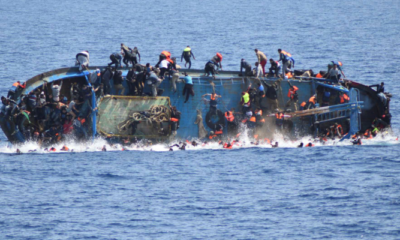
Des dizaines de migrants égyptiens et d’autres nationalités sont présumés morts ou portés disparus après le naufrage d’une embarcation au large des côtes libyennes, alors qu’ils tentaient de traverser la Méditerranée pour rejoindre l’Europe, selon des médias égyptiens.
L’embarcation aurait quitté la ville de Tobrouk, dans l’est de la Libye, jeudi soir, mais aurait commencé à sombrer quelques kilomètres seulement après son départ, poussant les passagers à lancer des appels de détresse.
Des sources citées par le journal égyptien Al-Masry Al-Youm ont indiqué que des vents violents et l’obscurité avaient entravé les opérations de sauvetage. Six personnes ont été secourues, tandis que le sort des autres passagers demeure inconnu.
Les équipes de recherche ont poursuivi leurs opérations le long des côtes libyennes afin de retrouver d’éventuels survivants, de localiser les migrants portés disparus et de récupérer les corps.
Le nombre exact de passagers à bord de l’embarcation ainsi que le bilan humain confirmé n’étaient pas immédiatement connus.
Selon le média, les migrants auraient rejoint la Libye par l’intermédiaire de réseaux de traite des êtres humains, qui les auraient retenus dans des entrepôts avant d’organiser leur traversée maritime vers l’Europe en échange d’argent.
Des habitants du village de Sindbis, situé dans le gouvernorat égyptien de Qalyubia, ont déclaré à Al-Masry Al-Youm qu’entre 22 et 27 jeunes hommes de leur localité auraient été à bord de l’embarcation. Des jeunes originaires de villages voisins auraient également participé à cette traversée.
Un habitant a indiqué que le groupe avait quitté le village environ un mois auparavant, en prenant un bus pour Alexandrie avant de poursuivre son voyage vers la Libye par voie maritime. Leurs familles auraient perdu tout contact avec eux plusieurs heures après leur embarquement.
La plupart des jeunes hommes portés disparus auraient moins de 20 ans et étaient à la recherche d’opportunités d’emploi à l’étranger, a ajouté cet habitant.
Ce nouveau naufrage met en évidence les dangers persistants auxquels sont confrontés les migrants qui tentent de rejoindre l’Europe par les voies migratoires irrégulières en Méditerranée depuis la Libye, où les traversées maritimes périlleuses et les réseaux de traite des êtres humains continuent d’exposer les migrants à l’exploitation et aux pertes en vies humaines.
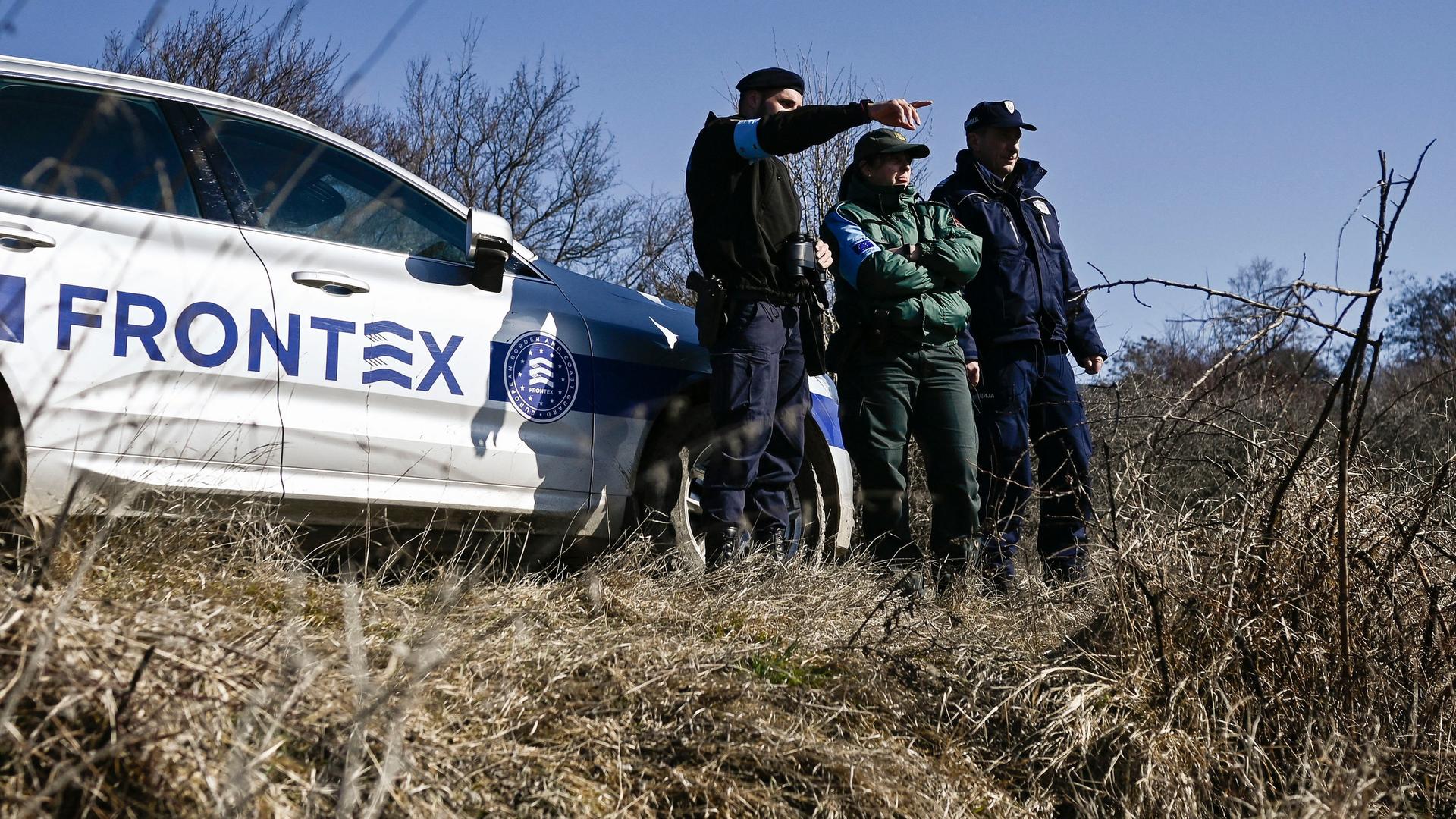
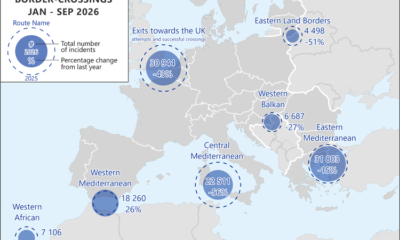
Les arrivées irrégulières dans l’Union européenne ont diminué sur la plupart des principales routes migratoires au cours des neuf premiers mois de 2026, bien que les traversées sur la route de la Méditerranée occidentale aient augmenté de 26 %, selon les chiffres publiés par l’Agence européenne de garde-frontières et de garde-côtes (Frontex).
Les données couvrant la période de janvier à septembre 2026 montrent que la route de la Méditerranée orientale a enregistré le plus grand nombre de franchissements irréguliers des frontières, avec 31 803 détections, soit une baisse de 15 % par rapport à la même période en 2025.
La route de la Méditerranée centrale arrive en deuxième position avec 22 511 détections, marquant une baisse de 56 %, tandis que celle de la Méditerranée occidentale a enregistré 18 260 traversées, soit une augmentation de 26 %.
La route de l’Afrique de l’Ouest a enregistré 7 106 traversées, en baisse de 45 %, tandis que celle des Balkans occidentaux a comptabilisé 6 687 franchissements, soit une diminution de 27 %.
Par ailleurs, les détections le long de la frontière terrestre orientale ont chuté de 51 %, pour s’établir à 4 498.
Les départs en direction du Royaume-Uni ont également diminué, avec 30 944 détections enregistrées au cours de cette période de neuf mois, soit une baisse de 43 % par rapport à la période correspondante en 2025.
Chiffres du mois de septembre
Pour le seul mois de septembre, la route de la Méditerranée orientale a enregistré 4 772 traversées irrégulières, le chiffre le plus élevé parmi les routes surveillées par Frontex.
La Méditerranée occidentale arrive ensuite avec 3 067 traversées, tandis que la Méditerranée centrale en a enregistré 2 877.
La route de l’Afrique de l’Ouest a comptabilisé 1 939 traversées, contre 1 079 dans les Balkans occidentaux et 584 à la frontière terrestre orientale.
Par ailleurs, 4 536 départs en direction du Royaume-Uni ont été enregistrés au cours du mois.
Principales nationalités
Les ressortissants soudanais, bangladais et afghans ont constitué les principales nationalités détectées sur la route de la Méditerranée orientale au cours des neuf premiers mois de 2026.
Sur la route de la Méditerranée centrale, les Bangladais, les Algériens et les Somaliens arrivaient en tête, tandis que les Algériens, les Maliens et les Marocains étaient les nationalités les plus fréquemment détectées sur la route de la Méditerranée occidentale.
Sur la route de l’Afrique de l’Ouest, les principales nationalités étaient les Marocains, les Sénégalais et les Gambiens.
Les ressortissants turcs, afghans et égyptiens étaient les plus fréquemment détectés sur la route des Balkans occidentaux, tandis que les Ukrainiens, les Afghans et les Russes arrivaient en tête à la frontière terrestre orientale.
Concernant les départs vers le Royaume-Uni, les Érythréens, les Soudanais et les Somaliens constituaient les principales nationalités recensées.
Ces chiffres mettent en évidence les différentes tendances migratoires aux frontières extérieures de l’Europe. Alors que la plupart des routes ont enregistré des baisses importantes, la Méditerranée occidentale a connu une augmentation des traversées au cours de la période étudiée.
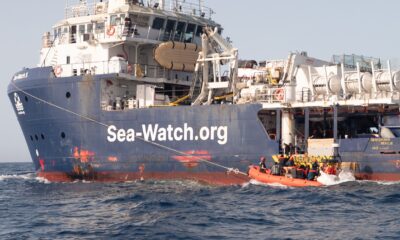
Sea-Watch, a German-based sea rescue organisation, has criticised a proposed European Union regulation to expand the powers and operations of Frontex, warning that the plan could increase border violence, surveillance and deportations of migrants and asylum seekers.
In a series of posts on X on October 27, the organisation condemned the proposal presented by the European Commission and European Commissioner for Migration, Magnus Brunner, arguing that it would transform Frontex, the EU border agency, into a more powerful force capable of pushing back people seeking international protection, including beyond EU borders.
Sea-Watch said the proposed regulation would significantly expand Frontex’s operations through the deployment of more armed border officials, increased surveillance and expanded deportation activities.
The organisation also raised concerns over the financial implications of the proposal, stating that the European Commission intends to allocate €12 billion to Frontex between 2028 and 2034.
It contrasted the proposed funding with the €26 million allocated annually to the EU Agency for Fundamental Rights, arguing that the spending priorities placed greater emphasis on border enforcement than on protecting people’s rights and welfare.
Sea-Watch further criticised the language used by the European Commission to justify the proposed changes, particularly references to external threats, security crises and dangerous migration.
According to the organisation, such descriptions reflect narratives promoted by far-right political movements and parties, which it said are increasingly influencing EU migration policies.
The rescue organisation also recalled allegations of human rights violations involving Frontex, including illegal pushbacks and cooperation with Libyan actors accused of crimes against humanity.
It noted that a case concerning Frontex’s alleged role in pushbacks to Libya is currently before the Court of Justice of the European Union.
Sea-Watch argued that security should not be defined solely by border protection and migration control, but should also include affordable housing, functioning public services, freedom from violence and respect for fundamental rights.
” We must not sacrifice human rights in the name of protecting them,” the organisation said.
It stressed that the proposed regulation has not yet become law, as negotiations are expected to take place between the European Parliament and the Council of the European Union.
However, Sea-Watch warned that increasing border controls, surveillance and deportations would not create a safer or more inclusive Europe.
The organisation called for opposition to the proposed expansion of Frontex’s powers, reiterating its campaign slogan, #AbolishFrontex.

La loi égyptienne sur l’asile expose les réfugiés aux expulsions et aux violations de leurs droits – ONG

Egypt’s asylum law exposes refugees to deportation, rights violations – Rights group

Extraction des ressources, fardeau de la dette alimentant la migration forcée depuis l’Afrique, selon un journaliste lors du congrès de Dakar

Resource extraction, debt burden fuelling forced migration from Africa, journalist tells Dakar congress

Des migrants égyptiens et d’autres nationalités portés disparus ou présumés morts après le naufrage d’une embarcation au large de la Libye
-

 News2 weeks ago
Sea-Watch condemns proposed EU plan to expand Frontex powers
-

 News3 weeks ago
Refugees continue protest at UNHCR centre in Niger’s Agadez
-
 News Extra2 weeks ago
Sea-Watch renouvelle son appel à mettre fin au financement européen des garde-côtes libyens
-
 Interviews5 hours ago
Extraction des ressources, fardeau de la dette alimentant la migration forcée depuis l’Afrique, selon un journaliste lors du congrès de Dakar
-
News Extra2 weeks ago
Sea-Watch condamne le projet de l’UE visant à étendre les pouvoirs de Frontex
-
 News Extra2 weeks ago
Frontex celebrates drop in irregular crossings into EU
-
 News3 weeks ago
Jeff Crisp questions IOM’s involvement in US third-country deportation programme
-
 Interviews6 hours ago
Resource extraction, debt burden fuelling forced migration from Africa, journalist tells Dakar congress