
News Extra
European Union, EU member states, Tunisia cooperation on migration control contributing to human rights violations

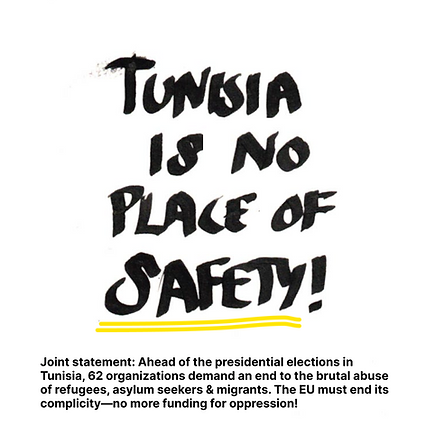
The ongoing cooperation between the European Union (EU), EU member states, and Tunisia on migration control which includes reliance on the possibility to disembark people rescued or intercepted at sea in Tunisia – similar to previous cooperation with Libya – is contributing to human rights violations.
This was contained in a joint statement signed by Refugees In Libya, Amnesty International, Alarme Phone Sahara, Human Rights Watch and 58 other organisations.
The statement reads unedited:
In view of the rampant human rights violations against migrants, asylum seekers, and refugees in Tunisia, especially those who are Black; Tunisia’s lack of an asylum system; the Tunisian government’s crackdown on civil society, judicial independence, and the media; and the impossibility of fairly and individually determining nationalities or assessing the protection needs of migrants and asylum seekers while at sea, it is clear that Tunisia is not a safe place for the disembarkation of people intercepted or rescued at sea. The ongoing cooperation between the European Union (EU), EU member states, and Tunisia on migration control which includes reliance on the possibility to disembark people rescued or intercepted at sea in Tunisia – similar to previous cooperation with Libya – is contributing to human rights violations.
European policies to externalize border management to Tunisia are supporting security authorities who are committing serious violations. They are also obstructing people’s rights to leave any country and to seek asylum, containing refugees and migrants in countries where their human rights are at risk. Moreover, disembarkation in Tunisia can endanger individuals and expose them to serious harm, and further puts refugees and migrants at high risk of collective expulsion to Libya and Algeria, which can violate the principle of non-refoulement. The establishment on 19 June 2024 of the Tunisian Search and Rescue Region (SRR), called for and supported by the European Commission, risks becoming another tool to violate people’s rights rather than a legitimate fulfillment of the responsibility to protect safety at sea. Mirroring its cooperation with Libya, the EU and its member states’ engagement with Tunisia may have the effect of normalizing serious violations against people seeking protection and undermining the integrity of the international search and rescue system by twisting it to serve migration control purposes.
As humanitarian and human rights organizations, we call on the EU and its member states to terminate their cooperation on migration control with Tunisian authorities responsible for serious human rights violations at sea and in Tunisia. Search and rescue NGOs and commercial ships should not be instructed to disembark anyone in Tunisia.
Widespread and repeated violations of human rights
Findings from Tunisian and international organizations, as well as UN bodies, over the past two years indicate that Tunisia cannot be considered a ‘Place of Safety’ for people intercepted or rescued at sea, most notably Black people as defined by the 1979 SAR Convention, the Maritime Safety Committee (MSC) and UN bodies.
Despite being party to the 1951 UN Refugee Convention, Tunisia has no national asylum law or system. People who enter, stay in, or exit the country irregularly are criminalized by law. Following interceptions at sea or after arbitrary arrests on Tunisian territory, Tunisian authorities have repeatedly abandoned refugees, asylum seekers, and migrants in the Tunisian desert or remote border regions with Libya and Algeria. These practices can amount to unlawful collective expulsions, demonstrate a total disregard for refugees’ and migrants’ right to life, and may violate the principle of non-refoulement. People expelled face the risk of serious human rights violations in Libya and onward expulsions from Algeria to Niger. According to reports citing information from the UN, Tunisian security forces have notably rounded up people presumed to be irregular migrants on land and directly transferred them to Libyan authorities, who subsequently subjected them to arbitrary detention, forced labour, extortion, torture and other ill-treatment, and unlawful killings.
According to the accounts of refugees, migrants and asylum seekers documented by Amnesty International, Human Rights Watch, OMCT, and Alarm Phone, Tunisian authorities at sea have committed abuses and put lives at risk during boat interceptions – including by high-speed manoeuvers threatening to capsize the boats, physical violence, firing tear gas at close range, and colliding with the boats – followed by a failure to systematically ensure individualized assessments of protection needs at disembarkation. Tunisian authorities have also subjected refugees, asylum seekers and migrants to torture and other ill-treatment in the contexts of disembarkations, detention, or collective expulsions.
At the same time, several international and local organizations, human rights defenders and lawyers have reported an alarming deterioration of civil liberties and fundamental rights in Tunisia, impacting both the migrant population and Tunisian citizens.. Since 2021, the country has witnessed a significant rollback of human rights, characterized by a dismantling of institutional safeguards for their protection, an erosion of judicial independence and a clampdown on freedom of expression, association and peaceful assembly. The disembarkation in Tunisia of Tunisian nationals intercepted or rescued at sea, which could include people fleeing persecution, torture or other serious harm and intending to seek asylum abroad, could effectively deny the right to seek asylum to those in need of international protection.
The European Union’s complicity in human rights abuses
Despite the documented human rights violations by Tunisian authorities, the EU and its member states have stepped up their support for Kais Saïed’s administration. Through the Memorandum of Understanding signed in July 2023, the EU promised Tunisia 1 billion Euros, including 105 million EUR dedicated to border and migration management, effectively in exchange for preventing sea departures towards Europe, which includes people in need of protection. With the implementation of a Tunisian Search and Rescue Region (SRR), the Tunisian government has met a long-standing priority set by the EU. While on the one hand this represents a formal step towards the fulfillment of Tunisia’s responsibility to protect life at sea, the reality is that European Rescue Coordination Centers (RCC) will now refer boats in distress within the Tunisian SRR to the Tunisian RCC, reinforcing a gradual disengagement of EU actors in favor of actors with a poor human rights record.
By supporting an increased role for the Tunisian Coast Guard (National Guard) – without any human rights benchmarks or monitoring system in place, nor arrangements to ensure that rescued people are disembarked in a place of safety which cannot be Tunisia – the EU is contributing to a risk of further serious human rights violations at sea and in Tunisia against refugees and migrants and people at risk of persecution in the country.
Humanitarian space for search and rescue (SAR) NGOs will also be further curtailed, if European RCCs instruct SAR NGOs to liaise with the newly established Tunisian MRCC for disembarkation, which they may refuse to respect the principle of non-refoulement. The UN refugee agency, UNHCR, has noted that vessels at sea are not the appropriate place for determining protection needs. Under international maritime law, states have the primary responsibility for coordinating rescues within their SRRs and for arranging disembarkation in a place of safety, which may be another state.
European support of human rights violations must end
These developments follow the pattern witnessed in Libya since 2016. In addition to material, technical and political support, the EU and Italy supported the establishment of a Libyan SRR and MRCC, thus leading to a transfer of SAR responsibility to the Libyan Coast Guard and increased pullbacks and disembarkations in Libya, all while being aware that this would expose refugees and migrants to a serious risk of horrific and deadly violations in Libya. Both the Italian government and EU institutions have not only continued this cooperation, but sought to extend it to other countries, including in Tunisia.
We therefore urge the EU and its member states to:
- Call on Tunisian authorities to end human rights violations against refugees, asylum seekers, and migrants, including urgently with regards to life-threatening and unlawful collective expulsions.
- Call on Tunisian authorities to end the crackdown on civil society.
- Ensure that SAR NGOs and commercial ships are not instructed to disembark people they rescue at sea in Tunisia, given the risks of human rights violations there, and given that fair individual assessments concerning these risks cannot be made at sea. Tunisia cannot be considered a place of safety for people rescued at sea under applicable international law.
- Terminate financial and technical support to Tunisian authorities responsible for serious human rights violations in relation to border and migration control.
Signatures:
Afrique-Europe Interact
Alarme Phone Sahara (APS)
All Included Amsterdam
Amnesty International
Associazione per gli Studi Giuridici sull’Immigrazione (ASGI)
Association CALAM
Association for Justice, Equality and Peace
Association Lina Ben Mhenni
Association Marocaine d’aide des Migrants en Situation Vulnérable (AMSV)
Association pour la promotion du droit à la différence (ADD)
Association Sentiers-Massarib
Association tunisienne de défense des libertés individuelles
Aswat Nissa
Avocats Sans Frontières (ASF)
BAOBAB EXPERIENCE
Campagna LasciateCIEntrare – MaipiuCIE
Carovane Migranti
CCFD-Terre Solidaire
Chkoun? Collective
Comité de Sauvegarde de la LADDH
Comité pour le respect des libertés et des droits de l’Homme en Tunisie (CRLDHT)
CompassCollective
Damj – l’Association Tunisienne pour la justice et l’égalité
Dance Beyond Borders
EMERGENCY
Fédération des Tunisiens pour une Citoyenneté des deux Rives (FTCR)
Fédération Internationale pour les Droits Humains (FIDH)
Forum Tunsien pour les Droits Economiques et Sociaux (FTDES)
FUNDACION SOLIDAIRE
Human Rights Watch
Intersection pour les droits et les libertés
iuventa-crew
L’association Tunisienne pour les Droits et les Libertés (ADL)
La Cimade
LDH (Ligue des droits de l’Homme)
Maldusa
Médecins Sans Frontières
MEDITERRANEA Saving Humans
Melting Pot Europa
migration-control.info project
Migreurop
Missing Voices (REER)
Mission Lifeline International e.V.
PRO ASYL Bundesweite Arbeitsgemeinschaft für Flüchtlinge e.V.
r42-SailAndRescue
Reclaim the Sea
Refugees in Libya – APS
Refugees Platform In Egypt (RPE) منصة اللاجئين في مصر
Resqship
SALVAMENTO MARITIMO HUMANITARIO -SMH
SARAH Seenotrettung gUG
Sea-Eye e.V.
Sea-Watch e.V.
Search and Rescue Malta Network
Seebrücke
SOS Humanity e.V.
SOS MEDITERRANEE
Statewatch
Union des diplômés-chômeurs (UDC)
United4Rescue – Gemeinsam retten e.V.
Univ. of Southern California Gould School of Law Immigration Clinic
Watch the med Alarm Phone

News Extra
Alarm Phone signale des appels de détresse de migrants au large de la Crète et le sauvetage de 53 personnes
L’organisation humanitaire Alarm Phone a fait état de plusieurs appels de détresse provenant de trois groupes de migrants qui tentaient de rejoindre la Grèce, dont 75 personnes bloquées en mer agitée au sud de la Crète.
Dans une série de publications sur X, l’organisation a indiqué que le groupe de 75 personnes se trouvait dans une situation de grande détresse, de l’eau s’infiltrant dans leur embarcation alors qu’elle dérivait au milieu de fortes vagues.
Alarm Phone a précisé que les migrants étaient pris de panique et a appelé les garde-côtes grecs à poursuivre les recherches, après que les autorités auraient déclaré ne pas avoir réussi à localiser l’embarcation, malgré la transmission de coordonnées actualisées.
Dans un autre incident signalé le 1er novembre, l’organisation a indiqué avoir reçu un appel de détresse de 53 personnes bloquées au sud de la Crète.
Selon Alarm Phone, elle avait alerté les garde-côtes grecs la veille au soir et avait été informée qu’une opération de recherche était en cours.
Le groupe aurait été privé de nourriture et d’eau potable dans l’attente des secours.
Cependant, l’organisation a indiqué par la suite que des proches des migrants l’avaient informée du sauvetage du groupe. Les garde-côtes grecs ont également confirmé avoir secouru une embarcation dans la zone.
Alarm Phone s’est réjouie de ce sauvetage, exprimant l’espoir que toutes les personnes à bord étaient saines et sauves.
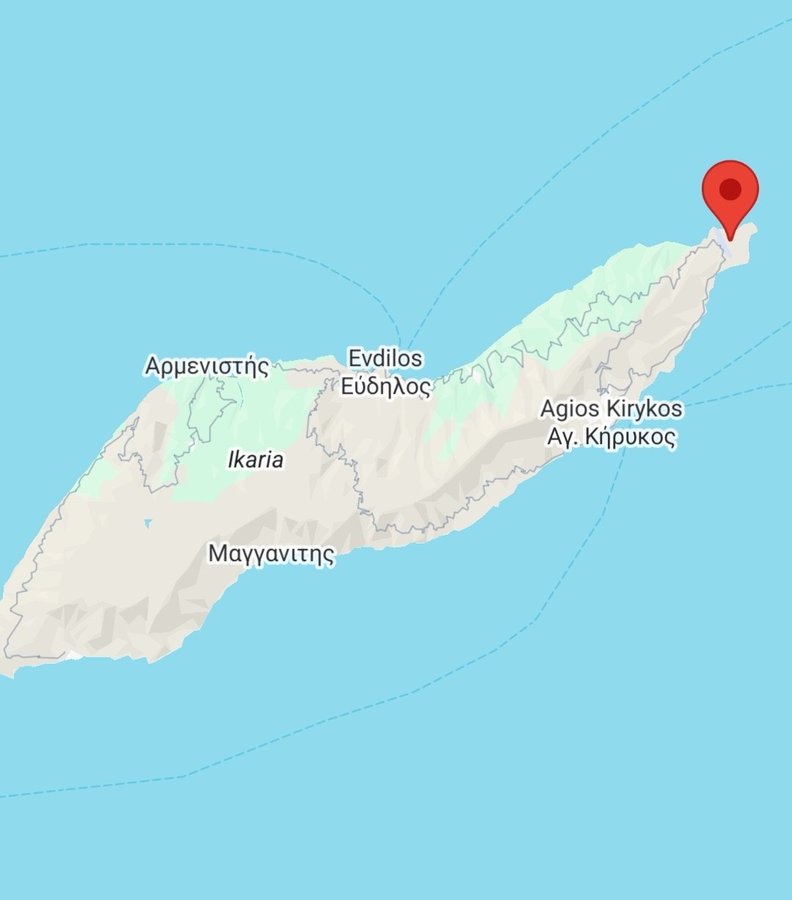
Dans un autre incident, l’organisation a signalé qu’environ 71 migrants, dont deux femmes enceintes et des enfants, avaient atteint l’île grecque d’Ikaria après l’avoir contactée alors qu’ils étaient encore en mer.
Le groupe aurait sollicité une assistance médicale urgente, Alarm Phone avertissant que plusieurs personnes vulnérables parmi les migrants nécessitaient une prise en charge immédiate.
L’organisation a ensuite indiqué avoir rétabli le contact avec les migrants, qui ont confirmé se trouver dans un commissariat de police sur l’île.
Alarm Phone leur a souhaité beaucoup de courage et de bonne chance pour la suite de leur parcours.
Ces incidents mettent en évidence les risques persistants auxquels sont confrontés les migrants qui tentent de traverser la mer dans des conditions dangereuses pour rejoindre les pays européens, particulièrement lorsque les conditions météorologiques sont défavorables.
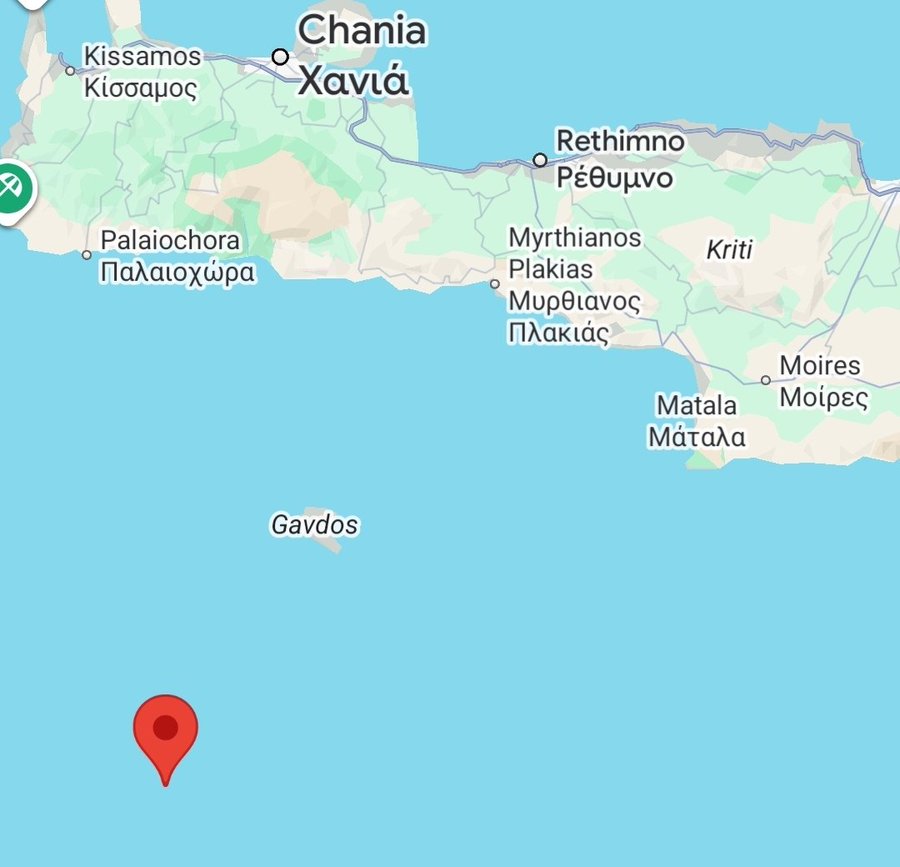
Humanitarian organisation Alarm Phone has reported receiving distress calls from three groups of migrants attempting to reach Greece, including 75 people stranded in rough seas south of Crete.
In a series of posts on X, the organisation said the group of 75 people was in severe distress, with water entering their boat as they drifted amid high waves.
Alarm Phone said the migrants were panicking and appealed to the Greek Coast Guard to continue searching for them after authorities reportedly said they had been unable to locate the boat, despite receiving updated coordinates.
In a separate incident reported on November 1, the organisation said it had received a distress call from 53 people stranded south of Crete.
According to Alarm Phone, it alerted the Greek Coast Guard the previous night and was informed that a search operation was underway.
The group was reportedly without food and drinking water while awaiting rescue.
However, the organisation later said relatives of the migrants informed it that the group had been rescued. The Greek Coast Guard also confirmed that it had rescued a boat in the area.
Alarm Phone expressed relief over the rescue and hoped that all those on board were safe.
In another incident, the organisation reported that approximately 71 migrants, including two pregnant women and children, had reached the Greek island of Ikaria after initially contacting it while still at sea.
The group reportedly requested urgent medical assistance, with Alarm Phone warning that several vulnerable people among them required immediate attention.
The organisation later said it had re-established contact with the migrants, who confirmed that they were at a police station on the island.
Alarm Phone wished them strength and good luck for the remainder of their journey.
The incidents highlight the continuing risks faced by migrants attempting dangerous sea crossings to reach European countries, particularly during periods of rough weather.
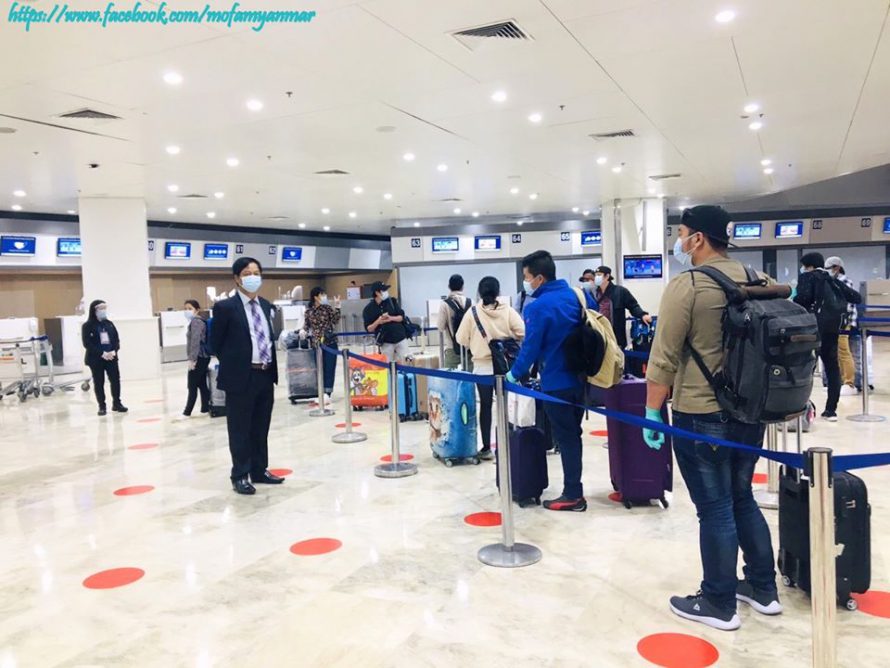
Nigerians lose an estimated N75 billion annually to visa application fees and related expenses, with unsuccessful applications to Schengen countries alone accounting for about N19 billion in 2025, according to a report obtained from the Ministry of Foreign Affairs.
The report attributed the losses to rising visa charges, high rejection rates and the non-refundable nature of fees paid to foreign embassies, leaving thousands of Nigerians financially disadvantaged when their applications are rejected.
Canada, the United Kingdom, Belgium, Spain and the United States were identified as some of the destinations where Nigerian applicants face significant financial risks due to stringent immigration requirements and high visa refusal rates.
Additional costs increase financial burden
The report noted that the cost of applying for visas goes beyond official application fees to include payments for visa application centres, medical insurance, hotel reservations, flight bookings and other supporting documents.
Depending on the destination, an unsuccessful visa application could cost an applicant between N350,000 and N1.2 million, even when the visa is eventually denied.
The situation has raised concerns about the financial implications of international travel for Nigerians, particularly students, tourists and other prospective travellers who must meet demanding documentation requirements before their applications are considered.
Canada, Schengen countries record high rejection rates
Canada reportedly rejected 75 per cent of Nigerian study permit applications between January and April 2026, meaning only one in four applicants received approval during the period.
The report attributed the high refusal rate largely to concerns among Canadian immigration authorities about whether applicants would leave the country after completing their studies.
Within the Schengen Area, Belgium recorded the highest visa refusal rate for Nigerian applicants at 60.3 per cent, followed by Spain at 52.7 per cent and France at 47.4 per cent.
The overall Schengen visa rejection rate for Nigerians increased to 46.9 per cent in 2025, compared with 45.9 per cent in 2024.
Approximately 250,000 applications were rejected during the period, resulting in an estimated N19 billion in losses to Nigerian applicants, according to the report.
UK, US also pose challenges
The United Kingdom recorded an overall visa refusal rate of 33.1 per cent for Nigerian applicants in 2025, which reportedly rose to 35.4 per cent in the first quarter of 2026.
Visitor visa applications had an estimated rejection rate of 38.6 per cent, exposing applicants to potential financial losses from non-refundable fees and travel-related arrangements.
For the United States, the report put the refusal rate for African applicants seeking F-1 student visas at approximately 64 per cent.
The figures underscore the financial risks confronting prospective international students and travellers who spend substantial amounts preparing their applications without any guarantee of approval.
Japan increases visa charges
Japan was identified as one of the destinations with relatively lower visa rejection rates for Nigerians, estimated at between 12 and 15 per cent.
However, the country reportedly increased its visa charges fivefold from July 1, 2026. A single-entry visa now costs ¥15,000, while multiple-entry applications attract a fee of ¥30,000.
The report also highlighted the cost of obtaining visas for other popular destinations.
A 10-year UK visitor visa was estimated at approximately N2.09 million, while a six-month visitor visa costs about N203,000.
The United States B1/B2 visitor visa was put at approximately N299,700, while Canadian visitor visa and biometric charges stood at about N205,000.
Visa-free destinations recommended
To reduce potential financial losses, the report advised Nigerians to consider destinations offering visa-free entry, visas on arrival or electronic travel authorisation, subject to meeting the relevant eligibility requirements.
Countries identified as possible alternatives include Ghana, Benin Republic, Togo, Senegal, The Gambia, Rwanda, Mauritius, Barbados and Dominica.
However, prospective travellers were urged to confirm applicable entry requirements before making travel plans, as visa-free arrangements and other immigration policies may change.
The report also advised intending travellers to verify current visa requirements through official government channels before paying application fees or committing funds to flight bookings, hotel reservations and other travel arrangements.

Alarm Phone signale des appels de détresse de migrants au large de la Crète et le sauvetage de 53 personnes

Alarm Phone reports distress calls from migrants off Crete, rescue of 53 people

Comment les Nigérians perdent 75 milliards de nairas chaque année en demandes de visa

How Nigerians waste N.75trillion annually applying for visa

SOS Humanity accuse Frontex de faciliter les refoulements de migrants vers la Libye
-

 News Extra3 weeks ago
Sudan: Drone attacks disrupt school lessons in El Obeid- NRC
-
 News3 weeks ago
Sea-Watch rescues 227 migrants in Mediterranean within 48 hours
-
 News3 weeks ago
Sea-Watch secourt 227 migrants en Méditerranée en 48 heures
-
 News3 weeks ago
Soudan : les attaques de drones perturbent les cours à El-Obeid, alerte le NRC
-

 News Extra7 days ago
IOM’s Displacement Tracking Matrix monitors 97.2 million people in 2025
-

 News6 days ago
Libya repatriates hundreds of migrants, deploys reinforcements to Tobruk
-
News6 days ago
Libye : des centaines de migrants rapatriés, des renforts déployés à Tobrouk
-
 News Extra7 days ago
La Matrice de suivi des déplacements de l’OIM a suivi 97,2 millions de personnes en 2025