
News
Arrival of ten more lifeless people at Lampedusa met with anger – Maldusa Project


Maldusa Project, an organization facilitating freedom of movement on land and sea, has decried rising death rates and violence on international waters.
The organization, while chronicling recent fatalities on international waters said: “Last night in Lampedusa, the arrival of ten more lifeless people was met with anger and sorrow, victims of the European border regime.
“The sailboat Nadir from @resqship, towed for over 10 hours the wooden and fiberglass boat carrying the bodies. Before entering the port at Molo Favaloro, access to which was denied to the public, the crew of the sailboat placed 10 red lights on the boat.
“Photos of the deck – partially torn apart in an attempt to distinguish the alive from the dead – show parts of the bodies trapped, suffocated by gasoline. Another act of violence in recent days, which we receive with anger and bitterness.”
Just yesterday, Maldusa Project said at least another fifty people were deliberately killed by the political decisions of European governments. “A sailboat sank just over 100 miles from Roccella Ionica, as captured in photos by an Italian Coast Guard helicopter.
“Only four days ago was the anniversary of the Pylos shipwreck, where more than six hundred people lost their lives in 2023 due to a fatal intervention of the Greek Coast Guard.
“These are not isolated cases, “accidents,” or “emergencies.” They are the predictable and intentional results of controlling borders and reducing arrivals, pushing back or letting people die who are fighting for their freedom.”
Continuing, it said: “A recent example is the thirteen people spotted at sea by Seabird from @seawatchcrew only a few days ago, dead for days, and recovered by the crews of @MSF_Sea and @SOSMedIntl. This was the only evidence of an hidden shipwreck, which would have never come to our attention.
“On June 1st, another person lost their life during a rescue operation by the commercial ship Maersk Aegean. Earlier, on May 28th, @soshumanity_en found a 5-month-old baby girl dead, whose body remained in Lampedusa’s morgue until yesterday, June 17th, without refrigeration.”
“What happens to these people?”Maldusa Project questioned.
The attempt to displace them as quickly as possible when alive, it said extends even after death. “No identification is guaranteed by the Italian authorities, and their memory is considered too inconvenient.
“The structural violence of borders becomes a concrete practice on the bodies of people, forced, tortured, and persecuted before, killed at sea or hidden and forgotten once their bodies arrive.
“However, no political pact between the elites of the northern and southern Mediterranean countries will stop the force of those fighting for freedom.
“In solidarity with all people on the move, their loved ones, and those who fight in solidarity with them.”










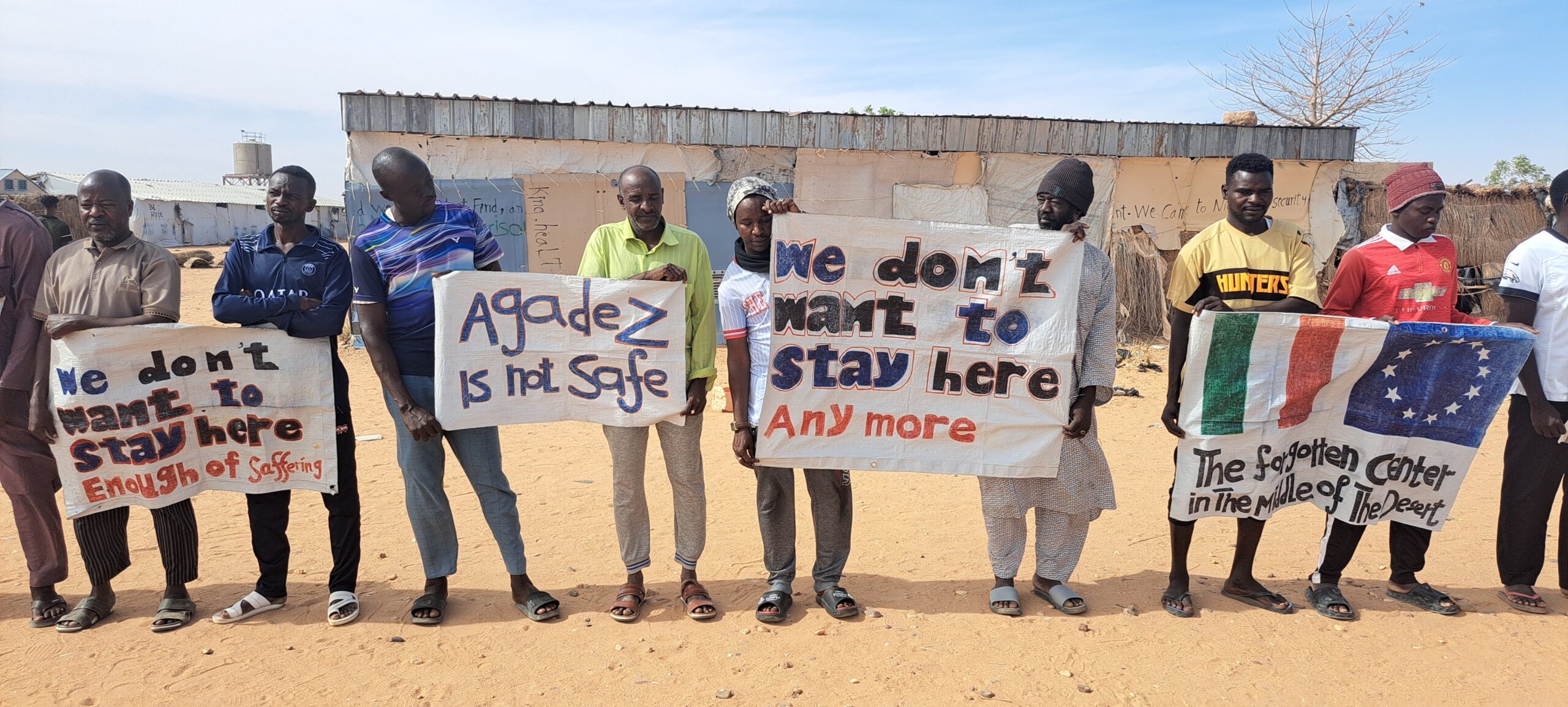
Des réfugiés installés au centre humanitaire d’Agadez, au Niger, poursuivent une manifestation pacifique devant les bureaux du Haut-Commissariat des Nations unies pour les réfugiés (HCR), accusant les organisations humanitaires d’ignorer leur situation et de ne pas répondre à leurs revendications.
Les réfugiés, regroupés sous le nom de Refugees in Niger, affirment manifester depuis plus de deux ans pour dénoncer leurs conditions de vie et ce qu’ils considèrent comme un manque d’engagement des organisations humanitaires en faveur de la protection de leurs droits.
Dans une série de publications sur X entre le 1er et le 5 novembre, le groupe a indiqué que la manifestation avait atteint son 771e jour au 2 novembre, ajoutant que la situation au centre s’était considérablement détériorée.
Il a décrit les conditions de vie comme extrêmement difficiles, soulignant que les réfugiés manquaient de produits de première nécessité et faisaient face à un avenir incertain.
« La situation à Agadez est devenue catastrophique. Les réfugiés souffrent énormément, vivent dans des conditions déplorables et leur sort demeure incertain depuis leur arrivée au centre », a déclaré le groupe dans une publication du 2 novembre.
Les manifestants ont également accusé le HCR et d’autres organisations humanitaires de garder le silence malgré la durée de leur mobilisation et leurs appels répétés à l’aide.
Dans une autre publication datée du 5 novembre, le groupe a indiqué que la manifestation pacifique se poursuivait toujours devant les bureaux du HCR, exprimant sa frustration face à ce qu’il a qualifié d’inaction persistante des organisations humanitaires alors que les réfugiés continuent de vivre dans des conditions difficiles.
Le groupe a attiré l’attention sur les revendications des réfugiés concernant leurs droits et l’amélioration de leurs conditions de vie, appelant les organisations humanitaires à répondre à leurs préoccupations.
Le HCR n’avait pas encore réagi aux accusations contenues dans les publications citées.
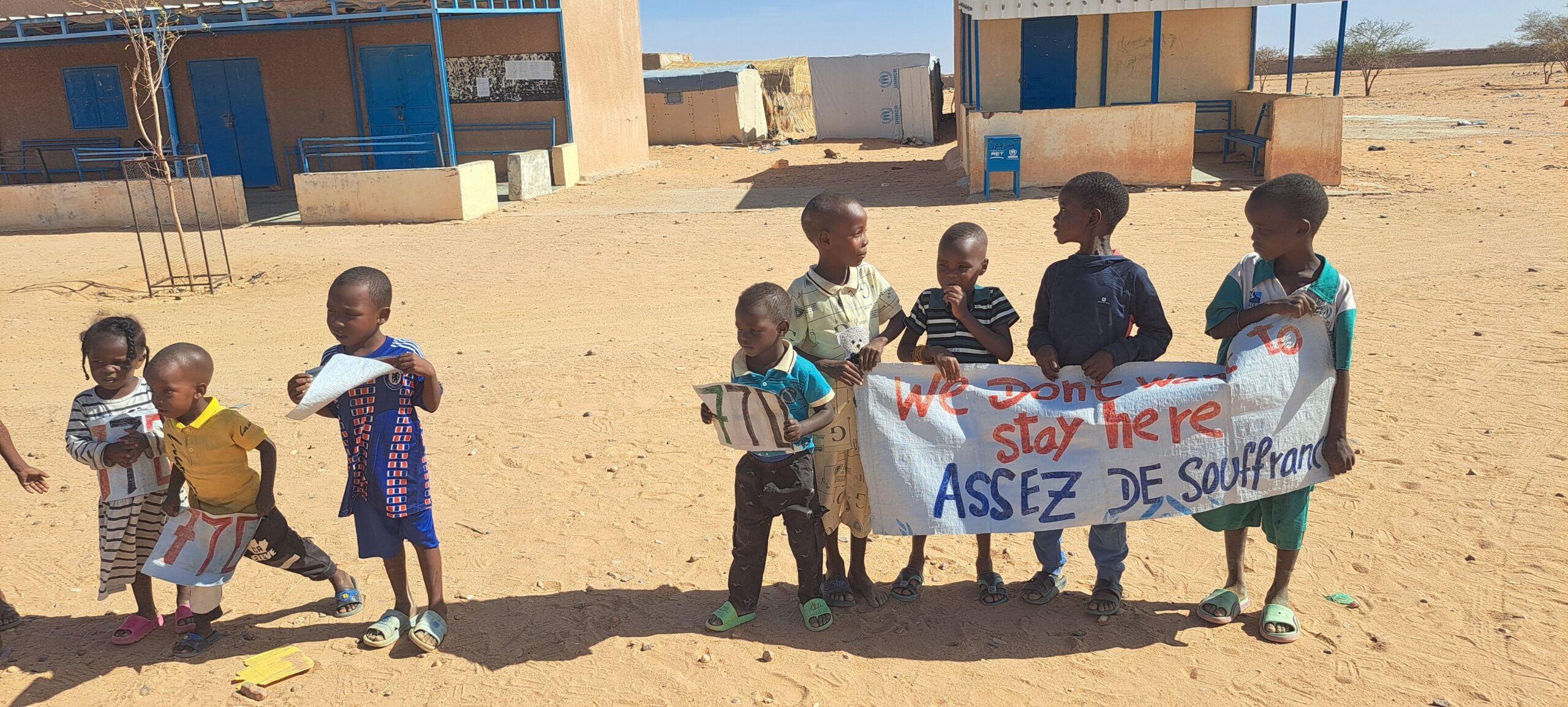
Refugees at the Agadez Humanitarian Centre in Niger have continued a peaceful protest outside the office of the United Nations High Commissioner for Refugees (UNHCR), accusing humanitarian organisations of ignoring their plight and failing to address their demands.
The refugees, under the group Refugees in Niger, said they had been protesting for more than two years over their living conditions and what they described as the lack of efforts by humanitarian agencies to protect their rights.
In a series of posts on X between November 1 and 5, the group said the protest had entered its 771st day as of November 2, adding that the situation at the centre had deteriorated significantly.
It described conditions as dire, saying the refugees lacked basic necessities and faced an uncertain future.
“The situation in Agadez has become catastrophic. Refugees are suffering immensely, living in dire conditions, and their fate has remained unknown since their arrival at the centre,” the group said in a post on November 2.
The protesters also accused UNHCR and other humanitarian organisations of remaining silent despite their prolonged demonstrations and appeals for assistance.
In another post on November 5, the group said the peaceful protest was still ongoing outside the UNHCR office, expressing frustration over what it described as the continued inaction of humanitarian organisations while refugees endured difficult conditions.
The group called attention to the refugees’ demands for their rights and improved living conditions, urging humanitarian organisations to address their concerns.
The UNHCR had not responded to the allegations in the posts cited.
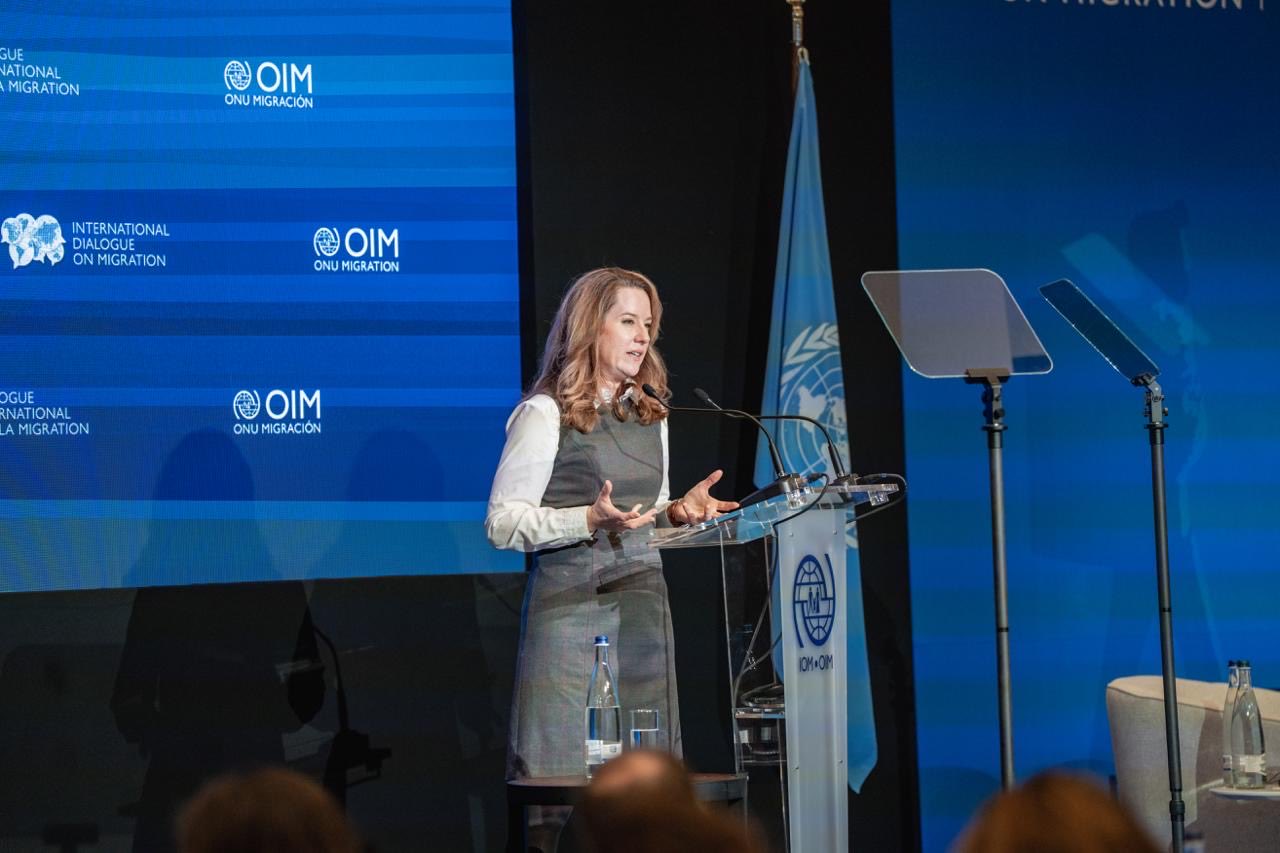
Migration expert Jeff Crisp has questioned the International Organization for Migration’s (IOM) decision to participate in the implementation of a United States programme involving the deportation of migrants to third countries.
Crisp also raised concerns over what he described as a racially based relocation programme targeting white South Africans.
In a post on X on November 2, Crisp said he was seeking clarification on IOM’s involvement in the two programmes.
“I am trying to understand IOM’s decision to be involved in the implementation of the US programme of 3rd country deportations and its racially-based relocation programme for white South Africans,” he wrote.
His comments were made in response to a post by IOM Director-General Amy Pope, who was discussing the importance of building public trust in migration governance.
In her post, Pope said trust in migration could not be established through facts and figures alone, stressing the need for transparency, public participation and accountability in institutional decision-making.
“Trust in migration isn’t built with facts and figures alone. It’s built when people understand decisions, can help shape them, and see that institutions follow through,” she wrote.
Pope added that the issues were central to discussions at the 2026 International Dialogue on Migration (#IDM2026), taking place in Geneva.
Crisp’s response raises questions about IOM’s role in implementing migration policies and deportation arrangements pursued by the US government.

Niger : des réfugiés poursuivent leur manifestation devant le centre du HCR à Agadez

Refugees continue protest at UNHCR centre in Niger’s Agadez

Jeff Crisp s’interroge sur la participation de l’OIM au programme américain d’expulsions vers des pays tiers

Jeff Crisp questions IOM’s involvement in US third-country deportation programme

Alarm Phone signale des appels de détresse de migrants au large de la Crète et le sauvetage de 53 personnes
-

 News Extra1 week ago
IOM’s Displacement Tracking Matrix monitors 97.2 million people in 2025
-
 News1 week ago
Libya repatriates hundreds of migrants, deploys reinforcements to Tobruk
-
News1 week ago
Libye : des centaines de migrants rapatriés, des renforts déployés à Tobrouk
-
 News1 week ago
Ebola:DRC confirms 10,000 cases, NRC seeks scale-up
-

 News Extra1 week ago
La Matrice de suivi des déplacements de l’OIM a suivi 97,2 millions de personnes en 2025
-

 Features1 week ago
League of Arab States, IOM launch Arab Migration Data Network
-
 News Extra3 days ago
SOS Humanity accuses Frontex of aiding migrant pushbacks to Libya
-
 News1 week ago
Ebola : la RDC confirme 10 000 cas, le NRC appelle à un renforcement urgent de la réponse