
News Extra
‘How my children’s laughter saved me from suicide’

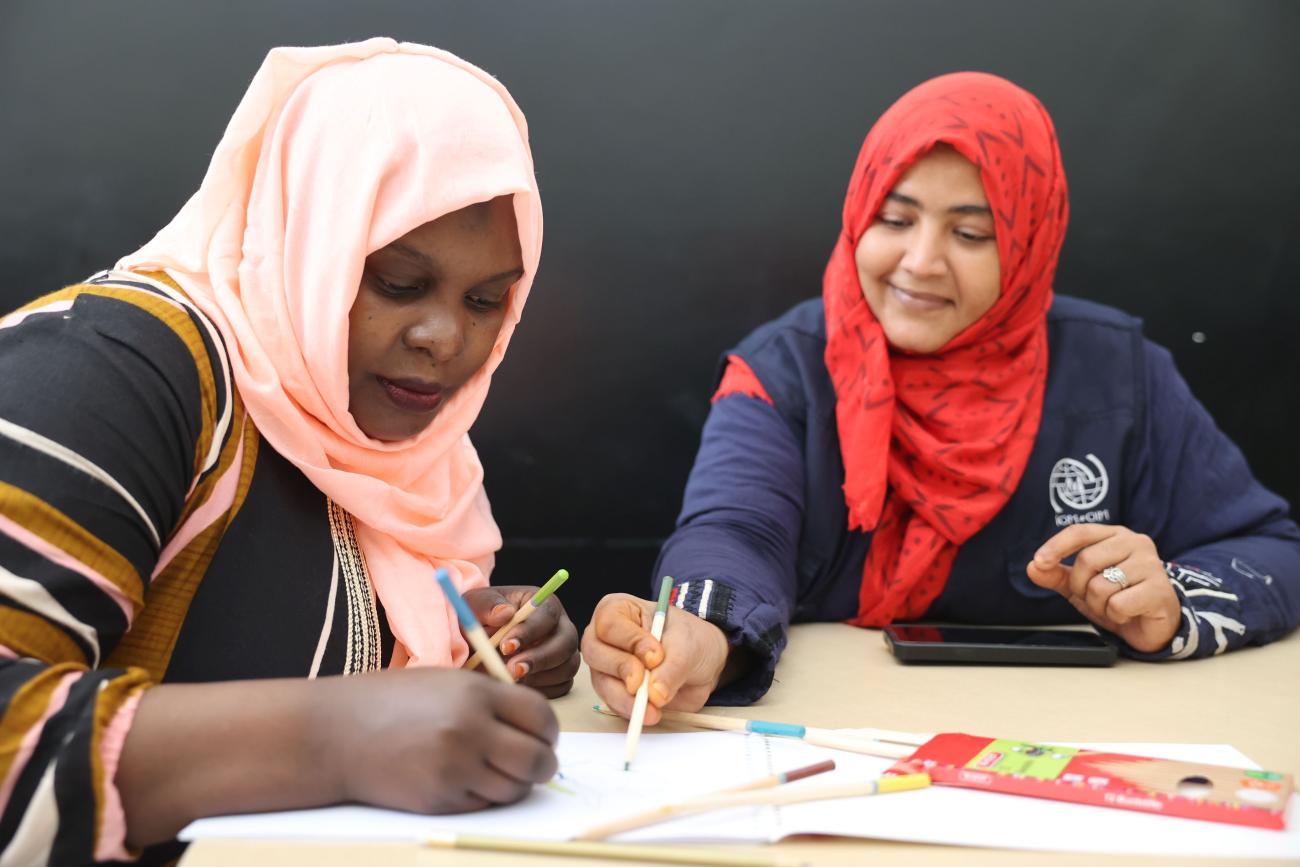
A Ugandan migrant Imanu has spoken on how her children’s Innocent faces and laughter saved her from committing suicide.
The thirty-year-old Imanu grew up as an orphan, raised in a small village in Uganda by her grandparents. Shortly after completing high school, she got married and soon became a mother of three. After her marriage ended, Imanu focused on raising her children.
“I struggled to provide for my children’s basic needs, including food and education,” says Imanu. “I am deeply indebted to my grandparents who have helped me along the way.”
Amid life’s adversities, Imanu caught wind of tales from relatives and friends detailing high-wage work opportunities in the Gulf countries. Gradually, the idea of migration took root in her mind.
Defying all warnings and fears, she traveled without informing any relatives, leaving everything behind, driven by the hope of securing a better future for her children.
Along her grueling journey, Imanu took a job as a housekeeper in a small village. Unfortunately, her experience took a dark turn. “I asked for my salary, but the housemistress told me she would not give me any money. She insisted that receiving food should be more than enough.”
Imanu was then smuggled to Yemen, where another family took her in. Regrettably, she faced exploitation once again, being forced to work without pay. Her employer harassed her when she dared to demand her rights.
“I often thought about escaping, but we lived in an arid area in the middle of the mountains with no houses or roads, so it was impossible for me to leave,” Imanu explains.
Over the following months, she meticulously planned her escape. At times, the idea of taking her own life crossed her mind as a desperate means to end her suffering.
“Whenever thoughts of suicide surfaced, the innocent faces of my children and their sweet laughter brought me back, compelling me to endure the bitterness of my days,” she says.
Imanu eventually summoned the courage to attempt to escape. She embarked on a challenging journey that stretched over four agonizing weeks. Discovering a road frequented by vehicles, she sought refuge inside a wrecked car. In this makeshift sanctuary, travelers and migrants passing by became her lifeline, offering her food and water.
“I stayed in that car leave until a bus stopped and a woman emerged,” she recalls. “She was like an angel, urging me to join her. Initially, I hesitated – I had lost trust in everyone.”
Dr. Mona, a psychiatrist with the International Organization for Migration in Aden, Yemen, was deeply moved the first time she met Imanu. “Once she agreed to come with me, I escorted her to IOM’s Community-Based Care (CBC), where I helped her bathe.”
IOM’s mobile medical team tried to talk to her, but she did not respond. During her first month at the CBC, she was unable to speak, afraid of everyone who tried to approach her. However, the team patiently helped her open up again through drawing and therapeutical activities.
“I’ve been receiving care and support for over a year at IOM’s CBC in Aden,” Imanu says. “I love everyone here as if they were my family; we share meals and listen to each other’s painful stories, but we take pride in having overcome them.”
IOM also supports stranded migrants in Yemen through its voluntary humanitarian return. With optimism in her heart, Imanu now anticipates a reunion with her children in the near future.
IOM’s protection assistance through the Migrant Response Points and CBCs in Yemen is supported by EU Humanitarian Aid, United States Bureau of Population, Refugees and Migration and the Government of Germany.




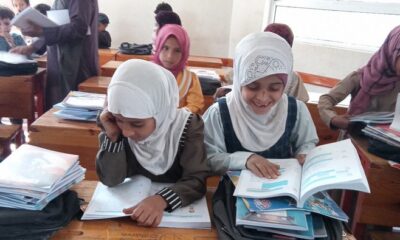

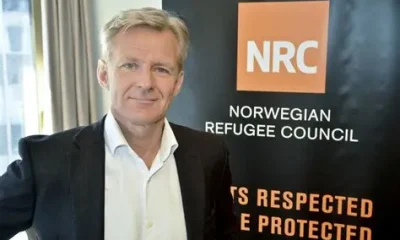

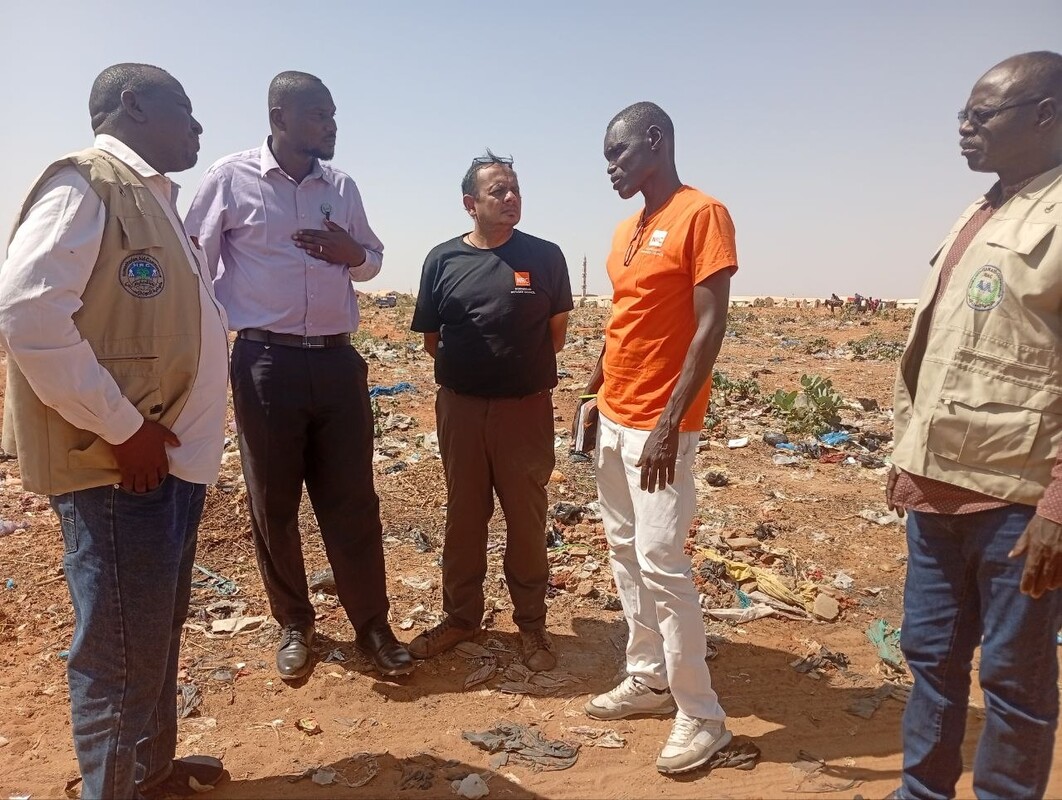
Children in El Obeid, North Kordofan State, are facing growing threats from drones flying overhead, forcing schools to suspend lessons and disrupting access to education, the Norwegian Refugee Council (NRC) has said.
Shashwat Saraf, NRC’s country director in Sudan, raised the alarm after visiting the city this week, saying children and teachers were struggling to continue learning amid growing security concerns.
“I visited a school where teachers told me they are being forced to regularly suspend lessons as a result of drones flying overhead,” Saraf said.
“It is an outrage that children should experience such things when simply trying to get education: they should not have to be brave just to attend school.”
According to the NRC, its learning centres in El Obeid have enrolled more than 5,500 pupils, while many other families are still seeking to enrol their children.
The organisation, working with its partner, the Alsalam Organisation for Rehabilitation and Development (AORD), supports children in catching up on missed lessons and managing the fear and stress associated with the conflict.
Drones have repeatedly struck civilian locations in El Obeid in recent weeks, including a university dormitory, a shelter for displaced families and warehouses in Sheikan locality containing more than 330,000 textbooks.
The city is home to more than 500,000 people, including tens of thousands displaced by fighting in other parts of Kordofan and Sudan.
“The places where people sleep have been hit from the air, and so have the books children need to learn,” Saraf said.
He added that the attacks had left families uncertain about their safety, while rising prices and limited access to clean water, safe sanitation and adequate shelter were worsening their living conditions.
“Each attack leaves families wondering what will be hit next,” he said.
The NRC also highlighted the difficult conditions facing students at a girls’ school in El Obeid, where about 1,200 pupils are enrolled but only three classrooms are available for use.
“Entering one of the classrooms meant trying not to step on one another,” Saraf said.
The organisation has built two additional classrooms and toilets at the school, supplied learning materials and trained teachers to support children affected by the conflict.
However, Saraf said the interventions remained insufficient to meet the growing needs.
“Children are willing, teachers are willing, parents are willing. What they are missing is the certainty that a school day can simply be a school day, without listening for drones or wondering when lessons might have to stop,” he said.
Beyond education, the NRC has provided cash assistance to 4,000 households and distributed 3,000 kits containing hygiene and shelter supplies, including blankets, plastic sheeting, sleeping mats, jerrycans and solar lamps.
It also plans to support community-led initiatives to strengthen efforts by residents already responding to the needs of affected families.
The organisation said its 12-month response plan for El Obeid requires $7.1 million to assist 107,000 people, but 65 per cent of the funding remains unmet.
Saraf called on parties to the conflict to protect civilians and essential infrastructure, stressing that attacks on civilians and the infrastructure they depend on are prohibited under international humanitarian law.
“The parties to this war must protect schools, homes, shelters and markets, and keep military assets away from civilian areas,” he said.
He also urged donors to provide immediate funding for water, shelter and education programmes to ensure that displaced people and host communities in El Obeid can access essential assistance.
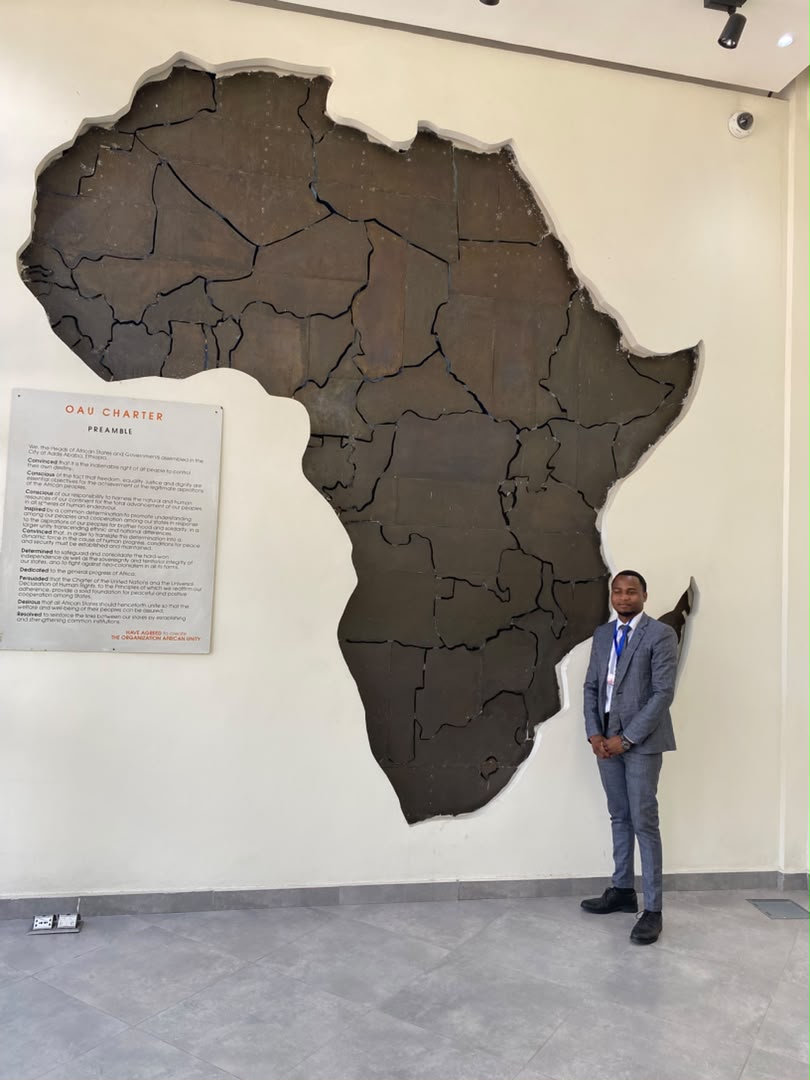
Un avocat ougandais et défenseur de la jeunesse, Mwanje Gideon, a appelé l’Union africaine (UA) à mettre en place d’urgence une monnaie numérique continentale, à investir dans le développement des jeunes, à supprimer les obstacles à la libre circulation en Afrique et à rejeter les accords migratoires qui transforment les pays africains en centres de détention externalisés pour les pays européens.
Gideon, surnommé Batapa, né le 8 avril 2000 à Bamunaniika, dans le district de Luwero, en Ouganda, estime que ces mesures sont indispensables pour accélérer l’intégration économique de l’Afrique, renforcer sa souveraineté, créer des emplois pour les jeunes et protéger la dignité des migrants et des demandeurs d’asile.
Il a formulé cet appel dans une lettre datée du 10 septembre 2026, adressée au président de la Commission de l’Union africaine, au siège de l’organisation à Addis-Abeba, en Éthiopie. Il s’est personnellement rendu au siège de l’UA pour remettre le document.
Dans cette lettre intitulée « Priorités urgentes pour l’intégration économique de l’Afrique, la jeunesse et la souveraineté », l’avocat basé à Kampala a salué les progrès accomplis en faveur de l’unité continentale, notamment la création de l’Organisation de l’unité africaine (OUA), sa transformation en Union africaine et la mise en place de la Zone de libre-échange continentale africaine (ZLECAf).
Il a toutefois déploré que, malgré des décennies d’engagements en faveur de l’intégration régionale, l’Afrique continue de faire face à d’importants défis économiques, politiques et migratoires.
Selon lui, l’évolution rapide du contexte politique et économique mondial exige des mesures urgentes et concrètes pour préserver l’avenir du continent.
Gideon a identifié quatre domaines prioritaires nécessitant une intervention immédiate de l’organisation continentale.
Il plaide pour une monnaie numérique africaine
Sur le plan de l’intégration économique, l’avocat a préconisé la création d’une monnaie numérique continentale sécurisée, spécialement conçue pour faciliter les échanges commerciaux transfrontaliers entre les pays africains.
Il estime que le recours actuel aux devises étrangères pour les transactions entre pays africains fragilise le commerce régional et entraîne une sortie importante de ressources financières du continent.
« Aujourd’hui, un commerçant d’Afrique de l’Est qui vend des marchandises en Afrique de l’Ouest doit souvent convertir d’abord sa monnaie locale en devises étrangères, payer des frais de transaction élevés et perdre ainsi une partie de son capital », a-t-il déclaré.
Gideon a souligné que, si l’ambition à long terme de créer une monnaie africaine unique demeure importante, les entreprises ne peuvent pas attendre indéfiniment sa réalisation.
Il a proposé l’introduction d’une monnaie numérique baptisée « Afro », qui permettrait aux entreprises africaines d’effectuer facilement des transactions au-delà des frontières.
« Une monnaie numérique Afro permettrait aux entreprises africaines d’acheter et de vendre entre elles sans difficulté, de conserver la valeur financière au sein de notre continent et de construire une véritable indépendance économique », a-t-il affirmé.
Selon lui, une telle initiative renforcerait le commerce intra-africain, réduirait les coûts de transaction et accélérerait l’intégration économique du continent.
Il réclame des investissements dans le sport et la technologie pour la jeunesse africaine
L’avocat a également exhorté les gouvernements africains à faire des investissements dans les infrastructures sportives, le développement technologique, l’éducation numérique et les centres d’innovation une priorité, afin de lutter contre le chômage des jeunes.
Il a relevé que, malgré la population la plus jeune au monde, l’Afrique continue de souffrir d’un manque d’emplois et d’opportunités économiques pour des millions de jeunes.
Selon lui, l’industrie mondiale du sport génère plus de 500 milliards de dollars par an grâce aux droits de diffusion, aux parrainages, aux produits dérivés, au tourisme sportif et à d’autres activités commerciales.
Gideon a cité la star sénégalaise du football Sadio Mané et l’international égyptien Mohamed Salah comme exemples de sportifs africains dont la réussite a contribué au développement économique de leurs pays d’origine.
Il a affirmé que Sadio Mané avait investi plus de 20 millions de dollars dans sa ville natale de Bambali, au Sénégal, pour soutenir des projets dans les domaines de la santé, de l’éducation et du développement agro-industriel.
Selon lui, ces investissements ont créé des emplois, réduit la pauvreté et renforcé l’économie locale.
Il a également mis en avant les contributions de Mohamed Salah dans les domaines de la santé, du développement des jeunes et des infrastructures communautaires en Égypte.
Gideon estime que la formation d’un plus grand nombre de sportifs africains capables de rivaliser au niveau international pourrait générer d’importantes recettes en devises étrangères et stimuler la croissance économique locale.
« Si l’Afrique produit 1 000 sportifs d’élite dont la valeur marchande, dans différentes disciplines internationales, est comparable à celle de Sadio Mané ou de Mohamed Salah, l’économie bénéficierait d’un apport direct de capitaux dépassant 500 millions de dollars, sous forme de recettes en devises, d’indemnités de transfert et de transferts de fonds des joueurs », a-t-il déclaré.
Il a appelé l’Union africaine et ses États membres à reconnaître le sport comme un secteur économique majeur, plutôt que comme une simple activité de loisirs.
« Le sport n’est plus seulement un loisir ; c’est une industrie mondiale majeure qui crée des millions d’emplois, développe les économies locales et rassemble les communautés », a-t-il souligné.
Il a ajouté que les investissements dans les pôles technologiques, les centres d’innovation et l’éducation numérique permettraient aux jeunes Africains d’acquérir les compétences nécessaires pour développer des produits compétitifs à l’échelle mondiale sans devoir quitter leur pays.
« Investir dans notre jeunesse est le plus important investissement économique que l’Afrique puisse réaliser aujourd’hui », a déclaré Gideon.
Il demande la suppression des visas pour les déplacements en Afrique
Concernant la mobilité régionale, Gideon s’est inquiété du fait que les citoyens africains continuent de se heurter à des procédures d’immigration restrictives, à des frais de visa élevés et à de longs délais de traitement lorsqu’ils voyagent entre les pays du continent.
Il a estimé que cette situation était incompatible avec l’ambition de l’Afrique de parvenir à une intégration économique et politique.
L’avocat a particulièrement critiqué les restrictions de voyage imposées aux citoyens africains qui souhaitent assister à des réunions, mener des activités commerciales ou participer à des initiatives de la société civile dans les villes accueillant les principales institutions continentales.
Il a notamment cité Addis-Abeba, en Éthiopie, et Banjul, en Gambie, parmi les destinations diplomatiques importantes où la libre circulation devrait être facilitée.
Gideon a demandé à l’Union africaine d’instaurer une politique obligatoire permettant aux détenteurs de passeports africains d’obtenir gratuitement un visa à l’arrivée, valable au moins quatre jours, lorsqu’ils se rendent dans les États membres accueillant les principaux sièges institutionnels du continent.
Selon lui, cette mesure permettrait aux entrepreneurs, aux représentants de la société civile et aux autres citoyens africains de mener leurs activités légitimes sans subir de difficultés administratives inutiles.
« Ce laissez-passer de courte durée donnerait aux visiteurs suffisamment de temps pour mener leurs activités sereinement, au lieu de devoir précipiter des réunions importantes par crainte de sanctions liées à l’immigration », a-t-il expliqué.
Il a soutenu que la suppression des obstacles inutiles aux déplacements favoriserait la coopération régionale, renforcerait les relations entre les peuples et rapprocherait le continent de son objectif d’une Afrique sans frontières.
Il met en garde contre les politiques européennes d’externalisation des migrations
Gideon a également appelé l’Union africaine à intervenir plus fermement contre l’externalisation des politiques européennes de migration et de contrôle des frontières vers les pays africains.
Il s’est inquiété des accords par lesquels des gouvernements européens cherchent à convaincre des États africains d’accueillir, de traiter ou de détenir des migrants et des demandeurs d’asile en échange d’une aide financière ou de financements destinés au développement.
L’avocat a averti que de tels accords pourraient porter atteinte à la souveraineté de l’Afrique et exposer les migrants vulnérables à des violations des droits humains.
« Échanger des êtres humains contre de l’argent est une voie profondément dangereuse, qui rappelle les pages les plus sombres de l’histoire de notre continent », a-t-il déclaré.
Il a soutenu que les pays riches ne devraient pas transférer aux nations africaines leurs responsabilités internationales en matière de protection des réfugiés par le biais d’accords financiers.
Selon lui, la responsabilité de protéger les personnes fuyant les persécutions doit être partagée conformément au droit international des réfugiés et au principe de non-refoulement, qui interdit de renvoyer des personnes vers des territoires où elles risquent de subir de graves menaces contre leur vie ou leur liberté.
« Les pays occidentaux ne doivent pas être autorisés à se soustraire à leurs obligations internationales sous prétexte que l’hospitalité africaine, notre esprit de Karibu, est chaleureuse et accueillante », a-t-il déclaré.
Gideon a exhorté l’Union africaine à examiner les accords de coopération migratoire existants entre les pays africains et européens afin de déterminer s’ils respectent les normes internationales relatives aux droits humains.
Il a également demandé à l’organisation continentale de condamner publiquement les accords qui compromettent la dignité des migrants en échange d’avantages financiers.
« L’Union africaine doit enquêter sur tous les accords migratoires existants, condamner publiquement ceux qui troquent la dignité humaine contre des fonds et mettre en garde les États membres contre la conclusion d’accords qui transforment notre territoire en centres de détention externalisés », a-t-il déclaré.
L’avocat a estimé que les pays africains devaient résister à toute tentative visant à les transformer en centres de rétention pour les migrants rejetés ou transférés par les gouvernements européens.
Il a souligné que l’hospitalité traditionnelle de l’Afrique ne devait pas servir de prétexte à des accords qui déplacent les responsabilités en matière de gestion migratoire vers des pays qui ne sont pas à l’origine de ces décisions.
Il appelle l’UA à faire preuve d’un leadership plus ferme
En conclusion, Gideon a exhorté la Commission de l’Union africaine à faire preuve d’un leadership déterminé pour promouvoir l’indépendance économique du continent, l’autonomisation des jeunes, la liberté de circulation et la protection des migrants.
Il a affirmé que les initiatives proposées étaient étroitement liées et indispensables à la construction d’une Afrique prospère, unie et souveraine.
Selon lui, une monnaie numérique continentale faciliterait les échanges commerciaux, les investissements dans le sport et la technologie donneraient davantage de moyens aux jeunes, l’assouplissement des restrictions de voyage renforcerait l’intégration, tandis que le rejet des accords migratoires abusifs protégerait la dignité et l’indépendance de l’Afrique.
Il a déclaré que des millions d’Africains attendaient de l’organisation continentale qu’elle transforme ses engagements de longue date en politiques concrètes susceptibles d’améliorer leurs conditions de vie.
« Ces quatre priorités — une monnaie numérique pour le commerce, le développement des jeunes grâce au sport et à la technologie, une Afrique sans frontières, la facilitation des déplacements vers les centres institutionnels continentaux et la défense de la dignité humaine face aux accords migratoires injustes — constituent des étapes essentielles vers une Afrique véritablement souveraine », a-t-il déclaré.
« Si ces propositions sont mises en œuvre, nous commencerons à voir émerger une Afrique unie », a ajouté Gideon.

The United States Department of Homeland Security (DHS) has named 24 Nigerians arrested by immigration authorities over alleged criminal offences, as the country intensifies its deportation campaign.
The department published the names and photographs of the Nigerians, who were reportedly apprehended by the US Immigration and Customs Enforcement (ICE) in different locations across the country.
The alleged offences range from wire and mail fraud to money laundering, drug-related crimes, identity theft, assault, forgery and cruelty towards a child.
In a statement, DHS said the publication was intended to highlight non-US citizens with criminal records who had been arrested by immigration enforcement officers.
“The U.S. Department of Homeland Security is highlighting the worst of the worst criminal aliens arrested by the U.S. Immigration and Customs Enforcement (ICE),” the statement said.
It added: “Under DHS leadership, the hardworking men and women of DHS and ICE are fulfilling President Trump’s promise and carrying out mass deportations – starting with the worst of the worst – including the illegal aliens you see here.”
According to the information released by the department, the 24 Nigerians were arrested in various cities and detention locations across the United States.
Those named include Emmanuel Omowaiye, arrested in Richmond, Texas, over alleged mail fraud; Laurene Onwuka, apprehended in Chantilly, Virginia, over alleged fraud and impersonation; Olusegun Shonekan, arrested in Newark, New Jersey, over alleged wire fraud; and Olusegun Olaseni, apprehended in Greencastle, Indiana, over an alleged amphetamine sale offence.
Others are Peter Ude, arrested in Atlanta, Georgia, over alleged wire fraud; Newton Jemide, apprehended at Fort Dix, New Jersey, over alleged wire fraud, conspiracy and mail fraud; Shedrack Umukoro, arrested in Yazoo City, Mississippi, over alleged money laundering; and Olasoji Akinbode, apprehended in Kearny, New Jersey, over alleged fraud and impersonation.
The list also includes Oluwatosin Afolabi, arrested in Conroe, Texas, over alleged fraud; Alameen Adetunji Tokosi, apprehended in Chicago, Illinois, over alleged drug possession; and Joshua Ipoade, arrested in Atlanta, Georgia, over alleged wire fraud.
Michael Orji, arrested in Oxford, Wisconsin, faces listed allegations involving weapons offences, fraud, identity theft, wire fraud, false citizenship and money laundering. Ahmadu Apooyin was apprehended in Baltimore, Maryland, over a drug-related offence, while Teslim Kiriji was arrested in Yazoo City, Mississippi, over alleged money laundering.
Also named were Onomen Uduebor, arrested in Seattle, Washington, over alleged identity theft; Charles Ochi and Daniel Eta, both apprehended in White Deer, Pennsylvania, over alleged money laundering and wire fraud, respectively.
The remaining Nigerians are Ifeanyi Ibennah, arrested in Tampa, Florida, over alleged cruelty towards a child; Kazeem Runsewe, apprehended in Thomson, Illinois, over alleged wire fraud; Fatiu Lawal, arrested in Lompoc, California, over alleged wire fraud; and Justin Akubueze, apprehended in Orem, Utah, over alleged money laundering.
Others are Moyinoluwaseun Okeowo, arrested in Orlando, Florida, over alleged larceny, forgery and concealing stolen property; Babajide Oluwaseun Faseyi, apprehended in Alden, New York, over an alleged assault offence; and Bright Eigbedion, arrested in Lompoc, California, over alleged money laundering.
DHS said the arrests formed part of the US government’s broader immigration enforcement campaign, with ICE responsible for apprehending individuals across the country.
The department’s announcement comes amid the Trump administration’s drive to expand deportations, with immigration authorities prioritising individuals they identify as having criminal records.
The publication of the names and alleged offences does not, by itself, establish the legal status or final outcome of each individual’s case, nor does it confirm that all 24 Nigerians have received deportation orders or are scheduled for immediate removal.

Soudan : les attaques de drones perturbent les cours à El-Obeid, alerte le NRC

Sudan: Drone attacks disrupt school lessons in El Obeid- NRC

Sea-Watch secourt 227 migrants en Méditerranée en 48 heures

Sea-Watch rescues 227 migrants in Mediterranean within 48 hours

Un avocat ougandais exhorte l’UA à rejeter les accords migratoires avec l’Europe
-
 Features2 weeks ago
Gaza : Près de deux millions de personnes ont besoin d’une aide d’urgence en matière d’hébergement
-

 News Extra2 weeks ago
NACTAL conteste le rapport américain sur la traite des personnes et exige la reconnaissance des contributions des organisations de la société civile nigérianes
-
 News Extra2 weeks ago
Un avocat ougandais exhorte l’UA à rejeter les accords migratoires avec l’Europe
-
 News Extra1 week ago
Sudan: Drone attacks disrupt school lessons in El Obeid- NRC
-
 Features2 weeks ago
Nigerian immigrants face hidden mental health challenges despite success, expert warns
-
 Features2 weeks ago
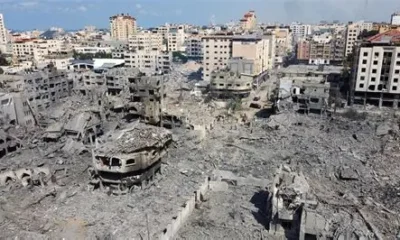
Gaza: About two million need urgent shelter assistance
-

 News Extra2 weeks ago
NACTAL faults US trafficking report, demands recognition of Nigerian CSOs’ contributions
-
 News Extra2 weeks ago
US to deport fresh set of Nigerians over alleged criminal offences