
Interviews
Why Frontex shouldn’t be abolished- Researcher Uzomah


Ngozi Louis Uzomah is the Lead Consultant of GIMBOS Plus, a Nigerian-based research firm. The Doctoral researcher from the University of Nigeria Nsukka in this interview with voiceforafricanmigrants.org,speaks about various issues affecting migration in Nigeria and Africa by extension and why the EU border agency, Frontex, shouldn’t be abolished even when calls for that are rife in different quarters.
Excerpts:
How did you get into migration and refugee research?
My migration journey to Russia, Germany and Benin Republic as well as travels to other countries of the world where I witnessed first-hand the progress and aspirations of migrants including refugees and their social and economic exclusion propelled me into migration and refugee research.
Let us look at the challenge of irregular migration in Nigeria. Would you say it is on the rise or on the decrease?
Nigeria is the most populous country in Africa and probably the 6th in the world according to US Census Bureau. With harsh socioeconomic conditions and insecurity emanating from bad governance, it is not surprising that the population leaving the country through irregular pathways will be high too.
What is the main driver of irregular migration in the country?
If you ask me the main driver of migration through irregular pathways, then it could be attributed to neocolonial hierarchies with economic and insecurity implications. What do I mean? When the colonialist physically left Nigeria on 1 October 1960, the economic structures that was used to syphon Nigeria’s wealth to colonial metropoles were not dismantled. More importantly, Bretton Woods organizations including IMF and IBRD with their bailouts of high interest rates continue to subjugate Nigeria to underdevelopment and rendering the PPP of the Naira very low. As a result, many Nigerians have problems purchasing their basic needs. Also, weapons coming mainly from North America and Europe via Libya into Nigeria are used by Boko Haram, bandits and separatists to cause refuge situation in the country thereby displacing many people who eventually use the irregular pathway to emigrate.
Another important driver of migrating through irregular pathways is bad governance which has caused deterioration in basic services and infrastructure in the country. Every facet of the polity is riddled with despair and corruption. The electricity supply is epileptic, and the roads are dilapidated. The education sector is also in comatose. Though the president recently announced that student loans could made available to improve access to education, that cannot not be achievable in practice. There are multiple formal and informal taxation imposed on citizens by the powers that be: Security agencies extort commuters and drivers; local government authorities collect levies from shop owners; and Agberos (touts) extort both the drivers and the shop owners. People have their limits, and at a point will not bear it no more. The next option is to leave, and due to lack of or limited regular pathways to migrate and strict migration laws in destination countries, aspiring Nigerian migrants chose the irregular means which may be dangerous, though. Of course, people have the right to migrate to wherever they want and if the restriction is too harsh, they will always find a way around it.
Do you think the government has done enough to address the drivers of irregular migration?
The government may be trying its best to tackle deterioration in education, insecurity, and economy in the country which are causes of desperate migration out of the country, but it is doing it the wrong way. Government policies and intentions may be right, but the implementation of the policies is antithetical to the yearnings and aspirations of the people. The issue of corruption at the top echelon is high and incompetent people are allowed to occupy positions due to cronyism.
What is your opinion about various government agencies in Nigeria working in the area of migration?
The government has done well in assigning several agencies in migration matters including NIS, FMOJ, NAPTIP, NCFRMI, NEMA and NIDCOM. However, from my interaction with members of their mid-level staff, I discovered that most of them either lack capacity in knowledge or have very low of knowledge in the field. This may be real or deliberate and sometimes a mixture of both. When some of us who are experts in the field try to point out certain anomalies, they they are not happy and will label us ‘I too know’.
They do not even understand that we criticize to make the system work better for migrants and origin, destination, and transit countries.
There should be deliberate effort for capacity building for the MDAs.
We have continued to have deportation of the citizens especially from Europe, what do you think is responsible for this?
I noticed myself that the spate of deportation from European countries has surged in recent times, even from Lithuania! There is an increase in securitization and militarization of borders which continues to problematize mobility and migrantise people on the move. There are tighter border controls in Africa influenced by EU externalization policies to keep migrants away before they reach Europe: The MIDAS technology is used at many borders in Africa to monitor migrants’ movement and there is the biometric exercise in Mauritania to capture foreigners’ identity as well as increase in the activities of Frontex in Senegal. There is also the internalization of borders in EU countries with a resolve to keep what they term as ‘unwanted migrants’ out of their territories. The rate of deportation is poised to increase as German politicians have agreed on ease home searches for migrants’ identity to speed up deportations; Nordic countries of Denmark, Finland, Iceland, Norway, and Sweden in a joint press conference agreed to strengthen diplomatic cooperation and to organise joint flights through Frontex as well as deport ‘EU-bound” migrants from North Africa; and there is a proposed legislation in Belgium to confiscate passports of undocumented people to speed up deportations.
Do you think the voluntary return programmes in Europe are effective and reliable for African migrants?
I wish the programmes were effective, then most Africans will choose to return home rather than living in uncertainty abroad. The EU is pouring millions of Euros in these return programmes that are supposed to cushion the negative effect of deportation and help returnees to sustainably reintegrate in Nigeria, but this goal is far from being achieved due to lapses in transparency and accountability in their implementation. I suggest proper monitoring of how the funds are spent to ascertain the contexts and how the programs are being implemented in the countries.
We have had cases where people who applied for voluntary return were deported. What could be responsible for this?
This is a violation of their rights. Even when some refugees and migrants have their cases still pending in the court they are rounded up and deported without due process. In all the contexts, their return is said to be unorderly, unsafe and undignified which is against the provisions of GCM and violates the principle of non-refoulment.
What do you make of the inhuman treatment of Sub-Saharan Africans in Tunisia?
The remark in February this year by the President of Tunisia, Mr. Kals Saied, about Sub-Saharan Africans coming to alter the demographic composition of Tunisia to an African country that has no affiliation to Arab and Islamic nation contributes to the racist and xenophobic attacks in the country. Ironically, this white supremacists conspiracy theory has been used to exclude Tunisians in Europe and the President applied it to stoke fears and anger for political gains. This is dangerous! Additionally, it is awful that the Tunisian government has chosen to get transactional and commodify its migration practices. After the over €1B deal between Tunisian government and the EU to among others strengthen border controls, there have been more deadly pushbacks by the Tunisian Coast guards and even more deportations from Tunisia into Algeria of Sub-Saharan Africans where their belongings are robbed.
Could ECOWAS intervention in anyway have helped in addressing the problems?
ECOWAS can address the problems, but you know there is power asymmetries between ECOWAS and the EU. The EU sponsors the initiatives and thus dictates the direction of every dialogue and agreement. There have been several agreements between ECOWAS (and even the AU) and the EU, but all of them tilt towards returning ‘unqualified migrants’ from the EU to Africa. The EU Mobility Partnership is one of such and I think it is unsustainable. ECOWAS should thus be advocating for the integration of the migrants in destination countries rather than returning them to reintegration programmes that are ineffective and inadequate in for example Ghana, the Gambia or Nigeria.
Senegal and few other African countries are raising the alarm over the presence of Frontex in their domains. Does Nigeria in any way have anything to do with Frontex?
The operation of Frontex in Senegal is bad and negates sovereignty of Senegal and by extension all African countries. Senegal is being used as a rentier state to keep Africans away from Europe and at the same time send them back to the bad governance they are running away from.
For Nigeria, the Draft Action Plan for Nigeria released by the EU in September 2021 stated clearly that Frontex will have more roles to play inside Nigeria. To that respect, Frontex will be involved in training NIS in border management. What does that mean? It means because Europe is afraid of African migrations, Africans and in this instance, Nigerians should be stopped before they enter Europe. The implication is that the cross border and circular migration which has been used by Nigerians to conduct socioeconomic activities and escape conflicts in the continent is negated.
There have been calls for Frontex to be abolished. Do you agree with this and why?
I do not think that Frontex should be abolished. The organization should be reformed in a manner that it does not infringe on sovereignty of other countries. It could be stationed in the Atlantic Ocean or Mediterranean Sea to save migrants in dinghies, not to push them back or drown them.




Interviews
Le Jamboree et le Fonds du réexode : une promesse échouée de réintégration des migrants de retour

Par Victor Aihawu, Directeur, Platform for Cooperation on Mixed Migration (PCMM)
Depuis des années, le Fonds d’aide à la réintégration des migrants de retour est présenté comme un filet de sécurité essentiel pour ceux qui retournent dans leur pays d’origine. Il est conçu pour aider les migrants de retour à reconstruire leur vie, à créer des entreprises, à poursuivre leurs études et à se réintégrer dans leurs communautés. Cependant, la réalité sur le terrain est souvent bien différente, laissant de nombreux migrants de retour désillusionnés et sans soutien. Au lieu de favoriser un retour durable, le fonds n’a souvent pas atteint les objectifs qui lui étaient assignés, certains bénéficiaires utilisant les fonds pour réémigrer, tandis que d’autres les gèrent mal en raison d’un accompagnement insuffisant.
Une promesse mal gérée : des opportunités gaspillées et des rêves brisés
L’un des problèmes les plus criants du Fonds d’aide à la réintégration réside dans l’absence d’un contrôle adéquat et d’une gestion professionnelle. De nombreux migrants de retour, contraints de relever seuls des défis complexes liés à leur réintégration, finissent par utiliser à mauvais escient les fonds qu’ils reçoivent. Sans une compréhension claire de la manière d’allouer efficacement les ressources ou de développer des sources de revenus durables, ils se retrouvent souvent confrontés à des difficultés financières peu après avoir reçu les fonds.
Cette situation a contribué à créer un cycle de « réexode », dans lequel des migrants de retour, incapables de subvenir durablement à leurs besoins dans leur pays d’origine, sont poussés à réémigrer à la recherche de meilleures opportunités.
Les véritables causes de l’échec : inexpérience et absence de soutien durable
L’échec du fonds ne s’explique pas uniquement par la mauvaise gestion des bénéficiaires, mais également par le manque de compétence de ceux qui supervisent les programmes. De nombreux responsables des programmes destinés aux migrants de retour ne disposent ni de l’expérience requise ni des compétences spécialisées nécessaires pour gérer des initiatives de réintégration durables.
Le fait d’évoluer depuis plusieurs années dans ce secteur ne signifie pas nécessairement que l’on possède une véritable expertise. Une réintégration efficace exige une connaissance approfondie des meilleures pratiques en matière de développement, un accompagnement personnalisé et un engagement en faveur de résultats à long terme.
Une réintégration professionnelle devrait comprendre un système global de soutien adapté aux besoins individuels des migrants de retour. Cela implique de répondre aux besoins immédiats tels que le logement, les soins de santé et l’accompagnement psychologique lié aux traumatismes, tout en offrant une formation professionnelle, un accès à des programmes d’éducation financière, un mentorat entrepreneurial et un accompagnement à long terme.
La réintégration durable ne devrait pas se limiter à une aide financière à court terme. Elle devrait également permettre de renforcer les capacités, de développer la résilience et de favoriser l’acceptation des migrants de retour par les communautés locales.
Tirer les leçons des meilleures pratiques : une approche globale de la réintégration
Les programmes de réintégration réussis dans d’autres régions du monde offrent des enseignements précieux susceptibles de contribuer à la refonte du Fonds d’aide à la réintégration. Les meilleures pratiques montrent qu’une réintégration efficace nécessite une approche multidimensionnelle qui prenne en compte non seulement les besoins économiques, mais aussi les facteurs sociaux et psychologiques.
Parmi les principaux éléments figurent :
1. Des plans de réintégration individualisés :
Adapter l’accompagnement aux besoins, aux compétences et aux aspirations propres à chaque migrant de retour est essentiel. Cela suppose de procéder à des évaluations approfondies afin de comprendre son parcours, ses difficultés et ses objectifs avant de débloquer les fonds.
2. Une formation à la gestion financière :
Les migrants de retour devraient bénéficier d’une formation financière de base afin de comprendre comment gérer leurs ressources, réaliser des investissements judicieux et développer une culture de l’épargne. Leur apprendre à établir un budget, à gérer leurs dettes et à épargner pourrait contribuer à éviter le gaspillage des fonds.
3. Un mentorat entrepreneurial et un développement des compétences :
Un accompagnement entrepreneurial continu peut considérablement améliorer les chances de réussite des migrants de retour qui souhaitent créer une entreprise. Les programmes proposant une formation pratique, un mentorat et un coaching en développement d’entreprise, associés à un accès à des microcrédits, peuvent aider les bénéficiaires à créer des moyens de subsistance durables.
4. Un suivi et un accompagnement à long terme :
La réintégration est un processus et non une intervention ponctuelle. Un suivi et un accompagnement continus sont indispensables pour permettre aux migrants de retour de surmonter les difficultés, de s’adapter aux changements de situation et de progresser vers la stabilité. Le suivi devrait porter à la fois sur le développement personnel et sur la viabilité des activités financées.
5. La participation et l’acceptation de la communauté :
Une réintégration efficace ne concerne pas uniquement l’individu : elle implique également la communauté. Des efforts devraient être déployés pour sensibiliser les communautés locales et les associer au processus afin qu’elles soutiennent les migrants de retour. Il s’agit notamment d’informer les membres de la communauté sur les avantages de la réintégration et de favoriser un sentiment de responsabilité collective quant à la réussite des bénéficiaires.
6. Des partenariats solides avec les acteurs locaux :
La collaboration avec les collectivités locales, les ONG, les centres de formation professionnelle et les entreprises peut offrir aux migrants de retour un réseau de soutien plus large. Elle peut également faciliter leur accès aux possibilités d’emploi, aux formations professionnelles et aux ressources locales indispensables à une réintégration durable.
Combler le fossé : vers des politiques de réintégration efficaces
Le fossé entre les promesses politiques et les réalités du terrain a porté atteinte à la crédibilité du Fonds d’aide à la réintégration. Les migrants de retour ont souvent le sentiment d’avoir été trahis par une initiative qui devait leur offrir un nouveau départ, mais qui s’est finalement transformée en un cycle d’attentes déçues.
Pour aller de l’avant, il est nécessaire de renouveler l’attention portée à la conception de programmes privilégiant des solutions centrées sur l’être humain, le développement durable et une véritable expertise.
Les décideurs politiques et les responsables de programmes devraient investir dans la formation des agents chargés de la réintégration, améliorer les modules d’éducation financière destinés aux migrants de retour et mettre en place des systèmes de suivi plus solides permettant d’évaluer les résultats.
La réintégration doit être considérée comme un engagement à long terme plutôt que comme une solution rapide. L’accent doit être mis sur le développement des compétences, la création de véritables possibilités d’emploi et le soutien à l’épanouissement personnel.
Conclusion : des promesses non tenues à de nouveaux départs
Le Fonds d’aide à la réintégration a été conçu pour offrir de l’espoir et une chance de prendre un nouveau départ, mais sa mise en œuvre actuelle n’a pas été à la hauteur de cette promesse.
Sans une évolution vers des pratiques de réintégration durables, le fonds continuera de représenter une promesse non tenue, poussant les migrants de retour vers l’incertitude d’une nouvelle migration.
Il est temps de repenser, de restructurer et de réorienter les efforts vers une approche globale et durable capable de produire de véritables changements et de tenir la promesse d’un nouveau départ pour les migrants de retour.
By Victor Aihawu, Director, Platform for Cooperation on Mixed Migration (PCMM)
For years, the Reintegration Assisted Fund for Returnee Migrants has been presented as a vital safety net for those returning to their countries of origin. It is designed to help returnees re-establish their lives, start businesses, pursue education, and reintegrate into their communities. However, the reality on the ground is often quite different, leaving many returnees disillusioned and unsupported. Instead of fostering a sustainable return, the fund has frequently fallen short of its intended goals, with returnees either using the funds to re-migrate or mismanaging it due to inadequate guidance.
A Mismanaged Promise: Squandered Opportunities and Broken Dreams
One of the most glaring issues with the Reintegration Assisted Fund is the lack of proper oversight and professional management. Many returnees, left to navigate complex reintegration challenges on their own, often misuse the funds they receive. Without a clear understanding of how to allocate resources effectively or how to develop sustainable income streams, returnees frequently face financial difficulties soon after receiving the funds. This has led to a cycle of “re-exodus,” where returnees, unable to sustain themselves in their home country, are driven to re-migrate in search of better opportunities.
The Real Causes of Failure: Inexperience and Lack of Sustainable Support
The failure of the fund is not simply due to returnees’ mismanagement but also to the incompetence of those overseeing the programs. Many handlers of returnee programs lack both the requisite experience and the specialized skills necessary to manage sustainable reintegration initiatives. Being in the sector for years does not necessarily translate to genuine expertise; effective reintegration requires an in-depth understanding of developmental best practices, personalized care, and a commitment to long-term outcomes.
Professional reintegration should encompass a comprehensive support system tailored to the individual needs of returnees. This means addressing immediate needs like shelter, healthcare, and trauma counseling, as well as providing vocational training, access to financial literacy programs, business mentorship, and long-term support. Sustainable reintegration should not be limited to short-term financial aid but should extend to building capacity, fostering resilience, and enhancing local community acceptance.
Learning from Best Practices: A Holistic Approach to Reintegration
Successful reintegration programs in other parts of the world offer valuable lessons that can help reshape the Reintegration Assisted Fund. Best practices suggest that effective reintegration requires a multi-faceted approach that addresses not only economic needs but also social and psychological factors. Some key elements include:
- Individualized Reintegration Plans: Tailoring support to each returnee’s unique needs, skills, and aspirations is crucial. This involves conducting thorough assessments to understand their background, challenges, and goals before releasing any funds.
- Financial Literacy Training: Returnees should be provided with basic financial training to help them understand how to manage their funds, make sound investments, and develop a savings culture. Teaching them about budgeting, debt management, and savings could prevent the fund from being squandered.
- Business Mentorship and Skills Development: Providing ongoing business mentorship can significantly improve the chances of successful entrepreneurship among returnees. Programs that offer hands-on training, mentorship, and coaching in business development, coupled with access to micro-loans, can help returnees create sustainable livelihoods.
- Long-term Monitoring and Support: Reintegration is a process, not a one-time intervention. Continuous follow-up and support are essential to ensuring that returnees can navigate challenges, adapt to changing circumstances, and maintain progress toward stability. Monitoring should focus on both personal development and the sustainability of funded ventures.
- Community Involvement and Acceptance: Effective reintegration is not just about the individual—it also involves the community. Efforts should be made to sensitize and engage local communities to support returnees. This involves educating community members about the benefits of reintegration and fostering a sense of shared responsibility for returnees’ success.
- Strong Partnerships with Local Stakeholders: Collaborating with local governments, NGOs, vocational training centers, and businesses can provide returnees with a broader network of support. This can also help link returnees to job opportunities, skills training, and local resources, which are essential for long-term reintegration.
Bridging the Gap: Moving Toward Effective Reintegration Policies
The gap between policy promises and ground realities has undermined the credibility of the Reintegration Assisted Fund. Returnees often feel betrayed by what was meant to be a fresh start but has instead turned into a cycle of failed expectations. To move forward, there must be a renewed focus on designing programs that prioritize human-centered solutions, sustainable development, and genuine expertise.
Policymakers and program managers should invest in training reintegration officers, improving financial literacy modules for returnees, and introducing stronger monitoring systems to track outcomes. Reintegration must be seen as a long-term commitment rather than a quick fix, with emphasis placed on building skills, providing meaningful employment opportunities, and supporting personal growth.
Conclusion: From Failed Promises to New Beginnings
The Reintegration Assisted Fund was designed to offer hope and a chance for a fresh start, but its current implementation has fallen short of this promise. Without a shift toward sustainable reintegration practices, the fund will continue to be a failed promise that drives returnees back into the uncertainty of re-migration. It is time to rethink, restructure, and refocus efforts on a holistic, sustainable approach that delivers real change and fulfills the promise of a new beginning for returnees.
Interviews
La déportation traumatisante d’Abdulai Daramy soulève des inquiétudes concernant l’accord avec les États-Unis
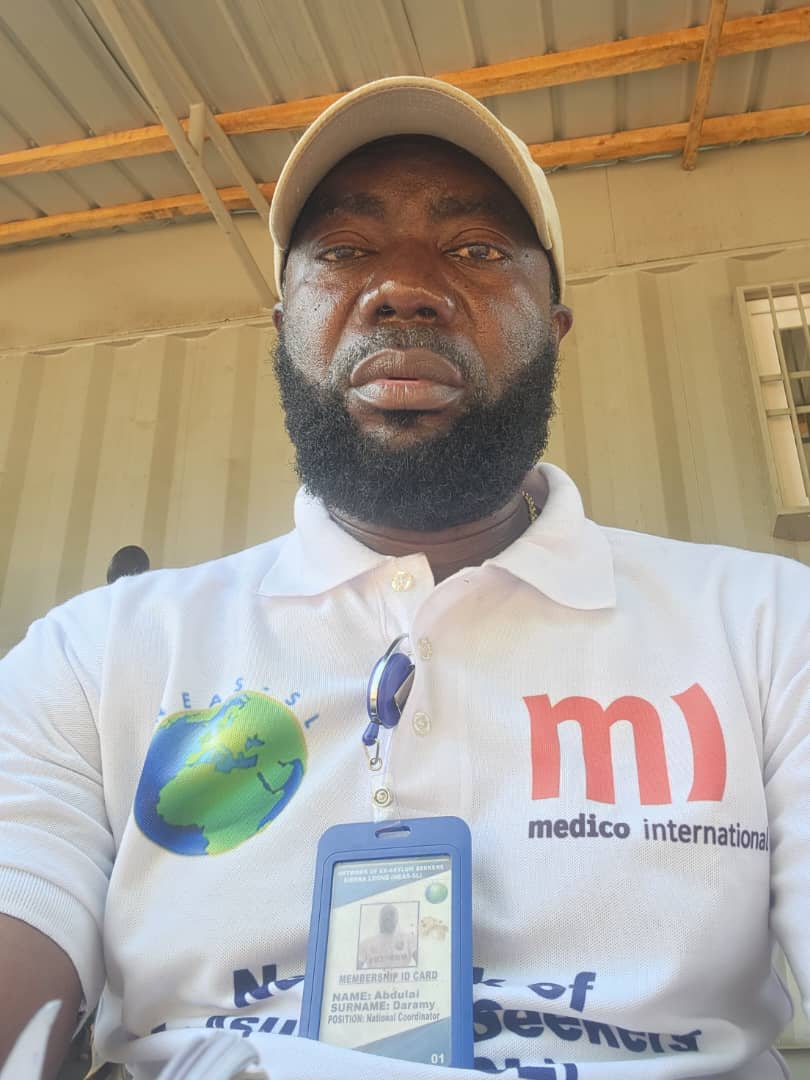
L’expérience traumatisante de déportation vécue par Abdulai Daramy, un Sierra-Léonais expulsé de force d’Allemagne en 2011, a ravivé les inquiétudes autour de l’accord présumé entre la Sierra Leone et les États-Unis visant à accueillir des ressortissants de pays tiers expulsés du territoire américain.
Daramy affirme que son expérience d’expulsion forcée lui a laissé des séquelles physiques et psychologiques qui ont persisté bien longtemps après l’atterrissage de l’avion de déportation en Sierra Leone.
Selon le récit de son expérience, Daramy s’est fracturé la main lors de son transfert d’un centre de détention vers un vol de déportation en Allemagne.
Mais pour lui, cette blessure physique n’était que le début d’une épreuve bien plus profonde.
À son retour en Sierra Leone, Daramy a rencontré d’autres personnes expulsées qui tentaient de reconstruire leur vie après leur renvoi forcé. Beaucoup d’entre elles, a-t-il constaté, étaient confrontées au rejet de leur famille et de leur communauté, au chômage, à la pauvreté, aux traumatismes psychologiques ainsi qu’à des difficultés d’accès aux soins de santé et à d’autres formes de soutien essentiel.
« Je ne veux que personne d’autre ne vive ce que j’ai vécu », a déclaré Daramy.
Son expérience personnelle allait plus tard inspirer des initiatives visant à soutenir les personnes expulsées à travers le Réseau des anciens demandeurs d’asile de Sierra Leone (Network of Ex-Asylum Seekers Sierra Leone), une organisation créée par d’anciens expulsés pour venir en aide aux personnes confrontées aux conséquences de la détention, de l’expulsion forcée et d’une difficile réintégration.
L’histoire de Daramy a pris une importance particulière dans le contexte des informations selon lesquelles la Sierra Leone pourrait accueillir des ressortissants de pays tiers expulsés des États-Unis dans le cadre d’un arrangement conclu entre les deux pays.
Selon plusieurs informations, un premier groupe de personnes expulsées serait déjà arrivé en Sierra Leone, comprenant notamment des ressortissants du Ghana, du Sénégal, de la Guinée et du Nigeria.
Alors que le gouvernement sierra-léonais aurait défendu cet arrangement comme s’inscrivant dans le cadre de ses relations diplomatiques avec Washington, l’expérience de Daramy soulève une question fondamentale : que devient une personne expulsée après son arrivée ?
Pour Daramy et de nombreux autres anciens expulsés, le voyage ne s’arrête pas lorsque l’avion touche le sol.
Au contraire, la déportation peut marquer le début d’une autre lutte difficile : trouver un logement, obtenir un emploi, surmonter la stigmatisation sociale, renouer avec sa famille et sa communauté et faire face aux conséquences psychologiques de la détention et de l’expulsion forcée.
Au fil des années, le Réseau des anciens demandeurs d’asile de Sierra Leone a appelé à l’adoption de politiques gouvernementales plus solides pour soutenir la réintégration des personnes expulsées, notamment par une assistance sociale et un soutien en matière de santé mentale.
L’arrangement présumé avec les États-Unis a toutefois suscité de nouvelles inquiétudes quant à la capacité de la Sierra Leone à fournir un soutien, une protection et des services de réintégration adéquats, non seulement à ses propres citoyens de retour au pays, mais également aux ressortissants étrangers envoyés dans le pays.
Ces préoccupations sont particulièrement importantes au regard des informations selon lesquelles certaines des personnes expulsées seraient originaires d’autres pays d’Afrique de l’Ouest.
Des observateurs des droits humains et des détracteurs de cet arrangement ont également appelé à une plus grande transparence, notamment à des clarifications sur le statut juridique des personnes déportées en Sierra Leone, les procédures utilisées pour les contrôler et les garanties mises en place pour protéger leurs droits.
Des questions ont également été soulevées sur le sort des personnes expulsées qui ne pourraient pas ou ne souhaiteraient pas retourner dans leur pays d’origine après l’expiration de tout accord de résidence temporaire qui leur aurait été accordé.
Daramy a reconnu ce qu’il décrit comme une réalité politique : les organisations de la société civile sierra-léonaise et les communautés concernées pourraient avoir un pouvoir limité pour empêcher des politiques de déportation décidées par des gouvernements plus puissants.
Il estime toutefois que le processus peut encore être rendu plus humain.
Au cœur de ses préoccupations figure la nécessité d’associer les anciens expulsés et les organisations ayant une expérience directe des retours forcés à l’élaboration des politiques qui affectent directement la vie des personnes déportées.
L’expérience de Daramy, ainsi que celle d’autres anciens demandeurs d’asile, illustre la manière dont les conséquences de la déportation peuvent aller bien au-delà de l’application des lois sur l’immigration et du contrôle des frontières.
Pour de nombreuses personnes de retour, la partie la plus difficile de l’épreuve commence après la déportation.
Alors que la Sierra Leone fait face à une controverse croissante autour du présumé accord de déportation avec les États-Unis, l’histoire de Daramy devrait renforcer les appels en faveur d’une plus grande transparence, de garanties juridiques solides et d’un soutien concret aux personnes envoyées dans le pays.
Pour les anciens expulsés, la question centrale n’est donc pas simplement de savoir si la Sierra Leone doit accueillir des personnes déportées d’autres pays.
La véritable question est de savoir ce qu’elles deviennent après que l’avion a atterri.

Le Jamboree et le Fonds du réexode : une promesse échouée de réintégration des migrants de retour

The Jamboree and Re-Exodus Fund: A Failed Reintegration Promise for Returnee Migrants

Nigeria makes case for global migration

Osemene promet un leadership inclusif et une action renforcée contre la traite en tant que président élu de NACTAL

Osemene pledges inclusive leadership, stronger anti-trafficking action as NACTAL President-Elect
-

 Interviews3 weeks ago
Oluwagbolahan Oluwatobi: Connecting Visa Advisory, Migration and Social Impact
-

 News Extra3 weeks ago
Human rights advocate Mwanje calls for end to ‘cash-for-containment’ deals at World Social Forum
-
Interviews3 weeks ago
Oluwagbolahan Oluwatobi : à la croisée du conseil en matière de visas, de la migration et de l’impact social
-

 News2 weeks ago
Senegalese activist turns brother’s death on Atlantic migration route into campaign for change
-
 Features1 week ago
How WSF changed ways participants see migration
-

 News Extra3 weeks ago
BOZA FII exige la fin des refoulements financés par Frontex et appelle à une justice migratoire
-
 Features1 week ago
Reintegration or a facade? Nigerian returnees challenge promise of starting again
-
News Extra3 weeks ago
BOZA FII demands end to Frontex-funded push-backs, calls for migration justice