
Investigation
Tunisia: A hell for black African migrants, refugees


On July 19, 2023, Human Right Watch published a report titled Tunisia: No Safe Haven for Black African Migrants, Refugees.
The menace of abusing human rights of black migrants and refugees has continued long after the publication by HRW. The report I reproduced below for your reading pleasure.
The Tunisian Maritime National Guard (coast guard) approaches a boat at sea carrying people from different African countries seeking to get to Italy, near the coast of Sfax, Tunisia, Tuesday, April 18, 2023. © 2023 AP PhotoClick to expand Image
The Tunisian police, military, and national guard including the coast guard have committed serious abuses against Black African migrants, refugees, and asylum seekers.
With respect to Black Africans, Tunisia is neither a safe place for disembarkation of third country nationals intercepted or rescued at sea, nor a “safe third country” for transfers of asylum seekers.
Tunisia should carry out reforms to respect human rights and end racial discrimination. The EU should suspend migration control funding to security forces and set human rights benchmarks for further support.
(Tunis) – The Tunisian police, military, and national guard including the coast guard have committed serious abuses against Black African migrants, refugees, and asylum seekers, Human Rights Watch said today. Documented abuses include beatings, use of excessive force, some cases of torture, arbitrary arrests and detention, collective expulsions, dangerous actions at sea, forced evictions, and theft of money and belongings.
Yet on July 16, the European Union (EU) announced the signing of a Memorandum of Understanding (MoU) with Tunisia on a new “strategic partnership” and a funding package of up to €1 billion for the country, including €105 million for “border management, … search and rescue, anti-smuggling and return.” Dutch Prime Minister Mark Rutte highlighted that the partnership would include focus on “bolstering efforts to stop irregular migration.” The MoU, which must be approved formally by EU member states, failed to include serious guarantees that Tunisian authorities would prevent violations of the rights of migrants and asylum seekers, and that EU financial or material support would not reach entities responsible for human rights violations.
“Tunisian authorities have abused Black African foreigners, fueled racist and xenophobic attitudes, and forcibly returned people fleeing by boat who risk serious harm in Tunisia,” said Lauren Seibert, refugee and migrant rights researcher at Human Rights Watch. “By funding security forces who commit abuses during migration control, the EU shares responsibility for the suffering of migrants, refugees, and asylum seekers in Tunisia.”
The EU has already dedicated at least €93-178 million in migration-related funding to Tunisia cumulatively between 2015 and 2022, including by reinforcing and equipping security forces to prevent irregular migration and stop boats heading for Europe. The EU should suspend funding to Tunisian security forces for migration control and set clear human rights benchmarks for any further support, Human Rights Watch said. EU member states should withhold their support for migration and border management under the recently signed MoU with Tunisia until a thorough human rights impact assessment is carried out.
In addition to the documented security force abuses, Tunisian authorities have failed to ensure adequate protection, justice, or support for many victims of forced evictions and racist attacks, at times even blocking such efforts. As a result, with respect to Black Africans, Tunisia is neither a safe place for disembarkation of third country nationals intercepted or rescued at sea, nor a “safe third country” for transfers of asylum seekers.
Since March, Human Rights Watch has conducted phone and in-person interviews with 24 people – 22 men, 1 woman, and 1 girl – who lived in Tunisia, including 19 migrants, 4 asylum seekers, and 1 refugee, from Senegal, Mali, Côte d’Ivoire, Guinea, Sierra Leone, Cameroon, and Sudan. Nineteen had entered Tunisia between 2017 and 2022, twelve irregularly and seven regularly. For five interviewees, the dates and manner of entry were unknown. Some of those interviewed are not identified by name for their security or at their request.
Human Rights Watch also interviewed four representatives from civil society groups in Tunisia – the Tunisian Forum for Economic and Social Rights (FTDES), Lawyers Without Borders (ASF), EuroMed Rights, and Alarm Phone, a rescue hotline network – as well as a volunteer who assisted refugees in Tunis; Elizia Volkmann, a Tunis-based journalist; and Monica Marks, a university professor and Tunisia expert. All seven had interviewed or assisted dozens of migrants, asylum seekers, and refugees in Tunisia, and knew of or had documented cases of abuse by the police or coast guard.
Among the migrants, asylum seekers, and refugees interviewed, nine had returned to their countries on emergency repatriation flights in March, while eight remained in Tunis, the Tunisian capital, or Sfax, a port city southeast of Tunis. Seven were among the up to 1,200 Black Africans expelled or forcibly transferred by Tunisian security forces to land borders with Libya and Algeria in early July 2023.
Overall, 22 interviewees had suffered human rights violations at the hands of Tunisian authorities.
Though the documented abuses took place between 2019 and 2023, the majority occurred after President Kais Saied in February 2023 ordered security forces to crack down on irregular migration, linking undocumented African migrants to crime and a “conspiracy” to change Tunisia’s demographics. Saied’s speech, which UN experts have called racist, was followed by a surge in hate speech, discrimination, and attacks.
Fifteen people interviewed said they suffered violence by the police, military, or national guard including coast guard. This included a refugee and an asylum seeker beaten and electrically shocked by police during detention in Tunis. Five people said that authorities confiscated and never returned their money or belongings.
The seven interviewees expelled to border zones in July said the military and national guard left them in the desert with insufficient food and water. While some were relocated back into Tunisia a week later by Tunisian authorities, others still needed assistance or were unaccounted for.
At least nine people interviewed had been arbitrarily arrested and detained in Tunis, Ariana, and Sfax, where police profiled them based on their skin color. They said officers did not check their papers before arresting them, and in most cases neither conducted individual legal status assessments nor allowed them to challenge their arrest.
A 31-year-old Malian interviewed had a valid residence permit when police arbitrarily arrested him in mid-2022 in Ariana. “They didn’t ask me whether I had documents or not,” he said. “My friend was arrested with me … a Guinean military officer who had come to Tunisia for medical treatment. He had a passport with a [valid] entry stamp.”
Five people recounted abuses during or after sea interceptions and rescues near Sfax, apparently by the maritime national guard, also referred to as the coast guard. These included beatings, theft, leaving a boat adrift without a motor, overturning a boat, and insulting and spitting on survivors.
Three civil society group representatives interviewed also described increasingly problematic coast guard practices since 2022, including beatings, dangerous use of teargas, shooting in the air, taking or damaging boat engines and leaving people stranded at sea, creating waves that caused boats to capsize, delays in rescues, and theft of money and phones.
Human Rights Watch wrote to the Tunisian Foreign Affairs and Interior Ministries on June 28, sharing research findings and posing questions, but received no response.
In addition to the security force abuses, at least 12 men interviewed said they also experienced abuses by Tunisian civilians, including 10 assaulted or robbed and 5 forcibly evicted by civilian landlords. All but two incidents occurred after President Saied’s February speech.
In the months following Saied’s speech, and in the context of Tunisia’s deteriorating economic situation, worsening repression and xenophobic violence, and increasing boat departures and deaths at sea, over a dozen European officials visited Tunisia to discuss economic, security, and migration issues with Tunisian officials. The German interior minister noted the importance of “the human rights of refugees” and “creat[ing] legal migration routes,” but few others publicly mentioned human rights concerns. The French interior minister said France would offer Tunisia €25.8 million to help “contain the irregular flow of migrants.”
A group of Black migrants and asylum seekers of multiple African nationalities, including a woman and her baby, stranded in the desert for days after expulsion from Tunisia, stand in the buffer zone at the Tunisia-Libya border facing an Al Jazeera news crew and Libyan soldiers, July 11, 2023. © 2023 PrivateClick to expand Image
A group of Black migrants and asylum seekers of multiple African nationalities, including a woman and her baby, stranded in the desert for days after expulsion from Tunisia, stand in the buffer zone at the Tunisia-Libya border facing an Al Jazeera news crew and Libyan soldiers, July 11, 2023. © 2023 Private
Millions in EU and bilateral funding – particularly from Italy – have already supported, equipped, and trained the Tunisian coast guard, “internal security forces,” and “land border management institutions.”
Border “externalization” – preventing irregular arrivals by outsourcing migration controls to third countries – has become a central plank in the EU’s response to mixed migration and has led to egregious human rights violations. Support to abusive security forces only exacerbates human rights abuses that drive migration.
“Both the EU and the Tunisian government need to fundamentally reorient their approach to migration challenges,” Seibert said. “Border control is no justification for trampling rights and ignoring international protection responsibilities.”
Migration and Refugee Context in Tunisia
Tunisia is a country of origin, destination, and transit for migrants, refugees, and asylum seekers. In the first half of 2023, it has surpassed Libya as a departure point for boats arriving in Italy. According to the UN Refugee Agency (UNHCR), of the 69,599 people who arrived in Italy between January and July 9 via Mediterranean Sea routes, 37,720 had departed from Tunisia, 28,558 from Libya, and others from Turkey and Algeria.
The most common countries of origin for those arriving in Italy were, in descending order, Côte d’Ivoire, Egypt, Guinea, Pakistan, Bangladesh, Tunisia, Syria, Burkina Faso, Cameroon, and Mali. Cameroon, Burkina Faso, Mali, and Guinea have faced widespread human rights abuses linked to conflict, coups, or government crackdowns in recent years.
A 2021 official estimate said that 21,000 foreigners from non-Maghreb African countries were in Tunisia, whose population is 12 million. The country hosted 9,000 registered refugees and asylum seekers as of January. Tunisia is party to the UN and African refugee conventions, and its Constitution provides for the right to political asylum. However, Tunisia has no national asylum law or system. UNHCR carries out registration and refugee status determination.
Though international human rights standards discourage the criminalization of irregular migration, Tunisian laws dating from 1968 and 2004 criminalize the irregular entry, stay, and exit of foreigners, as well as organizing or assisting illegal entry or exit. Penalties include prison and fines. Tunisia has no explicit legal grounds for administrative immigration detention, but multiple organizations have documented arbitrary detention of African migrants. Tunisia permits 90-day visa-free travel with an entry stamp for several African nationalities. However, obtaining a residency permit can be difficult.
Two young men or boys show their injuries on July 6, 2023, after arrest and expulsion to the Libyan border by Tunisian authorities. © 2023 PrivateClick to expand Image
Two young men or boys show their injuries on July 6, 2023, after arrest and expulsion to the Libyan border by Tunisian authorities. © 2023 Private
According to the nongovernmental group FTDES, between January and May 2023, Tunisian authorities arrested over 3,500 migrants for “irregular stay” and intercepted over 23,000 people attempting irregular departures from Tunisia. FTDES spokesperson Romdhane Ben Amor told Human Rights Watch that most recorded arrests of migrants took place near the Algeria border, though hundreds also occurred in Tunis, Sfax, and other cities following the president’s speech.
Collective Expulsion to Libya and Algeria Borders
Between July 2 and 5, 2023, Tunisian police, national guard, and military conducted raids in and around Sfax, arbitrarily arresting hundreds of Black African foreigners of many nationalities with both regular and irregular legal status. Without due process, the national guard and military expelled or forcibly transferred up to 1,200 people in several groups to the Libyan and Algerian borders.
The authorities drove an estimated 600-700 people south to the Libya border near the town of Ben Guerdane, according to five interviewees expelled there. They drove hundreds of others west to various locations along the Algerian border in the Tozeur, Gafsa, and Kasserine governorates, according to two expelled people, UN representatives, FTDES, and Alarm Phone.
The hundreds expelled to a remote, militarized zone at the Tunisia-Libya border included at least 29 children and 3 pregnant women. At least six were UNHCR-registered asylum seekers. People interviewed said that national guard or military officers beat and abused them during expulsions, including a 16-year-old girl who said she was sexually assaulted. They said security officers threw away their food, smashed their phones, and left them in a zone from which they could neither enter Libya nor return to Tunisia, with security forces of both countries pushing them back. They provided their GPS location on July 2-4 and videos and photos of expelled people, their injuries, smashed phones, passports, and consular and asylum seeker cards.
Black African migrants and asylum seekers walk in the desert near the Tunisia-Algeria border between July 5 and 7, 2023 after collective expulsion or forcible transfer there from Sfax, Tunisia, by Tunisian security forces. © 2023 PrivateClick to expand Image
Black African migrants and asylum seekers walk in the desert near the Tunisia-Algeria border between July 5 and 7, 2023 after collective expulsion or forcible transfer there from Sfax, Tunisia, by Tunisian security forces. © 2023 Private
On July 7, Human Rights Watch interviewed two people expelled or forcibly transferred to or near the Algerian border on July 4 and 5. They were in two groups, totaling fifteen people, including seven women – two pregnant – and one child. They said they were transported from Sfax in buses, forced to walk in the desert without adequate food or water, and pushed back by both Algerian and Tunisian security forces. A Guinean woman asylum seeker shared her group’s GPS location in Gafsa governorate, while an Ivorian man shared his group’s location in Kasserine governorate. They also provided videos of their groups walking in the desert.
In a July 8 statement, President Saied called allegations of abuses by security forces against migrants “lies” and “fake news.” The weekend of July 8, Tunisian Red Crescent teams provided food, water, and medical aid to some migrants at or near the Algerian and Libyan borders. They were the only aid group Tunisian authorities allowed into the Libya border zone.
On July 10, Tunisian authorities finally relocated more than 600 people from the Libya border to International Organization for Migration (IOM) shelters and other facilities in Ben Guerdane, Medenine, and Tataouine, according to UN representatives and an Ivorian man among those taken to Medenine, who provided his location. However, on July 11, Human Rights Watch spoke with two migrants saying they were in a group of over one hundred expelled people still stuck at the Libya border. They shared videos and their location.
Migrants at both borders alleged to Human Rights Watch and others that several people had died or been killed following expulsion, though Human Rights Watch could not independently confirm their accounts. On July 11, Agence France-Presse reported that the bodies of two migrants were found in the desert near the Tunisia-Algeria border. Al Jazeera, who visited the Tunisia-Libya border area several times, published footage from July 11 showing two still-stranded groups of African migrants – over 150 people total – and the body of a migrant who had died.
Tunisia is party to the International Convention on the Elimination of All Forms of Racial Discrimination; to the African Charter on Human and Peoples’ Rights, which prohibits collective expulsions; and to the UN and African Refugee Conventions, the Convention Against Torture, and the International Covenant on Civil and Political Rights, which prohibit forced returns or expulsions to countries where people could face torture, threats to their lives or freedom, or other serious harm.
Police Abuses
Outside of those expelled, eleven people interviewed experienced abuses by the police in Tunis, Sfax, Ariana, and a town near the Algerian border, including at least eight cases of violence. Two said that police forcibly evicted them from their apartments. Seven said police racially insulted them, including one threatened with death.
Sidy Mbaye, a 25-year-old Senegalese man repatriated in March, had entered Tunisia irregularly in 2021 and worked as a street vendor. He described abuses by police in Tunis:
[On February 25,] I went into town to sell phones, T-shirts, and fabric in the market. … Three police officers came toward me and asked my nationality. They said, “Did you hear what the president said? You have to get out …” They did not ask me for … any documents. They took everything that I was selling … I [resisted] … They severely beat me, punching me and hitting me with batons. There was blood coming from my nose …
They…took me to the police station … put me in a cell and continued to hit and insult me … They said something about me being Black … They still didn’t ask me for documents. I spent one day there. I was refusing to leave because I wanted my property, but I finally left. They threatened me and said, “If you return and sell these things again, you will be killed. Leave the country immediately.” … Where I lived with five other Senegalese, the [property] owner was a policeman … Coming back, we found our belongings outside.
Papi Sakho, 29, a Senegalese man who came to Tunis irregularly to work, experienced violence and forced eviction by the police prior to his repatriation in March:
At the end of February … five police officers came … There were four of us working at the carwash garage, me and two Gambians, one Ivorian. … They didn’t ask for our papers. … They yelled at us, insulted us … They beat me severely with batons…. The Ivorian was injured and bleeding … They closed our garage … And we’re the ones who usually washed their police cars!
The police then took us to our apartment and warned the owner that we no longer had the right to stay.…They grabbed our bags and put them outside … My passport got left behind. The police took my two phones … The others told me the police took some of their money.
A Senegalese mechanic, Moussa Baldé, 30, said that he came to Tunisia in 2021 with a work visa. He traveled to Tunis in February 2023 to purchase car parts. “A policeman stopped my taxi and made me get out, and he pushed me. He said, ‘You are Black, you don’t have the right to be here …’ He didn’t ask for my papers, just targeted me because of my skin color.” At the police station, “Two police officers punched and hit me. They gave me food only once during the two days [of detention], and I slept on the ground.” The police asked no questions about his legal status. “They said … ‘We’ll free you, but you need to leave the country.’”
Abdoulaye Ba, 27, also from Senegal, had lived in Tunis since 2022. In February 2023, the police came to the construction site where he worked and arrested at least 10 people, documented and undocumented workers from West and Central Africa:
There were Tunisians and Moroccans there, but they only arrested people with black skin. They asked which country we were from but didn’t ask for our papers … We resisted arrest, and part of the town came out … throwing stones at us.… The police beat us with batons … They took us to a police station in Tunis and detained us for five hours, without asking to see our papers… Then they released us and told us to leave Tunisia. … The police also stole my iPhone 12, and others said the police took their money.
A 24-year-old undocumented Malian said before his repatriation in March, he had worked at a restaurant in Tunis. In February, police arrested him as he returned from work with another Malian, but conducted no legal verification process. He said:
They didn’t ask for my papers … If they see a Black [person], they just take him and put him in their car. During the arrest, Tunisians were watching and yelling, “You Blacks need to leave …” Police took [my friend’s] money … about 600 dinars … They kept us for four days [at a police station]. … We slept on the ground … They only gave us bread and water twice a day. … We found around 100 Africans [detained] there … They treated us as if we weren’t human.
A 24-year-old undocumented Cameroonian living in Sfax said that several times in early 2023, police raided the home he shared with several migrants and took their phones and cash.
Police abuses were not limited to 2023. A 31-year-old Malian man said that in December 2021, a group of 6-8 police officers found him sleeping at a train station and assaulted him before arresting him for irregular entry, in a town near the Algerian border: “They hit me repeatedly with their batons, until I fell, and then they kicked me.”
A 32-year-old Malian, repatriated in March, said that police in Sfax took two of his phones in mid-2022, in addition to money his friend was carrying. “Policemen, when they see a Black person with a small bag, they will search it. When they find money [or valuables], they take it,” he said.
Sudanese and Yemeni men show their refugee or asylum seeker cards on April 12, 2023 outside the International Organization for Migration (IOM) office in Tunis, after Tunisian police on April 11 used force and tear gas to disperse refugees, asylum seekers, and migrants and dismantled their makeshift camp in front of the nearby UN Refugee Agency (UNHCR) office in Tunis. © 2023 Fethi Belaid/AFP via Getty ImagesClick to expand Image
Sudanese and Yemeni men show their refugee or asylum seeker cards on April 12, 2023 outside the International Organization for Migration (IOM) office in Tunis, after Tunisian police on April 11 used force and tear gas to disperse refugees, asylum seekers, and migrants and dismantled their makeshift camp in front of the nearby UN Refugee Agency (UNHCR) office in Tunis. © 2023 Fethi Belaid/AFP via Getty Images
Police Crackdown on Refugee Protesters
Following President Saied’s speech, scores of refugees, asylum seekers, and others rendered homeless due to evictions, or otherwise in fear for their safety, camped in front of the UNHCR and IOM offices in Lac 1, Tunis. Some of those in front of UNHCR barricaded the area and began protesting. After several people forcibly entered part of UNHCR’s premises, police arrived on April 11 to disperse the camp. The police used tear gas and force, and some people threw stones at cars or police.
“The police response was a disproportionate use of violence … especially given the vulnerable people there, families and small children,” said Elizia Volkmann, a journalist who arrived on the scene later that day. Human Rights Watch listened to an interview Volkmann recorded on April 11 with a witness to the events, who said he saw police slap a Sudanese woman before the situation escalated, and that police beat people with sticks and fired “many rounds of tear gas.”
A Sudanese asylum seeker, who had camped outside the UNHCR office since November 2022, told Human Rights Watch that he and others had barricaded the area for protection, and on April 10 had entered UNHCR premises “to drink water and use the toilet.” On April 11, he said, “It was the police who started the violence. They … came and fired [tear] gas at us. And that was the first time the police threw stones at us – I saw two of them do it.” He said he then saw some people throw stones back at police. After he fled the area, he said, the police beat and arrested him and others in the street.
The police initially took about 80 to 100 people into custody at Lac 1 police post, including some women and children, and left the camp destroyed. They released the Sudanese asylum seeker along with others later that day, but transferred 31 men to Mornaguia prison under various charges including disobedience and assault, according to a Lawyers Without Borders (ASF) representative. ASF provided legal assistance to the accused, who were released in late April, with charges later dismissed for half the group and the other half awaiting a September hearing, the representative said.
A Sierra Leonean asylum seeker, who had camped outside IOM and UNHCR since his eviction from his apartment in February, was among those arrested. Human Rights Watch reviewed a government document confirming his release from Mornaguia prison in late April. During the April 11 camp crackdown, he “saw one Liberian [asylum seeker] beaten by police … there was so much blood.” He said he was not involved in violence but had recorded videos and made phone calls. He said police grabbed him, arrested him, and tortured him in detention:
In the police van, one [officer] started choking me to force me to open my phone. …They took me to the police station in Lac 1. They separated three of us, me and a Sierra Leonean [asylum seeker] and the [injured] Liberian …
[The police] put us in a private room, where they tortured us. [Two uniformed officers] used … a wooden stick … hitting us on our heads, ankles, places where your bones are … Two [other uniformed officers] gave us shocks with electronic devices like tasers … One [man in civilian clothes] …said to me in English, “You are … saying Tunisia is not safe … You fucking immigrants and refugees, you want to spoil our image.”… The other police were insulting us in Arabic … They tortured us … for around 45 minutes.
A Sudanese refugee also told Human Rights Watch he was beaten and given electric shocks by police at the Lac 1 post before his transfer to Mornaguia prison.
A Tunis resident, who helped several men get medical assistance after release from Mornaguia prison in May, said two refugees, an Eritreans and a Central African, had described police using conducted electrical weapons such tasers on them during their arrest. He also said two Eritrean refugees told him that at Lac 1 post, “The police beat them … out of sight of the camera.”
The Sudanese asylum seeker who was detained and released the same day said he saw several African detainees taken to another room at the station and heard them crying in pain, and later some told him the police had used devices to give them electric shocks. The police violence had convinced him to leave Tunisia, he said: “I’m asking some people I know to help me to cross the sea, to be far away from this country.”
Coast Guard Abuses and Sea Interceptions
Of the six people Human Rights Watch interviewed who had attempted one or more boat journeys to Europe, five had experienced “pullbacks” – forced returns of outgoing boats, or other actions by authorities to prevent people from leaving a country outside of official border crossings. Pullbacks can violate individuals’ rights to seek asylum and to leave any country, whether their own or another, trapping people in abusive situations.
Five interviewees also described abuses by Tunisian authorities during or after sea interceptions (four) or rescues (one) near Sfax between 2019 and 2023.
Salif Keita, a 28-year-old Malian repatriated in March, said he attempted a boat voyage in 2019, embarking from Sfax. “The national [coast] guard took our motor and left us stranded at sea,” he said. “We had to break pieces of wood from the boat … to paddle ourselves back.”
An Ivorian man in Sfax attempted a sea journey in January 2022. He said the coast guard intercepted them and hit the passengers with sticks. While at sea, he said, he also saw a migrant boat whose passengers included children overturned by waves caused by a coast guard boat.
A 32-year-old man from Mali had also attempted a sea journey. He had entered Tunisia regularly, but his entry stamp expired. Unable to obtain a residence permit, in December 2021 he embarked near Sfax in a boat with approximately 50 West and Central Africans. The authorities intercepted them within 15 minutes, he said: “They took peoples’ money or phones … Those who didn’t have either, they hit and insulted them. I even saw an [officer] hitting one of the women … They took my phone.”
A 24-year-old man from Cameroon said the coast guard rescued him and others after their boat overturned near Sfax in April 2023. Once on land, the officers insulted, spat on, and beat him and other survivors, before releasing them.
Moussa Kamara, a 28-year-old Malian in Sfax, had entered Tunisia in May 2022. In December 2022, he embarked near Sfax in a boat with around 25 West Africans. “After not even 30 minutes, the [coast] guard came [positioning their boat alongside ours] and said ‘Stop!’ We didn’t stop, so one of the national guards started to hit people with a baton … they hit three men, including me … One of my friends was injured.” The authorities took them to Sfax and released them.
After this experience, Kamara remained in Tunisia, but Saied’s speech and its aftermath changed his mind: “I decided to try [a sea journey] again. The president said to leave the country. If I didn’t leave, I wouldn’t find a place to live or work.”
“The president created a climate of terror for migrants in Tunisia, so many are rushing to leave,” said Ben Amor of the Tunisian Forum, FTDES. “These past few months, the coast guard started to use tear gas to force [boats] to stop … And they target migrants who try to film them … they confiscate the phones after each operation.”
An Alarm Phone volunteer in Tunis said her team had collected similar accounts: “Since 2022, there is a pattern of behavior by Tunisian coast guards to try to attack the boats … using sticks to beat people, in some cases [using] tear gas … shooting in the air or toward the engine … sometimes … leaving people stranded [at sea in disabled boats].” Many such practices were cited in a December statement by over 50 groups in Tunisia, and again in April.
EU Migration Control Support
Between 2015 and 2021, the EU allocated €93.5 million to Tunisia from its “Emergency Trust Fund for Africa” (EUTF), which sought to combat irregular migration, displacement, and instability. This included €37.6 million for “border management” and efforts against “migrant smuggling and human trafficking.” A February 2022 EU document said the counter-smuggling/trafficking funding “provides for equipment and training for officers of the Internal Security Forces, as well as the Tunisian Customs.”
The same document said the EU would “designate” up to €85 million for migration-related projects in Tunisia in 2021-2022. It did not specify what had already been spent, though a February 2021 EU document stated, “A very significant EU-funded support programme, benefiting the Tunisian Coast Guard, is currently being implemented.” As much as €55 million of the €85 million could have been allocated to supporting migration control in Tunisia, based on the breakdown in the 2022 document: border management (€25m, including support to the coast guard); migration “governance” and protection (€6-10m); legal migration and labor mobility (€20-25m); combatting migrant smuggling/trafficking (€12-20m); and returns (€5m).
The 2022 document also details extensive bilateral support to Tunisia by Italy, Spain, France, Germany and other EU states. In addition to its “fund for migration cooperation (ca. €10 million),” Italy supplied equipment (vehicles, boats, and more) “for a total value of €138 million since 2011,” and “technical assistance related to border control (2017-2018) … for a total of €12 million,” which included support to the Tunisian police and national guard. Germany also provided boats and vehicles, while Spain supplied IT equipment.
The EU’s 2021-2027 “Multi-Country Migration Programme for the Southern Neighbourhood,” which encompasses Tunisia, incorporates some positive elements – support to development of asylum policies, legal migration pathways, civil society engagement – but still highlights support to “law enforcement action” and “border and coast guard authorities” for border control. Problematic project indicators conflate sea interceptions and rescues (“number of migrants intercepted/rescued through SAR operations at sea” and “on land”).
European politicians have repeatedly proposed various migration partnerships with Tunisia, including offshore processing centers, “safe third country” deals, and agreements that could allow returns of third-country nationals who transited Tunisia.
International law admits the possibility of safe third country designations, which enable receiving countries to transfer asylum seekers on the presumption that the country they travelled through, or some other country, can fairly examine their refugee claims and provide effective protection. UNHCR guidelines list conditions for such transfers, including respect for refugee and human rights law standards and “protection against threats to physical safety or freedom.” The EU Asylum Procedures Directive requires non-EU member states to meet specific criteria to be designated “safe,” including “no risk of serious harm.”
Given the documented abuses by security forces and xenophobic attacks against migrants, asylum seekers and refugees in Tunisia, in addition to Tunisia’s lack of a national asylum law, it appears that Tunisia does not meet EU law criteria for a safe third country. Black Africans in particular should not be forcibly returned or transferred to Tunisia.
Recommendations
The European Parliament, in its negotiations with the EU Council on the EU Pact on Migration and Asylum, should seek to limit the discretionary use of the “safe third country” concept by individual EU member states. EU institutions and member states should agree on clear criteria for designating a country a “safe third country” for purposes of returning or transferring third-country nationals, to ensure that EU member states do not erode protection criteria in their application of the concept, and determine publicly whether Tunisia meets these standards, taking into account the ongoing attacks and abuses against Black Africans in Tunisia.
The EU and member states concerned should suspend funding and other support to Tunisian security forces for border/migration control, and condition any future aid on verifiable human rights benchmarks.
The Tunisian government should investigate all reported abuses against migrants, asylum seekers, and refugees by authorities or civilians; ensure accountability, including through appropriate legal action; and implement reforms and oversight systems within the police, national guard (including coast guard), and military to ensure respect for human rights, end racial discrimination or violence, and refrain from adding to racial hatred or discrimination against Black Africans.

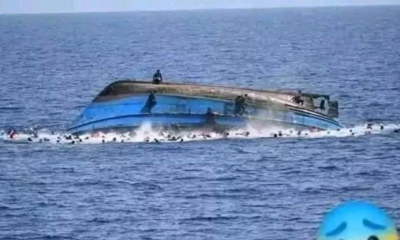


.
- Come rain or shine, Patrick A. Njok, has been ensuring patients in need of essential medical care get to the hospital in time for two years as a driver with Médecins Sans Frontières (MSF). Patrick manoeuvres across remote and rural terrain in the Cross River region of southern Nigeria, an area where many communities, including an estimated 15,000 refugees from Cameroon, do not have clean water or phone service.
“I’m a driver by profession and I love the job. The primary aspect of my job is to drive emergency patients from the MSF facility to the referral hospital.”
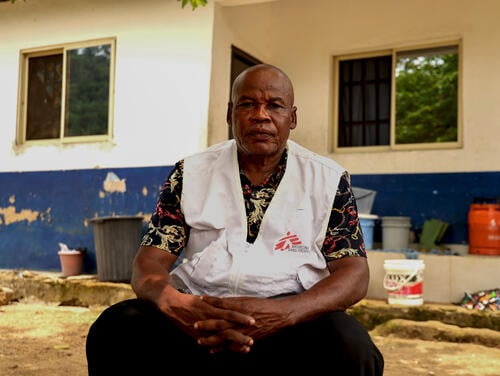
Patrick A. Njok, MSF driver, sits under a tree after driving through the long journey on a difficult terrain. Nigeria, April 2024.
While people can receive basic healthcare at MSF’s facilities in the area, more serious cases need to be referred to hospitals. That is where Patrick comes in, bringing patients to hospital no matter the obstacles on the road. He shares four challenges he often overcomes on his journeys.
1. Fallen trees
When rainy season comes, there are windstorms, and these knock down the trees. It can happen suddenly, even when you are already out on the road. The rain can come at any time.
If you don’t take a machete, a cutlass, or a chainsaw with you, you can end up getting blocked by the fallen trees until the villagers can help you remove them. This can seriously delay patients getting to hospitals, which can have potentially life-threatening consequences.
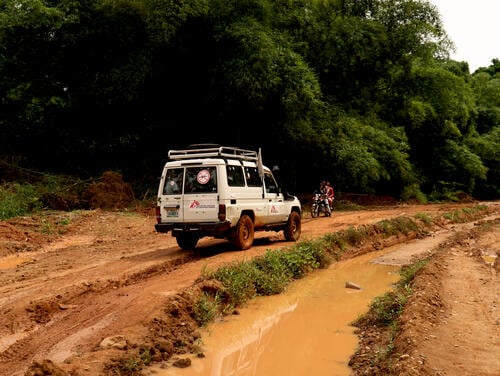
2. Muddy roads
From May to October, when it is raining very heavily, the soil texture is very difficult to drive on. Hilly, muddy and slippery. I know some of my colleagues who have spent almost half of the day trying to dig out the car when we get stuck.
Even the off-road vehicles we use sometimes struggle in the mud and you become stuck, wheels spinning but not moving anywhere! We have to make sure all cars come with all-terrain tires and an electrical winch so that the driver can get himself out.
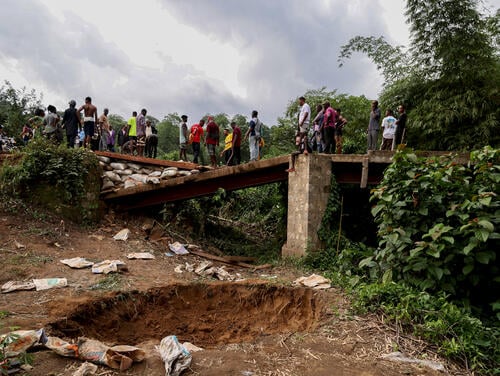
3. Broken bridges
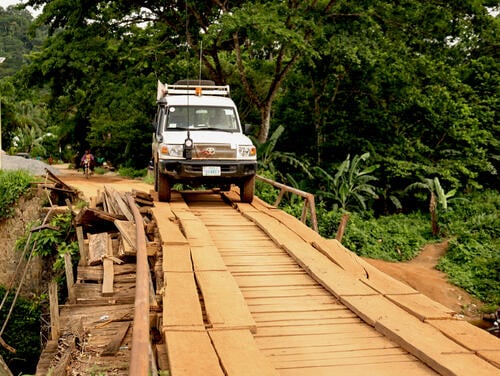
Just today, two bridges have collapsed. These bridges were constructed in 1973, when I was still in primary school. To this date, those bridges are still the same ones we are driving over now.
These are simple wooden bridges, and you have vehicles that are crossing with a load of more than 30 tonnes. Sometimes when we drive over these delicate bridges, all the passengers have to get out and walk across to reduce weight.”
4. High cost of transportation
In the rainy season, the price of taxis and transportation goes up. It can be around four times more. If people don’t come to the clinic, then we cannot refer them, and I cannot drive them to other hospitals.
Drivers are often the number one advertiser for MSF, the vehicle is the first thing people see. I would encourage people to go to the MSF clinic. If you are sick, you come to the facility and MSF will treat you.

Official investigations into credible allegations that the Hellenic Coast Guard’s actions and omissions contributed to the shipwreck and loss of life off Pylos, Greece six months ago have made little meaningful progress, a report by Amnesty International says.
A full accounting of what happened is paramount to securing truth and justice for survivors and families of the victims and to help avoid future deaths.
Authorities should ensure that the allegations against Hellenic Coast Guard officers and other Greek officials are thoroughly investigated and prosecute any officials for whom there is sufficient evidence of wrongdoing.
(Athens, December 14, 2023) – Official investigations into credible allegations that the Hellenic Coast Guard’s actions and omissions contributed to the catastrophic shipwreck and loss of life off Pylos, Greece six months ago have made little meaningful progress, Amnesty International and Human Rights Watch said today.
The Adriana, a severely overcrowded fishing trawler, capsized in the early morning of June 14, 2023, leading to the death of more than 600 people. It had started its journey from Libya five days earlier with an estimated 750 migrants and asylum seekers, including children, mainly from Syria, Pakistan, and Egypt. Only 104 of those onboard survived, and 82 bodies were recovered.
“The Pylos shipwreck appears to be another tragic example of Greek authorities’ abdication of responsibility for saving lives at sea,” said Judith Sunderland, associate Europe and Central Asia director at Human Rights Watch. “A full accounting of what happened is paramount to securing truth and justice for survivors and families of the victims and to help avoid future deaths.”
Amnesty International and Human Rights Watch interviewed 21 survivors, 5 relatives of 5 people still missing, and representatives of the Hellenic Coast Guard, the Greek police, nongovernmental organizations, United Nations and international agencies and organizations.
They found that in the 15 hours between receiving the first alert that the Adriana was in their search-and-rescue region, and when it capsized, Greek authorities failed to mobilize appropriate resources for a rescue. The authorities were clearly aware of indicators of distress, such as overcrowding and insufficient food and water, on the Adriana, and, survivors said, knew about corpses on board and requests for rescue. Survivors’ testimonies also challenge the authorities’ claim that people on the Adriana did not want to be rescued, which in any event would not have relieved the Hellenic Coast Guard of its obligation to take all measures necessary to ensure safety at sea. Survivors consistently said that they pleaded repeatedly for rescue, including to the Coast Guard itself.
Survivors said that a Coast Guard patrol boat attached a rope to the Adriana and pulled, causing the boat to capsize. They also alleged that, after the boat capsized, the Coast Guard boat was slow to activate rescue operations, failed to maximize the number of people rescued, and engaged in dangerous maneuvers.
Among others, separate investigations by the independent group Solomon, the interdisciplinary investigative platform Forensis, the New York Times, Der Spiegel, El País, Lighthouse Reports, and the Washington Post documented similar allegations.
The nature of ongoing judicial investigations in Greece raises concerns about the prospects for accountability for the shipwreck, the organizations said. Nine survivors, currently under arrest, are facing serious charges before the Criminal Court of Kalamata in Greece, including for causing a shipwreck. In parallel, the Naval Court opened an investigation in June into the potential responsibility of the Coast Guard and in September, 40 survivors filed a complaint with the same court alleging that Greek authorities were responsible for the shipwreck. It is unclear how a finding by one court might affect the other.
Survivors’ testimony points to potential serious procedural shortcomings that might affect both investigations, including the confiscation of survivors’ mobile phones, some of which may contain key evidence of the events. The Naval Court prosecutor only in late September requested Hellenic Coast Guard officers’ phones, which could also contain evidence, and as of early December, only 13 survivors had been summoned to provide statements.
In November, the Greek Ombudsman opened an inquiry into the Coast Guard’s actions, citing its refusal to conduct an internal disciplinary investigation. The European Ombudsman opened an inquiry into the role of the EU border agency Frontex, whose aircraft initially sighted the vessel, while the agency’s Fundamental Rights Officer is pursuing his own investigation. In contributions to the European Ombudsman’s inquiry, Amnesty International and Human Rights Watch contend that Frontex should have continued its monitoring of the Adriana and issued a mayday call. Frontex told the organizations that it is the responsibility of national authorities to coordinate search and rescue operations and that it did not issue a mayday alert because it did not assess an “imminent risk to human life.”
The Greek Ministry of Maritime Affairs and Insular Policy replied to the organizations’ letters, saying that protecting human life at sea constitutes its “highest professional and moral obligation” and that the Coast Guard and the Joint Rescue Coordination Center Piraeus, abide by the legal and operational frameworks in place in search and rescue operations. However, citing ongoing judicial and nonjudicial investigations, the Coast Guard declined to answer the organizations’ questions or respond to their findings.
The historic failures in Greece’s investigations of shipwrecks involving people on the move and the widespread impunity for systemic human rights violations at its borders raise concerns about the adequacy of the ongoing judicial inquiries into the Pylos tragedy, Human Rights Watch and Amnesty International said. In 2022, the European Court of Human Rights condemned Greece for the shortcomings in its rescue efforts and in its subsequent investigations in the 2014 Farmakonisi shipwreck in which 11 people died.
“Almost 10 years since the deadly Farmakonisi shipwreck, the Greek authorities’ response to the Pylos tragedy is a crucial test of their willingness to investigate human rights violations against racialized people on the move at the country’s border,” said Adriana Tidona, migration researcher at Amnesty International. “Greece must ensure that survivors and families’ of the hundreds who lost their lives can safely and effectively participate in proceedings to the highest degree possible and ensure that investigations are carried out in a timely manner, guaranteeing the completeness and integrity of evidence admitted.”

The Malawian government is jeopardizing refugee rights at Dzaleka refugee camp by expelling an important refugee rights group, Human Rights Watch said in a report. INUA Advocacy had been providing independent scrutiny of the human rights situation at the camp, which is about 40 kilometers from Lilongwe, the capital.
The media reported that the Malawian Ministry of Homeland Security wrote to INUA Advocacy in November 2023 to terminate its partnership with the group, ordering it to vacate Dzaleka camp. The partnership had permitted INUA Advocacy to have offices within the camp.
“Malawi authorities should stop targeting those exposing abuses against refugees and advocating for refugee rights,” said Idriss Ali Nassah, senior Africa researcher at Human Rights Watch. “INUA Advocacy and other organizations demanding respect for human rights and accountability in the treatment of refugees should be allowed to operate without fear of being deregistered or targeted by the authorities.”
The chief executive officer of INUA Advocacy, Innocent Magambi, told Human Rights Watch that the Homeland Security Ministry did not give a reason for ending the partnership. He believes the authorities acted because of the organization’s advocacy around human rights violations that refugees and asylum seekers have suffered during and after the forced relocations to Dzaleka camp in 2023.
In May, the police, aided by the military, began rounding up thousands of refugees and asylum seekers across Malawi, temporarily detaining them in prisons, then relocating them to Dzaleka camp. This followed a March 27 government directive to enforce its encampment policy, which restricts the freedom of movement of refugees and asylum seekers by requiring them to live in the camp.
Some of those arrested reported beatings and destruction or theft of their property. INUA Advocacy and other groups published a statement in August demanding a halt to the forced relocations and deportations of refugees and asylum seekers. The groups called for accountability, including the arrest and prosecution of those involved in stealing or other abuses.
INUA Advocacy has also spotlighted the dire living conditions inside Dzaleka camp, which is run by the government with support from the United Nations Refugee Agency (UNHCR). In May, UNHCR had asked the authorities in Malawi to rescind the relocation decision, noting the insufficient health services, water, shelter, and sanitation facilities in the camp, as well as the overcrowded schools. UNHCR also noted that Dzaleka camp currently hosted more than 50,000 people, though it was originally designed for a capacity of 12,000.
In June, President Lazarus Chakwera committed to improving the living conditions and overall well-being of refugees in the country. The government also pledged to uphold human rights in its treatment of refugees and asylum seekers.
However, the hardships brought about by the encampment policy have resulted in some refugees opting to leave Malawi. In October, over 100 Burundians had left Malawi in what UNHCR said were voluntary repatriations. The community leader of the Burundian refugees told the media that some of those leaving had decided to do so due to limited resources at Dzaleka camp.
A 26-year-old Rwandan woman with two children, all recognized refugees, told Human Rights Watch that she and her husband, also a Rwandan refugee, had moved out of Dzaleka camp about eight years ago to set up a grocery shop and agriculture business in Lilongwe. When armed police raided their home in May during the enforcement of the encampment policy, the family lost their business and their home.
At Dzaleka camp, where the family arrived empty handed, she was separated from her husband and housed in a tent with her children and several other women. Her children, ages 5 and 7, are out of school because the classrooms in the camp are full.
Despite their destitute living situation, the woman said she had no option but to stay in Malawi, where she had lived virtually her entire life. She said she was only 3 years old when her mother fled Rwanda and brought her to Malawi.
“I don’t know anything about the country where I was born,” she said. “My mother died in this camp, leaving just my brother and me. So, tell me, where will I go? The authorities are saying we could return to our countries if we wish, but even if I returned to Rwanda, who would show me where to go? I don’t know anyone there and wouldn’t even know where to start from.”
Malawi is party to both the 1951 UN Refugee Convention and the 1969 OAU Refugee Convention. Malawi expressed reservations when it ratified the 1951 Convention, stating it considered certain provisions “as recommendations only and not legally binding,” including refugees’ rights to freedom of movement, employment, property, and public education.
Malawi is also party to the UN Convention on the Rights of the Child and the African Charter on the Rights and Welfare of the Child, both of which uphold the right of refugee children to an education as well as other rights.
In 2018, Malawi endorsed the UN Global Compact on Refugees, which builds on the Comprehensive Refugee Response Framework. These instruments recognize the importance of integrating refugees into the population and the respect for their socioeconomic rights, also highlighting that access to education and labor markets promotes refugee self-reliance and contributes to local economies.
Malawi’s 1989 Refugee Act provides for procedures to determine refugee status but does not address the rights of refugees. INUA Advocacy has lobbied for amending the law requiring refugees to live in the camp indefinitely and to enshrine refugees’ rights to freedom of movement, work, and education.
“The Malawian government should fulfill its expressed commitment to respect refugee rights and improve their living conditions, and not obstruct the important work of civil society groups defending these rights,” Nassah said. “The government should collaborate with local and international rights organizations, ensure their access to Dzaleka refugee camp, and end its encampment policy.”

Le Jamboree et le Fonds du réexode : une promesse échouée de réintégration des migrants de retour

The Jamboree and Re-Exodus Fund: A Failed Reintegration Promise for Returnee Migrants

Nigeria makes case for global migration

Osemene promet un leadership inclusif et une action renforcée contre la traite en tant que président élu de NACTAL

Osemene pledges inclusive leadership, stronger anti-trafficking action as NACTAL President-Elect
-

 Interviews3 weeks ago
Oluwagbolahan Oluwatobi: Connecting Visa Advisory, Migration and Social Impact
-
 News2 weeks ago
Senegalese activist turns brother’s death on Atlantic migration route into campaign for change
-

 News Extra3 weeks ago
Human rights advocate Mwanje calls for end to ‘cash-for-containment’ deals at World Social Forum
-
 News Extra3 weeks ago
BOZA FII exige la fin des refoulements financés par Frontex et appelle à une justice migratoire
-
 Features7 days ago
How WSF changed ways participants see migration
-

 News3 weeks ago
Border externalisation: BOZA FII rejects deployment of Frontex in Senegal
-
Interviews3 weeks ago
Oluwagbolahan Oluwatobi : à la croisée du conseil en matière de visas, de la migration et de l’impact social
-
News3 weeks ago
Externalisation des frontières : BOZA FII rejette le déploiement de Frontex au Sénégal