
Features
Saudi border guards killed hundreds of Ethiopians crossing to yemen, says HRW


Saudi border guards have killed at least hundreds of Ethiopian migrants and asylum seekers who tried to cross the Yemen-Saudi border between March 2022 and June 2023, Human Rights Watch says. Research by Human Rights Watch indicates that, at time of writing, the killings are continuing. Saudi border guards have used explosive weapons and shot people at close range, including women and children, in a pattern that is widespread and systematic. If committed as part of a Saudi government policy to murder migrants, these killings would be a crime against humanity. In some instances, Saudi border guards first asked survivors in which limb of their body they preferred to be shot, before shooting them at close range. Saudi border guards also fired explosive weapons at migrants who had just been released from temporary Saudi detention and were attempting to flee back to Yemen.
It is estimated that approximately 750,000 Ethiopians live and work in Saudi Arabia. While many migrate for economic reasons, a number have fled because of serious human rights abuses by their government, including during the recent, brutal armed conflict in northern Ethiopia. Ethiopian migrants have for decades attempted the dangerous migration route – known as the “Eastern Route” or sometimes the “Yemeni Route” – from the Horn of Africa, across the Gulf of Aden, through Yemen and into Saudi Arabia. It is estimated that well over 90 percent of the migrants on this route are Ethiopian. The route is also used by migrants from Somalia and Eritrea, and occasionally other east African nations. In recent years, there has been an increase in the proportion of women and girls migrating on the eastern route.
Migrants and asylum seekers described their journey to the Yemen-Saudi border as rife with abuse and controlled by a network of smugglers and traffickers who physically assaulted them to extort payments from family members or contacts in Ethiopia or Saudi Arabia.
Read a text description of this video
Since the armed conflict began in Yemen in 2014, both the government and the Houthi armed group have detained migrants in poor conditions and exposed them to abuse. In 2014, Human Rights Watch documented abuses, including torture, of migrants in detention camps in Yemen run by traffickers attempting to extort payments. In 2018, Human Rights Watch documented how Yemeni guards tortured and raped Ethiopian and other migrants and asylum seekers from the Horn of Africa at a detention center in Aden and worked in collaboration with smugglers to deport migrants in large groups to dangerous conditions at sea. In 2021, Human Rights Watch documented how scores of mostly Ethiopian migrants burned to death after Houthi forces launched projectiles into an immigration detention center in Sana’a, which they controlled, causing a fire. Yemen is also home to one of the world’s worst humanitarian crises, with the vast majority of the population reliant on aid to survive.
Between January and June 2023, Human Rights Watch interviewed 42 Ethiopian migrants and asylum seekers by telephone, who tried to cross the border between Saudi Arabia and Yemen, or the friends and relatives of those who tried to cross. All attempted border crossings between March 2022 and June 2023. Human Rights Watch also analyzed over 350 videos and photographs posted to social media or gathered from other sources filmed between May 12, 2021 and July 18, 2023, and several hundred square kilometers of satellite imagery captured between February 2022 and July 2023. These show dead and wounded migrants on the trails, in camps and in medical facilities, how burial sites near the migrant camps grew in size, the expanding Saudi Arabian border security infrastructure, and the routes currently used by the migrants to attempt border crossings.
Migrants and asylum seekers told Human Rights Watch that after crossing the Gulf of Aden from Djibouti to Aden on often life-threatening journeys, in unseaworthy vessels, overcrowded and with limited food and water, Yemeni smugglers separated them into groups according to their Ethiopian ethnicity. Smugglers then took them to Saada governorate, currently under the control of the Houthi armed group, also known as Ansar Allah, on the border with Saudi Arabia. Smugglers took ethnic Tigrayans to an informal migrant settlement camp called Al Raqw and ethnic Oromo to a camp called Al Thabit, both in Saada.
Many interviewees said Houthi forces controlled the entry and exit into the camps and worked with smugglers to control their stay in Saada. Houthi forces would often extort bribes from the migrants or transfer them to what migrants described as detention centers where people were abused, until they could pay an exit fee. Sometimes, Houthi forces would collect migrants injured during their crossing into Saudi Arabia from hospitals in Saada even when they were injured from an attempted crossing, and forcibly return them to smugglers in the camps.
Interviewees said that the camps in Saada contained tens of thousands of migrants waiting their turn to cross the border into Saudi Arabia. Men, women, and children regularly make crossing attempts in groups of up to 200 people. Migrants who traveled in large groups told Human Rights Watch that their groups had more women than men and a number of unaccompanied children. Those unable to pay the smuggler fees in full were often forced to lead the group and consequently were the most likely to be injured or killed by explosive weapons attacks or shootings.
Saudi border guards were often sighted either patrolling the border area holding rifles or in “cars” or large vehicles with what interviewees said looked like rocket launchers mounted on the rear. Many migrants said they saw cameras tracking their movements mounted on what looked like “street lamps” on the Saudi side of the border.
Border Killings
While Human Rights Watch has previously documented killings of migrants at the border with Yemen and Saudi Arabia since 2014, the killings documented in this report appear to be a deliberate escalation in both the number and manner of targeted killings. This report shows how the pattern of abuses has changed from an apparent practice of occasional shootings and mass detentions to widespread and systematic killings. Such killings would be crimes against humanity if they are both widespread and systematic and part of a state policy of deliberate murder of a civilian population.
Migrants and asylum seekers described the following violations as they attempted to cross into Saudi Arabia.
Explosive Weapon Attacks
People traveling in groups, from four to five people to up to several hundred described being attacked by mortar projectiles and other explosive weapons by Saudi border guards once they had crossed the border from Yemen into Saudi Arabia. In total, Human Rights Watch interviewees described 28 explosive weapons incidents. After leaving camps near the border, migrants would approach or cross the border, often making multiple attempts over a period of months after being “pushed back” by Saudi border guards. Interviewees described seeing Saudi border guards, border guard posts and surveillance cameras and attempting to evade detection, for example by crossing during morning prayers. Human Rights Watch has identified what appear to be border guard posts from satellite images that are consistent with these accounts.
Interviewees had encountered Houthi forces in and travelling to the camps, but consistently described being attacked by Saudi border guards, often describing their uniforms and frequently referring to the effects of explosive weapons being “like a bomb,” mortar or rocket launchers being fired from the “back of cars.” Attacks sometimes lasted for hours or even days.
Once the attacks stopped, survivors were often then approached by Saudi border guards and detained, sometimes for months, by Saudi authorities in Saudi detention facilities. All described scenes of horror: women, men, and children strewn across the mountainous landscape severely injured, dismembered, or already dead. Many who said they managed to escape described the guilt of not being able to carry victims to safety, often after having been severely injured themselves.
Members of the Independent Forensic Expert Group (IFEG) of the International Rehabilitation Council for Torture Victims, an international group of prominent forensic experts, analyzed videos and photographs both collected from social media by or sent directly to Human Rights Watch showing injured or dead migrants to determine the causes of their wounds. IFEG members concluded that some injuries exhibited “clear patterns consistent with the explosion of munitions with capacity to produce heat and fragmentation,” while others have “characteristics consistent with gunshot wounds” and, in one instance, “burns are visible.”
Large Group Crossings and Deaths
Human Rights Watch interviewed 23 people who attempted to cross into Saudi Arabia as part of large groups that came under fire from explosive weapons. This included one person who watched another group come under fire the day before he attempted to cross, giving a total of 24 large group incidents. The dates and groups sizes indicate that these were all separate incidents. In total, 3,442 people were estimated to have taken part in these large crossings. Ten interviewees estimated that from 11 attempted crossings with a total of 1,278 migrants, they had seen killed or estimated at least 655 deaths. In one of these incidents, a survivor explained that from his group of 170 people, “I know 90 people were killed, because some returned to that place to pick up the dead bodies – they counted around 90 dead bodies.”
For nine additional attempted large group crossings, involving an estimated 1,630 people, interviewees saw people dying around them, but were often too busy fleeing or too traumatized to give an estimate of the number of deaths and instead said how many people returned to the camps. In these nine cases, out of 1,630 migrants, interviewees recounted that 281 people had survived. For example, one interviewee explained “from 150, only 7 people survived that day… There were remains of people everywhere, scattered everywhere.” Another interviewee went to the Saudi border to collect the body of a girl from his village and said “Her body was piled up on top of 20 bodies” explaining that “it is really impossible to count the number. It is beyond the imagination. People are going in different groups day to day. The dead bodies are there.” For the remaining four large group crossings that came under fire from heavy weapons, interviewees were not able to estimate the number of dead or known survivors.
This means Saudi border guards have killed hundreds, possibly thousands, of Ethiopian migrants and asylum seekers.
Small Group Crossings
While Saudi border guards fired explosive weapons at four small group crossings of ten people or less, interviewees said they witnessed no deaths as a result.
Shootings at Close Range
People traveling in smaller groups or on their own said once they crossed the Yemeni-Saudi border they would see Saudi border guards either at a distance in patrol vehicles or sometimes at close range carrying rifles. Many said the border guards shot at them immediately or the border guards would let them approach further into Saudi territory, ask them where they were going, and then fire their rifles at them. Interviewees describe being apprehended by armed border guards and asked in which limb of their body they would prefer to be shot and then the border guard would shoot this limb. People also described guards beating them with rocks and metal bars.
The abuses of Saudi border guards extend beyond firing explosive weapons and shooting at migrants at close range. Some migrants said that after an attack with explosive weapons was complete, the Saudi border guards would descend from their border guard posts and beat survivors. A 17-year-old boy described how Saudi border guards forced him and other survivors to rape two girl survivors after the guards had executed another survivor who refused.
Consequences of Attacks
Human Rights Watch interviewed many people who lost one or more limbs as a result of explosive weapons or shootings at the border and remain stranded in Yemen with limited or no health care and resources to leave. People described an absence of medical treatment at both Al Thabit and Al Raqw camps and Al Gar village, where survivors usually returned after an attack. Some made it to hospitals in Saada and other more severe cases to Sana’a. Usually, the friends and relatives of the victims raised money to help migrants access medical care.
Human Rights Watch estimates that since the start of its investigations in January 2023, at least hundreds of largely Ethiopian migrants have been killed at the border with Saudi Arabia.
There has been no international mechanism mandated to monitor rights violations in Yemen, including abuses against migrants, since the United Nations Human Rights Council-mandated Group of Eminent Experts, was disbanded in 2021 following pressure on Council member states from Saudi Arabia and the United Arab Emirates. Yemeni, regional, and international civil society groups, including Human Rights Watch, continue to call on UN member states to fill this gap with a mechanism aimed at monitoring the human rights situation in Yemen, and investigating abuses with a view to laying the foundation for accountability and redress.
Negotiations for a new truce in Yemen present an opportunity to incorporate much-needed accountability and redress measures essential for addressing the harms committed against Yemenis, as well as Ethiopian migrants in the country and others. It is critical that discussions meaningfully include all stakeholders, including Yemeni civil society. To date, talks between the warring parties, particularly those between Saudi Arabia and the Houthi armed group, continue to be conducted largely in secret without the participation of Yemeni civil society actors.
While this report is focused on the widespread and systematic abuses committed by Saudi border guards, Human Rights Watch notes that the Houthis play a significant role in perpetrating abuses against migrants along this migration route. Houthi forces’ role in coordinating security and facilitating access to the border for smugglers and migrants in Saada governorate, coupled with its practice of detaining and extorting migrants, amount to torture, arbitrary detention, and trafficking in persons.
In recent years, Saudi Arabia has invested heavily in deflecting attention from its abysmal human rights record at home and abroad, spending billions of dollars to host major entertainment, cultural, and sporting events. These include a Formula 1 motorsport Grand Prix and heavy weight boxing world title fights, purchasing Newcastle United, an English Premier League Football team, and creating the LIV golf tour, which recently announced a merger with the PGA Tour. It has also spent hundreds of millions of dollars on signing global soccer stars for the Saudi Professional League in 2023 such as Cristiano Ronaldo, Karim Benzema, and Sadio Mané.
Recommendations
Saudi Arabia should immediately and urgently revoke any policy, whether explicit or de facto, to deliberately use lethal force on migrants and asylum seekers, including targeting them with explosive weapons and close-range attacks and should urgently investigate and appropriately discipline or prosecute security personnel responsible for abuses, including unlawful killings, wounding and torture at the Yemen border.
Concerned governments should publicly call for Saudi Arabia to end any policy, whether explicit or in effect, to target migrants with explosive weapons and close-range attacks on the border with Yemen and press for accountability for any senior Saudi officials credibly implicated in ongoing mass killings of migrants and asylum seekers. In the interim concerned governments should impose sanctions on Saudi and Houthi officials credibly implicated in ongoing violations at the border, including through facilitating smugglers’ access to the border, as well as through detaining and extorting migrants.
Given the gravity of the abuses outlined in this report, a UN-backed investigation should be established into the killings and abuses against migrants and asylum seekers at the Yemen-Saudi border, including those documented in this report.
Human Rights Watch calls on organizers and participants in major international events sponsored by the Saudi government to speak out publicly on rights issues or, when whitewashing Saudi Arabia’s human rights record is the primary purpose, not to participate.
For many years, Saudi Arabia has been one of the world’s largest arms importers. Concerned governments should suspend any transfers of arms and other military equipment to Saudi Arabia, including arms, training, and maintenance agreements and suspend any ongoing military training and cooperation with Saudi border guard units.
A Dangerous Journey to the Border
A combination of factors, including poverty, drought, conflict, and serious human rights abuses have driven hundreds of thousands of Ethiopians to leave their country and migrate over the past decade. An International Organization for Migration (IOM) report from 2020 found that migration from Ethiopia to Saudi Arabia is highly gendered. Women and girls account for most documented movements, given the high demand for domestic work in Saudi Arabia, while men comprised the majority of undocumented movements.[1] However, the report found that the proportion of women and girls travelling along this corridor has increased in recent years.
Most Ethiopians have traveled by boat across the Gulf of Aden and then by land through Yemen to Saudi Arabia, the final destination country. This dangerous migration route is known as the “Eastern Route” or sometimes the “Yemeni Route.” Human Rights Watch has previously documented how a network of smugglers, traffickers, and authorities in Yemen kidnap, detain, and beat Ethiopian migrants and extort them or their families for money.[2] Migrants who illegally cross into Saudi Arabia usually do so in the mountainous border area separating Yemen’s Saada governorate and Saudi Arabia’s Jizan province. There is evidence that both sides of this border have experienced landmine use and could still have mined areas.[3] IOM’sDisplacement Tracking Matrix – which monitors migrant arrivals in Yemen – reported just over 73,000 migrant arrivals in 2022,[4] while in 2023, as of July 31, the figure was already over 86,630.[5] In 2022, the IOM’s Displacement Tracking Matrix found that women and girls made up 24 percent of total migrant arrivals in Yemen and 11 percent were children.[6]
Generally, interviewees said smugglers did not make in-person contact with them inside Ethiopia and directed all travel remotely through telephone calls until migrants reached Djibouti.[7] In a small number of cases, migrants went to known smuggler hotspots to meet with smugglers. Hamdiya, a 14-year-old girl from Hararghe in Oromia who said she left Ethiopia because of financial problems, explained how she contacted smugglers:
We went to Dire Dawa [a federally administered city in eastern Ethiopia near the Oromia and Somali regional borders] and hung around the gate where the smugglers could see we were poor from our clothes. They came to us and asked if we wanted to go to Saudi Arabia… They took us by car to Djibouti.[8]
Interviewees mostly used smugglers to travel all the way from their home in Ethiopia to the northern border of Yemen. Migrants generally paid for their journey in parts: 1) from Ethiopia to Djibouti, 2) from Djibouti to Aden by boat across the Gulf of Aden, 3) from Aden to Saada, and 4) from a migrant camp in Saada governorate to the border. Some interviewees had difficulty affording the whole journey with smuggler assistance and made parts of the journey – particularly once in Yemen – on their own.
Click to expand Image
Map of the migration route from Ethiopia to Saudi Arabia through Yemen. Graphic © 2023 Human Rights Watch
Those interviewed described life-threatening journeys[9] as long as three days from Djibouti across the Gulf of Aden to reach Yemen, in most cases in overcrowded boats, with no food or water. Several interviewees described ill-treatment and abuse such as beatings by smugglers or traffickers all the way along the migration route. Many interviewees said the traffickers physically assaulted them to extort payments from family members or contacts in Ethiopia or Saudi Arabia along various points of the route. Yemane, a young man who fled his home in Raya in southern Tigray because of the armed conflict in northern Ethiopia,[10] described how upon his arrival in Yemen traffickers took him to a house and beat him, and held him for ransom:
The smugglers register you, when you cross the sea, you are always assigned to a smuggler. In Ethiopia when you communicate [by telephone] with the smuggler, they give you a code and in Yemen you give the code over [to the Yemeni smuggler]. They ask you, “Who is your owner?” They [the Yemeni smugglers] picked me up by car and took me to somewhere around Aden. There was a house, and I was put inside it. There was torture in that house. They started to beat me. I immediately called my family in Saudi Arabia, and they transferred money for me. I left [that house] after four days.[11]
Yemane eventually made his way with the assistance of smugglers to Al Raqw camp in Saada.
A 14-year-old girl, Hamdiya, said that Ethiopian smugglers in Djibouti demanded money from her before the boat crossing:
In Djibouti the smugglers asked us to pay money for the boat by sea. I didn’t have any money – I had left home with the hope of earning money. But they [the smugglers] asked me to pay 2,000 Ethiopian Birr [US$37] and they kept me [in Djibouti] for a week and they beat me every day and did not give me any food. They [the smugglers] said if you don’t pay [us] they would keep beating me. On day eight they knew I couldn’t pay so they released me.[12]
Human Rights Watch interviewed two girls and eight women for this report. Several female interviewees said smugglers and other migrants sexually assaulted them or other female migrants along the smuggling route. Three of the ten women and girls interviewed for this report were raped by either smugglers or other migrants; two became pregnant as a result. Dahabo, a 20-year-old woman from Oromia in Ethiopia who left her home in search of better work opportunities in Saudi Arabia, described her anguish, “I am pregnant from rape by a smuggler. I am in a mental crisis because of that.”[13]
Baati, a 25-year-old man from Hararghe told Human Rights Watch, “The smugglers took a ransom from us and beat us and called our family [demanding money]. They would take women outside separately, doing whatever they wanted with them.”[14]
Migrant Camps near the Border between Yemen and Saudi Arabia
Migrants told Human Rights Watch that they traveled to two main migrant “camps” along the Yemen-Saudi border in Saada governorate in northern Yemen.[15] Saada has long been a center for migrant arrivals trying to access Saudi Arabia.[16] Migrants said that in general smugglers took Oromo migrants to an area called Al Thabit in the northwest of Yemen and Tigrayan and other ethnicities of the Ethiopian migrants were generally taken to Al Raqw. Even when smugglers did not take migrants on their journey to the border, migrants usually chose to go to migrant camps according to this ethnic split. Interviewees explained that the camps were divided in this way for language purposes.
Al Thabit Migrant Camp
Al Thabit is located about 70 kilometers northwest of Saada and about 4 kilometers east of the Yemen-Saudi border on a riverbed (wadi) prone to flash floods. Satellite imagery shows that the camp started to grow from the end of June 2022, and increased rapidly from July 2022 to March 2023, until it was largely dismantled in early April 2023.
Satellite imagery of January 1, 2023 shows the migrant camp of Al Thabit in Saada Governorate, Yemen. Image © 2023 Airbus. Google Earth
Interviewees who stayed in Al Thabit described it as a crowded makeshift informal settlement filled with tents and rudimentary shelters and surrounded by wire mesh.[17] Hamza, a 19-year-old man from West Hararghe in Oromia in Ethiopia, described the place as being “like an open-air detention center”:
There are some shelters made from plastic sheets…[It] has a compound which is built with wire, you cannot get out.…. There are hundreds of thousands of migrants there. Once you get in you cannot get out. There are guards there, the Houthis guard that area. The Houthis register everyone [that enters]. There is always registration going on. Once you submit a payment to the guards, the smugglers come and take you to the border. Otherwise, you can’t get out of Al Thabit. Sometimes you can go back into Yemen, but you cannot go alone to the border…[18]
Tayya, a 26-year-old man from Hararghe in Oromia, said he fled drought in the summer of 2022 to seek a better life in Saudi Arabia. He confirmed the Houthi presence in Al Thabit and explained how they worked with smugglers to enforce control over the area:
To get into Al Thabit you pay the smugglers. Once you are inside [Al Thabit] you can’t leave. The Houthis have a list of names saying who paid and who didn’t pay. There are Houthi forces everywhere and they work with the smugglers.[19]
A video published on TikTok on April 6, 2023 and geolocated by Human Rights Watch shows a large group of migrants gathered north of Al Thabit camp in Saada Governorate, Yemen on April 4, 2023. © 2023 Private
Lencho, a 26-year-old man from Arsi in Oromia who tried to cross the border from Al Thabit, said that Houthi forces often took migrants from the camps to what they called “detention centers” in Saada if they could not afford to pay the smuggler fees. Migrants identified the Houthi forces by the green military uniforms they were wearing and the weapons they carried. Lencho described their abusive treatment and confirmed they hold a list of migrants that have paid smuggler fees.
I was in Al Thabit at the time and they [the Houthi forces] took me seven months ago [September 2022] to the largest detention center in Saada and kept me there for three months… I couldn’t pay money so they took me there. In Al Thabit there are so many Houthi forces. They say they are protecting the country, but they are exploiting migrants and they take money from us.[20]
Human Rights Watch received and geolocated a photograph and a video from a Houthi-run center in the southwest outskirts of Saada depicting scores of migrant men and boys in a cramped room sleeping and sitting on blankets. A video recorded outside the north side of the main building shows a migrant man with two open wounds on the left side of his lower back and buttock which are consistent with gunshot or explosive fragment wounds, according to an IFEG pathologist.
Human Rights Watch verified 16 videos shared on social media, including a Facebook livestream, showing a large group of migrants leaving the camp and moving through a pass to the north on April 4, 2023.
Al Raqw
The Al Raqw camp is located 17 kilometers south of Al Thabit camp, just east of the Yemen-Saudi border on the elevated bank of a riverbed that marks the border.
Migrants described Al Raqw as a village-like area where thousands of migrants stay in tents as they prepare to cross the border. Berhe,an 18-year-old youth from Raya in southern Tigray who escaped the conflict there in November 2022, described Al Raqw:
There are no fewer than 50,000 people living there. The biggest number [of people] is migrants…The migrants sleep in tents… There are smugglers and Yemeni people too who work there and depend on migrants.[21]
Interviewees told Human Rights Watch that before entering Al Raqw, smugglers took them to Monabbih district in Saada first. Haben, a 29-year-old man from Tigray, described the process in Monabbih:
In order to go to Raqw you have to pay at Monabbih…There is a detention center in Monabbih where migrants who cannot pay are kept in detention. The Houthis control the security [of the detention facility]. They wear the Houthi, ranger uniform. The Houthis work with the smugglers.[22]
Human Rights Watch analyzed nine photographs taken in late May and early June 2023 sent from a facility in Monabbih that third parties confirmed is used by smugglers to hold migrants before traveling to Al Raqw. The photographs show tens of migrants packed together near bright orange tents inside a fenced off compound. Using these photographs and satellite imagery, Human Rights Watch identified a facility in Monabbih 13.8 kilometers southeast of Al Raqw which matches the description of the “detention center” provided by Haben.
Satellite images of the camp show an increase in the number of tents at the compound from May 2022 to June 2023.
Satellite imagery of July 20, 2023 shows the detention facility of Monabbih in Saada Governorate, Yemen. Image © 2023 Planet Labs PBC
Merhawi, a 26-year-old man from Tigray, described how the migrant camp in Al Raqw has also become increasingly crowded in 2023:
Raqw is so overcrowded because the border is so lethal. People stay in Raqw instead [of crossing]. Just a small number now try to cross but still thousands arrive every day. Due to that there is no work in Raqw. The only way you can survive is if you have money in your pocket.[23]
Satellite imagery demonstrates the large increase in the number of tents in and around Al Raqw from June 2022 to June 2023.
Click to expand Image
Satellite imagery of June 23, 2023 shows the migrant camp of Al Raqw in Saada Governorate, Yemen located just across a river from Saudi Arabia. Image © 2023 Maxar Technologies. Source: EUSI
Click to expand Image
Human Rights Watch constructed a 3D model of the migration route from the migrant camp of Al Thabit in Saada Governorate, Yemen, into Saudi Arabia using geolocated videos and satellite imagery. Graphic © 2023 Human Rights Watch
Dynamics of Border Crossings
Migrants cross into Saudi Arabia from Yemen at various points along a 100-kilometers-long mountainous stretch of the border; their routes depend on the migrant camp of departure. Saudi Arabia has deployed border guards along this mountainous route for a number of years.[24]
From Al Thabit: Interviewees told Human Rights Watch that journeys from Al Thabit to the border took between five and seven hours to several days. By geolocating 29 videos shared on social media using satellite imagery and the mountains visible in the background of the videos, Human Rights Watch reconstructed the route from Al Thabit camp to the border and the first kilometers inside the Saudi territory. The route runs for 10 to 15 kilometers until reaching the border and includes steep slopes, ravines, and mountain passes as high as 2,200 meters. People leaving Al Thabit said they generally did so in large groups of between 50 and 300 migrants.
Migrants and asylum seekers who traveled in large groups told Human Rights Watch that their group had more women than men and a number of unaccompanied children. Iftu, a 20-year-old woman from Hararghe in Oromia, left Ethiopia when smugglers convinced her to travel to Saudi Arabia with the promise of better work opportunities. “Most of the group was female,” she said of her border crossing in November 2022. “I was in a group of 250 and 200 were women and 50 were men. There were a lot of kids between 12 and 13 years old.”[25]
A video published on TikTok on July 31, 2022 and geolocated by Human Rights Watch shows a group of 22 migrants, 20 of whom appear to be women, descending a steep slope inside Saudi Arabia near the trail used to cross from the migrant camp of Al Thabit. © 2022 Private
Human Rights Watch verified 10 videos shared on TikTok and Facebook between March 6 and April 10, 2023 of Ethiopian migrants crossing from Yemen to Saudi Arabia. The number of migrants in the groups shown in these videos ranges from 22 to roughly 100. Human Rights Watch identified one and a half times more women than men in videos that contained enough detail to determine the presenting genders of the migrants. The ratio of female to male migrants on the trail increased in videos shared on social media after July 30, 2022 to five times more women than men. The ten videos verified by Human Rights Watch were short, averaging just 79 seconds, and likely did not capture the full number of migrants present in each group.
Iftu said that the journey from Al Thabit took five days as her group tried to avoid being seen by the Saudi border guards that patrol the area. “We walked for five days because we were trying to hide from the border guards,” she said. “We were changing our way [to avoid them].”[26]
From Al Raqw: Al Raqw’s informal migrant camp settlement is right on the border. Only a river separates it from the Saudi border. Many interviewees said they could see the border crossing, border guard posts and border surveillance equipment they described as “large cameras” from the settlement itself.[27] Human Rights Watch verified 13 videos recorded in or near Al Raqw and shared on social media showing three Saudi border guard posts that overlook the camp from the top of nearby hills. Three of these videos shared on TikTok on March 6, 2023, and April 28, 2023, show newly constructed fences next to one of the border guard posts.
Satellite imagery shows that these fences, spanning 2.7 kilometers, were built in the period between July and December 2022. They appear to be under construction, likely for expansion, and run parallel to other fences which were built prior to 2022. Multiple pick-up trucks are consistently visible on satellite images along the patrol roads and parked at the guard posts. One pick-up truck with an object mounted in the back is regularly parked on a high point where the new fences end. The back of this truck faces the Yemeni border. Human Rights Watch has not been able to determine the purpose and function of the object mounted in the back.
People said that it took 20 to 30 minutes to reach the border from Al Raqw, depending on the size of their group. While four interviewees joined large group crossings from Al Raqw, most crossed from Al Raqw on their own or in small groups of fewer than ten. This is likely due to the proximity of the border to Al Raqw and less need for smuggler guidance.
Killings of Migrants
The scale of the killings of migrants at the border documented in this report far surpasses those documented previously by Human Rights Watch. Saudi Arabia’s abuses against migrants and asylum seekers, committed historically and detailed more recently in this report, have been perpetrated with absolute impunity. In a 2014 report, Human Rights Watch documented how “Saudi border guards would fire warning shots at migrants and on occasion have fired at them directly, injuring or killing them.”[28] A similar pattern was documented in a 2019 report.[29] In 2020, Human Rights Watch showed how Houthi forces in April 2020 forcibly expelled thousands of Ethiopian migrants from northern Yemen using Covid-19 as a pretext, killing dozens and forcing them to the Saudi border.[30] Saudi border guards then fired on the fleeing migrants, killing dozens more, while hundreds of survivors escaped to a mountainous border area. Saudi officials eventually allowed hundreds to enter the country, but then arbitrarily detained them in unsanitary and abusive facilities without the ability to legally challenge their detention or eventual deportation to Ethiopia.
Between January 1 and April 30, 2022, UN experts reported receiving allegations of “artillery shelling and small arms fire allegedly by Saudi security forces causing the deaths of up to 430 and injuring 650 migrants, including refugees and asylum seekers.”[31] They went on to state that this “appears to be a systematic pattern of large-scale indiscriminate cross-border killings.”
In June 2023, the International Organization for Migration’s Missing Migrant Project stated that in 2022 “at least 795 people, believed to be mostly Ethiopians, lost their lives on the route between Yemen and Saudi Arabia, predominantly in Yemen’s Saada governorate at the northern border.”[32]
The marked change in pattern of abuses documented at the border from an apparent practice of occasional shootings and mass detentions to widespread and systematic killings documented by UN Experts in 2022 and in this report indicates that the abuses may qualify as crimes against humanity, if there is now a Saudi state policy of murder of civilian migrants.
Killing Migrants with Explosive Weapons
Migrants traveling in groups of all sizes who crossed the border from Yemen into Saudi Arabia described attacks they believed to be by Saudi border guards that were consistent with the use of mortar projectiles and other explosive weapons. Human Rights Watch has confirmed the use of explosive weapons in some of these cases by corroborating witness evidence with pathological analysis of photographic evidence from interviewees showing wounds consistent with blast trauma.
People traveling in groups, from four to five people up to several hundred described being attacked by mortar projectiles and other explosive weapons by Saudi border guards once they had crossed the border from Yemen into Saudi Arabia. After leaving camps near the border, migrants would approach or cross the border, often making multiple attempts over a period of months after being “pushed back” by Saudi border guards. Interviewees described seeing Saudi border guards, border guard posts and surveillance cameras and attempting to evade detection, for example by crossing during morning prayers.
Human Rights Watch has identified what appear to be border guard posts from satellite images that are consistent with these accounts. Interviewees had encountered Houthi forces in and travelling to the camps, but uniformly described being attacked by Saudi border guards as they crossed or neared the border, often describing their uniforms and frequently referring to explosive weapons “like a bomb,” mortar or rocket launcher being fired from the “back of cars.” Attacks sometimes lasted for hours or even days. Once the attacks stopped, survivors were often then approached by Saudi border guards and detained, sometimes for months, by Saudi authorities in Saudi detention facilities. Saudi border guards even told survivors they detained that they know migrants are coming and showed them vantage points “to show how they were killing people.”
All interviewees described scenes of horror: women, men, and children strewn across the mountainous landscape severely injured, dismembered, or already dead. Eleven videos and photographs of injuries and wounds sent directly to Human Rights Watch or collected from social media and assessed by an IFEG pathologist are consistent with injuries from shrapnel and explosive blasts.[33] Human Rights Watch has documented at least 11 incidents where interviewees estimated that at least 70 people had been killed, including eight where they were part of groups of at least 140 people and knew of only a handful of survivors.
“I saw people killed in a way I have never imagined,” said Hamdiya, a 14-year-old girl who crossed the border in a group of 60 in February 2023 that was repeatedly fired upon. “I saw 30 killed people on the spot.”
After witnessing the mass killing, Hamdiya pushed herself under a rock and at one point fell asleep. “I don’t know what happened after that,” she said. “I could feel people sleeping around me. I realized what I thought were people sleeping around me were actually dead bodies. I woke up and I was alone.”[34]
After surviving the attack, other migrants and Yemenis assisted Hamdiya to get to Sana’a. She told Human Rights Watch that while she did not sustain any physical injury, “I have a mental injury. I can’t sleep now. During the night I am so scared. I prefer people to stay awake and talk to me.”[35]
In total, 27 interviewees in separate incidents described 28 explosive weapons attacks from the Saudi Arabian side of the border after they crossed into Saudi Arabian territory. 24 of these incidents involved large group crossings, while four groups of smaller than ten people also experienced explosive weapons attacks. Often people couldn’t accurately name the weapon that had been fired at them. Interviewees used words like “bomb,” “mortar,” and “explosive” interchangeably when describing the explosive weapon. Some interviewees said they saw rocket launchers mounted on top of vehicles that were used to fire explosive weapons at them.
A Note on Saudi Border Guards
The General Directorate of the Border Guard (GDBG) falls under the Saudi Arabian Ministry of Interior. The GDBG, headquartered in Riyadh, has nine commands or regions: Tabuk, Al Jouf, Northern Region, Eastern Region, Najran, Jizan, Asir, Makkah and Madinah. It is possible other security forces, in addition to Saudi border guards, were also deployed at the border at the time of the attacks documented in this report. A 2020 Carnegie Endowment for International Peace publication said that a new security force under the Ministry of Interior, the al-Afwaj Regiment, had been “tasked with preventing smuggling, trafficking, and infiltrators,” and had been deployed to support the GDBG.[36] In May 2018, the New York Times reported that a Green Beret team of the US Special Forces arrived in Saudi Arabia to train Saudi ground troops responsible for securing the border against Houthi attacks.[37]
Based on witness accounts, it has not been possible to identify the exact security force units involved in attacks against Ethiopian migrants at the border with Yemen. In the absence of specific information on specialized units, this report will refer to Saudi security forces at the border as Saudi border guards.
Crossings from Al Thabit
Interviewees explained that the journey from the Al Thabit camp takes five to seven days. Human Rights Watch verified and geolocated 29 videos that show a migrant trail from the camp, heading north towards the Saudi border before crossing into Saudi territory.
Using satellite imagery, Human Rights Watch identified three Saudi border guard posts located just beyond the border at between 3.5 and 6 kilometers west of Al Thabit. The three posts straddle the riverbed, one to the north and two to the southwest. Human Rights Watch identified an additional four buildings located over a 4.1-kilometer stretch of ridgeline in Saudi territory that runs roughly parallel to the trail migrants use to cross from Al Thabit. The buildings are located along fences and what appear to be patrol roads, indicating they are likely Saudi border guard posts. A further three buildings that appear to be Saudi border guard posts are located closer to the valley floor of Wadi Hamr river between 1.3 to 3.1 kilometers north of the trail from Al Thabit.
3D model of likely Saudi border guard posts and patrol roads near fences identified with satellite imagery near the migration route from the migrant camp of Al Thabit in Saada Governorate, Yemen, into Saudi Arabia. Graphic © Human Rights Watch
Human Rights Watch identified what appears to be a Mine-Resistant Ambush Protected (MRAP) vehicle parked at one of the Saudi border guard posts north of the trail from Al Thabit in satellite imagery from October 11, 2021 to January 1, 2023. An MRAP is a light tactical vehicle that has armor and is designed and engineered to protect it against mines, improvised explosive devices, or small arms fire. The MRAP visibly parked at the Saudi border guard post appears to have a heavy machine gun mounted in a turret on its roof. Human Rights Watch was not able to identify the make or model of the MRAP.
Click to expand Image
Satellite imagery recorded on January 1, 2023 shows what appears to be a Mine-Resistant Ambush Protected (MRAP) vehicle parked at one of the Saudi border guard posts north of the trail from Al Thabit camp. Image © 2023 Airbus. Source Google Earth
Using a 3D model of the area near Al Thabit, Human Rights Watch identified large sections of the migration route that are visible from four of the likely Saudi border guard posts. This includes the majority of the route Human Rights Watch reconstructed inside Saudi territory.
Consistent with interviewees’ evidence, 10 videos verified and geolocated by Human Rights Watch show migrants in large groups strung out over tens to hundreds of meters along the trail, with large proportions of women, often in brightly colored clothing, and with no visible weapons. Four of these videos shared on TikTok between November 26 and December 4, 2022 show a group of at least 47 migrants in a line approximately 70 meters long passing near the line of sight of what appears to be a Saudi Border Guard post in Saudi territory.
Click to expand Image
Using a 3D model, Human Rights Watch identified and highlighted sections of the trail used by migrants to cross from Al Thabit into Saudi Arabia that are visible from likely Saudi border guard posts. Graphic © 2023 Human Rights Watch
Interviewees consistently stated that that they were in Saudi territory while coming under fire. They did not report a clearly marked border, but they recounted seeing buildings on hilltops which they thought were border guard posts, surveillance cameras and being told by smugglers that they were in Saudi territory, with migrants with debts to smugglers being made to walk first, used as “cannon-fodder.” Interviewees consistently reported both seeing Saudi border guards and trying to evade being seen by them. They frequently referred to seeing Saudi border guards with “cars” with mortars or other explosive weapons on the back. At least nine interviewees reported being approached and detained by Saudi border guards after the firing stopped.
Dahabo, a 20-year-old woman who left her home in Gara Muleta, Oromia in Ethiopia in search of better economic opportunities in Saudi Arabia, described crossing the Yemen-Saudi border in December 2022:
Immediately after we arrived [at the border], they [the Saudi border guards] fired on us…A lot of people were dying. In a group of 200 migrants only 50 people survived.
The people who shot us were Saudi government military – the uniform was multiple colors. It was like green or white or something. Everyone knows it is Saudi military – the smugglers told us – they are Saudi military, they are border guards. Everyone was calling the people who shot at us Saudi military. I couldn’t see the military, the people firing at us. It wasn’t a bullet they were shooting. It was thrown from the back of a car, like a bomb. It kills a lot of people. They fired on a lot of people.[38]
Dahabo said she was then captured by Saudi border guards who told her, “We know you are coming this way.”[39] After four nights she said the Saudi border guards released her and told her, “Don’t ever look back and if you look back, we will kill you.”[40]
Iftu attempted to cross into Saudi Arabia one month earlier, in November 2022:
We walked five days because we were trying to hide from the police [border] guards. We were changing our way [to avoid them]. There was firing from the border guards. They were firing big rocket launchers at us. It was like a bomb. From the 250 people [in the group crossing], 150 died. There were 70 or 80 people who were severely injured and scattered all over the mountain.[41]
Iftu explained how she was able to approximate the number of dead migrants from her group. She explained that after the firing from the explosive weapons ended, Saudi border guards came to her, “showed me the dead,” and collected the remaining survivors together. She added that “after they captured us, they took us to the top of the mountain to show how they were killing people.”[42] She was then taken to a detention center “approximately six hours away from the border” and where she was held for about six weeks. Saudi officials eventually released her and took her back to the border where she was able to cross back into Yemen.[43]
Hadiya, a 20-year-old woman from East Hararghe in Ethiopia, tried repeated crossings from the Al Thabit encampment:
We were there for three months, because we were trying to cross all this time. We would try and cross and then the border guards would push us back and then we would try and again and we would be pushed back, and this happened for 3 months.[44]
Hadiya’s last attempt was in October 2022, she explained the lethal force used by Saudi border guards:
I was with 170 people. Most of them were women, and there were kids also. The Saudi [border guards] were firing at us from the back of a car. I saw them throwing something from a car… When they [the Saudi border guards] fired at us people lost their hands and legs and we couldn’t help them because we had to help ourselves. I saw people killed with my own eyes. I saw 20 people dead while I was walking.[45]
In another case, Hanna, a 20-year-old woman from West Hararghe in Ethiopia explained how she recognized the border guards:
I saw the border guards’ car – it was similar to the color of the border guards uniform color. The color is similar to a grass color – green and white. The car is a small car – it looks like a gun that is on the car. We see from far they are pointing it at us and it looks like a gun. We don’t clearly see people but we see cars – I saw more than 30 cars all over the mountains. Early in the morning they [the border guards] started to fire on us…people started to die…people were screaming – the border guard kept firing at us for 2 hours.[46]
In both cases, after the firing stopped, Hadiya and Hanna were approached and detained by Saudi border guards.
Desta, a 25-year-old man from West Hararghe, said he left Ethiopia because he “couldn’t survive” the poverty. He said that he tried to cross the border three times, the last attempt in January 2023 in a group of about 200 people. His account illustrates how Saudi border guards monitor migrant crossing points from different directions from various border guard posts:
When we arrived at the border [crossing point] there were border guard posts in three directions, south, southwest, and north … We had to run uphill at this place where you have to be strong enough to get on the top of the mountain and quick enough so the southwest border guard post won’t see you.[47]
We rested in Al May because nothing was happening. The border guards couldn’t access this place we thought, but after we arrived [in Al May], those [border guards] on the south border guard post saw us and fired on us where we were resting. We started to run. We were crawling on our hands, and a lot of people died, and some escaped. But after we escaped, we had to go down [the mountain] and then that’s where there is Saudi farmland. Unfortunately, when we got to the farmland …, a Saudi tank was standing there. The tank started to fire on us and killed a lot of people, 185. Most were not killed on the spot; most were wounded… People were injured and waiting for help, but no one came to help them. Only 15 people survived.[48]
A Saudi border post is visible in a video sent to, verified and geolocated by Human Rights Watch. The video shows the bodies of at least two migrants hidden under bushes just north of the trail from Al Thabit into Saudi Arabia. The person recording says the victims were killed three days prior. The border post is visible 1.3 kilometers to the northeast of the person making the recording one second into the video, just before the bodies are exposed.
Using satellite imagery, Human Rights Watch geolocated a video that shows the bodies of at least two migrants hidden under bushes. The person who recorded the video said the victims were killed three days prior. A likely Saudi border guard post is in the valley roughly 1.3 kilometers away. Image © 2023 Maxar Technologies. Source Google Earth
Bilal, a 25-year-old man from West Hararghe in Ethiopia, tried to cross the border in February 2023. He described the explosive weapons he saw being used against his group of 140 as “like something which is used to shoot down a plane. They fire it from the back of a car.”[49] Bilal then explained how he had been walking with his group when the Saudi border guards struck them with what he said were mortar projectiles:
We walked about eight hours [from Al Thabit] to arrive at that place [where the attack happened]. There is … a space where you take a rest. We stayed there for a few hours… As soon as we started to walk again, the border guards started to fire on us – like ten times.
They [the Saudi border guards] … were firing big things like a mortar …They fired it from the back of a car. We could see where the border guards were positioned. They were in four spots. We lost 130 people that day – the majority were women and there were children there too.[50]
Hamza, 26, from West Hararghe in Ethiopia described reaching the border and seeing a car with “a big gun in its back half a km away.” His group waited overnight after seeing 70 people in another group of 90 being killed from a nearby hilltop.
At lunch it looked clear. We could see the car, but it didn’t move. The smugglers showed us different directions where the border guards are located…where you run. At lunch time we decided, we were 160 people…We started to walk in line, the border guards fired on us… I saw people thrown on the branch of trees, people cut in two and people who lost their body parts.[51]
In one particularly chilling incident in early June 2023, interviewees said Saudi border guards fired explosive weapons on a group of resting migrants after having just released them back at the border. Munira, a 20-year-old-woman from Oromia, explained what happened:
The Saudis picked us up from the detention center in Daer and put us in a minibus going back to the Yemen border. When they released us, they created a kind of chaos; they screamed at us to “get out of the car and get away.” They trapped us into the same lane, they didn’t want us to spread out in case we tried to go back to Saudi I think, and this is when they started to fire mortars – to keep us into the mountain line, they fired the mortar from left and right. When we were one kilometer away, the border guards could see us. We were resting together after running a lot…and that’s when they fired mortars on our group. Directly at us. There were 20 in our group and only ten survived. Some of the mortars hit the rocks and then the [fragments of the] rock hit us…The weapon looks like a rocket launcher, it had six “mouths,” six holes from where they fire and it was fired from the back of a vehicle – it fires several at the same time. They fired on us like rain.
When I remember, I cry… I saw a guy calling for help, he lost both his legs. He was screaming; he was saying, “Are you leaving me here? Please don’t leave me.” We couldn’t help him because we were running for our lives. There are several people who lost their body parts.[52]
An IFEG pathologist reviewed a photograph of the injuries to Munira’s face and concluded that the wounds are consistent with characteristics of a high-speed element like fragmentation.[53] At the time she was interviewed she was receiving basic treatment in a medical center in Qatabir (a district in Saada) and explained she had no choice but to try and cross the border again as soon as she recovers: “We can’t afford life in Yemen, there is no food, and we can’t survive, we will die. Even tonight or tomorrow morning we will try to cross [the border] again.”[54]
Crossings from Al Raqw
As set out earlier in this report, the Al Raqw camp sits on the elevated bank of a river that forms the Yemen-Saudi border. As soon as migrants cross the river, they are in Saudi territory. As with Al Thabit, Human Rights Watch used satellite imagery and videos shared on social media to identify border fences along with what appear to be Saudi Border Guard posts that are set back from the river. Eight videos shared on social media between April 12, 2022 and May 4, 2023 recorded inside the camp, and verified by Human Rights Watch, show that these posts have a direct view of Al Raqw.
A video recorded in Al Raqw, published on TikTok on March 6, 2023, and geolocated by Human Rights Watch shows a likely Saudi border guard post across the river from the camp. © 2023 Private
Amanuel, 20, from Tigray crossed into Saudi Arabia in May 2022 almost reaching the border fence before:
…we decided to travel in the morning around 9 a.m. After we walked around 30 minutes, there is a fence [on the border]. It is built with iron metal and some wire mesh. You have to cross onto that fence to go into Saudi Arabia. It is not strong, you can easily jump over. 10 meters away from that fence, the border guards threw a big explosive onto us. It was like a mortar – a very big explosive. I was hit by this.[55]
Amanuel crossed in a two-hour walk from Al Raqw into Saudi Arabia in a group of 200 Ethiopians, 40 men and 160 women of mixed ethnicities, in January 2023:
After we crossed the border, …it was midnight and we were sitting in groups of 20 to 30 people… I don’t know what happened, but the border guards fired on us… We were sitting according to our ethnicity. All the Amhara died. The Tigrayan group were sitting separately. We [the Tigrayans] were hit by the impact of the explosion. The people in the direct line of fire of the [explosive] were all killed… I was hit also but not directly.[56]
Berhe was hit on both legs. Other migrants carried him to safety. Berhe sought medical assistance in a hospital in Saada:
The wound I have is on both legs, but the right leg is worse because it is broken. They [hospital in Saada] put metal to support my leg. I couldn’t continue the treatment because I don’t have enough money. I am sleeping inside the compound hospital … under the shade of the tree as I couldn’t afford to stay inside the hospital.[57]
Said, a 25-year-old man from Raya Kobo in Amhara, tried to cross the border in March 2023 and was injured in his face and chest when Saudi border guards fired on his group:
We left Raqw at 3 a.m. and there were 200 of us in the group. Half of our group were women. They got tired and they wanted to sit and take a break…We couldn’t move for a while because it was daylight and we had to wait when the border guards are going to prayer. When we started walking, the border guards fired on us and killed 40 people. I saw these people die… three of my friends, women who were from Raya…were killed in front of me…I don’t want to think about that too much…All of my friend’s stomach came out, and the other one lost both her legs. I couldn’t bury more people because the firing was still coming.[58]
A video shared on Facebook on March 16, 2023 and verified and geolocated by Human Rights Watch shows four wounded migrants in the back of a truck at a location roughly three kilometers east of Al Raqw. An IFEG pathologist determined one of the wounded migrants sustained damage to the muscles and bones in his left leg consistent with explosives damage.[59] The truck appears to be transporting the migrants to get medical assistance.
Merhawi, 26, from Tigray, described himself as a trader that had crossed into Saudi Arabia many times. He explained “the border guards see migrants with a camera, but if they see you carrying trade they won’t kill you.”[60] Merhawi said he then traveled to the border crossing points from Al Raqw to collect the body of his deceased friend who attempted to cross into Saudi Arabia in February 2023:
They [the Saudi border guards] shot him with a bullet not with a mortar, on his leg. They shot him only on the leg, not other parts… I think he bled to death. We know how much he struggled because the place was impacted by his body a lot…. We went to collect his body. We communicated with the border guards…There were three of us that day. The guards didn’t believe us, so they kept one of us behind and let the others go and get the body. We picked the body of my friend up and arrived back in Raqw and buried him.[61]
Numbers of Migrant Deaths
Human Rights Watch has not been able to confirm the exact number of migrants killed in each incident documented during this research. Interviewees often said they estimated how many were killed by subtracting the number of people who ultimately returned to the migrant camps and villages along the border or in hospitals in Saada from the total number in the group that tried to cross the border at the outset. Human Rights Watch notes that some migrants may have returned without interviewees being aware of them doing so; some may have sought medical assistance without other survivors knowing; others may have managed to pass Saudi border guard patrols and get inside Saudi Arabia.
Interviewees who were in groups of hundreds of people have, however, consistently reported witnessing more deaths than they could count and being surrounded by bodies after coming under attack. One interviewee, Fami, a 23-year-old man from West Hararghe, Oromia, recounted how fellow migrants returned to collect bodies after his group was subjected to an explosive weapon attack at the border. Fami estimated that his group numbered 190 people when they tried to cross the border in November 2022 but that only 20 returned to Al Raqw migrant camp. “I know 90 people were killed,” he said, “because some migrants returned to that place to pick up the dead bodies. They counted around 90 dead bodies.”[62]
Jemal, a 40-year-old man from Wollo in Amhara region has lived in Yemen for 19 years. He said that he is friends with many Ethiopian migrants who try to cross the border into Saudi Arabia and he recently went to Saada to give his friend who died while crossing the border in January 2023 a decent burial. When Jemal went to the al-Juhmouri hospital morgue he saw a lot of bodies he identified as looking like local Yemeni nationals but said most looked like Ethiopians. “I cannot say how many numbers of dead there were,” he said, “but many. The bodies were piled upon each other.”[63]
Jemal sent Human Rights Watch a video showing the entrance to a container containing a pile of dead bodies at least four corpses high in the grounds of al-Juhmouri hospital. Jemal also sent another video showing an additional dead body on top of a container located in the southeast corner of the hospital.
Large Group Crossings and Deaths
Human Rights Watch interviewed 23 people who attempted to cross into Saudi Arabia as part of large groups that came under fire from explosive weapons. This included one person who watched another group come under fire the day before he attempted to cross, giving a total of 24 incidents. The dates and groups sizes indicate that these were all separate incidents. In total, 3,442 people were estimated to have taken part in these crossings. Ten interviewees estimated that from 11 attempted crossings with a total of 1,278 migrants, they had seen killed or estimated at least 655 deaths. In one of these incidents, a survivor explained that from his group of 170 people, “I know 90 people were killed, because some returned to that place to pick up the dead bodies – they counted around 90 dead bodies.”[64]
For nine additional attempted large group crossings, involving an estimated 1,630 people, interviewees saw people dying around them, but were often too busy fleeing or too traumatized to give an estimate of the number of deaths and instead said how many people returned to the camps. In these nine cases, out of 1,630 migrants, interviewees recounted that 281 people had survived. For example, one interviewee explained “from 150, only 7 people survived that day… There were remains of people everywhere, scattered everywhere.” Another interviewee went to the Saudi border to collect the body of a girl from his village and said “Her body was piled up on top of 20 bodies” explaining that “It is really impossible to count the number. It is beyond the imagination. People are going in different groups day to day. The dead bodies are there.” For the remaining four large group crossings that came under fire from heavy weapons, interviewees were not able to estimate the number of dead or known survivors.
This means Saudi border guards have killed hundreds, possibly thousands, of Ethiopian migrants and asylum seekers.
Small group crossings
While Saudi border guards fired explosive weapons at four small group crossings of 10 people or less, interviewees said they witnessed no deaths as a result.
Video analysis
Human Rights Watch analyzed two videos that show large numbers of dead migrants strewn across the mountainside. These videos, which were shared on Facebook, appear to have been recorded on the border crossing trail from Yemen to Saudi Arabia. While Human Rights Watch was not able to precisely geolocate these videos, the mountainous terrain, topography and vegetation visible in them are consistent with other videos geolocated to the border area.
The first of the two videos was uploaded to Facebook on November 5, 2022. It shows at least 13 to 20 bodies lying motionless near sparse foliage and rocks. Despite the poor quality of the video, at least two of the bodies are visibly stained with blood. According to an IFEG pathologist, one of the bodies exhibits advanced decomposition. The caption attached to the video claims it shows “Oromo children” who “died at the gate of Saudi Arabia.” The term Oromo children used in this context refers to people from the Oromia region of Ethiopia, not that the bodies are those of children. The uploader has shared multiple videos recorded near Al Thabit on his TikTok page, indicating the migrants may have died near the trail from Al Thabit into Saudi Arabia.
The second video, shared to Facebook on May 18, 2023, shows at least seven dead migrants near a trail, five of whom are female. As the people recording walk through the area, they cover the bodies with cloth and offer water to two more migrants who are limp and appear close to death while speaking Arabic and Tigrinya. At one point someone off camera refers to a migrant as “Tigrayan,” indicating the video may have been recorded near the trail from Al Raqw into Saudi Arabia. Human Rights Watch was unable to determine what killed the migrants shown in these videos.
Burial sites
Human Rights Watch identified at least eight burial sites near Al Raqw, half in Saudi territory, and counted at least 287 graves on a satellite image of June 23, 2023. Four of these sites, the closest to Al Raqw, have grown since February 9, 2022, at which date Human Rights Watch counted 183 graves.
The largest burial site identified by Human Rights Watch is located across the river from Al Raqw on Saudi territory. It grew significantly between February 2022 and June 2023. Human Rights Watch counted 12 graves on a satellite image of February 9, 2022 and 72 on an image of June 23, 2023 at this site.
Location of burial sites identified on satellite imagery close to Al Raqw migrant camp. Image: February 9, 2022. © 2023 Maxar Technologies. Source Google Earth
February 9, 2022June 23, 2023 JuxtaposeJS
February 9, 2022: Image © 2023 Maxar Technologies. Source: Google Earth, EUSI June 23, 2023: Image © 2023 Maxar Technologies. Source: Google Earth, EUSI
Satellite imagery comparison between February 9, 2022 and June 23, 2023 shows the increasing number of graves in the main burial site of Al Raqw migrant camp. Human Rights Watch counted at least 12 graves on February 9, 2022 and then at least 72 graves on June 23, 2023 while more graves could be hidden under the trees.
Human Rights Watch verified a video shared on Facebook on May 16, 2022 showing at least five bodies covered in cloth in the riverbed next to this site. An additional video from the same event that was shared on Twitter on November 12, 2022 shows migrants digging a grave in the burial site and placing one of the bodies into it. The video shows other completed graves in the site made with stones and concrete.
A video recorded at a burial site nearby and shared on TikTok on September 5, 2021 shows a close-up of a similar headstone with a name and a date of birth and death in the Ethiopian calendar on it. Two additional videos recorded at a burial site a kilometer east of Al Raqw and shared on TikTok on December 23 and 25, 2022 show migrants digging what appear to be single body graves. Human Rights Watch cannot confirm how many bodies each grave in the eight identified burial sites holds, but these videos suggest each headstone represents the grave of an individual.
A video published on May 16, 2022 and geolocated by Human Rights Watch shows migrants walking past cement graves during a burial ceremony at the largest burial site in Al Raqw. © 2022 Private
The number of new graves in the burial sites near Al Raqw is not wholly representative of the hundreds or thousands of deaths suggested by interviewees to have occurred since May 2022. Bodies of migrants who were killed while crossing the border are not always retrieved. Humanitarian actors[65] operating services for migrants in Saada also described how some migrants are buried in remote places or left unburied along the route, vulnerable to the elements or wild animals. Human Rights Watch verified two videos shared on Facebook on April 24, 2023 that illustrate this. Migrants in the videos are shown burying victims in an unmarked area on the Yemen side of the border on the trail from Al Thabit to Saudi Arabia. Two other videos shared by the same Facebook page on April 4, 2023 and analyzed by Human Rights Watch show a similar burial in a different remote location. Other bodies that are retrieved may be sent to hospitals in nearby districts and Saada city.[66]
The consistency with which interviewees described witnessing large number of deaths, the use of explosive weapons by Saudi border guards, and the pattern of excessive lethal force against unarmed civilian migrants indicate that Saudi border guards have killed hundreds if not thousands of migrants between March 2022 and June 2023. Human Rights Watch believes that the nature and scale of abuses committed by the Saudi border guards, which follow a pattern identified by UN experts and notified to the Saudi authorities in October 2022, and the similarities in the apparent unlawful killings and other crimes suggest these abuses may qualify as crimes against humanity.
Shootings at Close Range
Interviewees traveling in smaller groups or on their own said once they crossed the Yemen-Saudi border they would see Saudi border guards either at a distance or sometimes at close range carrying rifles. Some said these rifles had optics mounted on them.[67] Many said border guards shot at their groups immediately or that border guards would let the group travel further into Saudi territory, ask the migrants where they were going, and then fire their rifles at them. People also described armed border guards apprehending them, asking them which limb of their body they would prefer to have shot, and then shooting that limb. One interviewee described how Saudi border guards killed a migrant “on the spot” after he refused to rape another migrant in the group.[68]
Some people who were shot survived after fleeing from the border guards back toward Yemen. Others that were shot at, were temporarily detained by Saudi border guards, without medical care. Saudi officials took them close to Yemen, still wounded, and expelled them from Saudi Arabia. Fourteen interviewees were involved in shooting incidents at close range by Saudi border guards. Six interviewees were both targeted by explosive weapons and involved in shootings at close range.
Nuradin, a 23-year-old man from West Hararghe left his home in Ethiopia four years ago because of the economic situation and in search of a better life in Saudi Arabia. After some years spent in Redda, Yemen begging and searching for work, he tried to cross the border in December 2022:
We were confronted by Saudi border guards. They were shouting at us and commanded us to stop… We surrendered and showed them our hands. When they [the Saudi border guards] arrived near us, they shot at us. The man who shot me was only four meters away from me. I was with 45 other people, men and women; most of the group was female. There were only 12 men and there were kids there too. They shot at our legs…The guards were wearing Saudi military uniform, multiple colors with a mix of green and brown. It was obviously a Saudi military uniform. There were eight that shot at us. They were carrying a gun or a sniper rifle that had a camera on it.
I was shot in my neck and I was bleeding…I couldn’t remember too much. There were eight [border guards] when they shot at me. This I remember. After we were shot, we were collected. Many people were shot in different parts of their body. The bullet went through my mouth and out through my neck. I was shot brutally.[69]
Nuradin sent Human Rights Watch a photograph showing his injury. An IFEG pathologist reviewed the photograph and confirmed the injury sustained is consistent with characteristics of a high-speed element, including bullets.[70]
The border guards took Nuradin and four other migrants from his group to a temporary detention facility nearby. They released him five days later in an area close to Al Gar in Yemen on the border. Nuradin did not receive any medical attention while detained and the border guards told other people detained in the facility not to help him and any other wounded migrants. Nuradin said it was “a miracle I survived.” A few days after he was detained, two female detainee migrants helped him manage the bleeding and his injury.
Fami, left Ethiopia in search of a better life. He worked as a daily laborer in Yemen for three years, mostly on a khat (qat in Arabic) farm (a plant whose leaves are widely chewed throughout Yemen and the Horn of Africa and contain an amphetamine-like, but less powerful, stimulant), until he decided to try to cross the border to Saudi Arabia in November 2022. Fami told Human Rights Watch what happened after he survived an explosive weapon attack:
After these things [the attack] happened, they [the Saudi border guards] captured us, and they first identified who spoke Arabic [in our group of survivors]… From our group one of the migrants spoke Arabic, then they asked him to choose a body part, and he chose his hand and they shot
his hand.[71]
Fami said that after the border guard shot the man’s hand, they expelled him to Yemen, wounded and without assistance, medical or otherwise.[72]
Kiros, a 27-year-old man from Raya Alamata in Tigray, said he used to live and work in Saudi Arabia but was eventually arrested and held in a detention center for a year in Shmeisi in Jeddah before the Saudi Arabian authorities deported him to the Ethiopian capital, Addis Ababa, in the late summer of 2022. He said “[I] couldn’t stay in Addis and I couldn’t travel to Tigray because of the conflict…The road was not open to go there [to Tigray] and for economic reasons I returned to Yemen to try to and enter Saudi Arabia again.”[73]
Kiros tried to cross the border in September 2022 from Al Raqw in a small group of six men and four women. As his group walked toward the Saudi border, he said, “Saudi border guards told us to stop.” Kiros added, “While they walked towards us, they opened fire and fired bullets at us.” Kiros said that a bullet ricocheted off a rock and hit his leg, breaking it near his knee.[74]
Gebere, 32, from Tigray explained that:
There are a lot of border guards, they are scattered everywhere at the border…For those people that shot me – there were four altogether, but I could see others. The border guards told us to stop…and chose three of us to shoot, they shot my left leg.[75]
Smugglers’ Use of Migrants as “Cannon-Fodder”
Interviewees told Human Rights Watch that sometimes migrants who could not afford to pay the smugglers’ fees were placed at the front of the group as “cannon-fodder” to test the safety of the route.
Hamdiya, the 14-year-old girl who left her home in Hararghe in Oromia in Ethiopia because she couldn’t continue her education and needed to migrate to look for work, said the smugglers in Al Thabit demanded more money for the crossing than she was able to pay:
The smugglers asked us for 500 Saudi riyals [$133] but I don’t have contacts back home in Ethiopia or in Saudi Arabia or Yemen [to help me pay]. So, they [the smugglers] beat me again. They said to me if I don’t pay, I will be raped. But this didn’t happen to me. After spending two weeks in Al Thabit, the smugglers said I had to go [and cross the border]…
They [the smugglers] put some migrants in a group to walk in the front – I was one of these migrants. After a couple of minutes [during the crossing], they [the smugglers] hung back, they [the smugglers] send you to walk in that place, that dangerous place they say “Go! Go!” and then they watch you. If you are successful and it is safe, they will follow you.[76]
The group to which Hamdiya, quoted at the beginning of this report, came under repeated fire by explosive weapons, and she witnessed scores of people being killed all around her. She only survived by hiding under a rock for two to three days.
Sustained Injuries
Human Rights Watch interviewed many migrants who lost one or more limbs from explosive weapons or shootings at the border. People described an absence of medical facilities to obtain medical treatment at both Al Thabit or Al Raqw camps and at nearby Al Gar village, where most migrants returned to after an attack. Some made it to hospitals in Saada and other more severe cases were taken to Sana’a. Usually, friends and relatives of the victims raised and pooled resources to help migrants access medical care in larger cities. Sometimes interviewees said local Yemeni villagers who are aware of the situation of injured migrants at the border would help them access medical care by providing them with transport to Sana’a.
Awol traveled with his brother from West Hararghe in Ethiopia to try to earn a better living in Yemen. He settled in Redda, just south of Sana’a and explained that life was hard. “I work in agriculture, like khat farms. Sometimes I get paid, sometimes I don’t. I work the full day and I hope to get paid. This is how I live.”[77] His brother tried to cross the border with Saudi Arabia in the hope of a better life there. He was wounded by an explosive weapon when he tried to cross in June 2022:
The [Saudi] border guards fired a bomb on him and a lot of people got killed that day. He was walking on the top of a mountain and he was hit by what was thrown on them by the border guards. He fell from the mountain and broke his legs, and his back was paralyzed.[78]
Awolwent on to explain his brother’s medical condition:
He cannot eat now; his jaw is broken. They [doctors] put metal in his jaw for treatment. They [the hospital] asked for more money to treat him but we can’t afford it. He cannot chew his food, so we give him fluids. His back is broken and he is paralyzed…He needs blood, his body needs to be stronger. They [the doctors] asked us to take him home and feed him to make him stronger but we cannot even feed ourselves. Honestly, I am just waiting for him to die.[79]
Click to expand Image
Eliyaas tried to cross the Yemen-Saudi border in November 2022 and was injured in an explosive weapon attack. © 2022 Private
Amanuel left his home in Adigrat in Tigray in 2020 because of the conflict. “I was scared I was going to be part of the war. I left with one of my friends and I went directly to Yemen.”[80] Amanuel tried to cross the border with Saudi Arabia in May 2022 with another friend from Al Raqw. Saudi border guards fired an explosive weapon at him and his friend. His friend died instantly and Amanuel suffered a severe leg injury:
It was like a mortar [that hit me], a very big explosive. I stayed over-night [where I was hit] for around 12 hours. I was bleeding all this time. I was thinking about death because I was losing my mind, from over-bleeding… Two people picked me up, they checked me, and knew I was alive and they carried me to Raqw… People [Ethiopian migrants] collected money and sent me to Sana’a….I was sleeping on the street for three days…People would pass by and give me food, but I couldn’t eat because of the pain. Finally, some Yemenis helped me and they took me to a hospital and the hospital amputated my leg.[81]
Other Saudi Border Guard Abuses at the Border
The abuses of Saudi border guards extend beyond firing explosive weapons and shooting at migrants at close range. Some interviewees told Human Rights Watch that after an attack with explosive weapons was complete, the Saudi border guards would descend from their border guard posts and beat survivors.
Juhur, a 17-year-old boy, described how Saudi border guards forced him and other survivors to rape two girl survivors after the guards had executed another survivor who refused:
[When the firing stopped] they [Saudi border guards] took us. In my group there were seven people: five men and two girls.[82] The border guards made us remove our clothes and told us to rape the girls. The girls were 15 years old. One of the [migrant] men refused. They [border guards] killed him on the spot…I participated in the rape, yes. To survive I did it. The girls both survived because they didn’t refuse. This happened at the same spot where the killings took place.[83]
After Kiros was hit in the knee by a bullet fired by a Saudi border guard, he described how the guards proceeded to beat him and other migrants:
The border guards started to beat us and told us to sit on the ground. They checked us and then picked up a rock and started beating us with that; one guy was bleeding on his head because of this. We were told to return to Yemen immediately. I was carried back to Yemen with the help of other migrants. But when we walked back, another border guard found us and beat us with a metal bar. He said, “You think you can’t get hurt by this, you need to be beaten more!” We were all beaten this way.[84]
After Iftu survived an attack with explosive weapons, she said that Saudi border guards searched for survivors among the dead bodies, and then proceeded to torment them:
When they [Saudi border guards] see a group, they fire continuously, when they kill everyone, they go down to collect all those who didn’t die. This is what happened to me. I survived and they came to meet me and showed me the dead. They took us to the top of the mountain to show how they were killing people. Then they took us to a detention center and beat us all there.[85]
Temporary Detention in Saudi Arabia
Saudi border guards took nine interviewees who had traveled from Al Thabit and who survived explosive weapons attacks to temporary detention facilities in Saudi Arabia for between several hours to several days before expelling them to Yemen. Some experienced beatings and all consistently described overcrowding, terrible sanitation, and inadequate bedding, food, water, and medical care.
After Nuradin was shot in the neck by Saudi border guards and taken to what he described as a “military camp:”
They [Saudi border guards] collected us and took us by car and we traveled for one hour and 15 minutes to a military camp. The camp is like a radio command center – we were there for four days and then after four days they took us to Al Gar and told us to leave from here.
We didn’t get any medical support [in the camp]. People tried to give me water but the guards stopped them. They warned people not to help me…throughout the five days I was bleeding and I slept outside. The camp had no toilet so everyone used the room [we were sleeping in] as a toilet. Therefore, you cannot use the room to sleep. We just got food one day. There were approximately 140 people in the camp, most were women and there were underage girls. We all stayed in the same place, there was no separation between us.[86]
Border guards intercepted Munira with her group when they tried to cross into Saudi Arabia. The guards took them to what she described as a formal detention center in Dayer, a province of Jizan governorate, which directly borders Saada governorate in Yemen. She described the conditions of the center where she was held for three days and three nights:
We could not sit and sleep. We had to stand. The toilet was overflowing and the floor was wet with human excrement. The wetness of the floor… it came above our ankles. We were walking in toilet water. We developed infections from this. People were sick. It was a disaster.[87]
Bona, an 18-year-old man from Jimma, Oromia in Ethiopia, left because he didn’t “have a house to live in” and explained he wanted to be able to afford his own home. He tried to cross the border in January 2022 in a small group of four other migrants as he could not pay any smugglers’ fees. He was intercepted on the mountain route from Al Thabit by Saudi border guards who shot at him at close range and then took him to an informal detention center 20 minutes away:
It was not a [formal] detention center or a military camp, it is where they keep sheep, like a house for animals. There were only four of us at first and then they added more people. Lots and lots of migrants; finally, the number reached around 100. We just got food once a day, a biscuit in the morning. They [the Saudi border guards] brought water in the morning inside a big barrel… We couldn’t drink more than once.[88]
International Protection of Ethiopian Migrants and Asylum Seekers
The UN Refugee Agency (UNHCR) stated in March 2022 that “several regions of Ethiopia are affected by conflict and violent unrest as a result of political and ethnic tensions, conflict over land and access to resources, and intercommunal disputes. In addition, the country is impacted by a range of natural disasters, including droughts, flooding, and locust infestation.”[89] This statement underlined UNHCR’s decision to issue a No Returns Advisory[90] to all parts of Ethiopia and its call on states to allow civilians fleeing Ethiopia to access their territories and to ensure respect for the principle of nonrefoulement. Given this Advisory and human rights conditions in Ethiopia, this report calls on all governments, including Saudi Arabia, to give Ethiopian asylum seekers access to their territory and to provide them temporary protection or full and fair asylum procedures. Given the current situation for asylum seekers and migrants in Yemen and Saudi Arabia, this report also urgently calls on resettlement countries to increase refugee resettlement places for Ethiopians in Yemen, in part to give Ethiopian asylum seekers an alternative from crossing from Yemen to Saudi Arabia.
In paragraph 33 of the Advisory, UNHCR also called on states not to forcibly return Ethiopians to Ethiopia:
As the situation in parts of Ethiopia may remain fluid and uncertain for some time to come, coupled with an unfolding humanitarian emergency in the country, UNHCR calls on States to suspend the forcible return of nationals and former habitual residents of Ethiopia originating from any areas that are affected by, or which remain fragile and insecure as a result of, military action and/or ensuing displacement, until the situation stabilizes. The bar on forcible return serves as a minimum standard and needs to remain in place, until such time, as the security, rule of law, and human rights situation has significantly improved to permit the safe and dignified return of those determined not to be in need of international protection.[91]
At time of writing, the International Organization for Migration (IOM) is running repatriation flights and services under their Assisted Voluntary Return and Reintegration program for migrants and asylum seekers from Yemen to Addis Ababa in Ethiopia.[92]
Human Rights Watch interviewed 15 Tigrayans and one man from Afar who all said they fled Ethiopia because of the recent conflict in northern Ethiopia. The outbreak of conflict in the Tigray region between the Ethiopian federal government and allied regional forces and Eritrean forces against Tigrayan fighters in November 2020, and its expansion to the neighboring Afar and Amhara regions, has resulted in numerous human rights and laws-of-war violations.[93] In Tigray, Ethiopian and allied forces carried out massacres, widespread sexual violence, indiscriminate shelling and drone strikes, pillage, and deliberate attacks on civilian objects and infrastructure, such as hospitals and schools.[94] In the Western Tigray Zone, Amhara security forces and interim authorities have continued to carry out an ethnic cleansing campaign against the Tigrayan population.[95]
Tigrayan forces have also carried out killings, sexual violence, and attacks and pillage of civilian infrastructure in the Amhara and Afar regions.[96] Abuses have persisted in Tigray region, since the signing of a cessation of hostilities agreement in November 2022 that ended active hostilities. Human rights abuses and insecurity also persist in other parts of the country, notably in the Amhara and Oromia region.[97] Since 2019, parts of Oromia have been affected by an insurgency and government- led counter-insurgency campaign during which Oromo civilians as well as minority communities in the region have been subjected to widespread killing and arbitrary detentions.
Violations of International Law
Saudi Arabia
Unlawful Killings and Excessive Use of Force
In 2017, the Special Rapporteur on extrajudicial, summary, and arbitrary executions presented a report on the mass casualties of refugees and migrants in the course of their flight.[98] The report addressed killings by both State and non-State actors.






Features
ENBIC : À qui appartiennent les données biométriques de l’Afrique de l’Ouest et quel rôle l’OIM joue-t-elle ?

Une petite carte en plastique pourrait bientôt devenir l’un des documents les plus importants détenus par des millions d’Ouest-Africains.
La Carte nationale d’identité biométrique de la CEDEAO (ENBIC) est conçue pour faciliter les déplacements dans la région, remplacer l’ancien certificat de voyage et offrir un moyen plus sécurisé d’établir l’identité. Mais derrière la promesse d’une circulation sans entrave se cache une question qui mérite beaucoup plus d’attention du public :
Lorsqu’un citoyen fournit ses empreintes digitales, ses images faciales, ses informations biographiques et d’autres données d’identité pour obtenir une carte biométrique de la CEDEAO, qui contrôle finalement ces informations ?
Et, peut-être plus important encore, quelle est la place de l’Organisation internationale pour les migrations (OIM) dans un système qui implique la collecte, la vérification, le partage et potentiellement l’utilisation transfrontalière de certaines des informations les plus sensibles qu’une personne puisse posséder ?
Il ne s’agit pas simplement de questions technologiques. Ce sont des questions de souveraineté, de vie privée, de responsabilité et de droits des citoyens.
Un projet d’identité régional avec des empreintes digitales nationales
L’ENBIC n’est pas simplement une autre carte d’identité.
La CEDEAO indique que la carte a été établie conformément à la Décision A/DEC/01/12/14 et qu’elle vise à faciliter la libre circulation, à servir de preuve d’identité et de résidence, et à fonctionner de plus en plus comme un document de voyage. L’organisation régionale indique également que la carte peut soutenir des services tels que l’identification nationale, les services financiers et le commerce électronique.
Au Nigeria, la plateforme de demande d’ENBIC est gérée par le Service nigérian de l’immigration (NIS). Le portail officiel invite les citoyens nigérians à faire une demande, à renouveler leur carte, à corriger leurs informations, à suivre leurs demandes et à prendre rendez-vous.
Cela soulève immédiatement une distinction importante.
L’ENBIC peut être un instrument régional, mais les informations biométriques recueillies auprès d’un citoyen nigérian ne deviennent pas automatiquement la propriété d’une organisation régionale — ou d’une organisation internationale participant au soutien du programme.
En effet, le cadre nigérian de protection des données impose des obligations aux organisations qui déterminent les finalités et les moyens du traitement des informations personnelles.
La politique de confidentialité du Service nigérian de l’immigration identifie le NIS comme responsable du traitement de ses services numériques et inclut expressément les images faciales et les empreintes digitales parmi les informations personnelles qu’il peut recueillir.
C’est important.
Cela signifie que le débat public devrait aller au-delà de la question simpliste : « À qui appartient l’ENBIC ? »
Les questions les plus pertinentes sont :
Qui est le responsable du traitement des données ? Qui est le sous-traitant ? Où la base de données est-elle hébergée ? Qui peut y accéder ? En vertu de quelle loi ? À quelles fins ? Pendant combien de temps ? Les données peuvent-elles être transférées hors du Nigeria ? Et qui peut en ordonner la divulgation ?
Ces questions deviennent particulièrement importantes lorsque les systèmes d’identité franchissent les frontières nationales.
L’OIM est impliquée — mais implication ne signifie pas propriété
La participation de l’OIM à l’ENBIC n’est pas nouvelle.
La CEDEAO a documenté l’implication de l’OIM dans cette initiative dès 2016, lorsque l’organisation a aidé les États membres à examiner les possibilités et les défis liés au déploiement d’une carte nationale d’identité biométrique pour les pays de la CEDEAO.
En 2019, la CEDEAO a également indiqué que l’OIM avait soutenu une campagne de plaidoyer et de sensibilisation sur l’ENBIC au Nigeria, au Bénin et au Togo. L’exercice impliquait des agents des frontières, des transporteurs et des communautés et était présenté comme faisant partie des efforts visant à améliorer la libre circulation, la gestion des frontières et la lutte contre la traite des personnes.
Plus récemment, en septembre 2026, la CEDEAO et l’OIM ont de nouveau échangé avec les médias nigérians sur l’initiative ENBIC, expliquant sa contribution attendue à la mobilité, à la vérification de l’identité et à la gestion des frontières.
Mais une distinction importante ne doit pas être perdue dans le débat public :
Le fait de soutenir, conseiller, sensibiliser ou fournir une assistance technique n’établit pas, à lui seul, la propriété des informations biométriques des citoyens.
Les documents de la CEDEAO et du Nigeria accessibles au public examinés pour cet article n’établissent pas que l’OIM est propriétaire de la base de données ENBIC.
Ils établissent en revanche que l’OIM a joué un rôle dans le soutien à certains aspects du programme plus large d’identité biométrique et de gestion des migrations.
Cette distinction est essentielle, car les accusations selon lesquelles une organisation internationale « possède » les données biométriques des citoyens nécessitent des preuves de propriété juridique ou de statut de responsable du traitement des données — et pas simplement des preuves de participation à un programme.
Mais qui contrôle les informations une fois que les frontières disparaissent ?
C’est ici que le débat sur l’ENBIC devient plus complexe.
Une carte d’identité biométrique est précieuse précisément parce que différentes autorités peuvent faire confiance à l’identité qui lui est associée.
La CEDEAO cherche à assurer l’interopérabilité entre les systèmes nationaux d’identification fondamentaux et l’ENBIC. En février 2026, l’organisation régionale a indiqué que ses travaux sur la feuille de route visaient à établir des passerelles entre les systèmes nationaux d’identification fondamentaux et l’ENBIC, et à clarifier les fonctions des parties prenantes impliquées dans la planification, la conception, le développement, le déploiement, l’exploitation et la gestion de la carte tout au long de son cycle de vie.
L’interopérabilité présente des avantages évidents.
Un voyageur ne devrait pas avoir à prouver son identité à plusieurs reprises à chaque frontière.
Mais l’interopérabilité crée également un défi de gouvernance :
Plus les systèmes communiquent entre eux, plus il devient important de savoir exactement quelles informations sont échangées.
Un agent chargé du contrôle aux frontières peut avoir besoin de savoir qu’une personne est bien celle qu’elle prétend être.
Cela ne signifie pas nécessairement que cet agent doit avoir un accès illimité à l’intégralité du dossier d’identité de cette personne.
La différence entre la vérification de l’identité et la surveillance de l’identité est donc une question que les décideurs ne peuvent se permettre d’ignorer.
Les données biométriques ne sont pas des données ordinaires
Un mot de passe perdu peut être modifié.
Une empreinte digitale compromise ne peut pas l’être.
Une personne peut obtenir un nouveau numéro de passeport.
Elle ne peut pas obtenir un nouvel ensemble d’empreintes digitales.
Elle ne peut pas simplement remplacer le visage avec lequel elle est née.
C’est pourquoi les bases de données biométriques nécessitent un niveau de contrôle plus élevé.
La propre publication de l’OIM de 2026 sur la biométrie et la gestion de l’identité reconnaît les avantages potentiels des systèmes biométriques tout en identifiant les risques liés à la vie privée, à la discrimination, à la responsabilité, à la sécurité, à l’interopérabilité, à la « dérive fonctionnelle » (« function creep ») et aux utilisations abusives. Elle recommande d’accorder une attention particulière aux cadres juridiques, aux évaluations d’impact sur la protection des données, à la cybersécurité, aux mécanismes de contrôle et aux voies de recours.
L’avertissement concernant la dérive fonctionnelle est particulièrement pertinent.
Un système créé pour faciliter les déplacements pourrait potentiellement acquérir des fonctions supplémentaires au fil du temps.
Aujourd’hui, l’ENBIC peut principalement répondre à la question :
« Qui est ce voyageur ? »
Demain, les décideurs pourraient être tentés de demander :
« Où cette personne a-t-elle voyagé ? »
Ou :
« Quels services gouvernementaux cette personne a-t-elle utilisés ? »
Ou :
« Dans quelles bases de données de sécurité cette identité devrait-elle être comparée ? »
Certaines de ces utilisations peuvent être légales ou légitimes dans certaines circonstances.
Mais le principe fondamental demeure :
Une nouvelle utilisation des données biométriques ne devrait pas être automatiquement considérée comme acceptable simplement parce que la technologie la rend possible.
Que dit le droit de la CEDEAO ?
L’Afrique de l’Ouest n’est pas dépourvue de règles en matière de protection des données.
L’Acte additionnel de la CEDEAO relatif à la protection des données à caractère personnel établit des principes régissant le traitement et le transfert des données personnelles.
Entre autres dispositions, il exige des informations sur l’identité du responsable du traitement et sur les finalités pour lesquelles les informations sont traitées, et impose des conditions concernant les transferts de données personnelles vers des pays situés en dehors de la CEDEAO.
La CEDEAO a également reconnu que son cadre régional actuel de protection des données doit être actualisé. En novembre 2024, des experts des États membres et des autorités nationales de protection des données se sont réunis pour valider un Acte additionnel révisé destiné à répondre aux évolutions de l’environnement numérique.
Cette évolution est révélatrice.
La technologie a évolué rapidement.
La gouvernance régionale tente de rattraper son retard.
Et l’ENBIC se situe directement dans cet écart.
Le Nigeria a ses propres obligations en matière de protection de la vie privée
La Loi nigériane de 2023 sur la protection des données offre un niveau supplémentaire de protection.
La Commission nigériane de protection des données (NDPC) indique que la loi régit le traitement des données personnelles, protège les droits des personnes concernées et établit un régulateur indépendant chargé de superviser les responsables du traitement et les sous-traitants.
La NDPC énumère également des droits, notamment le droit d’être informé, d’accéder aux informations personnelles, de demander leur rectification, de s’opposer au traitement, d’en demander la limitation et de signaler les préoccupations à l’autorité de contrôle.
Cela crée une importante chaîne de responsabilité pour l’ENBIC au Nigeria.
Si le NIS recueille les informations, les citoyens devraient pouvoir comprendre :
- quelles informations sont recueillies ;
- pourquoi chaque catégorie d’informations est recueillie ;
- qui détermine les finalités du traitement ;
- quelles organisations traitent les informations pour le compte du NIS ;
- si les informations sont transférées hors du Nigeria ;
- pendant combien de temps les informations sont conservées ;
- qui peut y accéder ;
- comment les violations de données sont signalées ;
- et quels recours sont disponibles pour les citoyens.
La politique de confidentialité du NIS indique que les informations personnelles peuvent être partagées avec des agences gouvernementales, des services de sécurité, des prestataires de services, des autorités internationales chargées de l’immigration ou des frontières lorsque la loi l’exige, ainsi qu’avec les organismes chargés de l’application de la loi répondant à des demandes valides ou à des procédures légales. Elle indique également que des transferts hors du Nigeria peuvent avoir lieu lorsque cela est nécessaire à la fourniture de services ou à la coopération internationale, sous réserve de garanties juridiques et de sécurité.
Pour un citoyen ordinaire, cependant, la formule « lorsque la loi l’exige » ne devrait pas mettre fin à la discussion.
La question suivante devrait être :
Quelle loi, quelle autorité et quelle procédure ?
Les questions sans réponse concernant l’OIM
L’implication de l’OIM mérite donc un examen attentif — non pas parce que sa participation prouverait une quelconque propriété, mais parce que les organisations internationales qui interviennent dans les systèmes d’identité peuvent occuper des positions influentes dans la conception des programmes, l’assistance technique, la gestion des migrations et la gouvernance des frontières.
Le public mérite des éclaircissements sur plusieurs questions.
1. L’OIM a-t-elle accès aux dossiers biométriques de l’ENBIC ?
Si oui, à quelles catégories d’informations peut-elle accéder ?
L’accès est-il direct ou passe-t-il par une autre institution ?
Cet accès est-il temporaire, permanent ou limité à un projet ?
2. L’OIM est-elle responsable du traitement, responsable conjoint du traitement, sous-traitant ou simplement organisation chargée du soutien au programme ?
Ces descriptions ne sont pas interchangeables.
Chacune peut entraîner des responsabilités juridiques différentes.
3. Où les données sont-elles stockées ?
Les données ENBIC nigérianes sont-elles physiquement hébergées au Nigeria ?
Une partie est-elle hébergée ailleurs ?
Qui exploite les serveurs ?
Qui détient les clés de chiffrement ?
4. Les données peuvent-elles circuler entre les pays de la CEDEAO ?
Si oui, quelles informations sont échangées lors de la vérification aux frontières ?
L’autorité destinataire reçoit-elle l’intégralité du dossier biométrique, une réponse de vérification ou seulement des informations d’identité limitées ?
5. Que se passe-t-il lorsqu’un partenaire international quitte un projet ?
Conserve-t-il des copies ?
Ces copies sont-elles détruites ?
Qui vérifie de manière indépendante leur suppression ?
6. Que se passe-t-il après une violation de données ?
Qui doit informer les citoyens concernés ?
Quel régulateur enquête ?
Quelle institution prend en charge les mesures correctives ?
Et un citoyen peut-il obtenir une indemnisation ?
Ces questions ne constituent pas des accusations.
Ce sont des questions fondamentales de gouvernance pour tout système biométrique régional.
La question de la souveraineté
Il existe également une question plus profonde.
Les systèmes d’identité biométrique deviennent de plus en plus une partie des infrastructures à travers lesquelles les gouvernements comprennent leurs populations.
Celui qui contrôle l’infrastructure ne « possède » pas nécessairement les personnes — mais peut acquérir un pouvoir considérable sur la manière dont les individus sont identifiés, vérifiés et autorisés à se déplacer.
C’est pourquoi la gouvernance des données devrait être considérée comme faisant partie de la souveraineté nationale et régionale.
Les autorités nigérianes de l’immigration mettent déjà l’accent sur la cybersécurité, la confidentialité des données et la protection des infrastructures critiques d’information dans le cadre de leur programme de transformation numérique.
Le même principe devrait s’appliquer aux infrastructures régionales d’identité.
Si l’ENBIC doit devenir un titre d’identité régional digne de confiance, les citoyens ont besoin de plus que des assurances selon lesquelles la carte est sécurisée.
Ils doivent savoir qui est responsable lorsque quelque chose tourne mal.
Le danger de confondre intégration et partage illimité des données
La logique de l’intégration numérique est séduisante :
Une région.
Une norme d’identité.
Un système interopérable.
Mais l’intégration régionale ne doit pas nécessairement signifier un partage illimité des informations.
Un système bien conçu peut permettre à un agent chargé du contrôle aux frontières de vérifier qu’un voyageur est bien autorisé à voyager sans exposer toutes les informations contenues dans son profil d’identité.
C’est là que la minimisation des données devient importante.
Ne recueillir que ce qui est nécessaire.
N’utiliser les données qu’à des fins clairement définies.
N’accorder l’accès qu’aux personnes qui en ont besoin.
Ne conserver les données que pendant la durée nécessaire.
Et créer une trace vérifiable indiquant qui a accédé à quelles informations et pourquoi.
Ces garanties deviennent encore plus importantes parce que la vision de la CEDEAO pour l’ENBIC dépasse largement la simple production d’une carte en plastique. La Commission indique que la carte est de plus en plus développée comme un instrument capable de soutenir l’identification et d’autres services au-delà des déplacements transfrontaliers.
Plus le système devient vaste, plus la nécessité de définir clairement ses limites est grande.
Une carte n’est pas le véritable sujet
La véritable histoire est celle de la base de données qui se trouve derrière la carte.
Le voyageur voit une photographie, un nom, un numéro de carte et des dispositifs de sécurité.
Derrière cette carte peuvent se trouver des empreintes digitales, des informations faciales, des données biographiques et des liens vers d’autres systèmes d’identité.
C’est dans cette infrastructure invisible que réside le véritable pouvoir.
Et c’est pourquoi la question centrale autour de l’ENBIC ne devrait pas simplement être :
« Cette carte facilitera-t-elle les déplacements en Afrique de l’Ouest ? »
C’est probablement le cas.
La question plus difficile est :
« L’Afrique de l’Ouest peut-elle construire un système d’identité régional qui facilite les déplacements sans exposer les informations les plus sensibles des citoyens à des accès inutiles, à une conservation indéfinie ou à des utilisations secondaires incontrôlées ? »
C’est ce test qui compte.
Ce que le rôle de l’OIM devrait signifier — et ce qu’il ne devrait pas signifier
La participation de longue date de l’OIM à l’ENBIC et aux discussions connexes sur la gestion de l’identité fait de l’organisation un acteur important pour comprendre l’évolution du projet. Mais les éléments disponibles n’établissent pas que l’OIM possède les données biométriques des citoyens nigérians enregistrées dans l’ENBIC. La CEDEAO et les autorités nigérianes restent des acteurs centraux dans l’architecture institutionnelle et opérationnelle du système.
Cette distinction doit être préservée.
Dans le même temps, la participation internationale ne devrait jamais être considérée comme un substitut à la responsabilité publique.
Si l’OIM fournit une assistance technique, le public devrait pouvoir connaître les limites de cette assistance.
Si elle traite des informations, la base juridique devrait être claire.
Si elle n’a aucun accès aux bases de données biométriques, cela devrait être clairement indiqué.
Si elle y a effectivement accès, les citoyens ont le droit de savoir quelles garanties sont en place.
Et si elle ne contrôle pas les données, les institutions qui les contrôlent devraient être clairement identifiées.
Les questions que l’Afrique de l’Ouest ne peut pas se permettre de reporter
L’ENBIC promet de rendre les frontières moins contraignantes.
Mais les frontières numériques peuvent devenir invisibles dans un autre sens : les citoyens pourraient ne jamais voir les bases de données à travers lesquelles ils sont identifiés.
C’est précisément pourquoi la transparence doit précéder la commodité.
La Commission de la CEDEAO a reconnu que la mise en œuvre de l’ENBIC nécessite des dispositions institutionnelles claires, des considérations juridiques, des infrastructures, une gestion des risques et une coordination entre les parties prenantes.
Ces dispositions devraient être visibles pour les personnes dont les identités sont numérisées.
Les Ouest-Africains ne devraient pas avoir à découvrir, après une violation de données, une utilisation abusive ou une décision contestée à une frontière, qui avait accès à leurs informations.
Ils devraient le savoir avant de remettre leurs empreintes digitales.
Le principe fondamental est simple :
Le citoyen peut porter la carte, mais le véritable pouvoir réside entre les mains de ceux qui contrôlent les données qui se trouvent derrière cette carte.
Et alors que l’Afrique de l’Ouest se dirige vers des systèmes d’identité de plus en plus interconnectés, la question de savoir qui contrôle ce pouvoir — et qui peut lui demander des comptes — doit devenir une partie intégrante du débat sur l’ENBIC.
A small plastic card may soon become one of the most consequential documents carried by millions of West Africans.
The ECOWAS National Biometric Identity Card, ENBIC, is designed to make movement across the region easier, replace the old travel certificate and provide a more secure means of establishing identity. But beneath the promise of seamless travel lies a question that deserves far more public attention:
When a citizen submits fingerprints, facial images, biographical information and other identity details for an ECOWAS biometric card, who ultimately controls that information?
And, perhaps more importantly, where does the International Organization for Migration (IOM) fit into a system that involves the collection, verification, sharing and potentially cross-border use of some of the most sensitive information a person possesses?
These are not merely technological questions. They are questions of sovereignty, privacy, accountability and citizens’ rights.
A regional identity project with national fingerprints
ENBIC is not simply another identity card.
ECOWAS says the card was established pursuant to Decision A/DEC/01/12/14 and is intended to facilitate free movement, serve as proof of identity and residence, and increasingly function as a travel document. The regional body says the card can also support services such as national identification, financial services and e-commerce.
In Nigeria, the ENBIC application platform is operated through the Nigeria Immigration Service. The official portal invites Nigerian citizens to apply, reissue cards, correct information, track applications and book appointments.
That immediately raises an important distinction.
ENBIC may be a regional instrument, but the biometric information collected from a Nigerian citizen does not automatically become the property of a regional organisation—or of an international organisation involved in supporting the programme.
Indeed, Nigeria’s own data-protection framework places obligations on organisations that determine the purposes and means of processing personal information.
The Nigeria Immigration Service’s privacy policy identifies NIS as the data controller for its digital services and expressly includes facial images and fingerprints among the personal information it may collect.
That is significant.
It means that the public conversation should move beyond the simplistic question of “Who owns ENBIC?”
The more useful questions are:
Who is the data controller? Who is the processor? Where is the database hosted? Who can access it? Under what law? For what purpose? For how long? Can it be transferred outside Nigeria? And who can order its disclosure?
Those questions become particularly important when identity systems cross national boundaries.
IOM is involved—but involvement is not ownership
IOM’s participation in ENBIC is not new.
ECOWAS documented IOM’s involvement in the initiative as far back as 2016, when the organisation supported member states by examining opportunities and challenges associated with rolling out a national biometric identity card for ECOWAS countries.
In 2019, ECOWAS also said IOM supported an advocacy and sensitisation campaign on ENBIC in Nigeria, Benin and Togo. The exercise involved border officials, transporters and communities and was presented as part of efforts to improve free movement, border management and the fight against trafficking.
More recently, in September 2026, ECOWAS and IOM again engaged the Nigerian media on the ENBIC initiative, explaining its anticipated contribution to mobility, identity verification and border management.
But there is an important distinction that should not be lost in the public debate:
Supporting, advising, sensitising or providing technical assistance does not, by itself, establish ownership of citizens’ biometric information.
Publicly available ECOWAS and Nigerian documents reviewed for this story do not establish that IOM owns the ENBIC database.
What they do establish is that IOM has had a role in supporting aspects of the broader biometric identity and migration-management agenda.
That distinction is crucial because allegations that an international organisation “owns” citizens’ biometric data require evidence of legal ownership or data-controller status—not simply evidence of participation in a programme.
But who controls the information once borders disappear?
This is where the ENBIC debate becomes more complicated.
A biometric identity card is valuable precisely because different authorities can trust the identity attached to it.
ECOWAS is pursuing interoperability between national foundational identification systems and ENBIC. In February 2026, the regional body said its roadmap work was intended to establish pathways from national foundational ID systems to ENBIC and clarify the functions of stakeholders involved in planning, designing, developing, deploying, operating and managing the card throughout its life cycle.
Interoperability brings obvious benefits.
A traveller should not have to prove identity repeatedly at every border.
But interoperability also creates a governance challenge:
The more systems communicate, the more important it becomes to know exactly what information is being exchanged.
A border official may need to know that a person is who they claim to be.
That does not necessarily mean the official needs unrestricted access to the person’s entire identity record.
The difference between identity verification and identity surveillance is therefore one that policymakers cannot afford to ignore.
Biometrics are not ordinary data
A lost password can be changed.
A compromised fingerprint cannot.
A person can obtain a new passport number.
They cannot obtain a new set of fingerprints.
They cannot simply replace the face they were born with.
That is why biometric databases require a higher level of scrutiny.
IOM’s own 2026 publication on biometrics and identity management acknowledges the potential benefits of biometric systems while identifying risks involving privacy, discrimination, accountability, security, interoperability, “function creep” and misuse. It recommends attention to legal frameworks, data-protection impact assessments, cybersecurity, oversight and redress mechanisms.
The warning about function creep is particularly relevant.
A system created to facilitate travel could potentially acquire additional functions over time.
Today, ENBIC may primarily answer:
“Who is this traveller?”
Tomorrow, policymakers could be tempted to ask:
“Where has this person travelled?”
Or:
“Which government services has this person accessed?”
Or:
“Which security databases should this identity be compared against?”
Some of those uses may be lawful or legitimate under particular circumstances.
But the central principle remains:
A new use of biometric data should not simply be assumed because the technology makes it possible.
What does ECOWAS law say?
West Africa is not without data-protection rules.
The ECOWAS Supplementary Act on Personal Data Protection establishes principles governing the processing and transfer of personal data.
Among other provisions, it requires information about the identity of the data controller and the purposes for which information is being processed, and places conditions around transfers of personal data to countries outside ECOWAS.
ECOWAS has also acknowledged that its existing regional data-protection framework requires updating. In November 2024, experts from member states and national data-protection authorities met to validate a revised Supplementary Act designed to respond to changes in the digital environment.
That development is revealing.
Technology has moved rapidly.
Regional governance is trying to catch up.
And ENBIC sits directly in that gap.
Nigeria has its own privacy obligations
Nigeria’s Data Protection Act 2023 provides another layer of protection.
The Nigeria Data Protection Commission says the law regulates the processing of personal data, protects data subjects’ rights and establishes an independent regulator responsible for supervising data controllers and processors.
The NDPC also lists rights including the right to be informed, access personal information, seek rectification, object to processing, restrict processing and report concerns to the supervisory authority.
This creates an important accountability chain for ENBIC in Nigeria.
If NIS is collecting the information, citizens should be able to understand:
what information is collected;
why each category is collected;
who determines the purposes of processing;
which organisations process the information on behalf of NIS;
whether information is transferred outside Nigeria;
how long the information is retained;
who can access it;
how breaches are reported;
and what remedies are available to citizens.
The NIS privacy policy states that personal information may be shared with government agencies, security services, service providers, international immigration or border authorities where legally required, and law-enforcement agencies responding to valid requests or legal processes. It also says transfers outside Nigeria may occur where necessary for service provision or international cooperation, subject to legal and security safeguards.
For an ordinary citizen, however, “where legally required” should not end the conversation.
The next question should be:
Which law, which authority and which procedure?
The unanswered IOM questions
IOM’s involvement therefore deserves scrutiny—not because participation proves ownership, but because international organisations operating around identity systems can occupy influential positions in programme design, technical assistance, migration management and border governance.
The public deserves clarity on several issues.
1. Does IOM have any access to ENBIC biometric records?
If yes, what categories of information can it access?
Is the access direct or through another institution?
Is the access temporary, permanent or project-specific?
2. Is IOM a data controller, joint controller, processor or simply a programme-support organisation?
These are not interchangeable descriptions.
Each can carry different legal responsibilities.
3. Where is the data stored?
Is Nigerian ENBIC data physically hosted in Nigeria?
Is any component hosted elsewhere?
Who operates the servers?
Who holds encryption keys?
4. Can data move between ECOWAS countries?
If yes, what information is exchanged during border verification?
Does the receiving authority obtain the complete biometric record, a verification response, or only limited identity information?
5. What happens when an international partner leaves a project?
Does it retain copies?
Are those copies destroyed?
Who independently verifies deletion?
6. What happens after a data breach?
Who must notify affected citizens?
Which regulator investigates?
Which institution pays for remediation?
And can a citizen obtain compensation?
These questions are not accusations.
They are basic governance questions for any regional biometric system.
The sovereignty question
There is also a deeper issue.
Biometric identity systems are increasingly becoming part of the infrastructure through which governments understand their populations.
Whoever controls the infrastructure does not necessarily “own” the people—but can acquire significant power over how people are identified, verified and permitted to move.
That is why data governance should be treated as part of national and regional sovereignty.
Nigeria’s immigration authorities are already emphasising cybersecurity, data privacy and protection of critical information infrastructure as part of their digital transformation agenda.
The same principle should apply to regional identity infrastructure.
If ENBIC is to become a trusted regional credential, citizens need more than assurances that the card is secure.
They need to know who is accountable when something goes wrong.
The danger of confusing integration with unrestricted data sharing
There is a seductive logic behind digital integration:
One region.
One identity standard.
One interoperable system.
But regional integration does not have to mean unlimited information sharing.
A well-designed system can allow a border officer to verify that a traveller is legitimate without exposing every piece of information contained in that person’s identity profile.
This is where data minimisation becomes important.
Collect only what is necessary.
Use it only for clearly defined purposes.
Give access only to those who need it.
Keep it only as long as necessary.
And create an auditable trail showing who accessed what information and why.
These safeguards become even more important because the ECOWAS vision for ENBIC is broader than merely producing a plastic card. The Commission says the card is increasingly being developed as an instrument capable of supporting identification and other services beyond border travel.
The broader the system becomes, the greater the need for clearly defined boundaries.
A card is not the real story
The real story is the database behind the card.
The traveller sees a photograph, name, card number and security features.
Behind that card could sit fingerprints, facial information, biographical records and links to other identity systems.
That invisible infrastructure is where the real power lies.
And that is why the central question surrounding ENBIC should not simply be:
“Will this card make travelling across West Africa easier?”
It probably can.
The more difficult question is:
“Can West Africa build a regional identity system that makes movement easier without making citizens’ most sensitive information vulnerable to unnecessary access, indefinite retention or uncontrolled secondary use?”
That is the test that matters.
What IOM’s role should mean—and what it should not mean
IOM’s long-standing involvement in ENBIC and related identity-management discussions makes the organisation an important stakeholder in understanding the project’s development. But the available evidence does not establish that IOM owns Nigerian citizens’ ENBIC biometric data. ECOWAS and Nigerian authorities remain central actors in the system’s institutional and operational architecture.
That distinction should be preserved.
At the same time, international involvement should never be treated as a substitute for public accountability.
If IOM provides technical assistance, the public should be able to know the boundaries of that assistance.
If it processes information, the legal basis should be clear.
If it has no access to biometric databases, that should be clearly stated.
If it does have access, citizens deserve to know under what safeguards.
And if it does not control the data, the institutions that do should be clearly identified.
The questions West Africa cannot afford to postpone
ENBIC promises to make borders less cumbersome.
But digital borders can become invisible in another sense: citizens may never see the databases through which they are being identified.
That is precisely why transparency must precede convenience.
The ECOWAS Commission has acknowledged that the implementation of ENBIC requires clear institutional arrangements, legal considerations, infrastructure, risk management and coordination among stakeholders.
Those arrangements should be visible to the people whose identities are being digitised.
West Africans should not have to discover after a breach, a misuse or a disputed border decision who had access to their information.
They should know before handing over their fingerprints.
The fundamental principle is simple:
The citizen may carry the card, but the real power lies with whoever controls the data behind it.
And as West Africa moves toward increasingly interconnected identity systems, the question of who controls that power—and who can hold them accountable—must become part of the ENBIC conversation.
L’Organisation internationale pour les migrations (OIM) indique avoir aidé plus de 81 000 migrants à retourner dans leur pays d’origine ou dans des pays où ils avaient légalement le droit de séjourner en 2025, dans le cadre de ses programmes d’aide au retour volontaire et à la réintégration (AVRR).
Ce chiffre concerne les personnes qui ont expressément sollicité l’aide de l’OIM et ne doit pas être interprété comme représentant le nombre total de migrants retournés dans le monde, a précisé l’organisation.
L’OIM a expliqué que son travail en matière de retour des migrants s’effectue par deux voies distinctes : l’AVRR, qui est initié par les migrants qui choisissent de rentrer, et l’assistance après l’arrivée destinée aux personnes ayant été renvoyées dans le cadre d’opérations menées par des gouvernements ou d’autres acteurs.
Dans le cadre de l’AVRR, les migrants prennent eux-mêmes la décision de retourner dans leur pays et sollicitent l’aide de l’OIM. L’organisation affirme qu’elle n’initie pas les retours et ne procède pas aux expulsions.
Avant de fournir une assistance, l’OIM mène des séances de conseil individuelles afin d’informer les migrants sur les options qui s’offrent à eux et sur le soutien qu’elle peut leur apporter. Les personnes qui décident de poursuivre la procédure donnent leur consentement par écrit et peuvent se retirer du processus sans conséquences.
L’aide peut comprendre l’organisation du voyage et les dispositions logistiques, l’assistance pour l’obtention de documents d’identité et de voyage, l’identification des vulnérabilités, l’évaluation individuelle des besoins ainsi qu’une assistance spécialisée destinée aux personnes en situation de vulnérabilité, notamment les enfants non accompagnés, les victimes de traite des personnes et les personnes ayant des besoins médicaux.
L’OIM fournit également une assistance après l’arrivée et à la réintégration, destinée, selon elle, à favoriser l’autonomie économique, le bien-être psychosocial et la stabilité sociale.
En 2025, l’agence indique avoir aidé plus de 81 000 personnes à retourner depuis 115 pays dans le cadre de l’AVRR et avoir fourni un soutien à la réintégration à plus de 82 000 personnes dans 147 pays d’origine.
L’organisation souligne que l’AVRR est distinct du processus d’expulsion ou de renvoi forcé, qui relève des gouvernements.
Assistance après une expulsion
L’OIM indique que son rôle est différent lorsque les gouvernements procèdent à des expulsions ou à d’autres formes de renvoi forcé.
Dans de tels cas, le gouvernement du pays d’accueil peut demander à l’OIM de fournir une assistance aux personnes après leur arrivée. L’organisation précise qu’elle ne mène pas les opérations de renvoi, ne participe pas aux décisions d’expulsion, ne négocie pas les accords bilatéraux de renvoi et ne détermine pas le cadre juridique régissant ces opérations.
Son intervention ne commence qu’après l’arrivée des personnes et uniquement à la demande de l’État d’accueil.
Lorsque des migrants sont renvoyés dans leur pays d’origine, l’OIM peut fournir des soins de santé, des services de conseil, un contrôle des besoins en matière de protection, des services essentiels et un soutien à la réintégration, sous réserve d’une évaluation indépendante de la protection.
Cette évaluation vise à vérifier que la personne a été officiellement admise, que ses droits et sa dignité peuvent être protégés, que les conditions permettent à l’OIM d’intervenir et qu’un consentement véritable peut être obtenu.
L’OIM affirme qu’elle ne fournira pas d’assistance lorsque ces garanties ne peuvent être respectées.
Renvois vers des pays tiers
L’organisation distingue également les situations dans lesquelles des migrants sont renvoyés vers un pays autre que leur pays d’origine.
Ces transferts peuvent avoir lieu dans le cadre d’accords entre États. L’OIM précise qu’elle ne négocie ni n’approuve ces accords et ne participe pas directement aux transferts.
Lorsqu’un gouvernement d’accueil demande son assistance, l’OIM peut fournir des soins de santé, des services de conseil et un contrôle des besoins en matière de protection, sous réserve des mêmes garanties que celles appliquées aux retours vers les pays d’origine.
Les migrants présents dans un pays tiers qui décident par la suite de retourner volontairement dans leur pays d’origine peuvent demander l’aide de l’OIM dans le cadre de ses procédures habituelles d’AVRR.
L’organisation indique qu’elle évalue notamment les garanties relatives au statut légal, à la liberté de circulation et à l’accès à la protection internationale avant d’accepter d’intervenir. Lorsque ces conditions ne peuvent être garanties, elle peut refuser son intervention ou limiter l’assistance fournie.
L’OIM affirme qu’elle ne force pas les personnes à retourner dans leur pays, ne procède pas aux expulsions ou aux renvois forcés, ne négocie ni n’approuve les accords bilatéraux de renvoi et ne fournit pas d’assistance lorsque son intervention pourrait contribuer au refoulement, à la discrimination ou à des violations des garanties procédurales.
Environ 800 personnes aidées après des renvois des États-Unis vers des pays tiers
L’OIM indique que des informations publiques font état de dizaines de milliers de personnes renvoyées des États-Unis vers des pays tiers entre le début de 2025 et septembre 2026.
Cependant, l’organisation précise que son implication dans ces cas est restée limitée, car elle ne peut intervenir que lorsqu’elle est sollicitée par le gouvernement du pays d’accueil et lorsque les garanties de protection qu’elle exige sont réunies.
En septembre 2026, l’OIM indique avoir apporté son soutien à environ 800 personnes dans ce contexte, en leur fournissant des soins de santé, des services de conseil et un contrôle des besoins en matière de protection. Environ 300 de ces personnes ont ensuite choisi de retourner volontairement dans leur pays d’origine.
Selon l’organisation, l’écart entre les quelque 800 personnes qu’elle a assistées et les dizaines de milliers de personnes qui auraient été renvoyées s’explique par le nombre limité de gouvernements ayant demandé le soutien de l’OIM ainsi que par les cas dans lesquels les conditions nécessaires à son intervention n’étaient pas réunies.

Global powers fuel war as civilians die under drones, barrel bombs

Les autorités italiennes immobilisent un navire de sauvetage après avoir secouru 20 personnes
Italian authorities detain rescue vessel after saving 20 lives

20 000 enfants arrivent en Europe sans parent ni tuteur

20,000 children reach Europe without parent, guardian
-

 Features2 weeks ago
Retour volontaire assisté, assistance post-arrivée et réintégration : le rôle de l’OIM expliqué
-
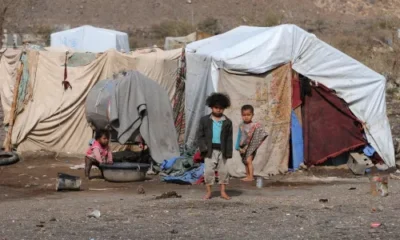
 News2 weeks ago
Yémen :21 573 ménages déplacés dans sept gouvernorats
-

 Features2 weeks ago
L’OIM explique son travail dans les pays qui accueillent des ressortissants de pays tiers
-
 News2 weeks ago
Ebola : Amy Pope appelle à un soutien urgent alors que la RDC fait face à la plus grande épidémie
-
 Features2 weeks ago
L’OIM aide plus de 81 000 migrants à retourner dans leur pays depuis 115 pays
-

 Features2 weeks ago
IOM explains work in countries receiving third-country nationals
-
 Features2 weeks ago
Assisted Voluntary Return, Post-Arrival Assistance, and Reintegration: IOM’s Role Explained
-

 News2 weeks ago
Un tribunal de Naples annule la détention de 45 jours du Sea-Watch 5