
Features
A boat carrying 180 Rohingya refugees vanished. A frantic phone call helped untangle the mystery

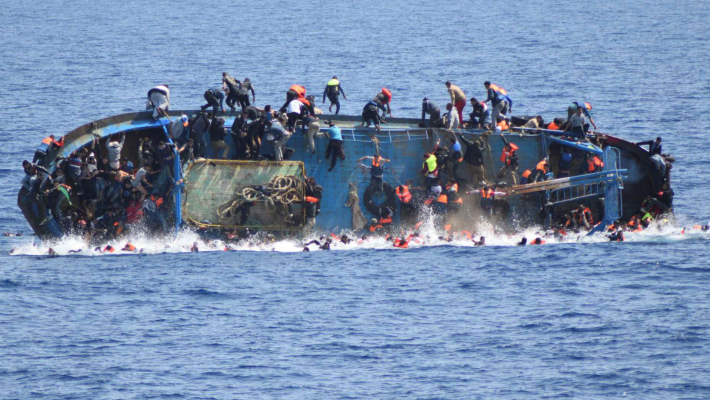
The wind had whipped the waves to nearly three times the woman’s height when her panicked voice crackled over the phone.
“Our boat has sunk!” Setera Begum shouted, as a storm threatened to spill her and around 180 others into the inky black sea south of Bangladesh. “Only half of it is still afloat!”
On the other end of the line, hundreds of miles away in Malaysia, was her husband, Muhammed Rashid, who picked up the phone at 10:59 p.m. his time on Dec. 7, 2022. He had not seen his family in 11 years. And he had only learned days earlier that Setera and two of their daughters had fled surging violence in Bangladesh’s camps for ethnic Rohingya refugees.
Now, Rashid feared, his family’s frantic bid to escape would cost them the very thing they were trying to save — their lives. For despite Setera’s pleas, no help would come, not for her or for the babies, the 3-year-old afraid of the sea or the pregnant women also on board.
Rashid listened to his wife’s terrified voice with growing dread.
“Oh Allah, it’s sunk by the waves!” Setera cried. “It’s sunk by the storm!”
The call disconnected.
Rashid tried to call back. On board the boat, the satellite phone rang. But no one answered.
Rashid tried again. He tried more than 100 times.
The phone rang out.
The Rohingya are a people nobody wants.
This stateless Muslim minority has suffered decades of persecution in their homeland of Myanmar, where they have long been viewed as interlopers by the Buddhist majority. Around one million have fled across the border to Bangladesh, only to find themselves trapped for years in a squalid camp and held hostage by migration policies that have given them almost no way out.
And so, in a bid to get somewhere — anywhere — safe, they are taking to the sea.
It is a life-or-death gamble. Last year, more than 3,500 Rohingya attempted to cross the Bay of Bengal and the Andaman Sea — a 360 percent increase over the previous year, according to United Nations figures that are almost certainly an undercount. At least 348 people died or went missing, the highest death toll since 2014.
It’s impossible to know whether any of those lives could have been saved, because almost no one was looking to save them in the first place. Instead, the Rohingya are often abandoned and left to die on the water, just as on land. Even when officials knew the boats’ locations in recent months, the United Nations’ refugee agency says its repeated pleas to maritime authorities to rescue some of them have gone ignored.
Governments ignore the Rohingya because they can. While multiple international laws mandate the rescue of vessels in distress, enforcement is difficult.
In the past, the region’s coastal nations hunted for boats in trouble — only to push them into other countries’ search and rescue zones, says Chris Lewa, director of the Arakan Project, which monitors the Rohingya crisis. But now, they rarely even bother to look.
The lucky ones are eventually towed to shore in Indonesia by local fishermen. Yet even rescue can be perilous — a Vietnamese oil company saved one boat, then promptly handed the Rohingya over to the same deadly regime in Myanmar from which they’d fled. And the Myanmar authorities themselves patrol for Rohingya migrants.
There is no reason why regional governments could not or cannot coordinate and rescue these boats, says John Quinley, director of human rights group Fortify Rights.
“It was a total lack of political will and extremely heartless,” he says. “The accountability and the onus really lies on everyone.”
Several countries in the region did not respond to requests for comment.
The reasons the Rohingya escape are written on face after gaunt face, in haunted eyes and across slumped shoulders. Any hope that once existed in the Bangladesh camps has long since died, replaced by a stoic sadness and a palpable fear. These are a people who have come to expect nothing, and often get that or worse.
Most of the Rohingya in these camps fled what the United States has declared a genocide in Myanmar in 2017. In recent years, however, brutal killings by gangs and warring militant groups — many in broad daylight — have become commonplace.
Fires are frequent, some of them acts of arson. One afternoon in March, a blaze that investigators say was set by criminals tore through thousands of shelters. The billowing smoke was so thick and black it blocked the view of the sun. Wide-eyed children huddled together, crying, as the inferno left 15,000 homeless.
Beyond fear is hunger. The Rohingya are banned from working and rely on food rations, which have been slashed due to a drop in global donations. Meanwhile, a military coup in 2021 in Myanmar has made any safe return home at best a distant dream.
And so, out of options, they do again what they have done before: They flee.
RELATED STORY
– Adrift in the Atlantic, a boat of death and lost dreams
Jutting up from the dust and the dirt of Nayapara camp in Bangladesh are bamboo, tarp and tin huts jammed along labyrinthine pathways.
This tight-knit warren is Block H, home to Setera and 64 other passengers, including the boat’s captain, Jamal Hussein.
Virtually everyone in Block H was connected to the boat somehow. Many residents have spent most, or all, of their lives here, after fleeing Myanmar during earlier waves of violence. Their shelters now bake below sun-scorched mountains that are home to violent gangs.
Jamal himself was afraid for his life, says his sister, Bulbul. Inside her shadowy shelter, she weeps at the memories of her brother. “He was my heart,” she says.
Back in Myanmar, Jamal was a rice farmer and a youth leader of their village. After his dad died, he became a father figure to his younger siblings, including Bulbul, who was 15 years his junior.
Their life in the camps was difficult, she says, but they managed. More recently, though, Jamal had received death threats, Bulbul says. He started making plans to get out.
He bought a boat and took a video of it to share with prospective passengers. In the video, obtained by the Associated Press, the wooden vessel sits docked in murky brown water. It appears old and shabby, with a cramped compartment below deck, and clearly too small to safely carry 180 people 1,800 kilometers (1,100 miles) to Indonesia, Jamal’s target.
From there, most passengers planned to make their way to their ultimate destination, Malaysia.
Though Bulbul denies it, residents of Block H say Jamal was a seasoned captain who had successfully guided several other boats of Rohingya refugees across the sea. It was his experience, they say, along with his willingness to put 16 of his own relatives on the boat — including his wife, six children, five grandchildren and two pregnant daughters-in-law— that prompted so many to trust him. One mother said Jamal promised her he would watch over her teenage son and daughter along with his children.
In a shelter a short walk from Jamal’s, Setera’s father holds up a photo of his daughter, with her full lips and wide-set eyes so much like her mother’s.
“She was the most beautiful person in our family,” says Abdu Shukkur.
Shukkur had never heard anyone say a bad word about Setera, a warm and doting mother to her own daughters. She rarely complained, despite raising her girls on her own in the misery of the camps since 2012. That’s the year her husband, Rashid, fled to Malaysia to support his family with the wages he sent from his restaurant job.
But the money had also made the family targets of kidnappers, Shukkur says, and Setera had begun to fear for their lives. The local gangs know which of the block’s residents have relatives abroad who could afford a ransom.
Two years ago, they snatched Setera’s 4-year-old nephew and took him to the mountains, Shukkur says. They held him there for 6 days, drugging him to keep him quiet. The family eventually paid a ransom of 300,000 taka ($2,800) to get him back — a fortune in the camps.
In late November, Setera went to her father and asked his permission to go on Jamal’s boat, along with her two younger daughters, aged 18 and 15. Her eldest daughter was married and would stay behind.
Shukkur forbade her to go.
“If you want to go to Malaysia by boat, just divorce your husband,” he told her. “It’s too dangerous.”
His wife, Gul Faraz, intervened. “She’s been living without her husband here for 11 years now,” Faraz said. “Let her go.”
Shukkur relented.
Grief steals his breath as he recounts his goodbye with his granddaughters, and he pauses to calm himself. They had a habit of stealing Shukkur’s unripe guavas, plums and mangoes whenever they visited, prompting scoldings from their grandfather.
“Grandpa, you will not need to scold us anymore,” one of the girls told Shukkur. “Everything will be all right.”
Setera, angry that her father had tried to stop her, did not come to say goodbye.
In a nearby shelter, another family was in agony.
Jamal’s cousin, Muhammed Ayub, was fighting to stop his daughter, Samira, and her children, aged 6 and nine months old, from getting on the boat. But his son-in-law, Kabir Ahmed, was resolute. Villagers outside the camps had beaten him with an iron rod, and he was afraid.
“It is not safe here. People are getting killed every day,” Ahmed told his father-in-law. “If you stop me from leaving, I will not visit you anymore.”
And so, powerless, Ayub hugged his daughter and son-in-law goodbye. Then, riddled with anxiety, he wrapped his grandsons in an embrace. His entire body ached as he watched them leave.
“They were my lovely ones,” he says.
A boat carrying 180 Rohingya refugees set out from Bangladesh on December 1. One week later, the boat vanished. The Associated Press reconstructed the journey based on interviews, videos, and calls from the boat. AP video by Al-emrun Garjon Production: McKinnon de Kuyper, Marshall Ritzel and Peter Hamlin
At the southernmost tip of mainland Bangladesh lies a wild, wind-swept beach, fringed to the east by forest and mountains and to the west by the Bay of Bengal. This stretch of grey sand is barren but for a few wooden fishing boats and an army of bright red crabs that hide in their holes when any human comes near.
It was from here that a small fishing boat began ferrying passengers to Jamal’s waiting vessel. The AP has reconstructed their journey based on interviews with 28 relatives of those on board, audio recordings of calls from the boat, interviews with three eyewitnesses, and photos and videos.
Late on the night of Dec. 1 and through around 4 a.m. the following day, many of those on Jamal’s boat called their anxious families.
It was only then that Setera told her husband she and two daughters were headed his way.
Rashid had told them countless times never to get on a boat. But this time, Setera would not be stopped. She told him she’d sold her jewelry to help pay for their passage, a total of 360,000 taka ($3,400).
Rashid was stunned. He apologized to Setera for any mistakes he’d made in their 20 years of marriage. And then, he says, he heard Jamal tell Setera to get off the phone. She hung up.
Rashid began to cry with excitement and fear. He couldn’t believe he might soon see his girls.
Setera made at least one more call, to her father, Shukkur.
“The boat is waiting for fuel,” Setera said. “We’re leaving soon, and we’ll be out of service.”
Shukkur was too angry to speak. He couldn’t believe she hadn’t even come to say goodbye. So he passed her mobile number onto his nephew in Malaysia, and told him to ring Setera and order her to come home.
Meanwhile, Jamal’s daughter-in-law, Bibi Ayesha, called her parents to say she and her family had also made it on board. Alongside Bibi was her 17-year-old brother, her husband, and her 3-year-old son, Abu.
The little boy was frightened of the water. Bibi and her husband passed him back and forth, trying to comfort him, as they spoke with her parents. “Pray for us,” they said.
Jamal got on the phone with the parents to reassure them. “The boat is big,” Jamal said, according to the couple. “We have enough food for 15 days.”
Asma Bibi, who was married to another of Jamal’s sons, also made a call to her mother, Hasina Khatun. Eighteen-year-old Asma was 9 months pregnant, and excited to meet her child after a stillbirth with her first baby one year earlier.
Asma hadn’t wanted to go on the boat, says Hasina. But Asma’s husband did.
“How can I stay here without my husband? I’m pregnant,” Asma had told her nervous mother days earlier. “How can my child survive without a father?”
And so, Hasina gave her daughter two sets of baby clothes — one pink, and one white, since they didn’t know the baby’s gender. She also gave her daughter medicine, towels and a green blanket to wrap the newborn in after birth.
Asma packed them along with snacks from her father’s shop, plus three sets of clothes to fit her pregnant and postpartum body. Then Asma reluctantly followed her husband onto Jamal’s boat, along with her 13-year-old brother.
At 4:04 a.m., back in Block H, Jannat Ara’s phone rang. It was her aunt, Kurshida Begum, who said she’d boarded with her husband and two sons, aged 3 and 4.
In the recorded call, shared with the AP, Kurshida recites a prayer, then asks her niece to do the same.
“The journey has begun,” Kurshida told her niece.
News of the call quickly reached Kurshida’s mother-in-law, Momina Begum, who became hysterical. She had no idea Kurshida and the boys were on the boat.
“Where are you going with these children?” Momina screamed. “Why are you crossing the dangerous sea with these children?”
But it was too late. Jamal’s boat was headed into the Bay of Bengal.
What happened next is best told through the eyes of the refugees on yet another boat that set out for Indonesia one day later.
On board were 104 people, including a man named Kafayet Ullah. According to Kafayet, he was merely a passenger. According to others, he was the captain.
Not long into the journey, Kafayet spotted a boat in the distance. As they moved closer, they realized the boat was Jamal’s. And it was in trouble.
Jamal called out that his engine was having problems. He borrowed some electrical wire from Kafayet’s boat and went to work repairing the fault.
Kafayet was worried. His own niece and nephew were aboard Jamal’s vessel, which looked old and overloaded, the passengers packed in tight like animals.
But unlike Kafayet, Jamal had experience and a satellite phone. So when Jamal finished fixing the engine, he set off again, and Kafayet followed.
Four days later, the sky cracked open.
A powerful storm descended upon them. The boats thrashed in the merciless waves. Kafayet’s terrified passengers sobbed as the rain pounded down and the tempest washed their supplies overboard.
The water in Kafayet’s boat began to rise, and a man on board spotted sharks. The passengers prepared themselves to die.
Through the darkness, they could see a light shining on Jamal’s boat. It was still above water.
But not for long.
Setera Begum’s final call to her husband, Muhammed Rashid, on Dec. 7, 2022.
The recording of Setera’s call to Rashid lasts 44 seconds.
“Oh Allah, our boat has sunk!” Setera shouts into the satellite phone. “Only half of it is still afloat! Please pray for us and tell my parents!”
“Where are you?” Rashid asks.
“We are about to reach Indonesia.”
“Indonesia?” Rashid repeats.
“Please tell me the name of the place,” Setera says to someone else on board, before replying to her husband: “Yes, it is India. Please try to send…”
“Are you in India?” Rashid asks, bewildered.
“Our boat has sunk! Our boat has sunk!”
“Who?” Rashid replies in a panic.
“Oh Allah, it’s sunk by the waves, it’s sunk by the storm!”
“Oh, is it sunk by the storm?” Rashid repeats. “Oh Allah…”
The call cut out.
Rashid began to pray.
Not even the shrieking wind could drown out the screams of Jamal’s passengers.
Kafayet could just make out the shape of Jamal’s boat as it made a sharp turn in the waves, and then flipped over. Kafayet threw empty water drums overboard in case his niece or nephew or any of the others could grab onto them.
He says he couldn’t see anyone in the water. But he could hear them screaming.
Then the screams stopped. The light on Jamal’s boat blinked out.
“I saw with my own eyes,” Kafayet says. “The boat sank.”
Within hours, the recording of Setera’s call spread through Block H. In shelter after shelter came the wails of families cracking apart.
Jamal’s cousin, Muhammed Ayub, was lying on his mat when he received the recording. As he listened, he began to howl in agony.
All he has left now of the grandsons he called his “lovely ones” are their clothing and his memories. He stares at a pair of little brown shoes with Velcro straps that 6-year-old Tasin once wore, and weeps. When he holds them, he says, he feels he is holding his grandson.
Crouched on the floor next to him, his wife, Minara Begum, inhales the scent from their daughter Samira’s yellow dress. Then she presses a pair of 9-month-old Samir’s tiny blue shorts to her face, the fabric growing damp with her tears.
“Oh, my grandson, why did you leave?” she moans. “Where have you gone?”
Families already pushed to breaking point are now broken. One man who lost four relatives tried to kill himself.
Momina Begum, whose young grandsons were on board, feels she is burning in a fire or sinking under water. She sits next to a plastic basket of her 4-year-old grandson’s toys and searches for the will to live.
“It would be better to kill us by poison instead of taking away my family,” she says.
Hasina Khatun, whose pregnant daughter, Asma, and 13-year-old son were on the boat, now finds herself begging to hold other people’s babies. She wasn’t able to hold her daughter’s stillborn baby, either, she says through tears.
Hasina, like some others, still holds out hope her loved ones are alive. Without their bodies, they say, their deaths are difficult to accept.
One man, Muhammed Rashid, believes he sees his teenage son, Saiful, in an online photo of Rohingya refugees in Indonesia. He had it laminated.
Muhammed cradles Saiful’s backpack in his lap. He pulls down a sack of his boy’s belongings and dumps it on the bed, a strangled sob erupting from his throat. Then he tenderly kisses his son’s English book, on which Saiful had scrawled: “I love you.”
“My son is everything,” Muhammed murmurs. “We believe he is alive.”
But the only known survivors from that night were Kafayet and his passengers.
After Jamal’s boat sank, they drifted for another 10 days, their engine damaged, their food and water gone. Kafayet’s brother could not stop crying, thinking about what must have happened to their niece and nephew.
Delirious with thirst and hunger, they suddenly spotted a speed boat in the distance and frantically waved their clothes in the air. The Sri Lankan navy towed Kafayet’s boat to shore.
“Allah gave me a new life,” Kafayet says from a Colombo shelter.
His brother, Muhammed, knows how close they came to death. He hopes no one else will attempt to do what they did.
Yet back in the camps, such plans are already underway. In early March, Jamal’s sister, Bulbul, listened in horror as her 20-year-old son told her he was preparing to leave by boat.
Her heart stopped. “I will never allow you to go on this dangerous journey,” she told him. “My brother died on a boat.”
So he agreed to stay — for now. If he flees, she says, she will die of worry.
Rashid’s eyes are ringed with black, a result, he says, of crying for months for Setera and their daughters.
He accepts now that they drowned in the dark, screaming for help from a world gone deaf.
“I spent a long time here for my family. But now I’ve lost them,” he says.
“I feel I am dead.”
Credit: AP NEWS





Features
Gaza : Près de deux millions de personnes ont besoin d’une aide d’urgence en matière d’hébergement
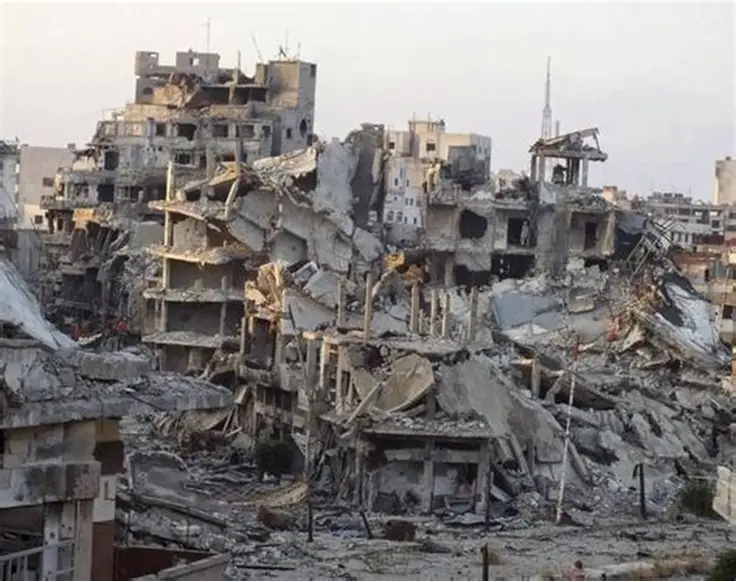
Près de deux millions de personnes, soit la quasi-totalité de la population de Gaza, ont toujours besoin d’une aide en matière d’hébergement, un an après l’annonce d’un cessez-le-feu. Alors que les pluies hivernales commencent, l’ensemble des approvisionnements prévus par les partenaires humanitaires intervenant dans le domaine de l’hébergement ne couvre qu’à peine 17 % des besoins identifiés pour l’hiver, a averti aujourd’hui Amy Pope, Directrice générale de l’Organisation internationale pour les migrations (OIM).
Après des années de déplacements et de destructions généralisées, les Palestiniens affrontent un quatrième hiver sans protection adéquate contre la pluie, les inondations et le froid. L’insuffisance des financements et les restrictions persistantes imposées par les autorités israéliennes à l’entrée de fournitures essentielles destinées aux abris empêchent les organisations humanitaires d’apporter une réponse à la hauteur des besoins.
« Les familles qui ont déjà subi des déplacements répétés et des pertes dévastatrices doivent pouvoir affronter l’hiver dans la sécurité et la dignité », a déclaré Pope. « Les matériaux destinés aux abris doivent pouvoir entrer rapidement, de manière prévisible et en quantités suffisantes pour répondre aux besoins. »
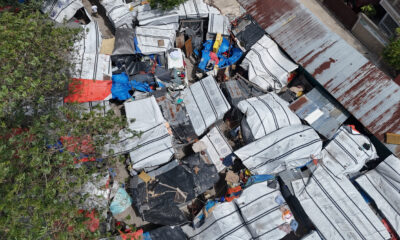
Plus de la moitié des tentes et des abris de fortune actuellement utilisés sont en mauvais état et doivent être remplacés. Les tentes sont conçues comme une mesure d’urgence temporaire et ne durent généralement que six à douze mois.
Faute d’autres solutions, de nombreuses familles vivent dans des bâtiments endommagés par la guerre qui présentent de graves risques pour leur vie. Le mois dernier seulement, des dizaines de personnes ont été tuées dans la ville de Gaza lorsqu’un bâtiment endommagé par la guerre s’est effondré. En août, un partenaire de l’OIM avait recensé plus de 3 600 structures jugées dangereuses et présentant un risque d’effondrement.
Le renforcement du phénomène El Niño devrait entraîner des précipitations plus abondantes, susceptibles de fragiliser davantage les bâtiments déjà dangereux, tandis que les systèmes de drainage fortement endommagés exposent les communautés aux inondations.
L’OIM et ses partenaires chargés de la gestion des sites ont recensé près de 1,8 million de personnes vivant dans des sites de déplacement, dont la plupart se trouvent dans des zones exposées aux risques d’inondation. Les eaux de crue pourraient endommager les abris, détruire les derniers biens des familles et contraindre les populations à se déplacer une nouvelle fois.
Environ 8 600 kits d’hébergement d’urgence de l’OIM sont prépositionnés à l’extérieur de Gaza et prêts à être acheminés, mais les autorités israéliennes continuent de leur refuser l’accès aux points de passage. Pendant ce temps, les équipes humanitaires utilisent, dans la mesure du possible, des matériaux disponibles localement et des matériaux récupérés. Ces efforts apportent un soutien temporaire limité, mais restent insuffisants pour répondre à l’ampleur des besoins en matière d’hébergement.
« Les solutions sont connues, les fournitures sont prêtes et les équipes humanitaires sont préparées à les acheminer », a déclaré Pope. « Un accès humanitaire immédiat et durable est essentiel pour protéger des vies, renforcer les abris endommagés et aider les familles à dépasser le stade des solutions temporaires. Toutes les parties doivent faciliter une action humanitaire fondée sur les principes humanitaires et soutenir une réponse à la hauteur de la gravité de la crise. »
L’OIM appelle à autoriser immédiatement et durablement l’entrée de tentes, de kits d’hébergement d’urgence, d’unités de logement de secours, de bois, d’outils et d’autres matériaux nécessaires pour renforcer les abris, réparer les habitations endommagées et aider les familles à trouver des logements plus sûrs.
Un accès prévisible aux équipements spécialisés, au carburant, aux pièces de rechange et aux matériaux de construction sera également essentiel pour permettre l’enlèvement des décombres et progresser vers un relèvement précoce.
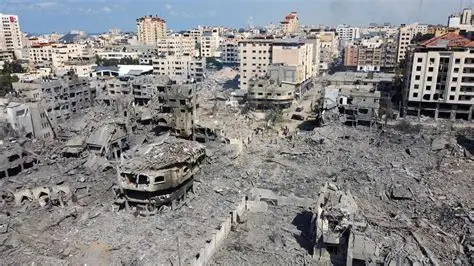
Nearly all of Gaza’s population, almost two million people, still require shelter assistance one year after a ceasefire was announced. As winter rain begins, the combined supply pipeline of humanitarian shelter partners covers barely 17 per cent of identified winter needs, the International Organization for Migration (IOM) Director General Amy Pope warned today.
After years of displacement and widespread destruction, Palestinians are facing a fourth winter without adequate protection from rain, flooding and cold. Insufficient funding and continuing Israeli authorities’ constraints on the entry of critical shelter supplies are preventing humanitarian organizations from responding at the scale required.
“Families who have already endured repeated displacement and devastating loss must be able to face the winter in safety and dignity,” Pope said. “Shelter materials must enter quickly, predictably and at the scale required.”
More than half of all tents and makeshift shelters currently in use are in poor condition that requires replacement. Tents are designed as a temporary emergency measure and generally last only six to 12 months.
With few alternatives available, many families are living in war-damaged buildings that pose serious risks to life. Just last month, dozens were killed in Gaza city when a war-damaged building collapsed. More than 3,600 structures were identified by an IOM partner in August as dangerous and at risk of collapse. The strengthening El Niño phenomenon is expected to bring heavier rainfall, which could further weaken unsafe buildings, while heavily damaged drainage systems leave communities exposed to flooding.
IOM and partners working in site management have identified nearly 1.8 million people living in displacement sites, most of them in areas at risk of flooding. Floodwaters could damage shelters, destroy families’ remaining possessions and force people to move once again.
Approximately 8,600 IOM emergency shelter kits are pre-positioned outside Gaza and ready for delivery but continue to be turned away at crossing points by the Israeli authorities. Meanwhile, humanitarian teams are using locally available and salvaged materials wherever possible. These efforts provide limited temporary support but are insufficient to meet widespread shelter needs.
“The solutions are known, the supplies are ready and humanitarian teams are prepared to deliver,” Pope said. “Immediate and sustained humanitarian access is essential to protect lives, strengthen damaged shelters, and help families move beyond temporary solutions. All parties must facilitate principled humanitarian action and support a response equal to the severity of the crisis.”
IOM calls for the immediate and sustained entry of tents, emergency shelter kits, relief housing units, wood, tools and other materials needed to reinforce shelters, repair damaged homes and support families seeking safer accommodation. Predictable access to specialized equipment, fuel, spare parts and construction materials will also be essential for debris removal and movement toward early recovery.
Features
Les immigrants Nigérians confrontés à des problèmes de santé mentale invisibles malgré leur réussite, alerte un expert

Les immigrants Nigérians peuvent connaître une réussite professionnelle et personnelle dans leurs pays d’accueil tout en faisant face à des problèmes de santé mentale souvent dissimulés, liés à la migration, aux changements identitaires et au stress prolongé, a déclaré Kehinde Ekpudu, un professionnel de la santé mentale.
Ekpudu, titulaire d’un MBA et d’un master en travail social, et travailleur social clinicien agréé (RCSW), a mis en lumière les conséquences psychologiques de la migration lors d’une présentation intitulée « Au-delà de la survie : santé mentale des immigrants nigérians — expériences vécues, identité et cerveau ».
Cette intervention a eu lieu lors du premier Sommet nigérian sur la santé mentale, organisé en ligne hier à l’occasion de la Journée mondiale de la santé mentale.
La présentation a examiné les liens entre la migration, l’identité, le cerveau et la santé mentale, en attirant l’attention sur les pressions émotionnelles auxquelles les immigrants peuvent être confrontés lorsqu’ils s’adaptent à la vie dans un nouveau pays.
« Lorsque nous parlons de la réussite des immigrants, nous célébrons leur capacité à s’en sortir. Mais que se passe-t-il lorsque la survie devient un mode de vie ? », a demandé Ekpudu, remettant en question la tendance à mesurer la réussite des immigrants principalement à travers leurs réalisations professionnelles et leur capacité d’adaptation.
Selon la présentation, les Nigérians n’arrivent pas dans leurs pays d’accueil dépourvus d’identité, d’expérience ou de références culturelles. La migration ne consiste pas simplement à passer d’un lieu géographique à un autre ; elle représente également une transition psychologique et identitaire.
La présentation a souligné que les immigrants peuvent être amenés à concilier simultanément plusieurs identités : nigériane, africaine, noire, canadienne, professionnelle, partenaire, parent, fils ou fille.
« La migration peut nous obliger à redéfinir certaines parties de nous-mêmes qui nous semblaient autrefois stables », indique le document.
Ekpudu a également cité une étude publiée en 2023 par Aluh et d’autres chercheurs, selon laquelle 51,7 % des immigrants nigérians participant à une étude menée au Canada présentaient un résultat positif au dépistage de la dépression.
La présentation a en outre relevé que le fait de résider au Canada depuis plus de dix ans était significativement associé à une probabilité plus élevée d’obtenir un résultat positif au dépistage de la dépression.
Ce constat remet en question l’idée selon laquelle les difficultés psychologiques liées à la migration diminuent nécessairement à mesure que les immigrants passent davantage de temps dans leur pays d’accueil.
Au-delà de la dépression, la présentation a identifié l’adaptation constante, l’incertitude et le stress chronique comme des facteurs susceptibles d’affecter le système nerveux et le bien-être émotionnel des immigrants.
Parmi les conséquences possibles figurent l’hypervigilance, l’anxiété, les troubles du sommeil, l’épuisement émotionnel, les difficultés de concentration et le burn-out.
« Parfois, ce qui ressemble à de la résilience de l’extérieur est en réalité un système nerveux qui est devenu très performant dans l’art de survivre », a déclaré Ekpudu.
La présentation a suggéré que des comportements souvent interprétés comme des signes de résilience peuvent parfois traduire les effets d’une pression psychologique prolongée, notamment lorsque les personnes se sentent obligées de rester fortes malgré leurs difficultés émotionnelles.
Elle a également examiné l’influence des attentes culturelles sur la manière dont les immigrants nigérians comprennent et expriment leurs problèmes de santé mentale.
Des expressions telles que « Je suis simplement fatigué », « Ce n’est que du stress », « Dieu m’aidera », « Je dois être plus fort », « D’autres personnes vivent des situations plus difficiles » et « Je ne peux pas craquer » ont été présentées comme des façons courantes de décrire ou d’aborder les difficultés émotionnelles sans reconnaître ouvertement ses besoins en matière de santé mentale.
Selon la présentation, ces réactions peuvent refléter la pression ressentie par certains immigrants, qui doivent rester forts, assumer leurs responsabilités familiales et continuer à rechercher la réussite, même lorsqu’ils traversent des difficultés émotionnelles.
Intitulée « Au-delà de la survie », la présentation a insisté sur la nécessité de prendre en compte les expériences vécues, les identités ainsi que le bien-être physique et psychologique des immigrants dans les discussions sur la santé mentale.
Elle a proposé un parcours allant de la survie à la confiance en soi, fondé sur trois principes : le sentiment d’appartenance, l’intégration et l’épanouissement.
Dans ce cadre, le sentiment d’appartenance consiste à pouvoir créer des liens sans renoncer à son identité ; l’intégration implique d’accepter et de concilier plusieurs identités ; tandis que l’épanouissement signifie reconnaître que la vie peut offrir davantage que la simple survie face aux difficultés quotidiennes.
« Je peux trouver ma place sans renoncer à moi-même », indique la présentation pour illustrer le premier principe.
Elle ajoute : « Je peux assumer plusieurs identités » et « Ma vie peut être davantage qu’une simple survie ».
La présentation a été réalisée dans le cadre des activités de Twin Ocean, dont la devise est : « Naviguer ensemble sur les vagues de la vie ».
Le sommet nigérian appelle à une approche inclusive des soins de santé mentale
Le coordonnateur du Sommet nigérian sur la santé mentale (NMHS), le Dr Oluyinka Oyeniji, a appelé à l’adoption d’une approche nationale inclusive des soins de santé mentale, qui tienne compte des expériences vécues par les patients, les aidants, les familles et les autres personnes affectées par les troubles mentaux.
Oyeniji a lancé cet appel hier dans son discours d’ouverture du premier Sommet nigérian sur la santé mentale, organisé pour commémorer la Journée mondiale de la santé mentale.
Le sommet, organisé en collaboration avec le Ladoke Akintola Neuroscience Group (LNG), a réuni des défenseurs de la santé mentale, des professionnels de santé, des chercheurs et d’autres acteurs concernés afin de discuter des défis et des possibilités d’amélioration des soins de santé mentale au Nigeria.
Selon Oyeniji, le sommet a été créé pour promouvoir des changements positifs dans le secteur de la santé mentale du pays et renforcer les efforts en faveur d’une réponse nationale coordonnée aux problèmes de santé mentale.
Il a déclaré que cette initiative revêtait une importance particulière à un moment où de nombreux Nigérians étaient confrontés à des problèmes de santé mentale, soit directement, soit en raison de leurs responsabilités en tant qu’aidants, membres de la famille ou amis.
Le coordonnateur a également souligné la démarche du gouvernement fédéral visant à dépénaliser la tentative de suicide, qu’il a qualifiée d’évolution importante après plus de quatorze années de plaidoyer.
Il a salué les acteurs qui ont maintenu la mobilisation en faveur de cette réforme et exhorté les Nigérians à soutenir les initiatives visant à améliorer les soins de santé mentale et à protéger les droits des personnes vivant avec des troubles mentaux.

Soudan : les attaques de drones perturbent les cours à El-Obeid, alerte le NRC

Sudan: Drone attacks disrupt school lessons in El Obeid- NRC

Sea-Watch secourt 227 migrants en Méditerranée en 48 heures

Sea-Watch rescues 227 migrants in Mediterranean within 48 hours

Un avocat ougandais exhorte l’UA à rejeter les accords migratoires avec l’Europe
-
 Features2 weeks ago
Gaza : Près de deux millions de personnes ont besoin d’une aide d’urgence en matière d’hébergement
-

 News Extra2 weeks ago
NACTAL conteste le rapport américain sur la traite des personnes et exige la reconnaissance des contributions des organisations de la société civile nigérianes
-
 News Extra2 weeks ago
Un avocat ougandais exhorte l’UA à rejeter les accords migratoires avec l’Europe
-
 News Extra1 week ago
Sudan: Drone attacks disrupt school lessons in El Obeid- NRC
-

 Features2 weeks ago
Nigerian immigrants face hidden mental health challenges despite success, expert warns
-
 Features2 weeks ago
Gaza: About two million need urgent shelter assistance
-

 News Extra2 weeks ago
NACTAL faults US trafficking report, demands recognition of Nigerian CSOs’ contributions
-

 News Extra2 weeks ago
US to deport fresh set of Nigerians over alleged criminal offences