
Features
Many women in Afghanistan, Myanmar, Sudan, Haiti, Democratic Republic of Congo, Gaza are unable to access services or safely report abuse

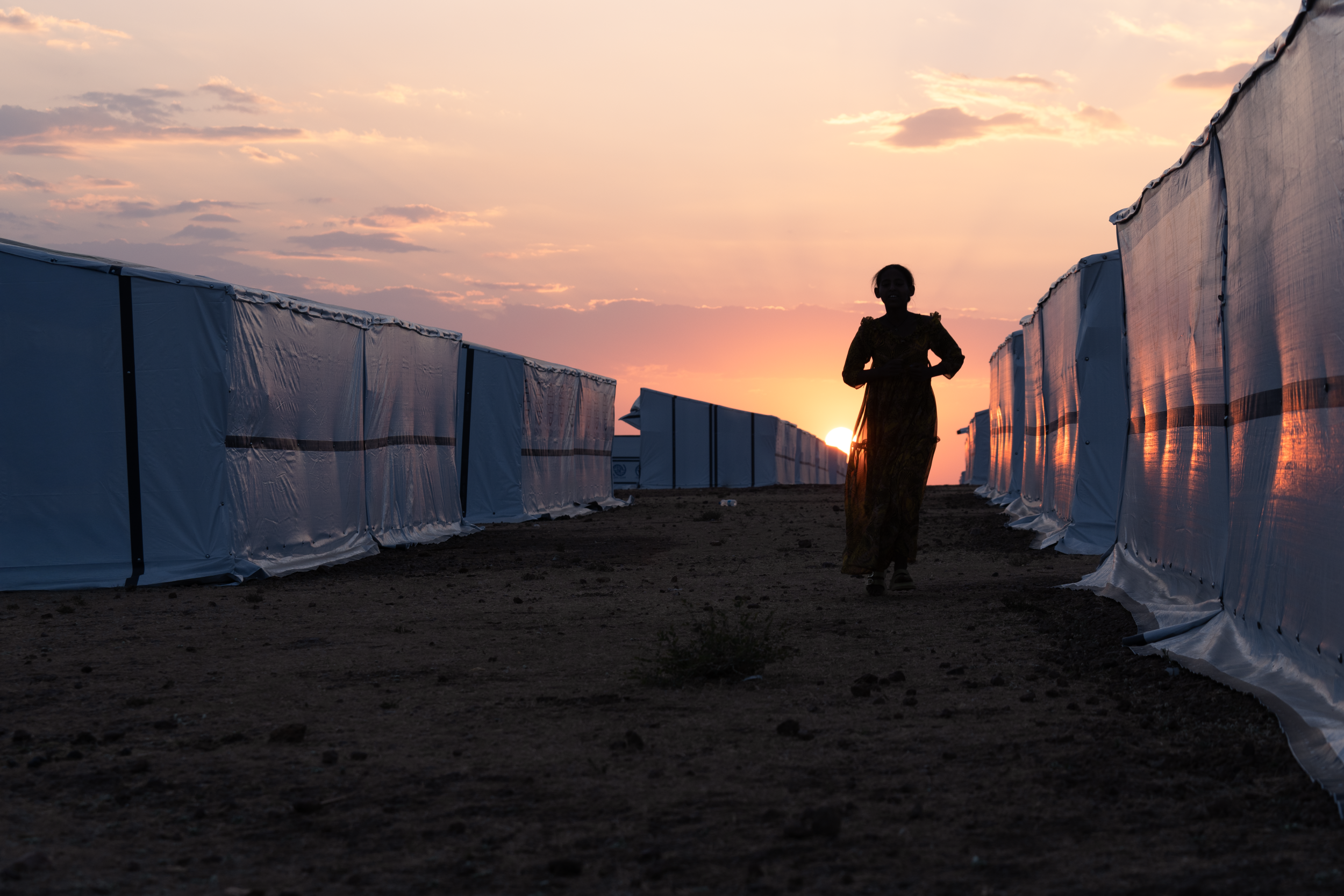
UN agency, the International Organization for Migration (IOM) says many women are unable to access services or safely report abuse, especially in countries where protection systems are weakened by crisis, including Afghanistan, Myanmar, Sudan, Haiti, the Democratic Republic of Congo, and Gaza.
The organization is consequently urging governments, humanitarian actors, and communities to step up efforts to prevent, address, and ultimately end the violence faced by women and girls around the world.
IOM stated this as the world marks the start of the 16 Days of Activism against Gender-Based Violence (GBV),
Every day, IOM teams meet women and girls whose stories trace the fault lines of today’s crises, their journeys marked by courage, loss, and a determination to survive. In Sudan, a mother walked for six days through areas of active fighting, holding her daughters as they fled their village. In Djibouti, a teenager arrived alone after being separated from her family on the Eastern migration route. In Mozambique, a mother pregnant with her second child watched floodwaters swallow her home for the third time in four years.
“I have met women and girls who have survived impossible situations. From fleeing conflict zones to crossing treacherous deserts to rebuilding their lives after losing everything to cyclones, they face increased risks of violence, exploitation, and abuse, often with little or no access to services,” said Ugochi Daniels, IOM Deputy Director General for Operations. “Keeping them safe must remain a central part of every response. I am proud that IOM’s operations put women and girls at the center. But we need to do more, and we need to do better.”
Globally, one in three women experiences violence in her lifetime. For women and girls living through conflict, disasters and displacement, the risks sharply rise to 70 per cent. Many are unable to access services or safely report abuse, especially in countries where protection systems are weakened by crisis, including Afghanistan, Myanmar, Sudan, Haiti, the Democratic Republic of Congo, and Gaza.
Across the Eastern migration route, more women and girls are being forced onto journeys once dominated by men. Countless face forced marriage, trafficking, sexual exploitation, and other abuses hidden in remote deserts and transit towns. Despite these challenges, IOM continues to put protection systems in place, empowering local actors and providing life-saving services and care.
IOM’s work spans across 157 countries working with Governments, local women-led organizations, and partners to bring services to those who need them most. From mobile protection teams that move between displacement sites to identifying survivors, connecting them to medical care, psychosocial first aid, and providing dignity kits, IOM supports safe spaces for women and girls, offering a refuge where survivors can speak freely and begin healing.
Along land migration routes, IOM operates migration response centres that offer a lifeline for millions, including the opportunity to voluntarily return home and reintegrate in their communities. Continuous protection monitoring along the route helps identify new risks, allowing services to adapt and ensuring women and girls are not navigating these dangers alone.
In areas prone to climate hazards that pushed families into cycles of displacement, IOM supports communities to rebuild safer homes, strengthen climate-resilient infrastructure, and put in place community protection mechanisms that reduce exposure to risks including GBV.
As crises intensify and displacement grows, IOM remains committed to upholding the safety, agency, and dignity of women and girls everywhere. The Organization continues to advocate for stronger protection systems, greater accountability, and the integration of GBV risk mitigation across all operations.







Features
Un militant des droits humains tire à nouveau la sonnette d’alarme face à la prolongation de la protestation et aux préoccupations relatives aux droits à Agadez
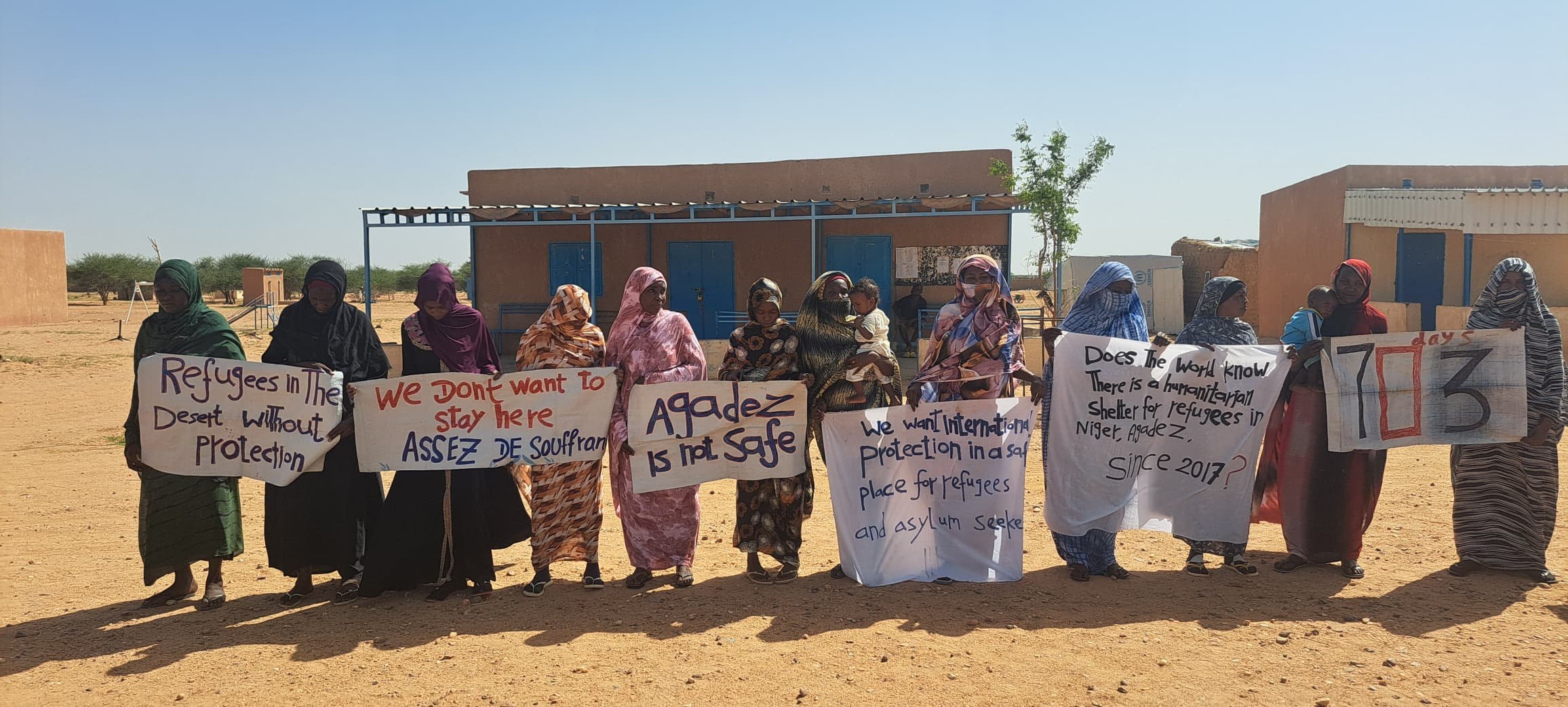
Yousef Ismail, membre de Refugees in Niger, a de nouveau alerté sur la situation humanitaire prolongée des réfugiés du camp humanitaire d’Agadez, au Niger, affirmant que leur manifestation pacifique se poursuit depuis plus d’un an et demeure sans solution.
Dans une série de publications, Ismail a indiqué que les réfugiés du camp manifestaient pacifiquement depuis 703 jours, réclamant une meilleure protection, la reconnaissance de leurs droits et l’accès à la protection internationale.
« La protection internationale est notre priorité », a déclaré Ismail, appelant la communauté internationale et les organisations de défense des droits humains à intervenir.
Il a décrit la situation dans le camp d’Agadez comme étant de plus en plus préoccupante et a accusé les organisations humanitaires ainsi que la communauté internationale de ne pas répondre suffisamment aux besoins des réfugiés qui, selon lui, ont fui leurs foyers à la recherche de sécurité et d’une nouvelle vie.
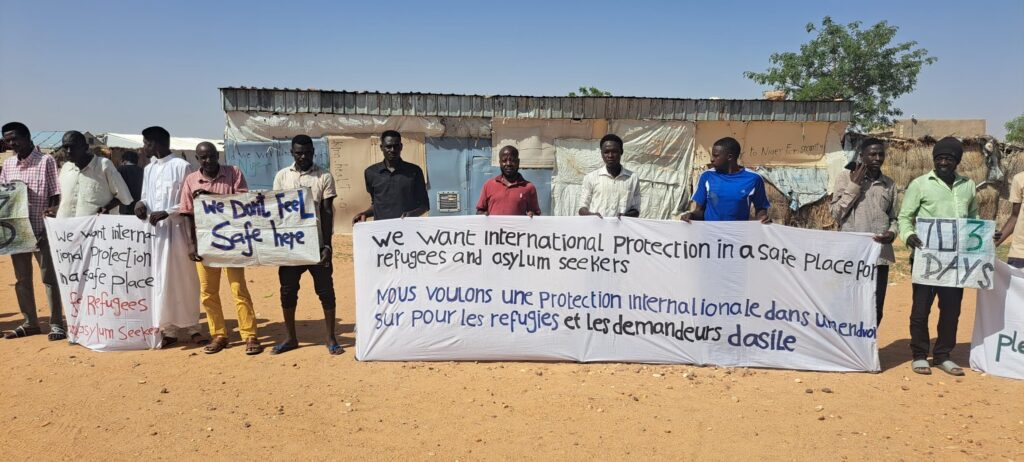
Ismail a exhorté les organisations internationales et de défense des droits humains à se rendre dans le camp afin d’évaluer directement la situation.
« La communauté internationale et les organisations de défense des droits humains doivent se rendre au centre humanitaire d’Agadez, où les réfugiés protestent depuis plus d’un an », a-t-il déclaré, avertissant que les réfugiés ont besoin d’une intervention urgente.
Il a également remis en question l’exactitude des déclarations faites par certaines organisations humanitaires concernant leur prise en charge des réfugiés vulnérables, affirmant que ceux bloqués à Agadez avaient, dans les faits, été abandonnés.
« N’abandonnez pas des personnes innocentes », a-t-il déclaré, soulignant que les réfugiés qui fuient des situations dangereuses devraient bénéficier d’une protection plutôt que d’être laissés dans une incertitude prolongée.
Six réfugiés auraient été expulsés vers la frontière tchadienne
Dans une autre publication, Ismail a commémoré ce qu’il a décrit comme une violation des droits humains survenue le 21 août 2025 au camp humanitaire d’Agadez.
Selon son récit, six réfugiés auraient été arrêtés puis expulsés vers la frontière avec le Tchad après avoir, selon les allégations, été déchus de leur statut de réfugié.
Il a présenté cet incident comme faisant partie de préoccupations plus larges concernant le traitement et la protection des réfugiés dans le camp.
Ismail a également attiré l’attention sur ce qu’il décrit comme la dégradation des conditions humanitaires à Agadez, réitérant son appel en faveur d’une protection et d’une intervention internationales.
Les publications ne fournissent pas de documents indépendants ni de réactions officielles des autorités nigériennes ou des organisations mises en cause par Ismail. Les allégations n’ont donc pas pu être vérifiées de manière indépendante sur la base des informations disponibles.
La prolongation de la protestation met en lumière des préoccupations plus larges concernant la protection des réfugiés et des migrants bloqués au Niger, notamment ceux qui recherchent une réinstallation, l’asile ou d’autres formes de protection internationale.
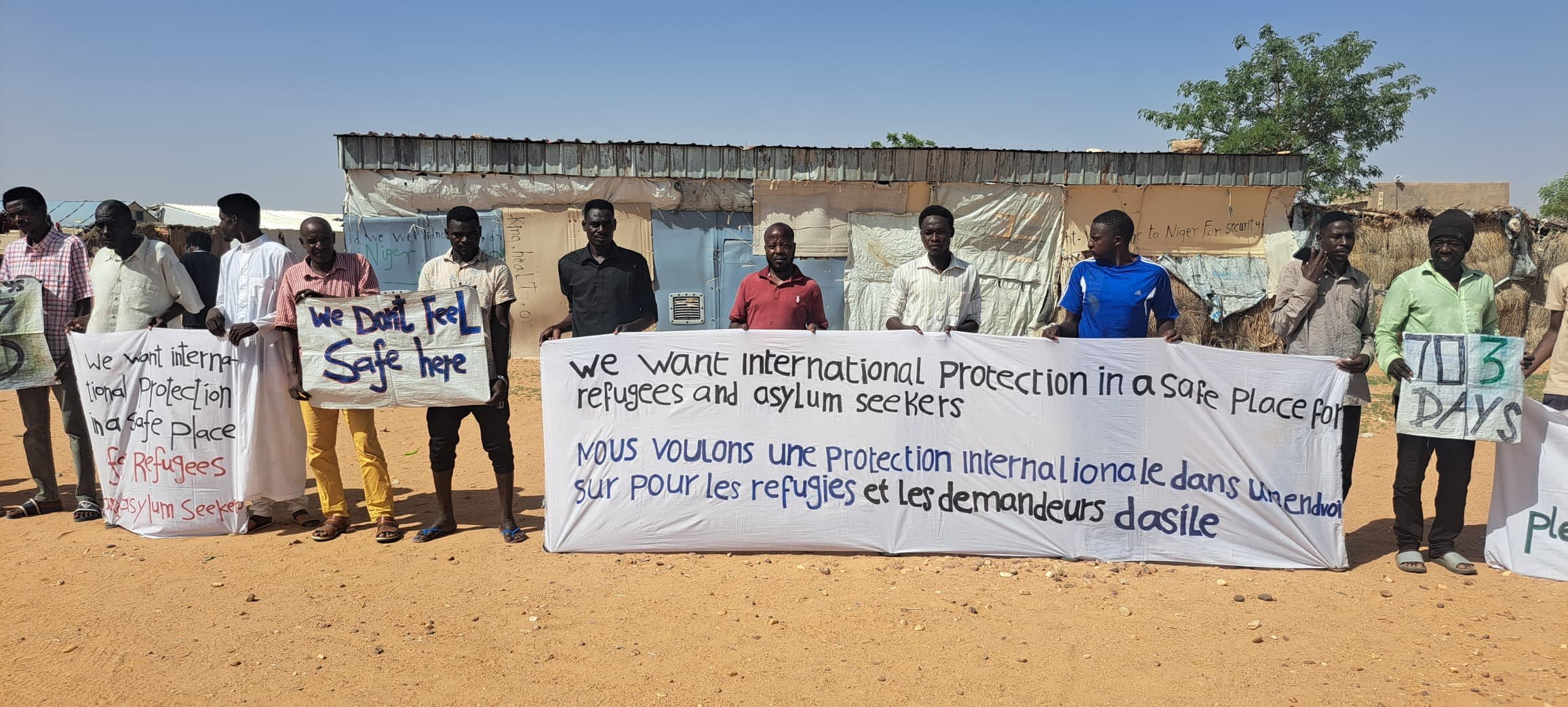
A member of Refugees in Niger, Yousef Ismail, has raised fresh concerns over the prolonged humanitarian situation facing refugees at the Agadez humanitarian camp in Niger, saying their peaceful protest has continued for more than a year and remains unresolved.
In a series of posts, Ismail said refugees at the camp had been demonstrating peacefully for 703 days, demanding greater protection, recognition of their rights and access to international protection.
“International protection is our priority,” Ismail said, while calling on the international community and human rights organisations to intervene.
He described the situation at the Agadez camp as increasingly dire and accused humanitarian organisations and the international community of failing to adequately respond to the needs of refugees who, according to him, fled their homes in search of safety and a new life.
Ismail urged international and human rights organisations to visit the camp and assess the situation directly.
“The international community and human rights organizations must go to the Agadez humanitarian center, where refugees have been protesting for over a year,” he said, warning that the refugees urgently need intervention.
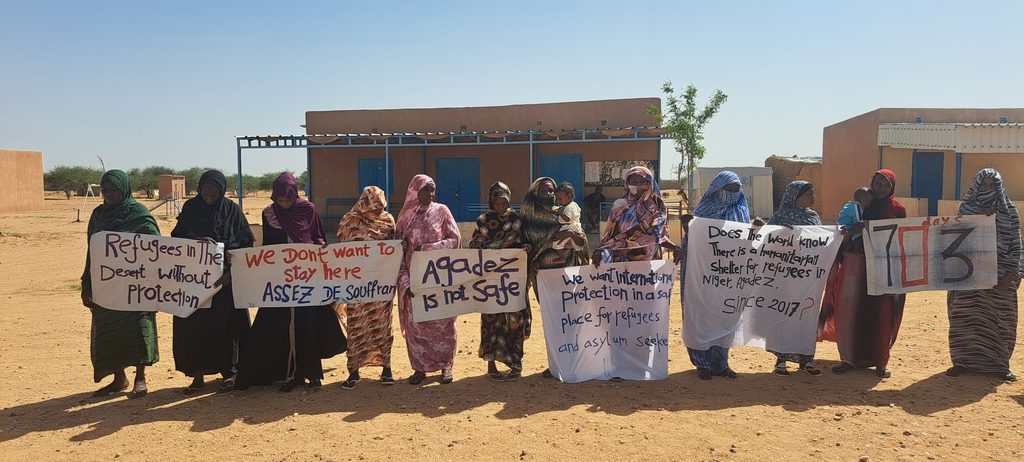
He also questioned the accuracy of statements made by humanitarian organisations about their treatment of vulnerable refugees, alleging that those stranded in Agadez had effectively been abandoned.
“Do not abandon innocent people,” he said, stressing that refugees fleeing danger should receive protection rather than being left in prolonged uncertainty.
Six refugees allegedly expelled to Chad border
In another post, Ismail commemorated what he described as a human rights violation that occurred on August 21, 2025, at the Agadez Humanitarian Camp.
According to his account, six refugees were arrested and subsequently expelled to the border with Chad after allegedly being stripped of their refugee status.
He presented the incident as part of broader concerns over the treatment and protection of refugees in the camp.
Ismail also called attention to what he described as the deteriorating humanitarian conditions in Agadez, reiterating his demand for international protection and intervention.
The posts did not provide independent documentation or official responses from Nigerien authorities or the organisations criticised by Ismail. The allegations therefore could not be independently verified from the information provided.
The prolonged protest highlights wider concerns surrounding the protection of refugees and migrants stranded in Niger, particularly those seeking resettlement, asylum or other forms of international protection.
Features
Externalisation des frontières : l’activiste latino-américain Paulo Illes appelle à une alliance mondiale pour défendre les migrants
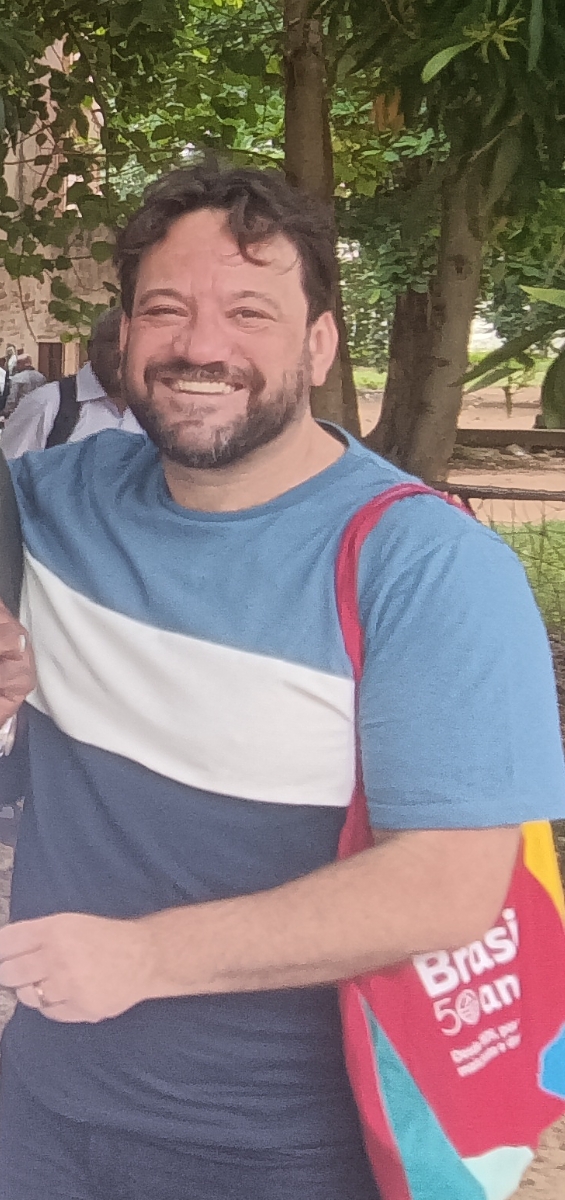
Le président du No Borders Network, Paulo Illes, a appelé à la création d’une alliance internationale contre l’externalisation des frontières, avertissant que les gouvernements du monde entier transfèrent de plus en plus les responsabilités liées au contrôle des migrations au-delà de leurs propres territoires.
Illes a lancé cet appel lors du Forum social mondial qui vient de s’achever en République du Bénin.
Il a participé à une table ronde consacrée à l’externalisation des frontières.
Illes y a présenté la perspective latino-américaine sur la gouvernance des migrations et ses implications pour l’Afrique, l’Amérique latine et l’Europe.
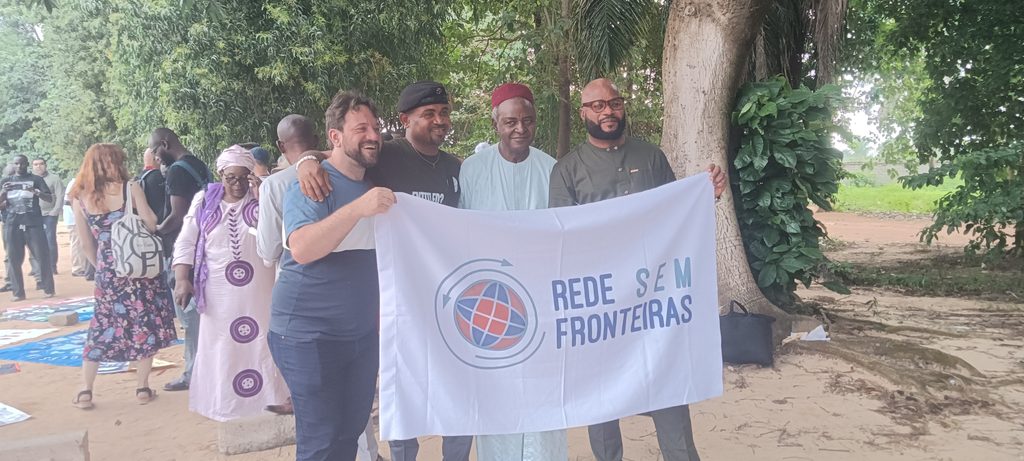
Il a expliqué que, bien que les routes migratoires diffèrent selon les régions, les pays sont confrontés à une tendance politique similaire, caractérisée par l’expansion de politiques visant à empêcher les migrants d’atteindre leurs destinations finales.
Selon lui, la mondialisation croissante de l’externalisation des frontières exige une réponse tout aussi coordonnée de la part des organisations de la société civile, des communautés de migrants et des défenseurs des droits humains.
Illes a présenté le No Borders Network comme un réseau international de la société civile qui relie des organisations d’Amérique latine et de la péninsule Ibérique pour défendre les droits des migrants et des réfugiés.
Il a expliqué que l’externalisation des frontières en Amérique latine avait dépassé le cadre des contrôles frontaliers traditionnels pour devenir un système plus large de gestion de la mobilité humaine.
« En Amérique latine, l’externalisation des frontières revêt des caractéristiques particulières. Plus qu’une simple politique migratoire, elle représente un changement dans la manière dont les États gouvernent la mobilité humaine », a-t-il déclaré.
Illes a expliqué que les frontières devenaient de plus en plus des réseaux de mécanismes de contrôle répartis entre plusieurs pays, plutôt que de simples limites géographiques.
Il a identifié deux grandes dimensions de cette politique en Amérique latine : les efforts visant à contrôler les flux migratoires vers les États-Unis et les mesures destinées à anticiper les politiques européennes de contrôle des migrations.
Selon lui, plusieurs pays situés le long des routes migratoires ont assumé des responsabilités de confinement, rendant de plus en plus difficile pour les migrants d’atteindre leurs pays de destination.
Il a ajouté que l’externalisation s’opérait également par l’intermédiaire des aéroports internationaux, des régimes de visas, des procédures consulaires, du partage d’informations sur les migrations et de mesures administratives susceptibles de limiter l’accès à l’asile et à la protection internationale.
Illes a soutenu que ce qui était externalisé n’était pas seulement le contrôle des frontières, mais également la responsabilité de la protection internationale.
Il a déclaré que les pays de destination transféraient de plus en plus à d’autres États la responsabilité d’empêcher les migrants de poursuivre leur parcours et, dans certains cas, d’accueillir des personnes qui chercheraient autrement à bénéficier des systèmes internationaux d’asile.
Il a cité le Brésil comme exemple des contradictions entourant la gouvernance des migrations, soulignant que le pays disposait d’une législation migratoire axée sur les droits humains, de programmes de visas humanitaires et d’initiatives de parrainage communautaire, tout en subissant parallèlement la pression de la tendance internationale à contenir les migrations.
« L’externalisation prend différentes formes selon les régions du monde, mais ses objectifs restent les mêmes : repousser les frontières plus loin, rendre l’accès à la protection plus difficile et transférer les responsabilités internationales », a-t-il déclaré.
Résistance de la société civile
Illes a déclaré que la société civile organisée demeurait une source majeure de résistance à l’expansion des politiques d’externalisation.
Il a cité les mouvements sociaux, les universités, les Églises, les syndicats, les organisations de migrants et les groupes de la société civile parmi les acteurs qui développent des réponses alternatives aux politiques migratoires restrictives.
Il a indiqué que le No Borders Network travaillait à mettre en relation des organisations de différents pays, à partager des informations, à élaborer des positions communes, à mener des actions de plaidoyer politique et à renforcer les alternatives concrètes en matière d’accueil et d’intégration des migrants.
Selon lui, la résistance ne devrait pas se limiter à dénoncer les violations des droits humains, mais devrait également inclure l’élaboration d’alternatives viables.
« Notre stratégie n’est pas simplement de résister. Il s’agit de construire un autre modèle de gouvernance des migrations, fondé sur les droits humains, la solidarité et une responsabilité internationale partagée », a-t-il déclaré.
Il a appelé au renforcement des réseaux internationaux de la société civile, à la mise en place d’informations fiables sur les nouvelles formes d’externalisation des frontières, à un suivi permanent des violations des droits humains et à une action conjointe auprès des gouvernements et des organisations internationales.
Il a également plaidé en faveur de politiques d’accueil et d’intégration plus solides ainsi que d’une plus grande participation des migrants aux décisions qui affectent leur vie.
Appel à une alliance internationale
Illes a proposé que le Forum social mondial laisse un héritage concret en renforçant une Alliance internationale contre l’externalisation des frontières.
Selon lui, une telle alliance pourrait mettre en relation les organisations de la société civile, coordonner le plaidoyer politique, partager des informations, réagir rapidement aux violations des droits humains et élaborer des alternatives aux politiques de confinement des migrations.
« Les gouvernements ont déjà construit une architecture internationale pour contrôler la mobilité humaine. C’est maintenant à notre tour de construire une architecture internationale fondée sur la solidarité, la coopération et la défense des droits humains », a-t-il déclaré.
Il a également invité les participants à une conférence internationale prévue les 26 et 27 novembre à São Paulo, au Brésil, à l’occasion du 10e anniversaire du Forum social mondial sur les migrations.
Illes a indiqué que cette conférence chercherait à renforcer la coopération entre les organisations de la société civile, les mouvements sociaux, les chercheurs et les dirigeants de communautés de migrants engagés en faveur de politiques migratoires fondées sur les droits humains et la solidarité.
Il a averti que la criminalisation de la mobilité humaine se propageait dans différentes régions du monde, les migrants étant de plus en plus présentés comme des menaces, tandis que le confinement se substitue à la solidarité.
Selon lui, le débat devrait finalement dépasser la seule question des politiques migratoires pour aborder la question fondamentale de la mobilité humaine et de la protection de la dignité humaine.
« Si nous acceptons que la migration constitue une menace, l’externalisation apparaîtra toujours comme légitime », a-t-il déclaré.
« Mais si nous réaffirmons que la migration est un droit humain et que la protection des vies constitue une obligation internationale partagée, alors une autre forme de gouvernance des migrations n’est pas seulement possible : elle est nécessaire. »

Défendre les plus vulnérables :

Fighting for the vulnerable: How Udekwe Kennedy Obinna Is giving migrants a voice and a chance at safer futures

Une militante sénégalaise transforme la mort de son frère sur la route migratoire de l’Atlantique en combat pour le changement
Senegalese activist turns brother’s death on Atlantic migration route into campaign for change

La déportation traumatisante d’Abdulai Daramy soulève des inquiétudes concernant l’accord avec les États-Unis
-
 Features2 weeks ago
Sea-Watch 5 découvre huit corps dans un état avancé de décomposition
-

 News3 weeks ago
Trois autres corps sans vie retrouvés après les 11 découverts par SOS Méditerranée
-
 News Extra3 weeks ago
Colombia: Conflict-affected families lose everything again after deadly earthquake
-
News3 weeks ago
Three more bodies found in Mediterranean after 11 discovered by SOS Méditerranée
-
 Features3 weeks ago
Un séisme meurtrier aggrave la grave crise humanitaire en Colombie
-
News Extra3 weeks ago
Colombie : les familles touchées par le conflit perdent une nouvelle fois tout après le séisme meurtrier
-
 News Extra2 weeks ago
Des manifestations éclatent après la mort de migrants dans le naufrage d’un bateau
-
Features3 weeks ago
Deadly earthquake compounds Colombia’s severe humanitarian crisis