
Features
EU: Stop criminalising migration in the facilitator’s package law

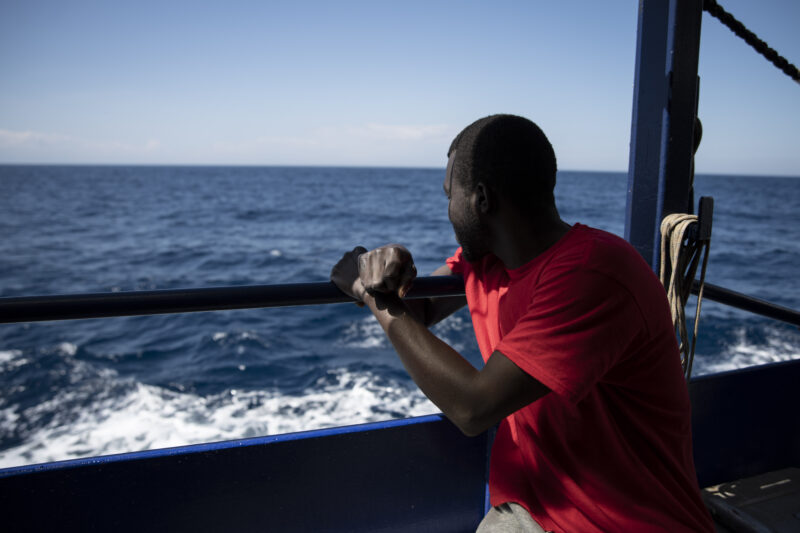
When the European Commission published the Facilitator’s Package in 2023, its stated goal was to protect migrants from being exploited by “professional smugglers” and undertaking dangerous journeys to Europe.
In reality, the Package’s proposed Facilitation Directive criminalises migrants and human rights defenders instead of targeting organised crime networks, and the Europol Regulation unlawfully expands the agency’s powers and resources by capitalising on right-wing politicisation of migration.
It ignores the EU’s role in restricting regular routes for migrants, refugees and asylum seekers, and contributing to environmental, political and economic instability in their home countries – forcing them to seek life-threatening alternatives. Wanda Proft / SOS Humanity
The EU must:
1. AMEND THE FACILITATION DIRECTIVE TO PROTECT MIGRANTS BY INCLUDING
a. A clear legal definition of smuggling as a for-profit activity aligned with existing international standards
b. An explicit and legally binding humanitarian exemption that protects migrants, refugees, asylum seekers, their families, and human rights defenders from being charged with smuggling
2. REJECT THE EUROPOL REGULATION IN ITS ENTIRETY
a. Unlawful – the proposal expands the agency’s powers beyond its ‘cooperation’ mandate and above Member State competencies
b. Unsafe – the proposed increase in Europol’s mass data collection mandate risks widespread violations of privacy and fundamental rights, as denounced by the European Data Protection Supervisor. It also pushes data sharing with known human rights violators Frontex and third countries
c. Unsubstantiated – the proposal was presented without a proper impact assessment, going against the EU’s own Better Regulation Guidelines. The European Parliament’s substitute impact assessment calls into question the effectiveness and lawfulness of the proposal.
The Package is simply a continuation of the erosion of the right to seek asylum and the criminalisation of human movement laid down by the 2024 Migration and Asylum Pact. It feeds into right-wing fear mongering around migration and promotes a criminal law response to a social phenomenon.
The EU continues to pour millions into violent criminal law approaches to migration that do not work. Public resources must instead be reallocated towards a system that meets the care and protection needs of all people, rather than targeting the most vulnerable.
SARAH CHANDER, DIRECTOR, EQUINOX INITIATIVE FOR RACIAL JUSTICE
“EU border policies create the criminal conditions under which people resort to networks in order to move. Lawmakers of the Facilitators Package face a political choice. They can direct the powers of the criminal law, policy, funding and personnel toward the purpose of punishing people in need, or focus on protecting people on the move and those in solidarity with them. The choice is simple.”
CHLOÉ BERTHÉLÉMY, EDRI
“The fight against so-called ‘migrant smuggling’ is an insidious pretext to unlawfully expand Europol’s powers. Turning Europol’s NSA-style surveillance capabilities against migrants and human right defenders will only lead to more pushbacks, violence and deaths at the EU borders. So not only it is hypocritical, but also extremely harmful. The only solution is the rejection of this Europol reform proposal.”
DOROTHEE KRÄMER, ADVOCACY OFFICER FOR SEA-WATCH
“The rage of European member states to punish people for seeking safety is out of control. Thousands are arrested and thrown in jail each year, often in trials that fail to uphold legal standards, simply for trying to exercise their right to asylum. But more repression won’t put an end to the dying at sea. The only way to avoid irregular entrance, is regular entrance and freedom of movement for all.”
Signatories
Organisations:
#DiasporaVote!
Ação Pela Identidade – API
Access Now
Action Aid
Africa Advocacy Foundation
All African Women’s Group
ALMA Community Therapies
Almena Cooperativa Feminista
Àltera APS
Alternatif Bilisim
APDHA-Asociación Pro Derechos Humanos de Andalucía
Apna Haq
Ariadni AMKE
Asociación Por Ti Mujer
BePax
Biznegra
Boat Refugee Foundation
Border Violence Monitoring Network
CADO-Advocacy and Human Rights Center
Changemakers Lab
Comitato 3 Ottobre – Accoglienza ETS
Community Rights in Greece
CompassCollective
Coordinadora Obrim Fronteres
CPT – Aegean Migrant Solidarity
Creación Positiva
de:criminalize
Digitale Gesellschaft (Germany)
Equal Legal Aid
Equinox Initiative for Racial Justice
European Anti-Poverty Network (EAPN)
European Civic Forum
European Network Against Racism (ENAR)
European Sex Workers’ Rights Alliance (ESWA)
Fédération des tunisiens citoyens des deux rives (FTCR)
Filipino Women’s Council
Flüchtlingshilfe Iran e.V
forRefugees
Fuga.coop
German NGO Network against Trafficking in Human Beings – KOK
Global Asylum Seeker Human Rights Defenders Committee (GASHDC)
Global Women Against Deportations
Greek Council for Refugees (GCR)
Greek Forum of Migrants
Hermes Center
Hoatzin
Hoffnung leben e.V.
Homo Digitalis
Human Rights Legal Project
Humanity Diaspo ONG
ILEX- Acción Juridica
Intereuropean Human Aid Association
International Coalition for People of African Descent ICPAD
International Service for Human Rights
International Women* Space
INTERSOS HELLAS
Islamic Human Rights Commission
Kif Kif vzw
Lafede.cat – Organitzacions per la Justícia Global
Legal Centre Lesvos
Love Without Borders
Migrant Tales
Migration Consortium
Mobile Info Team
Movement of Asylum Seekers in Ireland (MASI)
New Bulgarian University
New Women Connectors
No Name Kitchen
Northern Ireland Council for Racial Equality
Northern Lights Aid
Northern Police Monitoring Project
Ona bros
Platform for International Cooperation on Undocumented Migrants (PICUM)
Podlaskie Ochotnicze Pogotowie Humanitarne
Politiscope
Privacy International
QueeriséEs
Racism and Technology Center
Refugee Legal Support (RLS)
Refugees in Libya
Revibra
Romnja Feminist Library
Samos Volunteers
Saplinq, o.z.
SARAH gUG
Sea-Eye e.V.
Sea-Watch e.V.
Seebrücke
SOLIDAR
Solidary Wheels
SOS Humanity e.V.
Spazio di Mutuo Soccorso
SPECTRUM
Statewatch
SUPERRR Lab
The Channel Monitoring Project
The Electronic Privacy Information Center (EPIC)
The Institute for Technology in the Public Interest (TITiPI)
Transnational Institute
Tunisian Forum for Social and Economic Rights FTDES
Über den Tellerrand e.V.
UHURU VALENCIA
UNESCO Inclusive Policy Lab- People of African Descent & SDGs E-Team
United African Women Organization
Up
Utopia 56
Vasilika Moon – La Luna di Vasilika NPO
WeMove Europe
WIDE+ (Women In Development Europe+)
Women of Colour in the Global Women’s Strike
DIOTIMA
Individuals:
Afrika Inkindi
Anna Gruber
Anouar El Hajjami-Jarri
Asher Serrana
Asli Telli
Astrid Schreiber
Astrid Schreiber
Blanca Callén Moreu
Carlos José Marques Salgado
Charito Basa
Daniela Schneider
Diana Podar
Doreen Olivia Williams
Dorrie Wilson
Dr Adi Kuntsman
Elisa Damaso
Emma Martín Díaz
Ewa Trojanowska
Felix Diaz Martinez
Georgia Brooks
Glenn Leihner-Guarin
Ivana Stojanova
Iyo Bisseck
Jara Henar
Jessica Machacova
Karolina Mazurek
Katarina Baltar
Katarzyna Anna Augustynek
Kayra vee Martinez
Laïla B
Lamar Bailey Karamañites
Laurenz Koppenhagen
Leonie Mensel
Luka Mester
Lutz Bucklitsch
Mafe Moscoso
Maisy Vincent
Marek Męczyński
Marga Burgui Artajo
Mariam Camilla Rechchad
Mhe Hakobyan
Misamu Nzabi
Mouhieddine Cherbib
Olga Lubicz
Ona Bros
Osman Vatansever
Paulino Gonzalez
Piotr Fijałkowski – Obywatele RP
Prof. Jan Tobias Muehlberg
Robert Krzysztoń
Romdhane Ben Amor
Selamauyt Tesfaye
Stella Nyanzi
Susana Mariano Anastácio
Tamara Rubin
Terri Beswick
Vinya Mehta
Additional resources
Analysis and recommendations from:





The United Nations has announced a new set of senior appointments to the leadership of the UN Refugee Agency (UNHCR), with Secretary-General António Guterres naming Tressa Rae Finerty as Deputy High Commissioner for Refugees, Antón Leis García as Assistant High Commissioner for Operations, and Edem Wosornu as Assistant High Commissioner for Protection.
The appointments, announced on Saturday, are expected to take effect in the coming weeks.
The three officials will occupy the most senior positions within UNHCR, supporting the High Commissioner in leading the agency’s global response to the protection and assistance of refugees, stateless persons and other people forced to flee their homes.
Welcoming the appointments, UN High Commissioner for Refugees Barham Salih expressed confidence that the incoming officials would strengthen the agency’s response to the growing global displacement crisis.
“I warmly welcome these appointments and look forward to working closely with Tressa, Anton and Edem,” Salih said.
“Their leadership, experience and commitment will be invaluable as UNHCR responds to displacement challenges around the world. Together, we will work to continue strengthening protection, expanding opportunities for self-reliance and pursuing lasting solutions that help refugees rebuild their lives with dignity.”
Finerty, a career member of the U.S. Senior Foreign Service, currently serves as Chargé d’Affaires at the United States Mission to the United Nations and Other International Organizations in Geneva. She previously served as Deputy Chief of Mission in Geneva and Deputy Executive Secretary in the Office of the U.S. Secretary of State. Her diplomatic career has also included postings at the U.S. Mission to the United Nations in New York and embassies in Malaysia, Iraq, Armenia and Thailand. In addition, she has taught refugee policy at New York University and Georgetown University.
Leis García currently heads the Spanish Agency for International Development Cooperation (AECID), Spain’s development and humanitarian agency. He has previously held senior positions at the Organisation for Economic Co-operation and Development (OECD), the Office of the President of the Spanish Government, and international financial institutions including the African Development Bank and the World Bank Group.
Wosornu currently serves as Director of the Crisis Response Division at the United Nations Office for the Coordination of Humanitarian Affairs (OCHA) and chairs the Inter-Agency Standing Committee Emergency Directors Group. She has held several senior headquarters and field positions within OCHA and began her United Nations career as an intern at UNHCR before working in the private legal sector in the United Kingdom.
The newly appointed officials will replace Kelly T. Clements, Deputy High Commissioner; Raouf Mazou, Assistant High Commissioner for Operations; and Ruvendrini Menikdiwela, Assistant High Commissioner for Protection, whose terms are coming to an end.
Paying tribute to the outgoing leaders, Salih praised their contributions to the agency’s humanitarian mission.
“The organization owes a profound debt of gratitude to Kelly, Raouf and Ruven for their exceptional service and dedication,” he said. “Their leadership has strengthened UNHCR’s ability to protect and assist millions of displaced and stateless people around the world.”
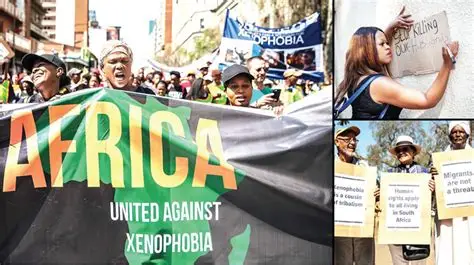
The final batch of 40 stranded Nigerians evacuated from South Africa has arrived at the Murtala Muhammed International Airport (MMIA) in Lagos, bringing to a close the Federal Government’s evacuation exercise that returned a total of 1,174 citizens.
The returnees landed on Friday night aboard a chartered Air Peace flight, marking the sixth and final phase of the evacuation programme.
In a statement issued on Saturday, the Director of Media, Public Relations and Protocols of the Nigerians in Diaspora Commission (NiDCOM), Abdur-Rahman Balogun, said the exercise was carried out through six flights operated by Air Peace and ValueJet.
According to the commission, the first five batches brought home 258, 266, 262, 282 and 66 Nigerians, while the final chartered Air Peace flight evacuated the remaining 40 stranded citizens.
Balogun said the returnees expressed appreciation to President Bola Tinubu for approving the evacuation from South Africa. They also thanked the Minister of Foreign Affairs, Bianca Odumegwu-Ojukwu, the Acting Nigerian Ambassador to South Africa, Temitope Alexander-Ajayi, and NiDCOM Chairman and Chief Executive Officer, Abike Dabiri-Erewa, for facilitating their safe return.
The evacuees were received at the airport by NiDCOM officials, who also announced a series of support packages from government agencies, corporate organisations and individuals.
According to the statement, Governor Hope Uzodimma of Imo State approved a grant of N1 million for each returnee from the state. Telecommunications company MTN also donated free SIM packs with N50,000 worth of data and pledged to credit each returnee’s bank account with N100,000.
Officials from the Edo and Delta State governments similarly announced assistance for their indigenes among the evacuees.
The commission added that the JAAL Foundation pledged empowerment support for 50 female returnees, while the General Overseer of Omega Power Ministries Worldwide, Apostle Dr Chibuzor Gift Chinwe, was commended for providing free accommodation for about 52 returnees, skills acquisition opportunities for their families and free education for their children up to university level.
The returnees also acknowledged Pastor Bolaji Idowu of Harvesters Church for donating N100,000 each to 66 evacuees, while real estate firm Cruxstone provided financial support to the first batch of returnees.
Balogun said officials of the National Emergency Management Agency (NEMA), the National Commission for Refugees, Migrants and Internally Displaced Persons (NCFRMI), the Nigerian Immigration Service (NIS), the Federal Airports Authority of Nigeria (FAAN), the National Identity Management Commission (NIMC) and other security agencies were present at the airport to receive and document the returnees.
“The returnees were full of gratitude for the donations, support and warm welcome received,” the statement said.
The UN Refugee Agency, UNHCR, and the UN Migration Agency, IOM have welcomed the entry into force today of the European Union’s Pact on Migration and Asylum as an opportunity to move beyond crisis-driven responses and implement a more predictable, fair and effective approach to the issues across Europe.
EU Member States should seize this moment to strengthen migration management and refugee protection while advancing solidarity and responsibility-sharing in line with European values and international obligations, the agencies’ chiefs said.
“The Pact’s entry into full effect today is an important step toward a more predictable and coherent European migration system. What matters now is steady implementation over time that is effective, humane, sustainably resourced and grounded in cooperation,” said Amy Pope, Director General of the International Organization for Migration. “The priority is turning the reforms into practical results for States, communities, and people on the move.”
The Pact aims to make EU asylum systems more efficient and consistent, offering a structured framework for Member State cooperation. This can reduce backlogs while maintaining the quality of assessments, provide greater certainty for asylum-seekers, and enable refugees to begin rebuilding their lives and contributing to their communities sooner.
“This Pact is an important step in the right direction, advancing shared responsibility and more predictable, sustainable approaches across the European Union,” said Barham Salih, UN High Commissioner for Refugees. “UNHCR stands ready to support all Member States in strengthening asylum systems – ensuring access to protection for those in need, upholding human rights and dignity, and enabling safe, lawful and dignified returns for those not in need of international protection.”
IOM and UNHCR welcome the EU’s renewed focus on partnerships with all affected countries. Reducing irregular movements means addressing root causes, ensuring access to protection, tackling smuggling networks, and enabling safe, regular pathways. The organizations will continue to support route-based approaches that ensure policies deliver on protection, dignity and shared responsibility, while contributing to sustainable solutions that benefit both countries and communities along migration routes.
UNHCR and IOM welcome several key elements of the Pact, including earlier identification of people with specific needs, strengthened legal assistance, and new independent monitoring mechanisms at external borders. Returns of those with no legal right to stay must be both effective and humane. Alongside enforcement, they should ensure access to informed voluntary return, early case management, and reintegration support, working with countries of origin, transit and first asylum as part of a balanced approach that upholds dignity and fundamental rights.
These measures can help ensure that asylum processing and return procedures are faster and fairer, reducing uncertainty for asylum-seekers while strengthening public confidence in the migration and asylum system.
UNHCR and IOM stress that implementation will be the decisive test. Procedures must be carried out with adequate safeguards to ensure that no one is returned or transferred to a situation where they may face persecution, conflict or other forms of serious harm.

ICC confirmation of 17 charges against El-Hishri draws praise from rights groups

Expert raises questions over UNHCR’s strategic direction after new leadership appointments

UN appoints new senior leadership for UNHCR

Migrant advocate laments death of asylum seeker, condemns Libya abuses

50 die as boat carrying about 60 people capsizes
-

 News2 weeks ago
IYAMIDR commends Okpebholo for ₦1m support to South Africa returnees
-
 News Extra3 weeks ago
Venezuela: Families worried about how to meet most basic needs
-
 News Extra3 weeks ago
Number of displaced people Sudan’s Kordofan region jumps from over 132,000 to 219,000
-

 News Extra2 weeks ago
Solomon Okoduwa: An accomplished migration expert champions reforms, diaspora engagement
-
 Uncategorized2 weeks ago
Venezuela: IOM delivers support via in-kind cargo flight funded by DHL’s Disaster Response Team
-

 News3 weeks ago
How Sweden is helping to strengthen IOM’s capacity to respond to emerging needs
-
 Features3 weeks ago
EU Pact offers hope for better migration management and fairer asylum systems- IOM, UNHCR
-

 News3 weeks ago
Over hundred Nigerians face deportation