
Uncategorized
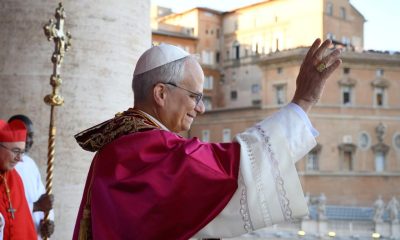
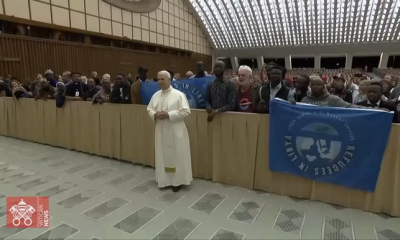
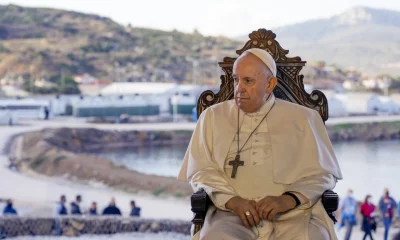
Migrants mourn Pope who fought for their rights


From South America to northern Mexico, migrants joined in mourning the death of the Argentine pope at the age of 88.
They expressed gratitude for Francis’s work denouncing what he called the “human tragedy” of migration and the anti-immigrant policies of US President Donald Trump.
“He prayed a lot for us migrants,” Yulieth Cuellar, a 28-year-old Colombian, told AFP at a church soup kitchen in the Mexican border city of Ciudad Juarez, calling Francis a “great pope.”
His prayers “touched us to the core,” added Cuellar, one of thousands of migrants left stranded in Mexico due to Trump’s anti-immigration crackdown.
It was in Ciudad Juarez in 2016 that Francis climbed a ramp facing the Rio Grande river that separates the city and El Paso, Texas, laid flowers under a black cross and blessed crowds of migrants.
The first Latin American pontiff was eager to see the border barrier with his own eyes, Jose Guadalupe Torres, bishop of Ciudad Juarez, recalled.
When he saw it, he said: “I have seen the promised land where neither milk nor honey flows,” Torres said during a mass in honor of Francis.
In one of the many tragedies that mark what the pontiff called a “humanitarian crisis,” 40 people died when a fire broke out at a migrant detention center in Ciudad Juarez in March 2023.
‘Wonderful person’
Thousands of miles away, in a shelter in Honduras, 35-year-old Venezuelan Ericxon Serrano remembered Pope Francis, the son of Italian migrants, as a “wonderful person.”
The pontiff had asked Trump to “stop the harassment of migrants,” said Serrano, who was returning to Caracas with his wife and two young children having abandoned hope of entering the United States.
Francis’s defense of migrant rights saw him clash with Trump, including when the Republican first ran for president in 2016 with a promise to build a wall to seal off Mexico.
“Anyone, whoever he is, who only wants to build walls and not bridges is not a Christian,” Francis said.
In a letter to US bishops in February, the pontiff called Trump’s deportation plans a “calamity” and pleaded for “the dignified treatment that all people deserve, especially the poorest and most marginalized.”
His support gave hope to migrants like Marisela Guerrero, a 45-year-old Venezuelan who moved to Chile a few months ago.
“His words encouraged all of us who left our countries,” she said.
Priests and others involved in migrant support programs also remembered Pope Francis with fondness and respect.
He was a “living saint,” says Cristina Coronado, head of the food kitchen in Ciudad Juarez, who said that Francis restored her confidence in the Church.
“It’s very sad that this angel who defended migrants has passed away,” said Father Francisco Calvillo, who ran a migrant shelter in the border city at the time of the pontiff’s visit.
Calvillo hopes Francis will now ask God to “send us a pope, more bishops, more priests, more lay people who are sensitive to this reality” of migration.
© 2025 AFP







A new data released today by the International Organization for Migration (IOM) has revealed that about 8,000 migrants were reported dead or missing worldwide in 2025, bringing the total since 2014 to more than 82,000.
At least around 340,000 family members are estimated to have been directly affected. Despite declines in arrivals in some regions, the data shows migration routes are shifting rather than easing, with risks remaining high along increasingly dangerous journeys.
The findings draw on IOM’s Displacement Tracking Matrix (DTM) Global Overview of Migration Routes and new analysis from the Missing Migrants Project (MMP). DTM tracks movements, changing routes and conditions along migration corridors through direct field monitoring and governmental data sources, while MMP documents migrant deaths and disappearances using official records, media reports and information from IOM missions worldwide. Together, the reports show how drivers at origin and policy changes along the routes are reshaping migration journeys, while the human cost of unsafe migration continues to rise.
“Routes are shifting in response to conflict, climate pressures and policy changes, but the risks are still very real,” said IOM Director General Amy Pope. “Behind these numbers are people taking dangerous journeys and families left waiting for news that may never come. Data is critical to understanding these routes and designing interventions that can reduce risks, save lives and promote safer migration pathways.”
The 2025 Global Overview of Migration Routes shows that lower arrival figures in some regions do not reflect reduced migration pressure, but rather changing journeys as enforcement measures, conflict dynamics and environmental stress have altered established pathways.
In the Americas, northbound movements along the Central American route fell sharply compared to 2024. In Europe, overall arrivals declined, but the profile of movements changed, with Bangladeshi nationals becoming the largest group arriving while Syrian arrivals fell following political and policy shifts.
In the Horn of Africa, movements towards the Kingdom of Saudi Arabia decreased slightly from 2024 but remained above 2023 levels, while flows from East Africa towards Southern Africa increased late in the year due to shifting labour demands in southern Ethiopia. Along the Western African Atlantic route, arrivals to the Canary Islands dropped significantly after strengthened border cooperation, but journeys have become longer, riskier and more geographically dispersed.
Across regions, DTM data shows persistent pressures along migration routes. Thousands of migrants were stranded in border areas with limited access to shelter, health care and protection, while returns and relocations increased, placing additional strain on local services and complicating reintegration.
Together, the findings show that changing routes do not mean reduced harm. As journeys become more fragmented and hazardous, deaths, disappearances and the suffering of families left behind remain a persistent reality.
The reports reflect IOM’s route-based approach, linking mobility tracking with analysis of risks and fatalities to better target interventions, prioritize resources and support governments along key migration corridors.
Ahead of the International Migration Review Forum in May, IOM is calling for renewed commitments to protect migrants, prevent deaths and disappearances, and better support families affected by migration tragedies. The Organization says the evidence is clear: fewer movements do not automatically mean safer journeys, and saving lives requires stronger international cooperation and sustained investment in evidence-based responses.

Security operatives in Libya have in different operations incepted human smugglers and rescued the victims.
According to Migrant Rescue Watch Police during desert patrols on April 14, intercepted a vehicle carrying 23 undocumented #migrants including women & children of sub-Saharan nationalities. “All transferred to Al-Shatti Security Directorate pending DCIM notification.
On April 13, Migrant Rescue Watch said Libyan Navy PB “Al-Marqab” rescued off the coast of Tobruk 32 #migrants of Bangladeshi, Egyptian & Sudanese nationalities. All disembarked in Tobruk Naval Base where they were provided with medical & humanitarian assistance by LRC.
It added that Libyan Coast Guard (Gen.Cmd.) rescued 130 nm NE of Tobruk 33 #migrants of Bangladeshi, Egyptian and Sudanese nationalities. All disembarked in Tobruk Naval Base.
About the same period it said the CID in Tobruk thwarted a major human smuggling operation and seized a truck transporting 150 undocumented #migrants of Bangladeshi and Pakistani nationalities.

Aegean Boat Report has condemned alleged shooting of 38 people including children by the Greek Coast Guard.
Late Friday night, @BoatReport said “Greek authorities say Coast Guard personnel fired gunshots to stop a high-powered speedboat carrying 38 people north of Rhodes. According to the official statement, warning shots were fired first, followed by what the Coast Guard calls “targeted gunfire” aimed at disabling the vessel.”
According to @BoatReport, this explanation raises serious questions.
It said firing at a small moving boat in the dark, from another moving vessel at sea, while 38 civilians — including many children — are onboard, is not a controlled or precise operation. It is extremely dangerous.
“Even a trained marksman would struggle to hit a specific target under such conditions. From a moving patrol vessel, in the dark, using a handgun or shotgun, the idea of accurately hitting a precise point on a fast-moving boat is highly questionable.
“Bullets can easily miss, ricochet off the hull, or strike people onboard. The boat was reportedly packed with passengers. So the central question remains: Why did they open fire at all?
@BoatReport added that “Greek authorities claim, as they routinely do in such incidents, that the vessel was “maneuvering dangerously and putting lives at risk.” But was it actually maneuvering dangerously — or simply trying to get away from the Coast Guard?
“Because once officers begin firing at a vessel carrying 38 people — 15 of them small children — the question of who is truly putting lives at risk becomes unavoidable.”
@BoatReport noted that if the intention was to arrest the smugglers, there were safer alternatives, adding “boats transporting migrants often attempt to return to Turkey after dropping passengers. Allowing the passengers to disembark safely and intercepting the vessel on its return would avoid placing dozens of civilians directly in the line of fire.
“Instead, gunfire was used against a boat filled with men, women and children.This is not the first time such reckless actions have been reported. Outside Symi, a man was shot in the head during what authorities also described as “targeted shots.” More recently, off Chios, a Coast Guard vessel collided with a migrant boat during a high-speed chase, leaving 15 people dead.
In this case, no one was killed. But that does not make the decision any less dangerous.
One must also ask whether the onboard cameras on the Coast Guard vessel were operating during this incident. In previous cases, footage that could clarify what happened has often been unavailable, with cameras reportedly “not activated” or “not functioning.”
“Once again, the Greek Coast Guard appears willing to place the lives of civilians — including children — at extreme risk in the name of border enforcement.It is only a matter of time before such actions end in tragedy again.According to authorities, the 38 people onboard were eventually taken to land on Rhodes: 17 men, six women and 15 children. Two of the men, Turkish nationals aged 41 and 31, were arrested on suspicion of smuggling.”

Rights group reports rise in abuses, hate speech against migrants in Libya

New rescue vessel Aurora 2: Sea-Watch’s response to political blockades of civilian sea rescue
Sea-Watch strongly criticises EU response following attack on Sea-Watch 5

Court annuls 20-day administrative detention imposed on Ocean Viking

Neglect deepens as DRC appears on NRC’s list of top neglected displacement for 10 years
-
 News1 week ago
War has devastated life for millions of refugees, displaced
-
 Features1 week ago
Netherlands, IOM reaffirm partnership including new multi-year funding commitment
-
 Features1 week ago
Stabilization gains open pathway to development in Central African Republic: IOM Chief of Staff
-
 News Extra1 week ago
West and Central Africa urges more climate funding as displacement rises
-
 Features3 days ago
Ebola: Border closures alone risk driving movement underground and increasing transmission risks
-
 News Extra1 week ago
Diaspora remittances point to untapped potential in crisis response: New IOM report
-
 News Extra5 days ago
Nigeria leads Liberia, Ghana, others as US set to deport migrants
-
 Features4 days ago
Haiti hosts over 1million displaced persons