
News
Europol launches new European Centre Against Migrant Smuggling

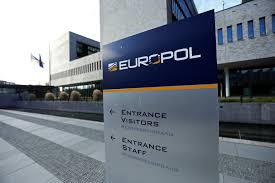
EU’s law enforcement agency, Europol has launched its new European Centre Against Migrant Smuggling (ECAMS), stepping up the European Union fight against migrant smuggling networks that are threatening the lives of hundreds of thousands of migrants each year. Active across continents, these criminal networks are increasingly present online – recruiting associates, advertising their criminal services and luring migrants into life-threatening trips that cost thousands of euros for those who take the risk.
With ECAMS, Europol is strengthening its role at the centre of Europe’s response, bringing together intelligence, operational coordination and advanced analytics to help Member States dismantle criminal networks at scale. A renewed focus will be placed on intelligence-led and data-driven investigations, stepping up innovation and digital expertise, tackling the business model, following the money trail and increasing global partnerships.
Catherine De Bolle Europol’s Executive Director
“Migrant smuggling networks are operating with increasing complexity, both online and offline. They have a significant global dimension and rely on multi-layered financial infrastructures, including underground banking systems, to move and conceal their criminal profits. For more than a decade, Europol has been supporting Member States in tackling these threats. However, as the criminal landscape evolves, so too must our response. It is essential that our action remains agile, underpinned by strong operational intelligence and close cooperation at a global level. With the establishment of the European Centre Against Migrant Smuggling, Europol is now stepping up its efforts — enhancing its capacity to support Member States and reinforcing the collective response to this complex and evolving threat.
Support contributing to thousands of arrests in ten years
Over the past decade, since the launch of the European Migrant Smuggling Centre in 2016, Europol has steadily expanded its operational support to EU Member States in tackling migrant smuggling. Operations supported by Europol have led to thousands of arrests of suspected migrant smugglers and hundreds of networks dismantled.
Last year, Europol’s experts in tackling migrant smuggling supported almost 200 operations and coordinated 56 action days targeting criminal networks involved in migrant smuggling across Europe. Furthermore, Europol experts contributed to nine Operational Task Forces, focusing on the most dangerous and complex cases.
At the same time, in 2025 alone, Europol processed over 12 000 intelligence contributions and delivered more than 1 000 operational analytical reports, helping investigators identify High Value Targets and connect cases across borders.
Intelligence driving operations
With ECAMS, this already massive law enforcement support is further being scaled up. Europol’s efforts are moving closer to systematically disrupting entire criminal networks and their business models.
As the EU’s criminal information hub, Europol plays a central role in connecting intelligence across countries and cases. By combining data from Member States and partners, with advanced analytical tools, ECAMS enables investigators to map criminal networks, identify facilitators and prioritise high-risk targets. The intelligence-led approach allows law enforcement to act faster, coordinate more effectively and deliver greater operational impact.
Taking the fight online
Migrant smuggling is no longer confined to physical routes. Criminal networks increasingly operate in the digital space. They advertise services and lure migrants online, recruit associates in digital spaces and coordinate logistics through encrypted communications.
DigiNeX, a network of digital investigators from national law enforcement authorities, coordinated by Europol, focuses on open-sources monitoring, detection, analysis and disruption of online smuggling activities. By combining open-source intelligence, advanced analytics and cooperation with online platforms, ECAMS brings law enforcement into the digital environments where these networks operate.
Magnus Brunner
EU Commissioner for Internal Affairs and Migration
In December, we adopted the Global Alliance Declaration to Counter Migrant Smuggling. More than 60 international partners joined us in stepping up our engagement. Today, with the new European Centre Against Migrant Smuggling at Europol, we are taking a further key step: bringing together intelligence and strengthening cross-border cooperation, across the EU and beyond. This gives us a critical edge in the fight to dismantle smuggling operations and tackle the organised criminal groups profiting from the desperation of illegal migration.
By leveraging Europol’s OSINT capacity, law enforcement agencies can significantly enhance their investigative capabilities in the migrant smuggling landscape. On 18 and 19 March, over 30 experts took part in digital action days implemented within the work of a dedicated Joint Investigation Team targeting migrant smuggling networks active in the Mediterranean Sea. The investigators were also supported by law enforcement officers from DigiNeX. The common efforts focused on 10 High Value Targets and resulted in over 1 000 new investigative leads.
Hitting a billion euros worth of criminal business
Migrant smuggling is driven by profit, and ECAMS is designed to target the full criminal business model. Information contributed to Europol suggests that criminal networks ask as much as 20 000 EUR per person to smuggle migrants across continents, from their home countries to their final destinations. As an example, migrants would have paid up to EUR 15 000 to be smuggled from Iran to Germany, the Netherlands or the United Kingdom. Migrant smugglers took EUR 13 000 to bring migrants to Germany via the Western Balkan route.
By supporting financial investigations, Europol helps trace, freeze and confiscate criminal assets, disrupting the economic foundations of smuggling networks. This approach shifts the focus to the business model behind the crime, making it harder for networks to operate, expand and reinvest.
A global response to a global crime
Migrant smuggling networks operate also beyond EU borders, along routes that span multiple jurisdictions. Europol is aligned with EU efforts to expand dialogues with these countries, to fuel cross-border investigations that follow the whole-of-route approach. Through platforms such as the Joint Migrant Smuggling Action Team (J-MSAT) and the network of Guest Officers, ECAMS strengthens coordination with EU MS and international partners to target networks along entire routes.
Criminal networks often mislead migrants about the risks of their journeys, exposing them to dangerous conditions and exploitation. Alongside enforcement by tackling the increasingly violent migrant smuggling networks active on all routes, it is crucial to raise awareness of these risks and reduce the demand for smuggling services, while promoting safer and legal alternatives.
Building on ten years of the European Migrant Smuggling Centre, the launch of ECAMS marks a new phase in Europol’s work, adapting to a rapidly evolving threat.
By strengthening intelligence, expanding digital investigations and deepening international partnerships, Europol is reinforcing its support to Member States to dismantle migrant smuggling networks across borders, across routes and across online platforms.






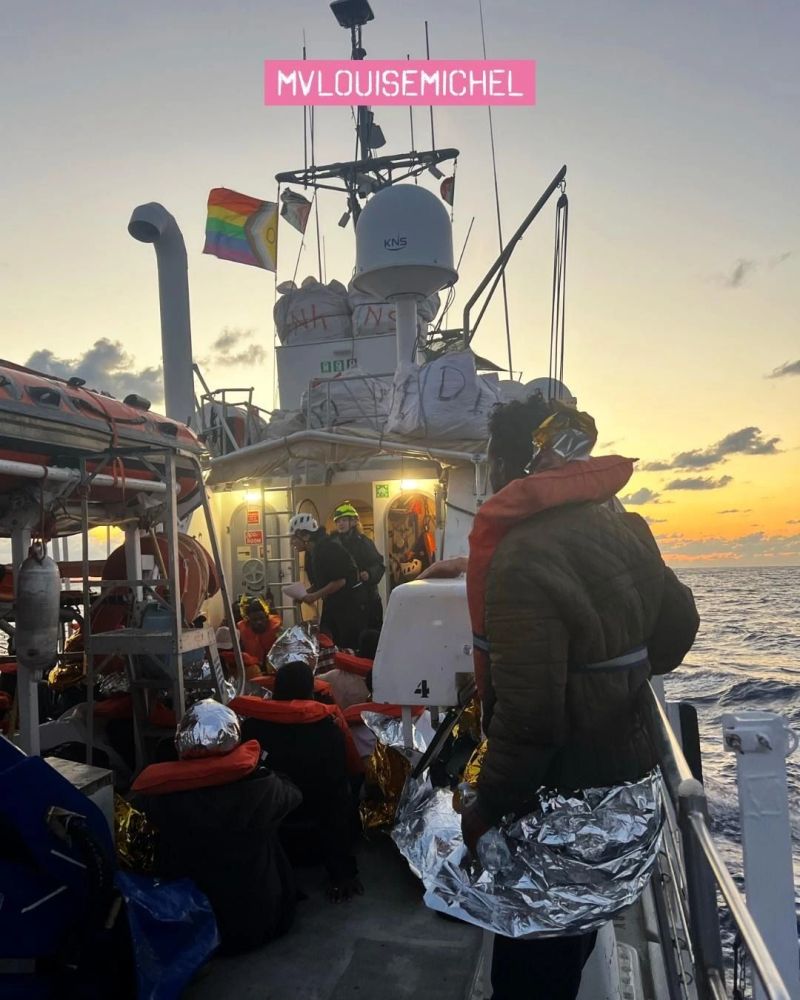
Trente-neuf personnes, dont sept femmes — parmi lesquelles une femme enceinte — et 13 enfants, ont été secourues en mer ce matin par l’équipage du M.V. Louise Michel, après qu’Alarm Phone a alerté le navire de la présence d’une embarcation pneumatique surchargée et impropre à la navigation en détresse.
Selon l’équipage, les personnes secourues voyageaient sans équipements de sauvetage adéquats, sans carburant ni nourriture. Certaines auraient souffert de brûlures causées par le carburant. Le groupe est désormais transporté vers Messine.
Ce sauvetage intervient alors que le suivi des opérations de contrôle migratoire en Libye fait état de centaines de personnes interceptées, arrêtées ou soumises à d’autres mesures dans le cadre d’opérations menées à travers le pays.
Entre le 2 et le 4 octobre, selon les informations disponibles, entre 312 et 342 personnes auraient été prises dans de telles opérations, bien que le nombre réel puisse être plus élevé.
Dans la région de Tobrouk, les rapports de suivi indiquent qu’environ 120 à 150 personnes ont été interceptées lors d’opérations terrestres. Dans les quartiers de Tajoura et d’Aïn Zara, à Tripoli, environ 85 personnes auraient été détenues lors de perquisitions menées dans des domiciles et sur des lieux de travail.
Au large de Zawiya, 62 personnes supplémentaires auraient été interceptées en mer et renvoyées en Libye, tandis qu’environ 45 autres auraient été arrêtées le long des routes de transit du sud, près de Koufra.
Ces chiffres illustrent les différentes étapes du contrôle migratoire auxquelles sont confrontées les personnes qui tentent de quitter la Libye : interception à terre, détention, interception en mer et, dans certains cas, expulsion ou retour forcé.
Dans le même temps, les organisations civiles de recherche et de sauvetage opérant en Méditerranée continuent de faire l’objet d’enquêtes, de mesures administratives visant leurs navires, d’amendes et de critiques politiques concernant leurs activités.
Ce contraste a suscité des critiques de la part des organisations de sauvetage, qui affirment que les groupes humanitaires sont soumis à des restrictions croissantes, tandis que les acteurs libyens chargés de la sécurité et des interceptions continuent de bénéficier de la coopération, de la formation, de l’équipement et du financement européens dans le cadre d’efforts présentés comme relevant de la « gestion des migrations ».
La question est devenue un élément controversé de la politique migratoire européenne, certains défenseurs des droits des migrants s’interrogeant sur le fait de savoir si les mesures visant à empêcher les migrations irrégulières contribuent à la détention et au retour forcé de personnes qui tentent de rejoindre un lieu sûr.
Pour les 39 personnes secourues par le Louise Michel, le voyage se poursuit en direction de l’Italie. Pour les centaines d’autres personnes qui auraient été interceptées à travers la Libye ces derniers jours, l’issue a été la détention, le renvoi ou l’éloignement des routes migratoires.
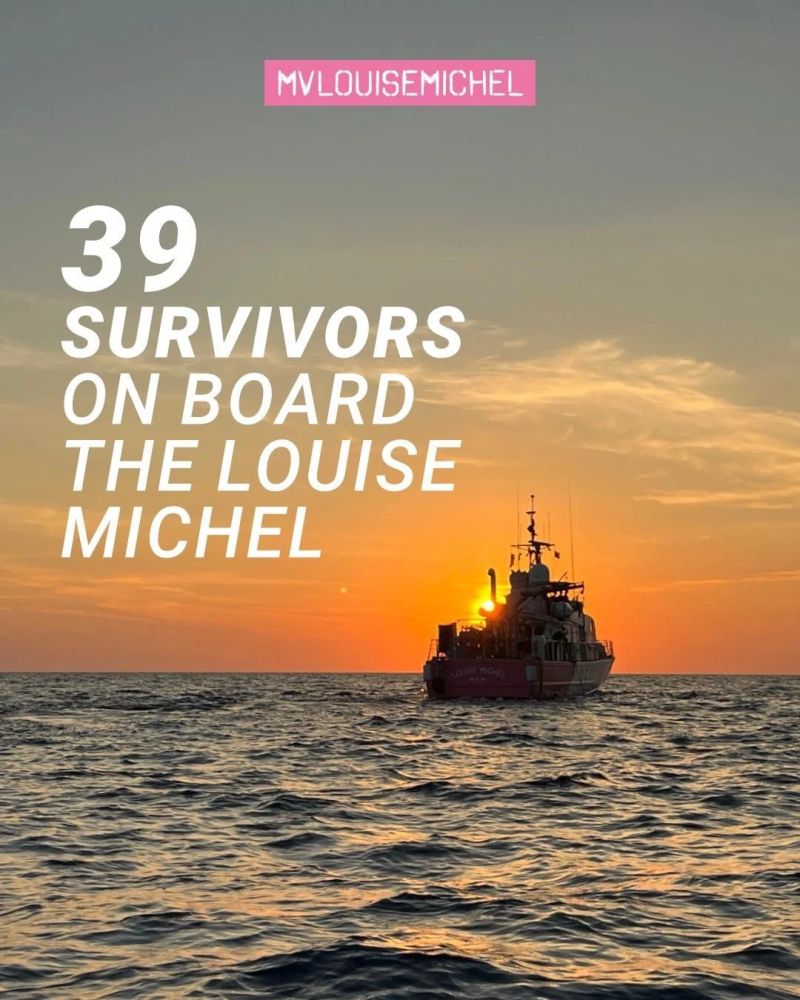
Thirty-nine people, including seven women—one of them pregnant—and 13 children, were rescued at sea this morning by the crew of the M.V. Louise Michel after Alarm Phone alerted the vessel to an overcrowded and unseaworthy rubber boat in distress.
According to the crew, those rescued had been traveling without adequate life-saving equipment, fuel or food. Some were reportedly suffering from fuel burns. The group is now being transported toward Messina.
The rescue comes as monitoring of migration-enforcement operations in Libya points to hundreds of people being intercepted, arrested or otherwise processed in operations across the country.
Between October 2 and 4, an estimated 312 to 342 people were reportedly caught up in such operations, although the actual number could be higher.
Around Tobruk, monitoring reports indicate that approximately 120 to 150 people were intercepted during land operations. In Tripoli’s Tajoura and Ain Zara areas, around 85 people were reportedly detained during house and workplace raids.
Off the coast of Zawiya, a further 62 people were reportedly intercepted at sea and returned to Libya, while around 45 others were reported to have been caught along southern transit routes near Kufra.
The figures illustrate the different stages of migration enforcement faced by people attempting to leave Libya: interception on land, detention, interception at sea and, in some cases, deportation or forced return.
At the same time, civilian search-and-rescue organisations operating in the Mediterranean continue to face investigations, administrative measures against their vessels, fines and political criticism over their activities.
The contrast has prompted criticism from rescue organisations, which argue that humanitarian groups face increasing restrictions while Libyan security and interception actors continue to receive European cooperation, training, equipment and funding as part of efforts described as “migration management.”
The issue has become a contentious part of Europe’s migration policy, with advocates questioning whether measures intended to prevent irregular migration are contributing to the detention and forced return of people who are attempting to reach safety.
For the 39 people rescued by the Louise Michel, the journey has continued toward Italy. For hundreds of others reportedly intercepted across Libya in recent days, the outcome has been detention, return or removal from migration routes.
News
Jeff Crisp s’interroge sur la représentation des migrants à la Conférence de Vienne sur les migrations

L’ancien responsable de la politique et de l’évaluation au HCR, Jeff Crisp, s’est interrogé sur la représentation des migrants à la prochaine Conférence de Vienne sur les migrations 2026, demandant combien de migrants y participeront par rapport aux responsables chargés des affaires intérieures, de la sécurité et du contrôle des frontières.
Crisp a soulevé cette question en réaction à une publication du Centre international pour le développement des politiques migratoires (ICMPD), annonçant l’ouverture des inscriptions pour suivre en ligne sa conférence annuelle phare.
« Combien de migrants seront présents à cette conférence ? Et combien de responsables des affaires intérieures, de la sécurité et du contrôle des frontières ? », a écrit Crisp.
L’ICMPD a indiqué que la 11e édition de la Conférence de Vienne sur les migrations se tiendra les 16 et 17 novembre et réunira des décideurs de haut niveau, des praticiens et des experts d’Europe et d’ailleurs pour un échange de haut niveau sur les politiques migratoires.
Dans sa publication, l’organisation n’a pas précisé combien de migrants ou de représentants d’organisations dirigées par des migrants participeraient à la conférence.
L’intervention de Crisp attire l’attention sur la composition des forums consacrés aux politiques migratoires, notamment sur la mesure dans laquelle les personnes ayant une expérience directe de la migration y sont représentées aux côtés des responsables gouvernementaux et des professionnels des politiques migratoires.
La Conférence de Vienne sur les migrations est organisée chaque année par l’ICMPD, une organisation internationale qui travaille avec les gouvernements et d’autres parties prenantes sur les politiques migratoires et de mobilité.
La conférence de 2026 doit se tenir à Vienne, avec un accès en ligne disponible pour les participants inscrits.

Le Royaume-Uni rouvre son programme de réinstallation des réfugiés aux nouvelles demandes de réinstallation

UK reopens refugee resettlement scheme for new referrals

Le sauvetage en mer met en lumière la pression croissante exercée sur les migrants en Libye

Rescue at sea highlights growing pressure on migrants in Libya

Jeff Crisp s’interroge sur la représentation des migrants à la Conférence de Vienne sur les migrations
-

 Features2 weeks ago
Retour volontaire assisté, assistance post-arrivée et réintégration : le rôle de l’OIM expliqué
-
 News2 weeks ago
Yémen :21 573 ménages déplacés dans sept gouvernorats
-

 Features2 weeks ago
L’OIM explique son travail dans les pays qui accueillent des ressortissants de pays tiers
-

 Features2 weeks ago
Assisted Voluntary Return, Post-Arrival Assistance, and Reintegration: IOM’s Role Explained
-

 Features2 weeks ago
IOM explains work in countries receiving third-country nationals
-
 Features2 weeks ago
L’OIM aide plus de 81 000 migrants à retourner dans leur pays depuis 115 pays
-
 News2 weeks ago
Yemen: 21,573 households displaced across seven governorates
-
 Features2 weeks ago
IOM helps more than 81,000 migrants return home from 115 countries