
Uncategorized
Afghanistan-Pakistan conflict:115,000 displaced people since 26 February

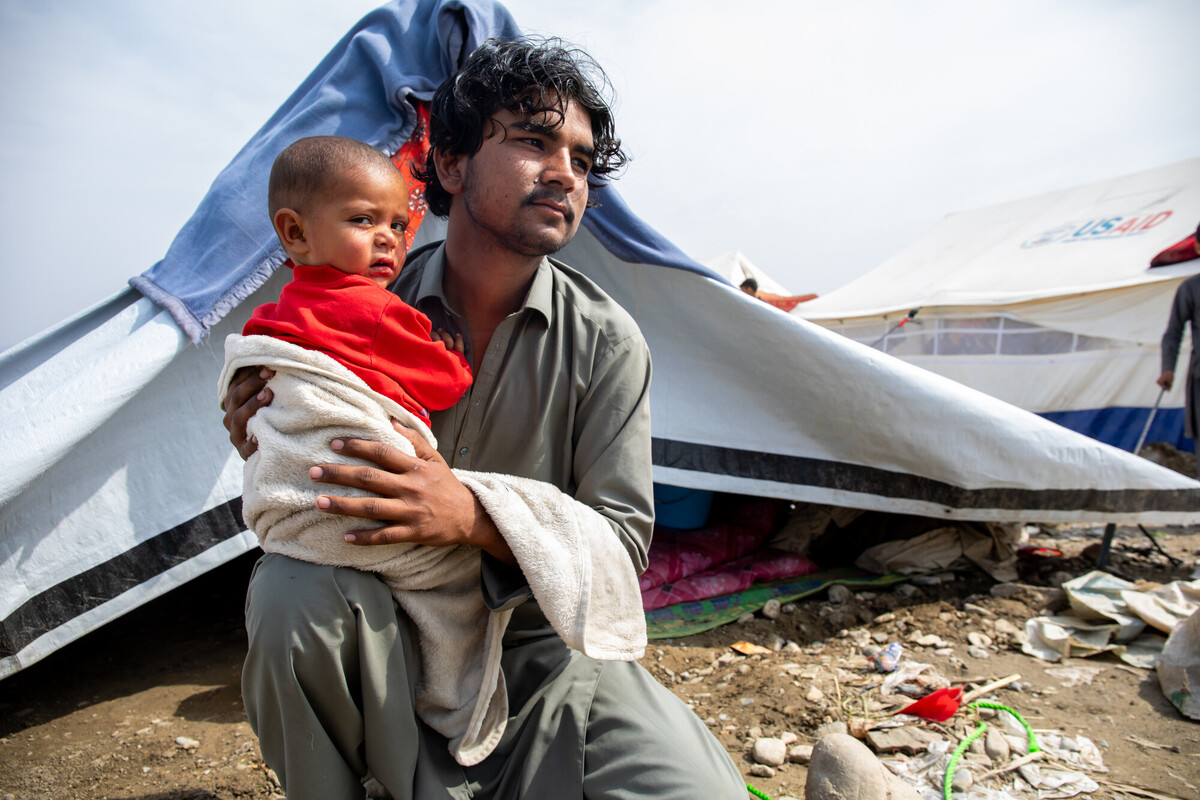
Escalating conflict along the Afghanistan–Pakistan border is having a devastating impact on civilians in eastern Afghanistan, displacing 115,000 people since 26 February, a statement by the Norwegian Refugee Council (NRC) has said, adding that civilians must be protected and humanitarian organisations must be granted safe access to reach families in need.
In the first eight days of the conflict 56 civilians were killed and a further 129 injured.
“Afghanistan is facing crisis on top of crisis, and it is civilians who are paying the highest price,” said Jacopo Caridi, NRC’s country director for Afghanistan. “All parties to the conflict must abide by international humanitarian law and ensure civilians, and civilian infrastructure, are protected.”
“Families who were already on the brink of survival have been forced from their homes. Thousands have found refuge in makeshift camps and with local families. Others are being forced to rent sub-standard accommodation they can little afford. They have lost access to clean water, health services, and schooling. We urgently need funding to be able to scale up our support to these families.”
826 homes have been damaged or destroyed in the conflict. NRC teams speaking with displaced communities in Kunar and Nangarhar provinces reported particular concern for child- and women-headed households and the elderly, many of whom said they had received no assistance.
More than 25,000 people who were displaced by the earthquake in Kunar province six months ago are subject to evacuation orders. They have been forced to return to their areas of origin, where little to no services are available, risking their health and wellbeing. Another 14,500 people are at risk of being displaced for a second time.
Afghanistan has been hit hard by aid funding cuts and currently is one of the lowest funded humanitarian responses globally. Now conflict is preventing people from accessing even the limited support available. NRC has been forced to suspend education classes in Khost province due to the conflict meaning 626 children have lost access to education.
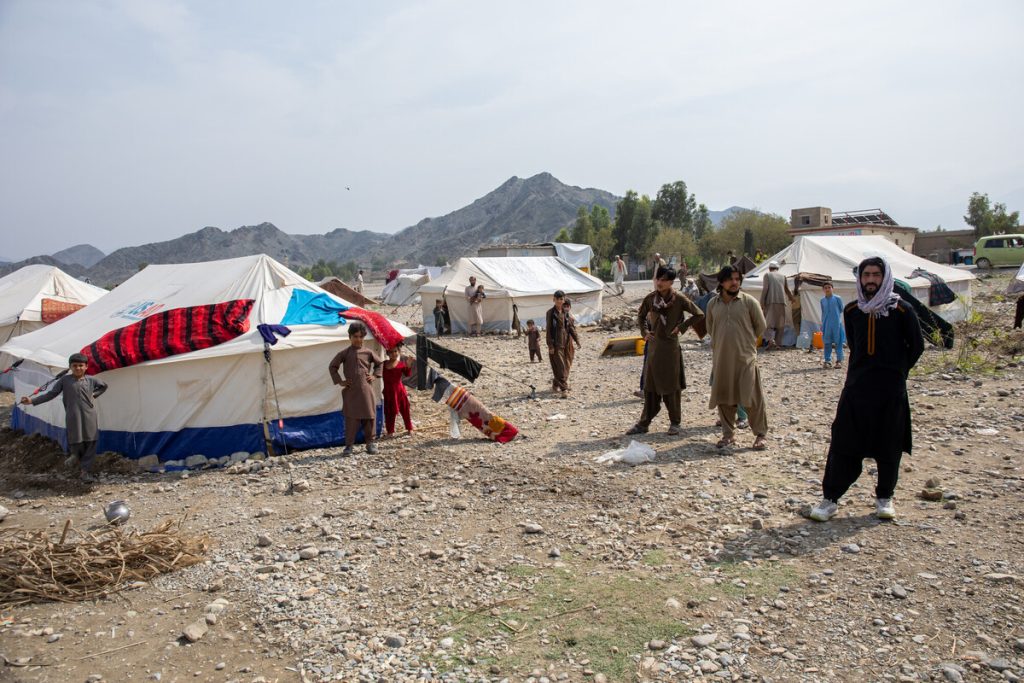
Health services at more than 20 facilities have been suspended due to insecurity, including five which have been damaged in airstrikes and shelling. World Food Programme (WFP) were also forced to temporarily suspend food distributions.
NRC is scaling up its support to affected families as quickly as possible, including providing cash to more than 4,300 people to allow them to buy what they need the most. Another 4,000 displaced people will be given cash in the coming days.
“We left everything behind,” said Bakhtiar, a father of six, who fled from Torkham, near the border with Pakistan. “Our belongings, our clothes, everything. We don’t even know what has happened to our house.”
NRC supported the family with cash which Bakhtiar says will help for some time. “But if this conflict continues, it will not be enough. We have lost everything. We ask the international community not to forget us. We are living in very difficult conditions and have nothing left,” Bakhtiar adds.
Afghans in Iran are also being affected by instability in the region. Iran hosts more than 4.4 million Afghans, up to 1.4 million of whom are undocumented and at risk of forced return.
Some families are returning to Afghanistan due to safety concerns, with a reported 1,700 people currently returning daily. One Afghan man who returned told NRC teams: “If the war had not started, I would not have returned. Survival became impossible.”
“With a world in turmoil, Afghans must not be forgotten,” said Caridi. “Rising food prices and closed borders are making survival even harder for families whose lives have already been shattered by conflict.”

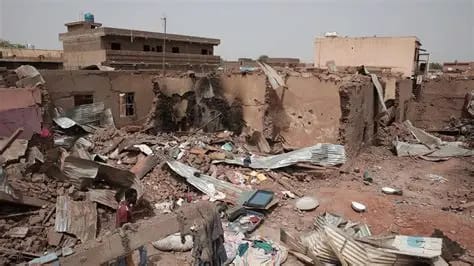
The question in Sudan is no longer whether the war has crossed every red line. It crossed them long ago.
The real question now is brutal and urgent: How many more crimes, how many more bodies must the world see before Sudanese blood is worth an independent international investigation?
The Chemical Bombs Dossier That Shook The World
In September 2026, the most damning case yet exploded into the open.
The Washington Post revealed it had reviewed about 150 documents, photographs, videos and audio recordings, plus thousands of messages, detailing alleged chemical weapons use by the Sudanese army.
The newspaper did not act alone. It enlisted more than 20 former intelligence officials and experts in chemical weapons and human rights to assess the material.
According to PMNewsnigeria.com, what they found was chilling: a programme to assemble chlorine-filled bombs, tests conducted in remote desert areas, a stockpile that reportedly reached 290 chemical munitions, messages referring to hundreds of bombs stored at Merowe Air Base and 106 of them already used.
Experts who examined the cache said the indications were strongly consistent with a chemical weapons programme, while stressing that definitive proof requires independent investigators to gain access to sites and witnesses.
That is precisely where international action should have started, not where the debate ended.
Sudan has been a party to the Chemical Weapons Convention since 1999. Developing, stockpiling or using such weapons is not a footnote in a civil war. It is a violation of one of the clearest prohibitions in international law.
If the allegations are false, an investigation will expose that. If they are true, the Sudanese people and the world have the right to know who ordered, who manufactured, who stockpiled and who dropped these bombs.
Why has evidence of this scale not immediately triggered an independent international investigation under the Organisation for the Prohibition of Chemical Weapons and other relevant institutions?
Why the silence?
El Fasher Is Not Beyond Justice
But chemical weapons are not the only horror demanding answers reports PMNewsnigeria.com.
El Fasher and Darfur have become the graveyard of civilian protection.
The region is under sustained, indiscriminate aerial bombardment involving advanced Turkish drones and barrel bombs dropped by Sudanese army transport aircraft on civilians without distinction.
These crimes cannot be mitigated or justified under any circumstances or by any party to the conflict.
The Sudanese Armed Forces themselves have used aircraft, aerial bombardment and drones in civilian areas, while human rights organisations have documented the bombing of residential and commercial areas in Darfur with unguided aerial bombs.
Sudan has witnessed a massive escalation in drone warfare. According to the United Nations, more than 1,000 civilians were killed by drone strikes between January and May 2026 alone, making such strikes one of the largest sources of civilian deaths in the war.
In Darfur, Antonov aircraft have been used in aerial bombardment operations, while UN and human rights documents reveal widespread use of weapons and barrel bombs in populated areas.
Drones have fundamentally altered the nature of the war. Research reports indicate that the Sudanese army possesses Iranian and Turkish systems, including the Iranian Mohajer-6 and Ababil, as well as Turkish Bayraktar systems, in addition to Turkish-Pakistani types, allowing air operations to extend over greater distances.
The problem is not the nationality of the weapon alone, but how it is used and who bears the cost of its continued flow.
A bomb is still a war crime when it falls on a market, whether it was built in Ankara or Tehran.
Who Is Arming This War?
Here, international silence becomes even more perplexing, even criminal.
The Sudanese war is no longer a purely Sudanese war. It has become an arena where regional and international networks of support and arms supplies intersect, fueling the slaughter.
International reports indicate that the army has received military and technical support from countries including Egypt, Saudi Arabia, Türkiye and Iran.
This is not a call to hold one side accountable while exempting the other. Quite the opposite.
If foreign weapons reaching parties to the conflict and being used against civilians warrant investigation and accountability, then the weapons reaching the army must be subject to the same standard, added PMNewsnigeria.com.
There is no morally acceptable bomb because it was dropped by a side we favour, nor is there a legitimate drone because it came from an allied country.
When markets, hospitals and residential neighbourhoods are struck, the legal question is who targeted civilians and who provided them with the capacity to do so, not which political camp they belong to. Justice that pursues one crime while ignoring another is not justice.
A law that criminalises an adversary’s weapon while turning a blind eye to an ally’s weapon loses its meaning.
What Do Cairo, Ankara And Riyadh Know?
This is where the responsibility of countries with close ties to the Sudanese army comes into sharp focus.
Egypt has deep military and security cooperation with the army. Türkiye is linked by reports to the provision of technology and drone systems to it, while Saudi Arabia maintains close ties with the army leadership, although it took a notable position in April 2026 when it asked Pakistan to halt a $1.5 billion arms deal with Sudan and refused to finance it, following what was said to be US advice and warnings to Riyadh.
Does this mean that these countries are legally responsible for the army’s crimes? No.
But it imposes a question that cannot be evaded: What are these governments doing now that allegations of chemical weapons use have become public, and violations resulting from airstrikes and drone attacks have been internationally documented?
Moral and political responsibility does not begin only when a state’s involvement in a particular crime is proven. It also begins when an ally knows that weapons flowing into a war zone could be used amid civilians, yet support continues without guarantees, oversight or accountability.
If you know your drones may be used to bomb a hospital in Nyala and you keep supplying them, at what point do you share the guilt?
Why Is The World Silent?
This is the real question that haunts every Sudanese today.
How can the world speak of protecting civilians and then allow Sudan to become a laboratory for weapons and drones?
How can evidence on this scale emerge concerning the possible manufacture and use of a chemical weapon, while a comprehensive international investigation remains a demand rather than a reality?
And how can bombs fall on markets, hospitals and residential areas while arms and financing channels and political relationships continue as though nothing has happened?
Sudan does not need another local committee through which the authorities investigate themselves. It has had enough of that theatre.
Nor does it need more statements of concern from Geneva and New York. It needs action.
The Price Of Selective Justice
It needs an independent international investigation into the chemical weapons file, transparent investigations into air attacks, drone strikes and violations against civilians, and accountability for every party proven to be involved, regardless of its name, allies or supporters.
Scrutiny must also extend to the states, companies and intermediary networks supplying the parties to the war with weapons when there is evidence that they may be used in grave violations of international law.
The civilian killed in El Fasher, Nyala or Khartoum does not care whether the drone that killed him was Turkish or Iranian, nor whether the bomb was dropped by an Antonov or launched by another force.
What matters to him is that someone killed him, that someone armed the killer, and that there was a world watching the war expand and knowing the scale of the violations, yet failing to do enough to stop it.
That is justice at a price in Sudan: the problem is not merely the absence of evidence, but that the value of the evidence itself sometimes appears to be tied to the name of the accused, the identity of his allies, and the political cost of holding him accountable.
That is why the investigation must begin now, not against one side, nor in the service of one camp against another, but because the Sudanese person killed by chemical weapons, aerial bombardment or drones deserves the same standard of justice, regardless of the name of the person who pulled the trigger and regardless of the capital from which the aircraft, bomb or money came.
Uncategorized
Les autorités italiennes immobilisent un navire de sauvetage après avoir secouru 20 personnes
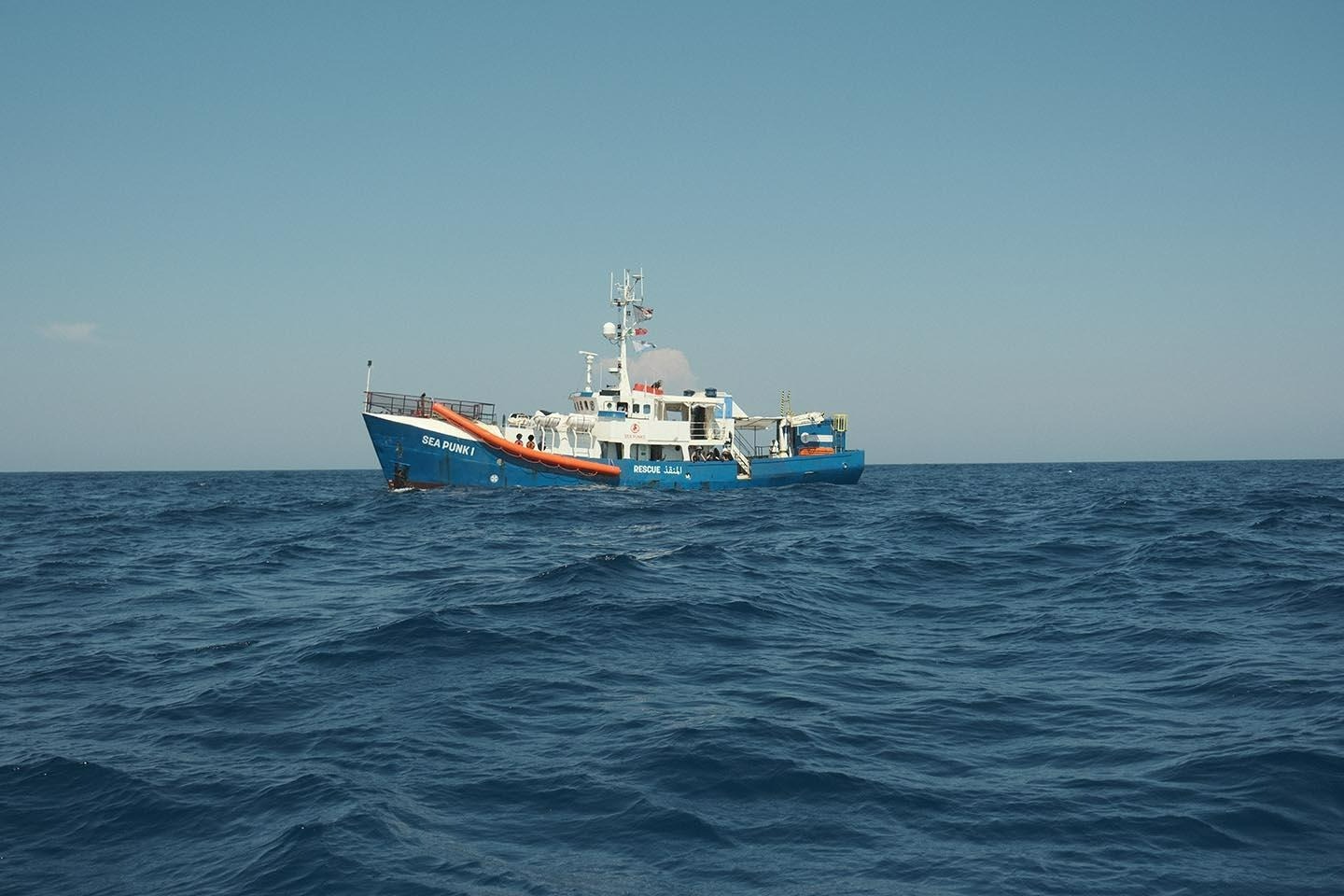
Les autorités italiennes ont immobilisé pendant 15 jours le navire de recherche et de sauvetage Sea Punk I et lui ont infligé une amende de 7 500 euros après le sauvetage de 20 personnes dans les eaux internationales.
L’opération de sauvetage a eu lieu le jeudi 10 septembre 2026, près de la plateforme pétrolière de Bouri. L’équipage du navire a déclaré que l’opération avait été menée en coordination avec les autorités italiennes et conformément aux conventions applicables et aux réglementations internationales.
Les autorités ont invoqué le décret dit Piantedosi et accusé le capitaine de ne pas avoir suivi les instructions des garde-côtes libyens dits « garde-côtes libyens ». Le Sea Punk I est partenaire de l’alliance Justice Fleet, une coalition d’organisations civiles de recherche et de sauvetage et de leurs soutiens.
Selon Justice Fleet, cette immobilisation porte à plus de 310 le nombre total de jours pendant lesquels les autorités italiennes ont bloqué ses navires depuis la création de l’alliance, en novembre 2025. Le Sea Punk I est le 11e navire de Justice Fleet à être immobilisé.
Selon Justice Fleet, les organisations civiles de recherche et de sauvetage ont recensé près de 80 incidents de violences extrêmes commises par des milices libyennes depuis 2016, dont la plupart seraient attribués aux garde-côtes libyens dits « garde-côtes libyens ». Le groupe affirme également que plus de 27 000 personnes ayant fui la Libye y ont été renvoyées de force l’an dernier, en violation du droit international. Il indique que les réfugiés et les migrants présents dans le pays sont confrontés à une recrudescence des violences et à des menaces de mort.
« Alors que des violences extrêmes contre les personnes en déplacement sont actuellement en cours en Libye, les autorités italiennes veulent nous contraindre à coopérer avec les garde-côtes libyens dits “garde-côtes libyens”. Pas question ! », a déclaré Giulia Messmer, porte-parole de Justice Fleet, appelant à mettre fin à la coopération européenne avec cette force.
Justice Fleet a été fondée en novembre 2025 par 13 organisations de recherche et de sauvetage, avec le soutien de groupes de la société civile. L’alliance indique notamment vouloir contester l’immobilisation des navires de sauvetage en Italie et s’opposer à la sous-traitance du contrôle migratoire à des acteurs libyens.
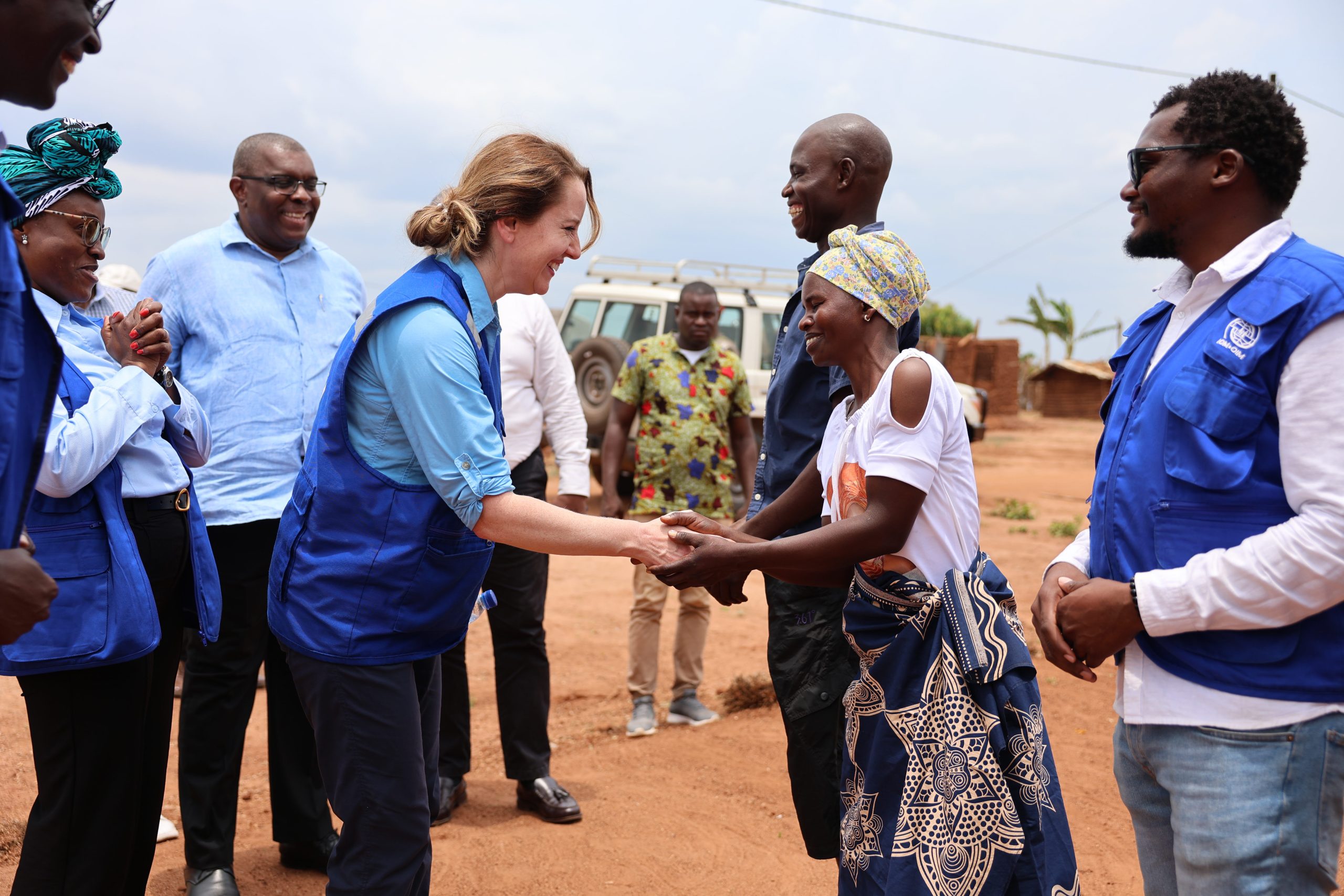
De nouvelles données de l’ONU révèlent que, sur les 31 100 enfants qui ont atteint l’Europe l’an dernier en empruntant des routes migratoires mixtes, plus de 20 000 sont arrivés sans parent ni tuteur.
La Directrice générale de l’Organisation internationale pour les migrations (OIM), Amy Pope, a appelé à une coopération plus étroite entre les États européens et les pays situés le long des routes migratoires afin de protéger les enfants qui voyagent seuls et de lutter contre les réseaux de passeurs et les réseaux criminels qui s’en prennent à eux.
Les conclusions indiquent que la réduction des possibilités de déplacement sûr et tenant compte des besoins de protection le long de ces routes pourrait pousser les jeunes à entreprendre des voyages plus risqués, à dépendre davantage des passeurs et à être davantage exposés à la violence, à l’exploitation et aux mauvais traitements.
« Des enfants entreprennent des voyages difficiles et dangereux sans parent ni tuteur à leurs côtés, a déclaré Amy Pope, Directrice générale de l’OIM. Ce rapport montre à quel point ils sont exposés à la violence et à l’exploitation lorsque les voies sûres sont limitées et qu’ils doivent compter sur des passeurs. Aucun enfant ne devrait avoir à affronter ces risques seul. Nous avons la responsabilité commune d’agir par-delà les frontières pour les protéger, défendre leurs droits et leur apporter les soins et le soutien dont ils ont besoin. »
Le nombre total d’enfants arrivés par voie maritime ou terrestre en Bulgarie, à Chypre, en Grèce, en Italie, à Malte et en Espagne a diminué de 25 % par rapport à 2024. Parmi les enfants arrivés, 78 % étaient des garçons et 22 % des filles. Toutefois, la proportion d’enfants recensés comme non accompagnés est passée à 67 %, contre 51 % l’année précédente. Les proportions les plus élevées ont été enregistrées en Italie et en Espagne, où 86 % des enfants sont arrivés seuls.
L’Italie a fait exception à la tendance à la baisse. Le nombre total d’arrivées y est resté stable, mais celui des enfants a augmenté de 12 %, pour atteindre près de 14 100. La plupart venaient d’Égypte, d’Érythrée, de Somalie, du Bangladesh et d’Éthiopie.
Ces voyages sont dangereux. L’OIM a interrogé plus de 4 600 adolescents et jeunes adultes âgés de 15 à 24 ans le long des routes de la Méditerranée, de l’Atlantique ouest-africain et des Balkans occidentaux. Près de la moitié des personnes interrogées au sujet de leur expérience ont déclaré avoir subi des violences physiques. Sur la route de la Méditerranée centrale, 28 % ont indiqué avoir été retenues contre leur gré et 17 % avoir été contraintes de travailler. La Libye est restée le pays le plus souvent cité comme lieu de ces mauvais traitements.
Dans le même temps, les solutions de remplacement sûres se sont raréfiées. Les enfants représentaient la moitié des 6 800 personnes engagées dans des procédures de réinstallation de réfugiés vers l’Europe en 2025 : 3 400 enfants, contre 8 900 un an plus tôt. Par ailleurs, seuls 199 enfants ont été relocalisés entre États européens dans le cadre du mécanisme de solidarité volontaire, soit une baisse de 67 %, et aucun n’était non accompagné.
Au total, 214 600 enfants ont demandé une protection internationale en Europe en 2025, dont 79 % étaient des primo-demandeurs. Environ 71 % des premières demandes ont été déposées dans seulement quatre pays : l’Allemagne (30 %), la France (19 %), l’Espagne (15 %) et la Grèce (7 %). Sur les 210 900 décisions rendues en première instance concernant des demandes d’enfants, 56 % étaient positives, tandis que les rejets ont augmenté de 25 %.
L’OIM exhorte les États membres de l’Union européenne à placer l’intérêt supérieur de l’enfant au cœur de chaque décision, à garantir un accès rapide aux services et à ne jamais placer des enfants en détention pour des motifs liés à l’immigration. Les enfants non accompagnés et séparés de leur famille devraient avoir immédiatement accès à une représentation juridique. Les évaluations de l’âge devraient rester rares, être adaptées aux enfants et pouvoir faire l’objet d’un recours.

Soudan : les attaques de drones perturbent les cours à El-Obeid, alerte le NRC

Sudan: Drone attacks disrupt school lessons in El Obeid- NRC

Sea-Watch secourt 227 migrants en Méditerranée en 48 heures

Sea-Watch rescues 227 migrants in Mediterranean within 48 hours

Un avocat ougandais exhorte l’UA à rejeter les accords migratoires avec l’Europe
-
 Features2 weeks ago
Gaza : Près de deux millions de personnes ont besoin d’une aide d’urgence en matière d’hébergement
-

 News Extra2 weeks ago
NACTAL conteste le rapport américain sur la traite des personnes et exige la reconnaissance des contributions des organisations de la société civile nigérianes
-
 News Extra2 weeks ago
Un avocat ougandais exhorte l’UA à rejeter les accords migratoires avec l’Europe
-
 News Extra1 week ago
Sudan: Drone attacks disrupt school lessons in El Obeid- NRC
-
 Features2 weeks ago
Nigerian immigrants face hidden mental health challenges despite success, expert warns
-
 Features2 weeks ago
Gaza: About two million need urgent shelter assistance
-

 News Extra2 weeks ago
NACTAL faults US trafficking report, demands recognition of Nigerian CSOs’ contributions
-

 News Extra2 weeks ago
US to deport fresh set of Nigerians over alleged criminal offences