
News
Irregular migration tearing UK apart, Home Secretary backs reduction in number of small boat crossings


Home Secretary Shabana Mahmood says irregular migration is tearing UK apart, and has vowed to reduce the number of small boat crossings.
To this end, Mahmood is set to unveil reforms to the UK’s asylum system on Monday, including a requirement that individuals granted asylum must wait 20 years before becoming eligible to apply for permanent residency.
Describing the development as a “moral mission,” Mahmood said the changes are intended to address the divisive impact of illegal migration and restore public confidence in the system.
The proposals will introduce regular reviews of refugee status, with those whose home countries later become considered safe expected to return.
Speaking on BBC’s Sunday with Laura Kuenssberg, Mahmood said illegal migration was “tearing the country apart,” arguing that the UK must act decisively to reduce the number of small boat crossings and discourage migrants from seeing the UK as an attractive destination.
Under the existing system, refugees typically receive a five-year status before applying for indefinite leave to remain. The new plan extends the path to settlement to 20 years, with reviews every two-and-a-half years.
Mahmood suggested that asylum seekers who arrive through official routes, work, and contribute positively may qualify for earlier settlement, though details have not been specified.
The home secretary defended the tougher stance, saying current provisions allow some asylum seekers better support than many UK citizens, including accommodation and financial assistance.
She said criminal networks were exploiting the UK by promising migrants free housing and food. The controversial measures mirror policies in Denmark, where temporary permits must be renewed regularly.
Critics, including Labour MP Clive Lewis, argue that the approach resembles “far-right talking points,” warning it could alienate parts of the Labour base. The Refugee Council described the plan as one that would leave people in prolonged uncertainty and emotional distress.
Conservative home secretary Chris Philp dismissed the policy as insufficient, saying a Conservative government would deport illegal arrivals within a week and prevent them from claiming asylum altogether.
Liberal Democrat leader Sir Ed Davey called for granting asylum seekers the right to work, arguing it would reduce dependency on government resources and benefit the economy.
More than 109,000 asylum claims were recorded in the UK in the year to March, a 17% annual increase, according to government figures.
Over 39,000 migrants have crossed the Channel on small boats so far this year, exceeding the full-year totals for 2024 and 2023.








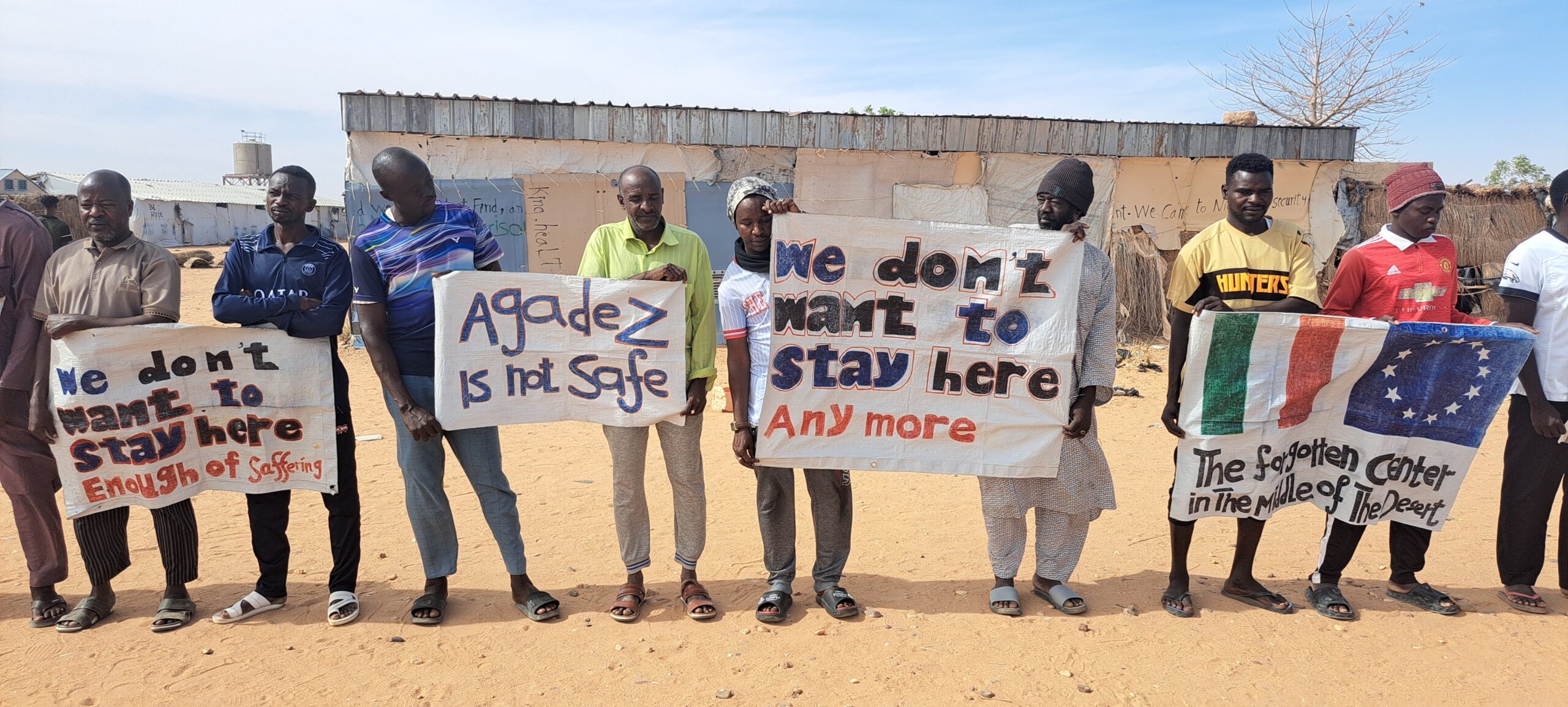
Des réfugiés installés au centre humanitaire d’Agadez, au Niger, poursuivent une manifestation pacifique devant les bureaux du Haut-Commissariat des Nations unies pour les réfugiés (HCR), accusant les organisations humanitaires d’ignorer leur situation et de ne pas répondre à leurs revendications.
Les réfugiés, regroupés sous le nom de Refugees in Niger, affirment manifester depuis plus de deux ans pour dénoncer leurs conditions de vie et ce qu’ils considèrent comme un manque d’engagement des organisations humanitaires en faveur de la protection de leurs droits.
Dans une série de publications sur X entre le 1er et le 5 novembre, le groupe a indiqué que la manifestation avait atteint son 771e jour au 2 novembre, ajoutant que la situation au centre s’était considérablement détériorée.
Il a décrit les conditions de vie comme extrêmement difficiles, soulignant que les réfugiés manquaient de produits de première nécessité et faisaient face à un avenir incertain.
« La situation à Agadez est devenue catastrophique. Les réfugiés souffrent énormément, vivent dans des conditions déplorables et leur sort demeure incertain depuis leur arrivée au centre », a déclaré le groupe dans une publication du 2 novembre.
Les manifestants ont également accusé le HCR et d’autres organisations humanitaires de garder le silence malgré la durée de leur mobilisation et leurs appels répétés à l’aide.
Dans une autre publication datée du 5 novembre, le groupe a indiqué que la manifestation pacifique se poursuivait toujours devant les bureaux du HCR, exprimant sa frustration face à ce qu’il a qualifié d’inaction persistante des organisations humanitaires alors que les réfugiés continuent de vivre dans des conditions difficiles.
Le groupe a attiré l’attention sur les revendications des réfugiés concernant leurs droits et l’amélioration de leurs conditions de vie, appelant les organisations humanitaires à répondre à leurs préoccupations.
Le HCR n’avait pas encore réagi aux accusations contenues dans les publications citées.
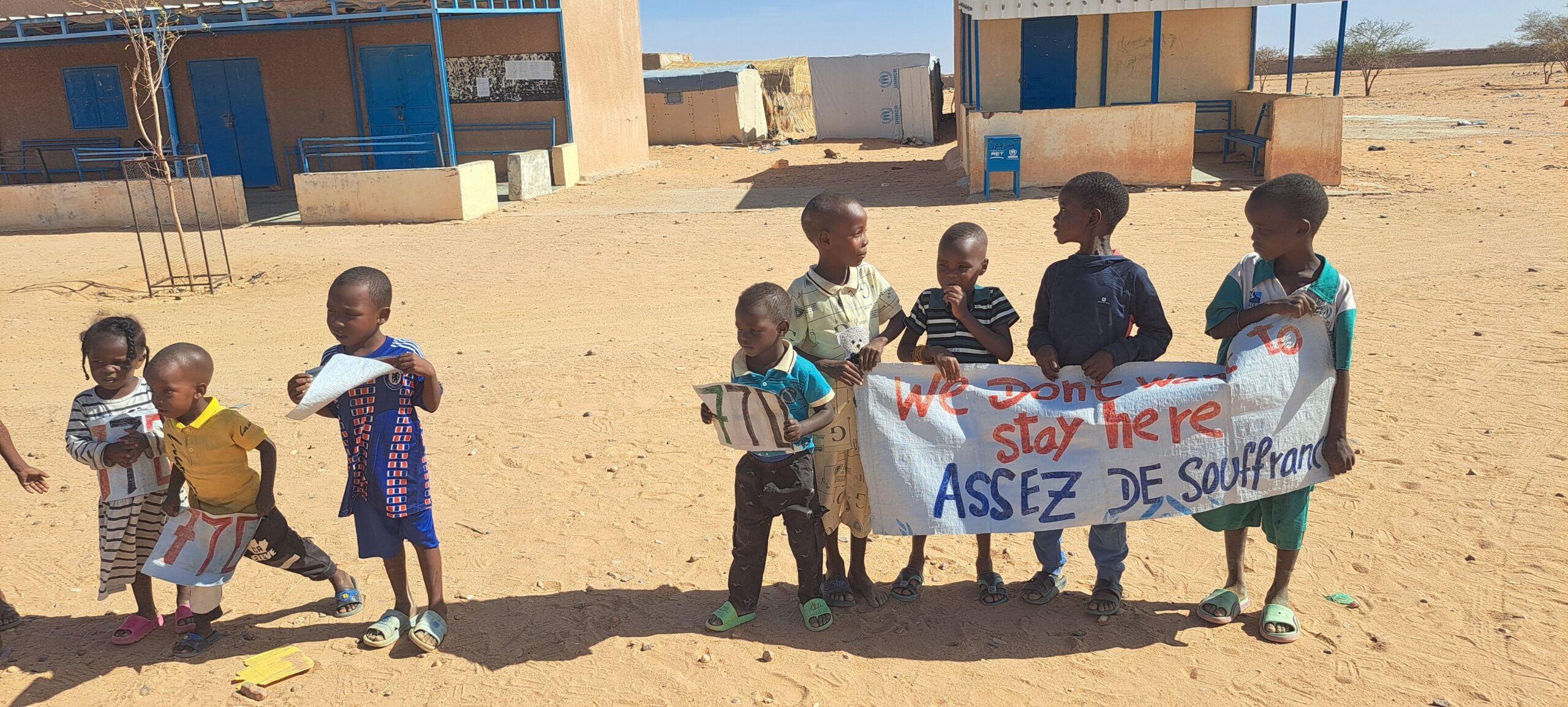
Refugees at the Agadez Humanitarian Centre in Niger have continued a peaceful protest outside the office of the United Nations High Commissioner for Refugees (UNHCR), accusing humanitarian organisations of ignoring their plight and failing to address their demands.
The refugees, under the group Refugees in Niger, said they had been protesting for more than two years over their living conditions and what they described as the lack of efforts by humanitarian agencies to protect their rights.
In a series of posts on X between November 1 and 5, the group said the protest had entered its 771st day as of November 2, adding that the situation at the centre had deteriorated significantly.
It described conditions as dire, saying the refugees lacked basic necessities and faced an uncertain future.
“The situation in Agadez has become catastrophic. Refugees are suffering immensely, living in dire conditions, and their fate has remained unknown since their arrival at the centre,” the group said in a post on November 2.
The protesters also accused UNHCR and other humanitarian organisations of remaining silent despite their prolonged demonstrations and appeals for assistance.
In another post on November 5, the group said the peaceful protest was still ongoing outside the UNHCR office, expressing frustration over what it described as the continued inaction of humanitarian organisations while refugees endured difficult conditions.
The group called attention to the refugees’ demands for their rights and improved living conditions, urging humanitarian organisations to address their concerns.
The UNHCR had not responded to the allegations in the posts cited.
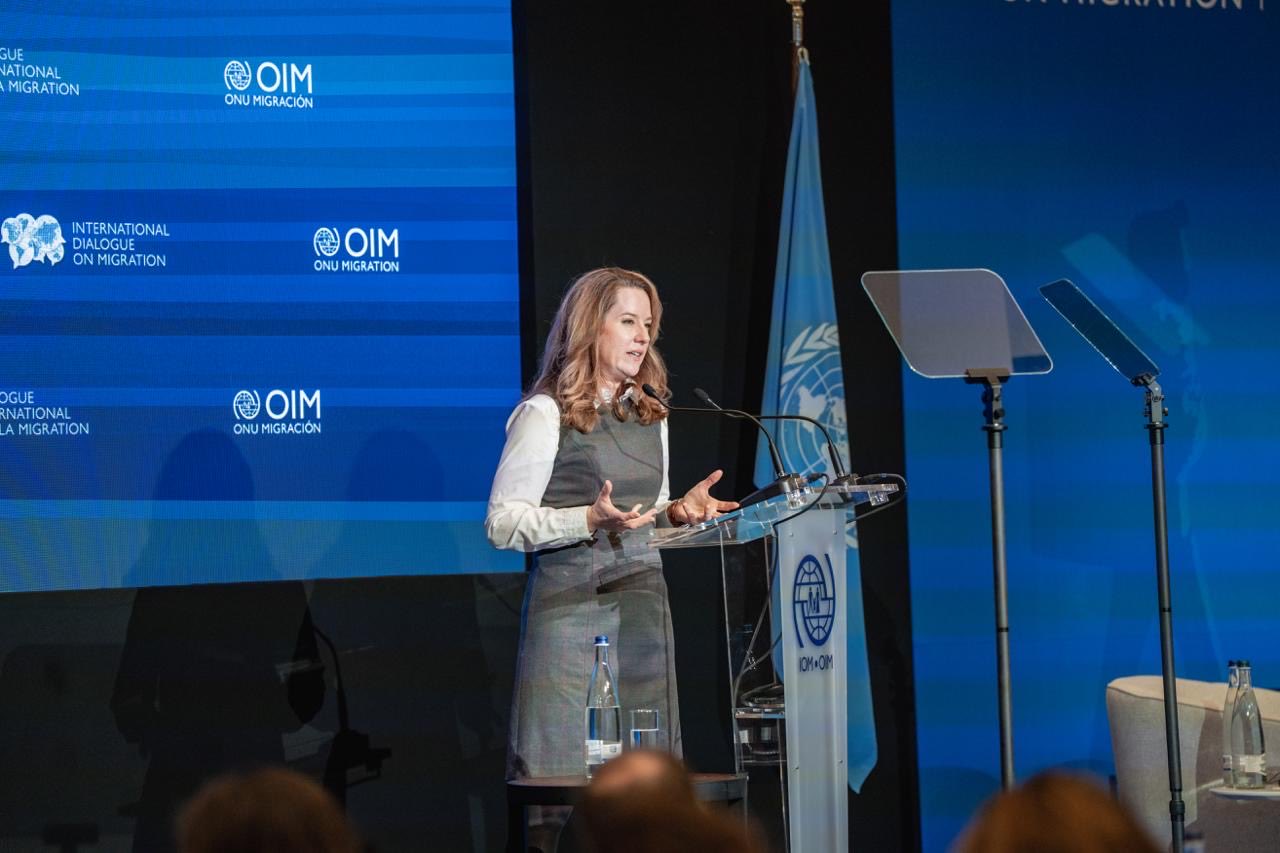
Migration expert Jeff Crisp has questioned the International Organization for Migration’s (IOM) decision to participate in the implementation of a United States programme involving the deportation of migrants to third countries.
Crisp also raised concerns over what he described as a racially based relocation programme targeting white South Africans.
In a post on X on November 2, Crisp said he was seeking clarification on IOM’s involvement in the two programmes.
“I am trying to understand IOM’s decision to be involved in the implementation of the US programme of 3rd country deportations and its racially-based relocation programme for white South Africans,” he wrote.
His comments were made in response to a post by IOM Director-General Amy Pope, who was discussing the importance of building public trust in migration governance.
In her post, Pope said trust in migration could not be established through facts and figures alone, stressing the need for transparency, public participation and accountability in institutional decision-making.
“Trust in migration isn’t built with facts and figures alone. It’s built when people understand decisions, can help shape them, and see that institutions follow through,” she wrote.
Pope added that the issues were central to discussions at the 2026 International Dialogue on Migration (#IDM2026), taking place in Geneva.
Crisp’s response raises questions about IOM’s role in implementing migration policies and deportation arrangements pursued by the US government.

Niger : des réfugiés poursuivent leur manifestation devant le centre du HCR à Agadez

Refugees continue protest at UNHCR centre in Niger’s Agadez

Jeff Crisp s’interroge sur la participation de l’OIM au programme américain d’expulsions vers des pays tiers

Jeff Crisp questions IOM’s involvement in US third-country deportation programme

Alarm Phone signale des appels de détresse de migrants au large de la Crète et le sauvetage de 53 personnes
-

 News1 week ago
Libya repatriates hundreds of migrants, deploys reinforcements to Tobruk
-

 News Extra1 week ago
IOM’s Displacement Tracking Matrix monitors 97.2 million people in 2025
-
News1 week ago
Libye : des centaines de migrants rapatriés, des renforts déployés à Tobrouk
-

 News1 week ago
Ebola:DRC confirms 10,000 cases, NRC seeks scale-up
-

 News Extra1 week ago
La Matrice de suivi des déplacements de l’OIM a suivi 97,2 millions de personnes en 2025
-

 News Extra4 days ago
SOS Humanity accuses Frontex of aiding migrant pushbacks to Libya
-

 Features1 week ago
League of Arab States, IOM launch Arab Migration Data Network
-
 News1 week ago
Ebola : la RDC confirme 10 000 cas, le NRC appelle à un renforcement urgent de la réponse