Features
Thousands deported, several killed by harsh conditions following deportations from Algeria to Niger desert between 1 January and June 2025-Alarme Phone Sahara

According to security officials in Assamaka, between 1 and 21 April 2025, 2,753 Nigerien nationals, including 308 minors and 196 women, were deported from Algeria in so-called official convoys. According to the same source, during the same period, 2,222 people, including 146 nationals of Niger and 2,076 from other countries, mainly African, were also deported in so-called unofficial convoys and arrived in Assamaka.
On 7 June, InfoMigrants reported that, according to the Nigerien authorities, a total of 16,000 people had been deported from Algeria to Niger since April.
Without complete detailed figures on all deportation convoys, it is difficult to determine with any degree of certainty the total number of people deported since the beginning of 2025.
In any case, it’s clear that the large number of people arriving in Assamaka empty-handed, often sick, injured and traumatised, far exceeds the capacity of local reception facilities.
People killed by the conditions of deportation
The Alarm Phone Sahara team in Assamaka reports several cases of deaths caused by the conditions of expulsion in the first half of 2025:
02.03.2025: A Malian migrant, upon arriving in Assamaka, dies because of a beating received in Algeria by the security forces. The Alarm Phone Sahara whistleblower team buries him on the spot.
19.04.2025: An Ivorian national dies in Assamaka. He is buried by the Alarm Phone Sahara team.
21.04.2025: A Guinean national in a group of people deported in an ‘unofficial’ convoy and dumped in the desert outside Assamaka dies. The Alarm Phone Sahara team attends the funeral at the local cemetery.
22 April 2025: Two deceased persons are discovered in the desert 10 km and 12 km west of Assamaka. Based on their condition, one of the two persons died a few days earlier and the other significantly longer ago. IOM health workers and the gendarmerie take care of their burial.
Alarm Phone Sahara shares the grief of the relatives of these people who were deprived of their lives in appalling conditions and demands an end to the inhumane and deadly pushbacks from Algeria.
Expulsions in violent and dangerous conditions
Testimonies from various people, women and men, deported in deportation convoys reveal a disturbing pattern of border violence perpetrated by Algerian, Tunisian and Moroccan security forces.
These are not isolated incidents, but systematic abuses marked by racism, sexism and extreme brutality – sometimes with fatal consequences.
Since the Tunisian state began large-scale deportations to its borders in 2023, many of those affected have been victims of a systematic practice of chain deportations: from Tunisia to the Algerian border, then, after being intercepted by Algerian security forces, to the Niger border near Assamaka.
Usually, people are deported at the ‘Point Zero’ post located 15 km from Assamaka, which serves as a reference point. However, recently, the Alarm Phone Sahara team has observed cases where people have been left at different locations in the surrounding area. This also complicates the work of the Alarm Phone Sahara team, which sets off each time to ‘Point Zero’ on its tricycle to rescue people in distress, especially the sick and injured and women with children.
Since the IOM stopped running such recue shuttles, Alarm Phone Sahara has become the only organisation on the ground that regularly sets off to ‘Point Zero’ to provide humanitarian assistance.
Given the difficult conditions in Algerian detention centres and during transport in the back of trucks, as well as the ill-treatment inflicted, many people arrive sick, injured or with fractures. In this condition, they have to walk to Assamaka until someone comes to their rescue.
For those who are deported, it is also difficult and dangerous, as the Algerian forces often drop them off between 10:30 and 11:00 a.m. in the heat and hot wind.
The lack of water and food for first aid to the hungry and thirsty also poses a challenge for the rescue team.
Despite all these difficulties, the Alarm Phone Sahara team is doing everything possible to prevent people from dying in the desert as a result of inhumane pushbacks.

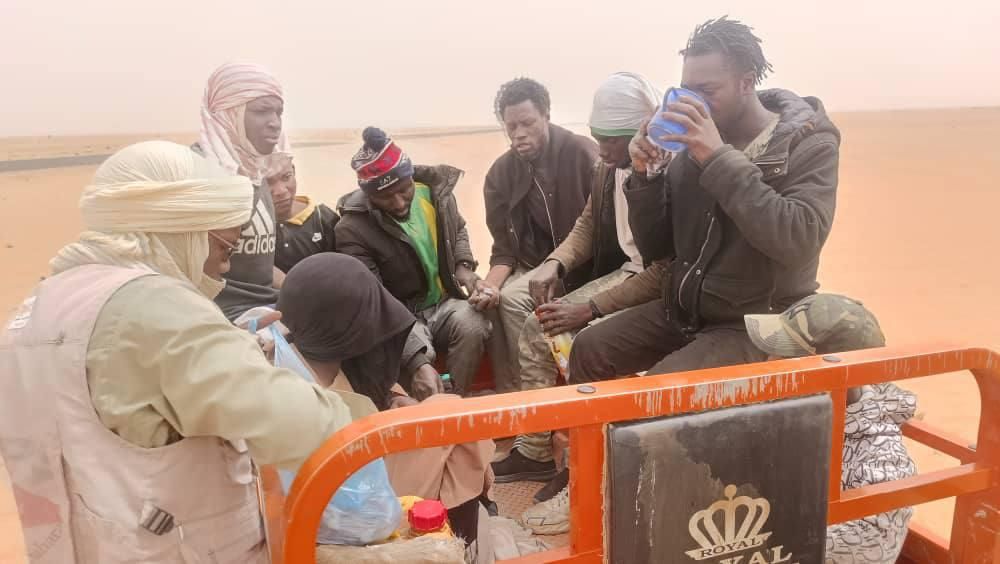
Distribution of pure water to deported people at Point Zero. 22.05.2025. ©Alarme Phone Sahara

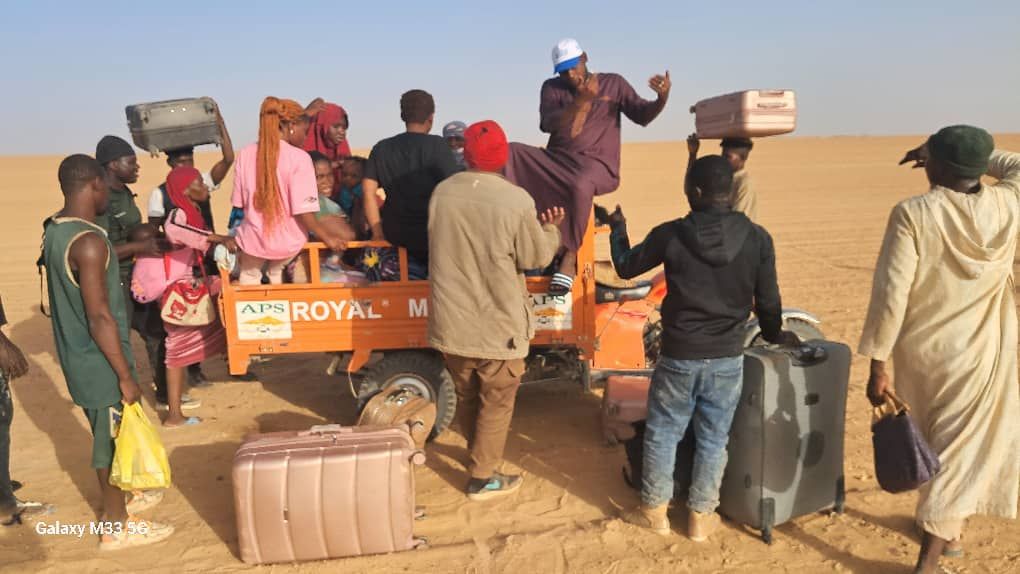
Boarding of deported people on Alarme Phone Sahara’s tricycles at Point Zero. 10.05.2025. ©Alarme Phone Sahara

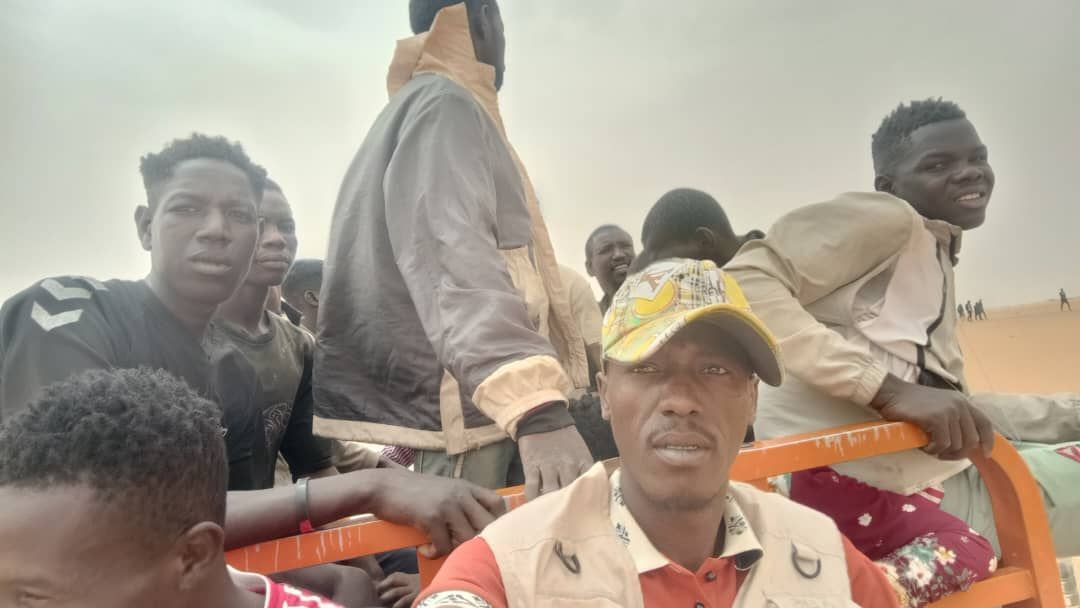
Deported people on the way from Point Zero to Assamaka on Alarme Phone Sahara’s tricycle. 29.05.2025. ©Alarme Phone Sahara
Authorities and media in Niger alerted to mass expulsions in Assamaka
Faced with the high number of people deported to the border in Assamaka in April 2025, the Nigerien public authorities and media are increasingly responding to the resulting emergency.
Several official delegations have visited the area to assess the situation. In May, a delegation comprising the regional governor, the prefects of Ingall and Arlit and senior officials was on the ground at the very moment when Algerian forces were dropping off large numbers of people at Point Zero and the Assamaka police station. Representatives of the IOM, who were also present during the visit, stated that more than 1,500 people were at that time in the local IOM reception centre and in emergency shelters set up by the Italian NGO COOPI.
According to the Alarm Phone Sahara team, an urgent issue is the transport of at least 4,000 migrants to their countries of origin by July, considering that many of them see no other prospects on their migration route.
Another notable development is the increased interest of the Nigerien media, in particular the national radio and television station RTN, which has reported in detail on the situation at the Niger-Algeria border and has also given a voice to those affected by the expulsions from the Maghreb countries.
Alarm Phone Sahara demands:
- In addition to emergency aid for the thousands of people deported, an immediate end to the round-ups and mass deportations in Algeria and Tunisia, as well as an end to border violence and human rights violations against people on the move!
- EU Member States have a duty to immediately end deals and cooperation with Maghreb countries aimed at preventing migration, as they are complicit in systematic border violence and the deaths of people on the move!