News
Bringing olive oil, opportunity back to Tunisia


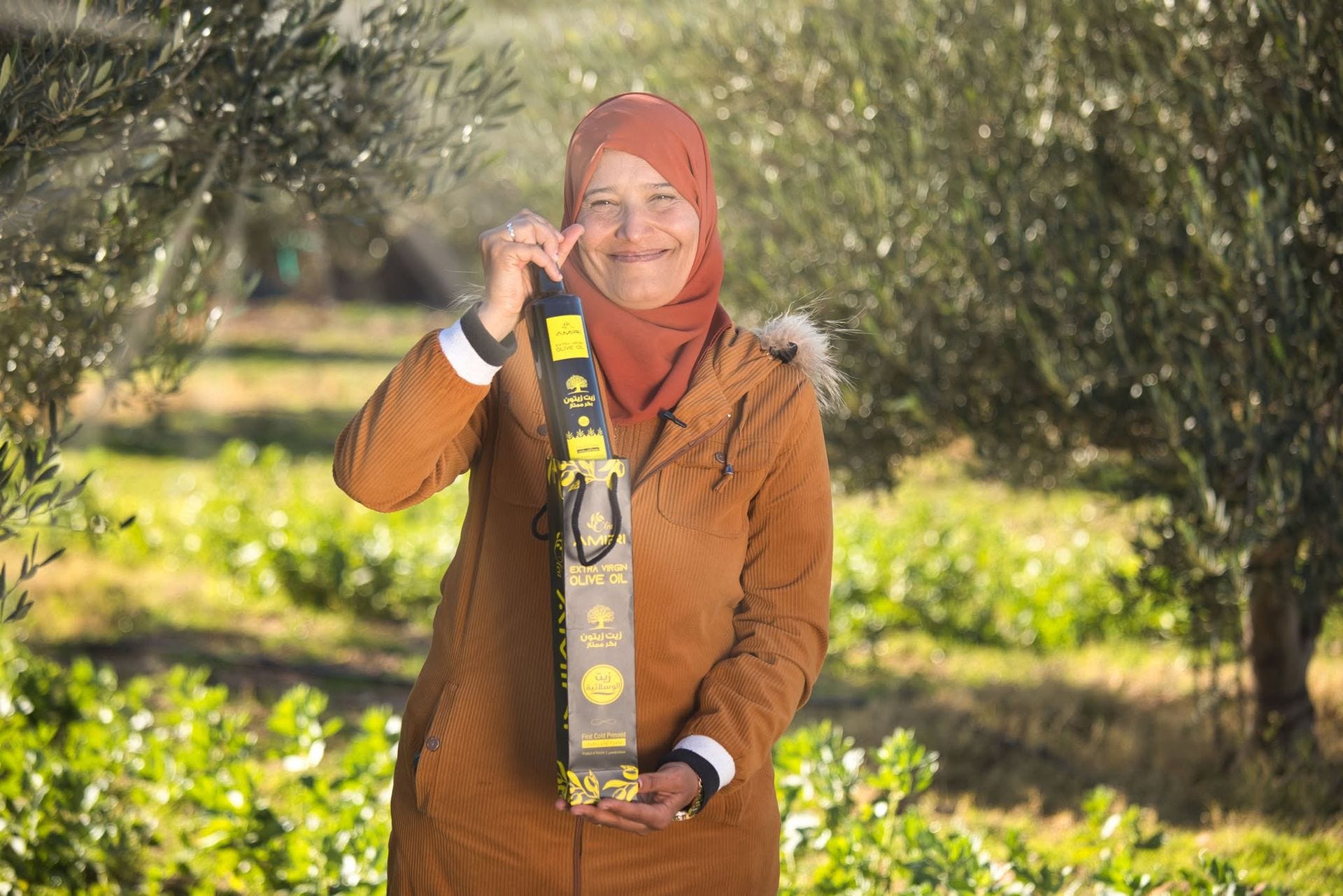
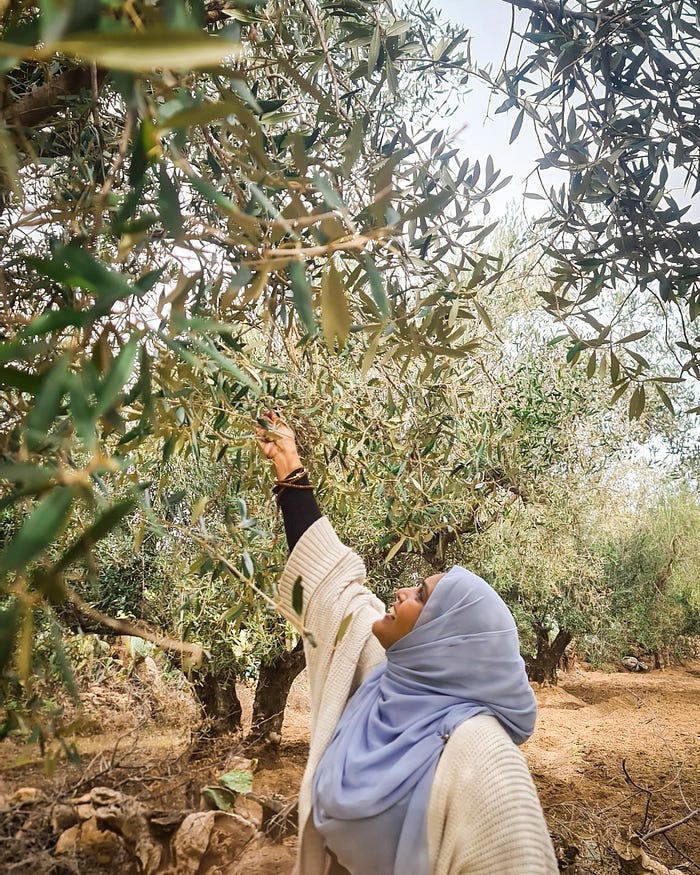
For Sonia Amiri, launching an olive oil business in Oueslatia, a rural area in Tunisia’s Kairouan region, wasn’t just about starting a company. It was about investing in her hometown’s future.
With support from a relative living in France, who contributed €8,500 to renovate a long-standing oil mill, Sonia laid the groundwork for Oléa Amiri, a premium olive oil brand. Today, her products are being exported to Germany, Italy, Abu Dhabi, and Côte d’Ivoire, bringing both local pride and international recognition.

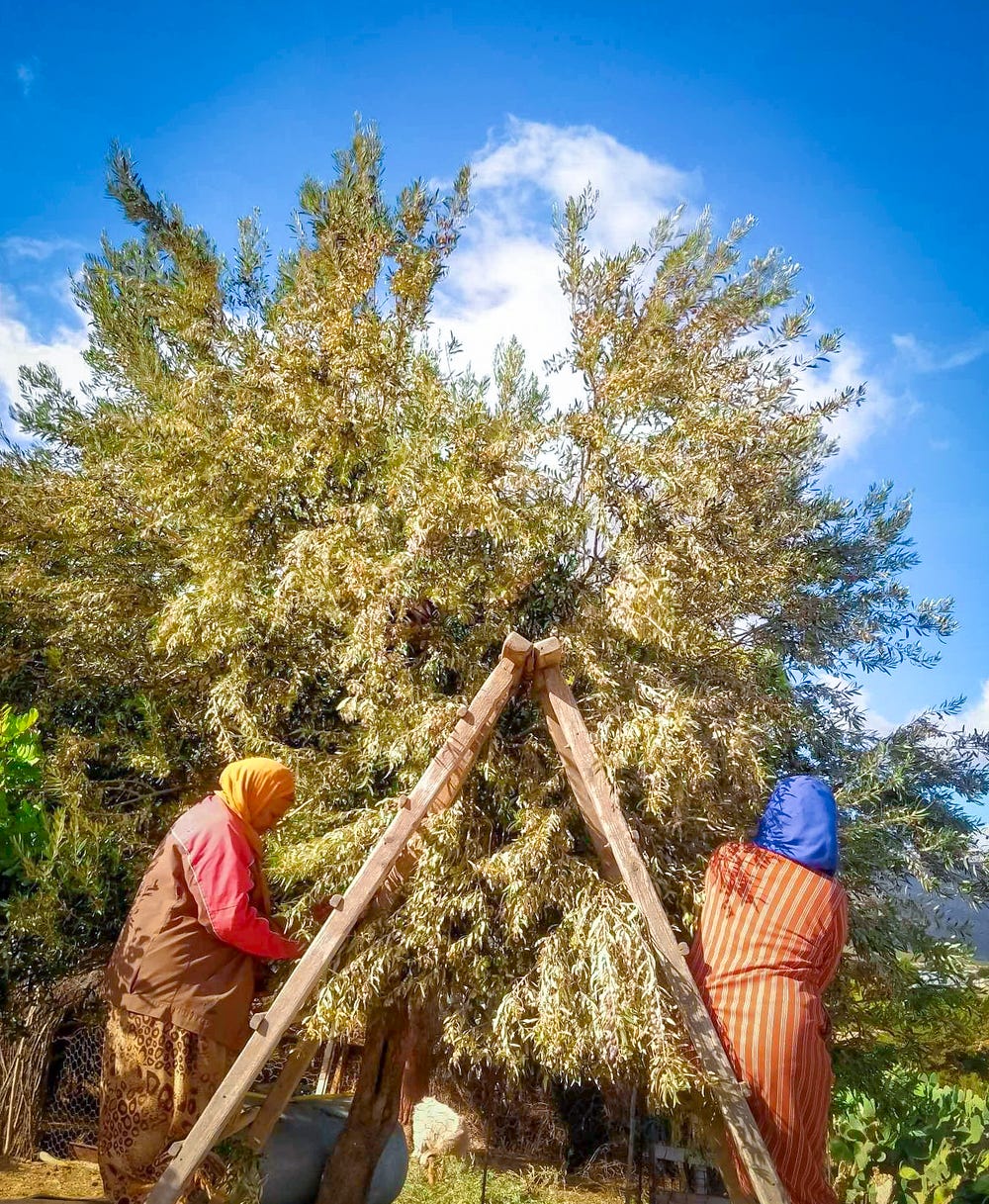
Sonia’s journey is one of 30 success stories from the second phase of “Migration as a Resource,” a project by the International Organization for Migration (IOM), funded by the Italian Agency for Development Cooperation. The initiative helps Tunisians abroad invest in small businesses back home, working in partnership with local authorities and institutions.
Her relative’s contribution was matched with an in-kind grant from IOM: a high-quality olive oil extraction machine worth €17,000. This matching model ensures that remittances go further, supporting business growth, creating jobs, and strengthening local economies. Oléa Amiri now employs six seasonal workers, five of them women, aged between 30 and 45. The project places a strong focus on engaging youth and women in economic life.

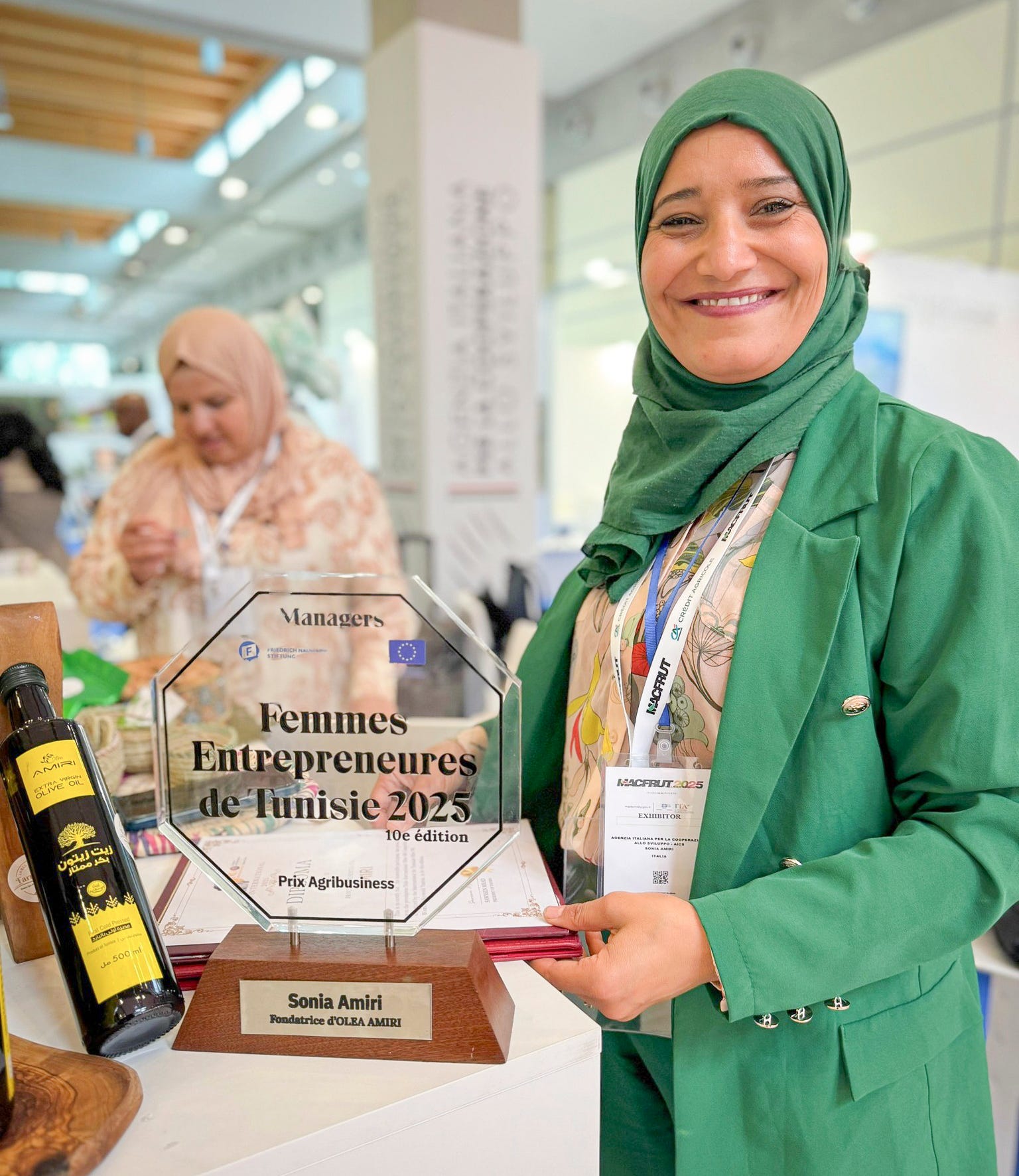

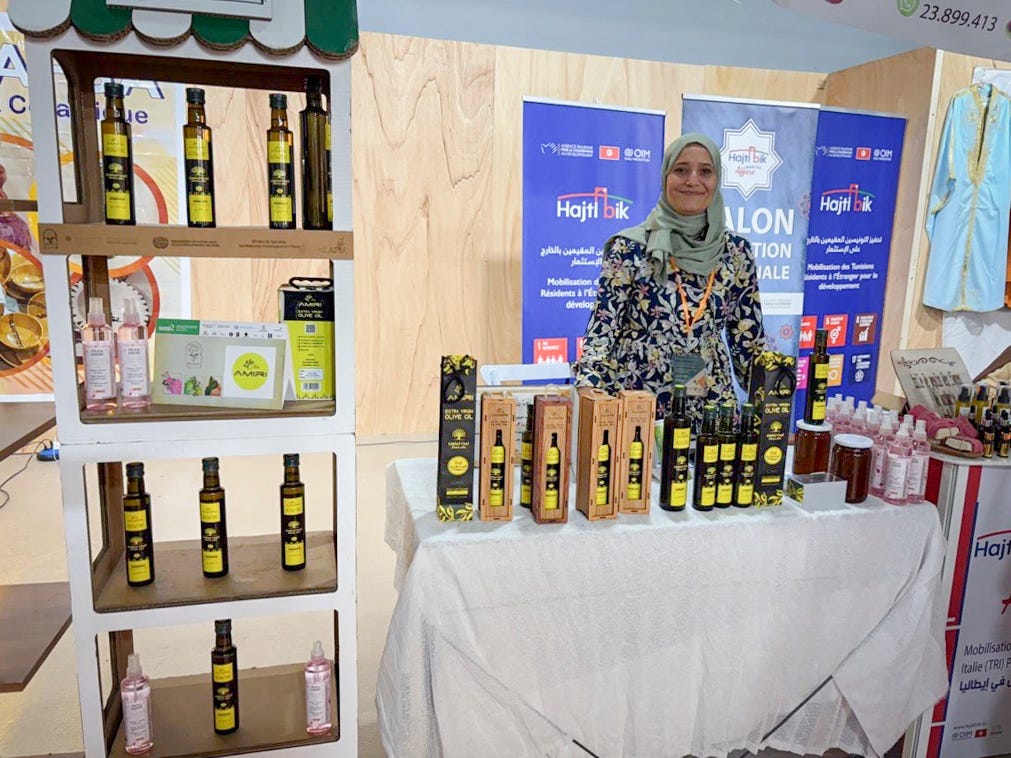
Right: At the 2025 Handicrafts Exhibition, Sonia showcases Oléa Amiri’s full range, highlighting the success of diaspora-funded ventures. Photo: IOM 2025
To help Sonia get started, IOM provided legal support through an expert and accounting firm. The business also receives one-on-one coaching and specialized training for a full year. This includes sessions on business planning, marketing strategies, digital promotion, and product photography. These tools have helped Oléa Amiri grow into an award-winning brand and an emerging destination for olive oil tourism in the region.
Stories like Sonia’s show the real impact of remittances when they are invested with intention. In 2023 alone, Tunisia received more than TND 7.5 billion (USD 2.87 billion) in remittances.
Through the project, diaspora members are not just supporting their families — they are helping rebuild their communities, drive exports, and preserve local identity. In Sonia’s case, what started as a family contribution has grown into a business that is reshaping her town’s economy.

About the Project
The Mobi-TRE project encourages partnerships between Tunisians living abroad and local entrepreneurs, especially in areas with high migration potential. The project supports Tunisia’s national development plans and promotes gender equality and youth empowerment. It also aligns with global development goals by linking remittances to long-term investment.
In its current phase (2023–2026), the project is supporting small businesses across 18 regions in Tunisia. Diaspora contributions are matched with up to €17,000 in in-kind support from IOM. Participants receive legal guidance, fiscal advice, and a full year of tailored business coaching.
During its first phase, the project helped launch 56 businesses, secured €534,000 in diaspora investment, and created 367 jobs — 60 percent of them for young people and 75 percent for women. The second phase is now supporting 30 new businesses and continuing to assist 39 from the first round, with hundreds more jobs expected.