
News
Over seven million refugee children out of school- UNHCR Report

A new report published by the UN Refugee Agency UNHCR, says more than half of the world’s 14.8 million school-aged refugee children are currently missing out on formal education, risking their future prosperity and the attainment of global development goals, according to
The 2023 UNHCR Refugee Education Report draws on data from over 70 refugee-hosting countries to provide the clearest picture yet of the state of education among refugees globally. It reveals that by the end of 2022, the number of school-aged refugees jumped nearly 50 per cent from 10 million a year earlier, driven mostly by the full-scale invasion of Ukraine. An estimated 51 per cent – more than 7 million children – are not enrolled in school.
Refugee enrolment in education varies dramatically by education level in reporting countries, with 38 per cent enrolled in pre-primary level, 65 per cent in primary, 41 per cent in secondary, and just 6 per cent in tertiary. In all but the lowest-income states, the difference between enrolment rates among refugees and non-refugees is stark, with far fewer refugees attending school, showing how lack of access stimies opportunity.
“The higher up the educational ladder you go, the steeper the drop-off in numbers, because opportunities to study at secondary and tertiary level are limited,” Filippo Grandi, UN High Commissioner for Refugees, writes in his foreword to the report.
“Unless their access to education is given a major boost they will be left behind. This will not help meet other goals for employment, health, equality, poverty eradication and more.”
With 20 per cent of refugees living in the world’s 46 least-developed countries and more than three-quarters living in low- and middle-income countries, the costs of educating forcibly displaced children fall disproportionately on the poorest.
“We need fully inclusive education systems that give refugees the same access and rights as host-country learners,” Grandi added. “Where refugee-hosting countries have implemented such policies, they need predictable, multi-year support from global and regional financial institutions, high-income states, and the private sector. We cannot expect overstretched countries with scarce resources to take the task on by themselves.”
This year’s report, titled ‘Unlocking Potential: The Right to Education and Opportunity’, not only reveals the scale of the challenge of refugee education but also the extent of the potential of school-aged refugees when their access to education is secured.
The report highlights examples of refugee learners from Afghanistan, Iraq and South Sudan, who have overcome obstacles, seized opportunities and excelled. It also takes a deep dive into the educational situation for school-aged refugees in the Americas and from Ukraine. And it proposes important steps that donors, civil society, other partners, and refugee-hosting States can take together to support refugee education.
Among the positive global developments identified include near gender parity among refugee learners on average when it comes to access to education in reporting countries (63 per cent for males and 61 per cent for females at the primary level, and 36 per cent for males and 35 per cent for females at secondary), although data for individual countries reveals that some still have significant gender gaps. There is also evidence from national examinations that refugee learners excel when given access to quality education.
If refugees are left behind, the UN Sustainable Development Goal of ensuring inclusive and equitable quality education for all will not be achieved, but when school-aged refugees are given access to education, they can thrive, with benefits for individuals, host states, and home countries.
As Monicah Malith, a South Sudanese refugee studying law at the University of Nairobi in Kenya, says in the report: “By empowering us through education we can break the cycle of hardship and provide a path towards a brighter future.”


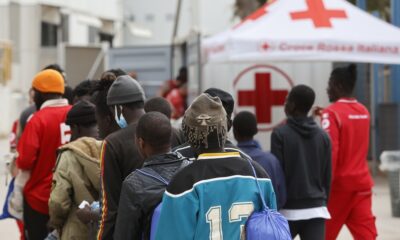



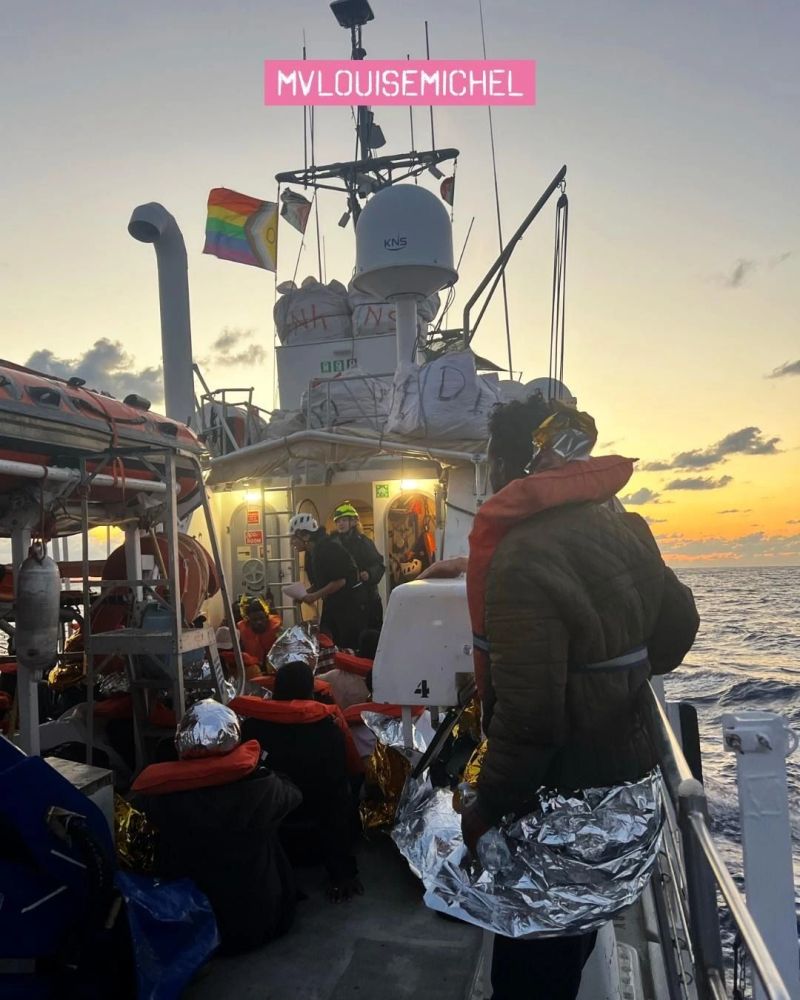
Trente-neuf personnes, dont sept femmes — parmi lesquelles une femme enceinte — et 13 enfants, ont été secourues en mer ce matin par l’équipage du M.V. Louise Michel, après qu’Alarm Phone a alerté le navire de la présence d’une embarcation pneumatique surchargée et impropre à la navigation en détresse.
Selon l’équipage, les personnes secourues voyageaient sans équipements de sauvetage adéquats, sans carburant ni nourriture. Certaines auraient souffert de brûlures causées par le carburant. Le groupe est désormais transporté vers Messine.
Ce sauvetage intervient alors que le suivi des opérations de contrôle migratoire en Libye fait état de centaines de personnes interceptées, arrêtées ou soumises à d’autres mesures dans le cadre d’opérations menées à travers le pays.
Entre le 2 et le 4 octobre, selon les informations disponibles, entre 312 et 342 personnes auraient été prises dans de telles opérations, bien que le nombre réel puisse être plus élevé.
Dans la région de Tobrouk, les rapports de suivi indiquent qu’environ 120 à 150 personnes ont été interceptées lors d’opérations terrestres. Dans les quartiers de Tajoura et d’Aïn Zara, à Tripoli, environ 85 personnes auraient été détenues lors de perquisitions menées dans des domiciles et sur des lieux de travail.
Au large de Zawiya, 62 personnes supplémentaires auraient été interceptées en mer et renvoyées en Libye, tandis qu’environ 45 autres auraient été arrêtées le long des routes de transit du sud, près de Koufra.
Ces chiffres illustrent les différentes étapes du contrôle migratoire auxquelles sont confrontées les personnes qui tentent de quitter la Libye : interception à terre, détention, interception en mer et, dans certains cas, expulsion ou retour forcé.
Dans le même temps, les organisations civiles de recherche et de sauvetage opérant en Méditerranée continuent de faire l’objet d’enquêtes, de mesures administratives visant leurs navires, d’amendes et de critiques politiques concernant leurs activités.
Ce contraste a suscité des critiques de la part des organisations de sauvetage, qui affirment que les groupes humanitaires sont soumis à des restrictions croissantes, tandis que les acteurs libyens chargés de la sécurité et des interceptions continuent de bénéficier de la coopération, de la formation, de l’équipement et du financement européens dans le cadre d’efforts présentés comme relevant de la « gestion des migrations ».
La question est devenue un élément controversé de la politique migratoire européenne, certains défenseurs des droits des migrants s’interrogeant sur le fait de savoir si les mesures visant à empêcher les migrations irrégulières contribuent à la détention et au retour forcé de personnes qui tentent de rejoindre un lieu sûr.
Pour les 39 personnes secourues par le Louise Michel, le voyage se poursuit en direction de l’Italie. Pour les centaines d’autres personnes qui auraient été interceptées à travers la Libye ces derniers jours, l’issue a été la détention, le renvoi ou l’éloignement des routes migratoires.
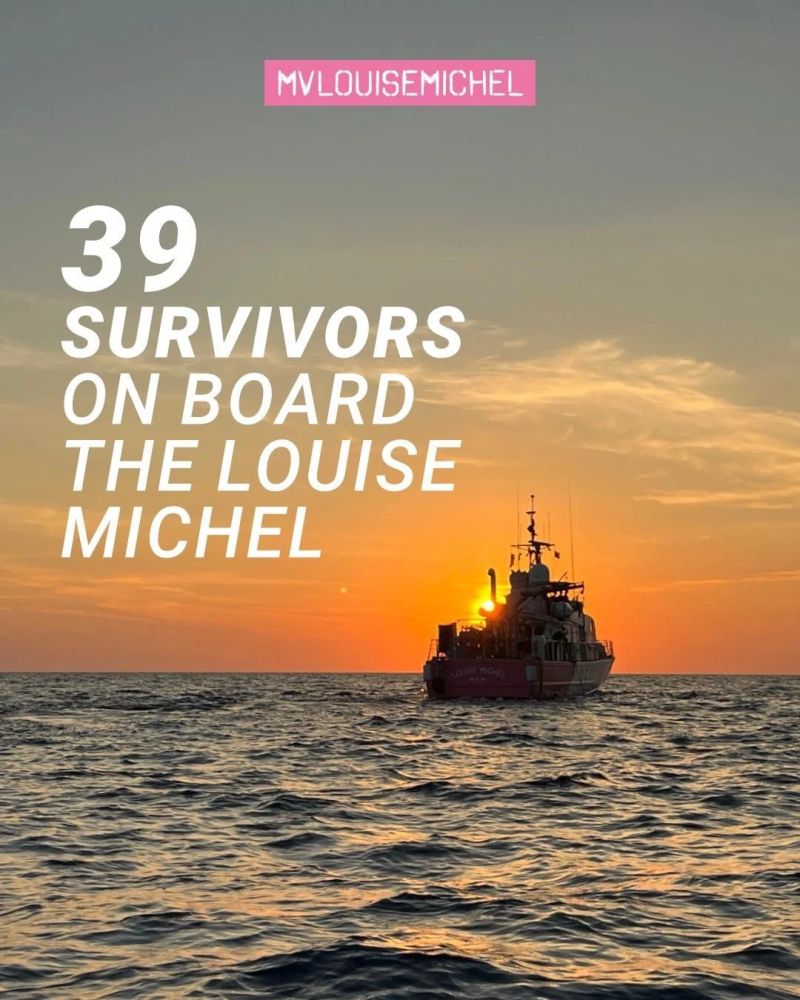
Thirty-nine people, including seven women—one of them pregnant—and 13 children, were rescued at sea this morning by the crew of the M.V. Louise Michel after Alarm Phone alerted the vessel to an overcrowded and unseaworthy rubber boat in distress.
According to the crew, those rescued had been traveling without adequate life-saving equipment, fuel or food. Some were reportedly suffering from fuel burns. The group is now being transported toward Messina.
The rescue comes as monitoring of migration-enforcement operations in Libya points to hundreds of people being intercepted, arrested or otherwise processed in operations across the country.
Between October 2 and 4, an estimated 312 to 342 people were reportedly caught up in such operations, although the actual number could be higher.
Around Tobruk, monitoring reports indicate that approximately 120 to 150 people were intercepted during land operations. In Tripoli’s Tajoura and Ain Zara areas, around 85 people were reportedly detained during house and workplace raids.
Off the coast of Zawiya, a further 62 people were reportedly intercepted at sea and returned to Libya, while around 45 others were reported to have been caught along southern transit routes near Kufra.
The figures illustrate the different stages of migration enforcement faced by people attempting to leave Libya: interception on land, detention, interception at sea and, in some cases, deportation or forced return.
At the same time, civilian search-and-rescue organisations operating in the Mediterranean continue to face investigations, administrative measures against their vessels, fines and political criticism over their activities.
The contrast has prompted criticism from rescue organisations, which argue that humanitarian groups face increasing restrictions while Libyan security and interception actors continue to receive European cooperation, training, equipment and funding as part of efforts described as “migration management.”
The issue has become a contentious part of Europe’s migration policy, with advocates questioning whether measures intended to prevent irregular migration are contributing to the detention and forced return of people who are attempting to reach safety.
For the 39 people rescued by the Louise Michel, the journey has continued toward Italy. For hundreds of others reportedly intercepted across Libya in recent days, the outcome has been detention, return or removal from migration routes.
News
Jeff Crisp s’interroge sur la représentation des migrants à la Conférence de Vienne sur les migrations

L’ancien responsable de la politique et de l’évaluation au HCR, Jeff Crisp, s’est interrogé sur la représentation des migrants à la prochaine Conférence de Vienne sur les migrations 2026, demandant combien de migrants y participeront par rapport aux responsables chargés des affaires intérieures, de la sécurité et du contrôle des frontières.
Crisp a soulevé cette question en réaction à une publication du Centre international pour le développement des politiques migratoires (ICMPD), annonçant l’ouverture des inscriptions pour suivre en ligne sa conférence annuelle phare.
« Combien de migrants seront présents à cette conférence ? Et combien de responsables des affaires intérieures, de la sécurité et du contrôle des frontières ? », a écrit Crisp.
L’ICMPD a indiqué que la 11e édition de la Conférence de Vienne sur les migrations se tiendra les 16 et 17 novembre et réunira des décideurs de haut niveau, des praticiens et des experts d’Europe et d’ailleurs pour un échange de haut niveau sur les politiques migratoires.
Dans sa publication, l’organisation n’a pas précisé combien de migrants ou de représentants d’organisations dirigées par des migrants participeraient à la conférence.
L’intervention de Crisp attire l’attention sur la composition des forums consacrés aux politiques migratoires, notamment sur la mesure dans laquelle les personnes ayant une expérience directe de la migration y sont représentées aux côtés des responsables gouvernementaux et des professionnels des politiques migratoires.
La Conférence de Vienne sur les migrations est organisée chaque année par l’ICMPD, une organisation internationale qui travaille avec les gouvernements et d’autres parties prenantes sur les politiques migratoires et de mobilité.
La conférence de 2026 doit se tenir à Vienne, avec un accès en ligne disponible pour les participants inscrits.

Le Royaume-Uni rouvre son programme de réinstallation des réfugiés aux nouvelles demandes de réinstallation

UK reopens refugee resettlement scheme for new referrals

Le sauvetage en mer met en lumière la pression croissante exercée sur les migrants en Libye

Rescue at sea highlights growing pressure on migrants in Libya

Jeff Crisp s’interroge sur la représentation des migrants à la Conférence de Vienne sur les migrations
-
 Features2 weeks ago
Retour volontaire assisté, assistance post-arrivée et réintégration : le rôle de l’OIM expliqué
-
 News2 weeks ago
Yémen :21 573 ménages déplacés dans sept gouvernorats
-

 Features2 weeks ago
IOM explains work in countries receiving third-country nationals
-

 Features2 weeks ago
L’OIM explique son travail dans les pays qui accueillent des ressortissants de pays tiers
-
 Features2 weeks ago
Assisted Voluntary Return, Post-Arrival Assistance, and Reintegration: IOM’s Role Explained
-
 News2 weeks ago
Yemen: 21,573 households displaced across seven governorates
-
 Features2 weeks ago
L’OIM aide plus de 81 000 migrants à retourner dans leur pays depuis 115 pays
-
 News2 weeks ago
Un tribunal de Naples annule la détention de 45 jours du Sea-Watch 5