Interviews
Resource extraction, debt burden fuelling forced migration from Africa, journalist tells Dakar congress

A journalist, Jaume Portell Cano, has identified resource extraction, unequal financial relationships and mounting debt burdens as some of the structural factors contributing to forced migration from Africa.
Cano, who spoke on Resource Extraction and Monetary Domination and Its Impact on Forced Migration at the African Congress on Mobility and Migration: Cross-Perspectives, Shared Commitments, said Africa’s natural resources and financial wealth continued to flow out of the continent while worsening economic conditions pushed more people to migrate in search of better opportunities.

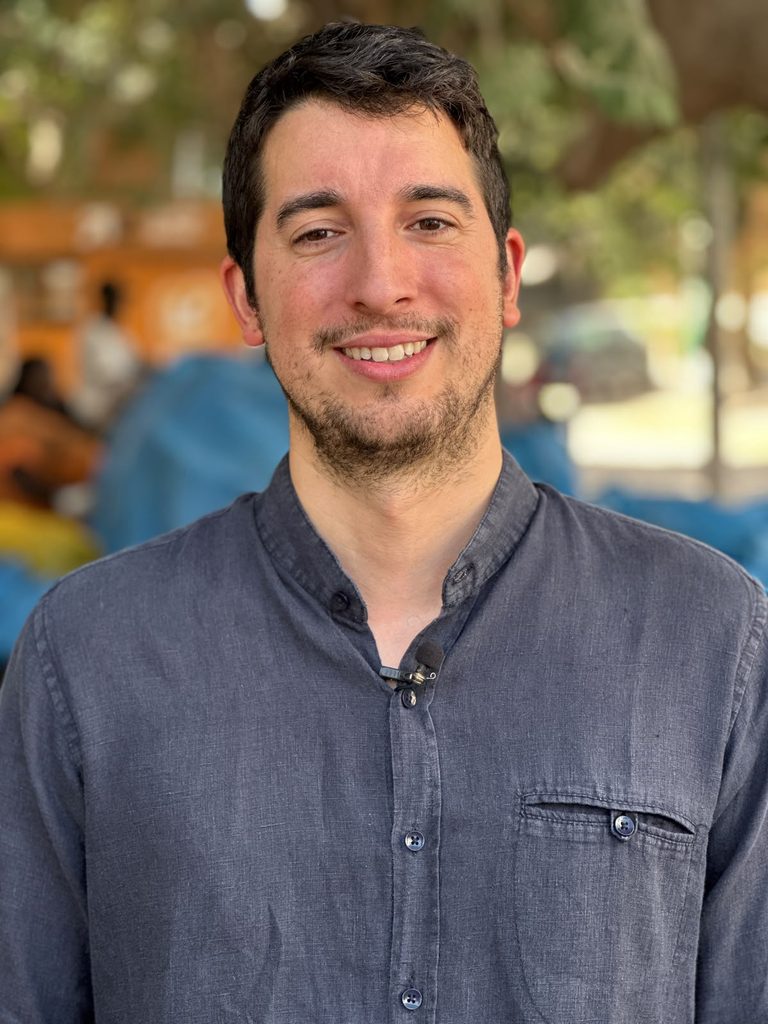
In a summary provided to Voice for African Migrants, Cano said the congress, held in Dakar, Senegal, from November 16 to 19, 2026, provided an opportunity for participants from across Africa to examine migration from different perspectives, including its underlying causes, migrants’ experiences along their journeys and their treatment in destination countries.
He said the gathering sought to challenge the dominant security-based approach to migration by promoting a rights-based understanding that addresses the structural conditions driving migration and the legal measures needed to protect migrants.
Cano explained that discussions at the congress highlighted how Africa continued to lose economic value through the under-invoicing of commodities exported from the continent and increasing debt-servicing obligations, which consume significant portions of national budgets in many African countries.
According to him, the situation creates an imbalance in which Europe benefits from access to African resources, debt repayments and migrant labour, while African countries are left grappling with environmental pollution from resource extraction, underfunded public services and deteriorating living conditions.
He noted that remittances sent home by African migrants increasingly served as a means of filling gaps in essential services and social welfare that governments had failed to adequately provide.
The journalist argued that these economic realities should form an integral part of discussions about migration, rather than treating people’s movement primarily as a security or border-control issue.
Beyond the panel discussions and workshops, participants also explored migration-related experiences through documentary films and engagements with organisations working with migrants and affected families in Dakar.
Cano said the congress featured films highlighting the plight of stateless people in Madagascar and the struggles of a Congolese migrant in South Africa who was attempting to secure a house he had already paid for.
One of the productions, by South African filmmaker Ayanda Charlie, offered an account of the difficulties faced by the Congolese migrant, illustrating the challenges migrants encounter even after reaching their destinations.
Participants also learned about the work of Boza Fii, through its representative, Saliou Diouf, particularly its efforts to trace families of people who died or went missing while attempting to cross the Atlantic in pirogues.
The organisation’s work involves travelling across Senegal to contact families affected by disappearances and deaths at sea.
Cano described a several-metre-long sheet of paper bearing the names of missing people as one of the most disturbing reminders of the human cost of dangerous migration journeys.
He said the initiative demonstrated the need to bring greater public attention to the experiences of families whose relatives disappear during sea crossings, stressing that the tragedy should concern both African and international audiences.
In his assessment, the congress should serve as a renewed call for governments in Africa and Europe to examine their migration policies, particularly the political and economic conditions that contribute to forced displacement and irregular migration.
He urged participants to sustain the momentum generated by the gathering and continue working alongside migrants to defend their rights.
Cano stressed that the congress should not be treated as a one-off event or merely remembered through photographs and discussions, but should mark the beginning of sustained collective action to address the root causes of migration and demand accountability from governments responsible for managing human mobility.