News
Insecurity driving forced displacement in Nigeria, Angela Odah tells Dakar migration congress

Angela Odah of RLS West Africa has identified worsening insecurity, environmental degradation, poverty, unemployment and governance failures as major factors driving forced displacement and migration in Nigeria.
Odah was a panelist during a panel session on “Mobility in Nigeria and Ghana: Between Extractivism, Insecurity and Regional Integration” at the African Congress on Mobility and Migration held in Dakar, Senegal, from November 16 to 19, 2026.
The event, held at the Agence universitaire de la Francophonie (AUF) in Dakar, was organized by Rosa Luxembourg Stiftung West Africa Office with COSPE, Brot für die Welt, medico international as co organisers/partners.
According to her, life in Nigeria had become increasingly dangerous over the past 12 years.
Angela made the remarks in an interview with Voice for African Migrants following the congress.
She noted that kidnappers, bandits and other criminal groups have turned the capture of citizens for ransom into a widespread criminal enterprise, leaving communities across the country’s six geopolitical zones struggling with insecurity.
She particularly highlighted the plight of rural communities in Northern Nigeria, where persistent attacks have forced many residents into Internally Displaced Persons (IDP) camps, with some families living in displacement for more than a decade.

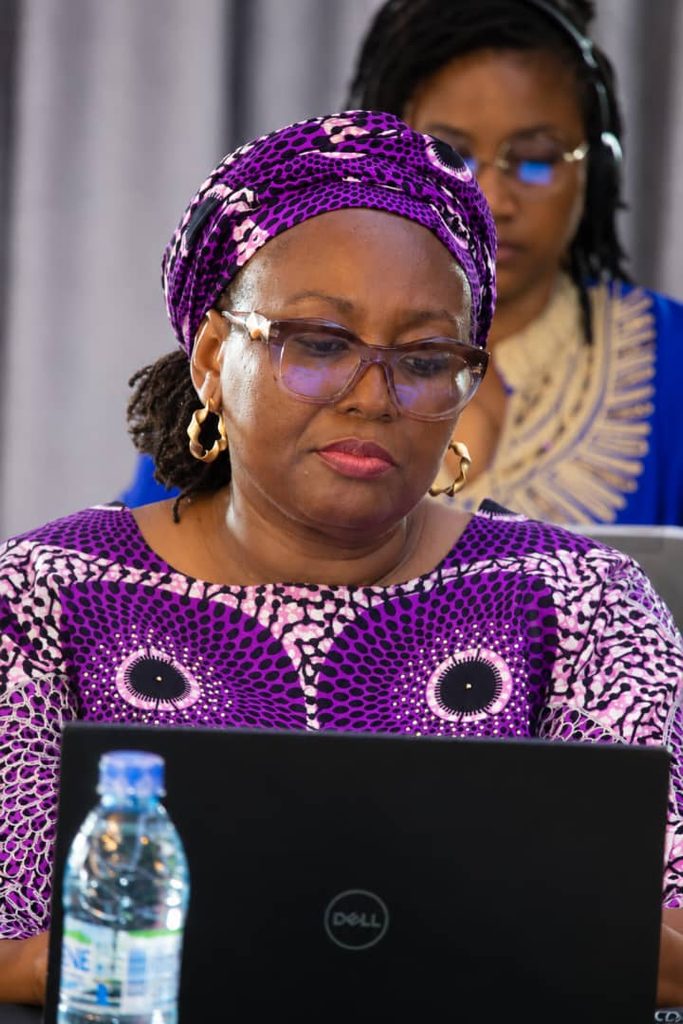
Odah noted that the proliferation of armed groups, variously described as herders, bandits, kidnappers and unknown gunmen, reflected the complex nature of Nigeria’s security challenges.
She explained that armed banditry, particularly in the North-West and North-Central regions, including Zamfara, Kaduna, Sokoto, Katsina, Niger and Kebbi states, was driven by interconnected environmental, economic, political and institutional factors.
On environmental pressures, she identified climate change, desertification, drought and shrinking access to arable land and water resources as factors intensifying competition over natural resources.
She said growing competition between pastoralists and farming communities had contributed to localised conflicts, some of which had gradually evolved into organised criminal activities.
Odah also linked the expansion of banditry to widespread poverty, youth unemployment, illiteracy and economic marginalisation, particularly in rural communities where legitimate livelihood opportunities remain limited.
She observed that criminal activities initially associated with cattle rustling had developed into a lucrative underground economy involving kidnapping for ransom, extortion, illegal levies and forced labour.
The RLS West Africa panelist further identified illegal gold mining, particularly in Zamfara State, as another factor fuelling insecurity, explaining that competition over mining sites, transportation routes and proceeds had attracted armed groups and criminal networks.
On governance, she blamed weak state presence, inadequate rural infrastructure and poor policing for creating ungoverned spaces, particularly in remote forests, where armed groups establish camps and operate with limited resistance.
She also raised concerns about the operational challenges facing Nigeria’s security agencies, including inadequate equipment, limited resources and poor coordination, which she said had weakened their ability to tackle criminal groups operating in difficult terrains.
Odah identified the proliferation of small arms and light weapons, facilitated by porous international borders and smuggling networks across the Sahel, as another major driver of insecurity.
She further pointed to the emergence of numerous armed groups operating independently or through loose criminal alliances, with ransom payments, drug trafficking and other illicit activities sustaining their operations.
The panelist also criticised the political dimension of insecurity, noting that some political actors had historically recruited and armed youth groups during election periods before abandoning them without proper disarmament or reintegration.
She said criminal networks also depended on local informants and accomplices who provided intelligence about security operations and potential targets.
According to her, the growing ransom economy has transformed kidnapping into a self-sustaining criminal business, generating funds for weapons, recruitment and further attacks.
Odah called on the Nigerian government to place the common good, respect for fundamental human rights and the protection of citizens at the centre of governance and national security policies.
She stressed that protection must extend to everyone, irrespective of age, gender, race, religion or social status, with particular attention to vulnerable groups, including women, girls, young people, persons with disabilities and older persons.
She also urged the government to strengthen the capacity, professionalism, accountability and operational effectiveness of security institutions to address terrorism, banditry and other security threats.
Odah further called for the prioritisation of the resettlement, reintegration and protection of displaced communities, stressing that addressing insecurity must go beyond military operations to include restoring livelihoods, rebuilding affected communities and guaranteeing the rights and safety of displaced persons.
Her intervention highlighted the links between insecurity, resource competition, economic exclusion and forced mobility, underscoring the need for rights-based governance and sustainable solutions to displacement in Nigeria.