Features
Egypt’s asylum law exposes refugees to deportation, rights violations – Rights group

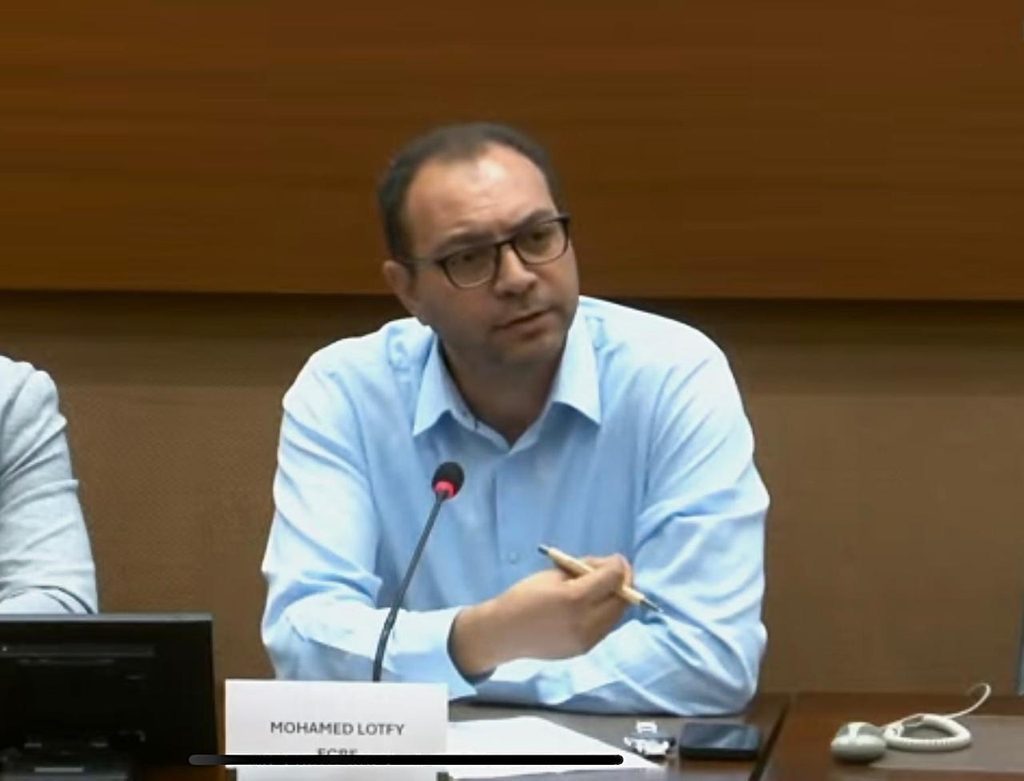
Egypt’s new asylum law has increased the vulnerability of refugees and asylum seekers, with security agencies wielding extensive powers over their protection and deportation, Mohamed Lotfy, Executive Director of the Egyptian Commission for Rights and Freedoms (ECRF), has said.
Lotfy raised the concerns during an oral intervention at the African Congress on Mobility and Migration, held in Dakar, Senegal, from November 16 to 19, 2026.
Speaking to Voice for African Migrants, he identified three major areas of concern: the implications of Egypt’s new asylum law for refugees, forced deportations of Sudanese refugees and the precarious situation of Palestinian refugees who fled Gaza to Egypt.
New asylum law and refugee protection
Lotfy said Egypt adopted its new asylum law in December 2024, ostensibly on national security and defence grounds, amid the refugee crisis triggered by the Sudan war, which began in April 2023, and concerns over forced displacement and ethnic cleansing in Gaza following the October 7, 2023 attacks.
He argued that the law provides a legal framework for violations of international refugee protection standards, particularly the 1951 Geneva Convention relating to the Status of Refugees, in a country where the rule of law is weak.
Under the new arrangement, responsibility for Refugee Status Determination (RSD), previously handled by the United Nations High Commissioner for Refugees (UNHCR) under a memorandum of understanding dating back to 1954, has been transferred to a government committee led by the Ministry of Interior.
Egyptian civil servants are now being trained to determine refugee status, a development Lotfy said raises concerns about the independence and impartiality of decisions, particularly where applicants have fled persecution over issues that are themselves sensitive or criminalised in Egypt.
He cited Christian converts and LGBTQ persons as examples of people who could face difficulties obtaining fair assessments from Egyptian authorities.
Lotfy also questioned the process through which the law was adopted, saying civil society organisations were not consulted and it appeared that neither the European Union nor UNHCR had been given an opportunity to examine the draft before its passage.
He illustrated the risks with the case of a recognised Sudanese Darfuri refugee who was reportedly arrested because of his skin colour. Police confiscated and destroyed his UNHCR refugee card, and although a court ordered his release, National Security officials subsequently deported him to Sudan.
He warned that the law grants security agencies extensive powers to deport refugees and asylum seekers, increasing the risk of arbitrary expulsions.
Forced deportations pushing Sudanese towards Europe
Presenting findings from ECRF’s November 2026 report on forced deportations, titled ‘Outside Protection’, Lotfy raised concerns over what he described as mass forced returns of Sudanese refugees and asylum seekers to a country still experiencing armed conflict.
He said many Sudanese no longer feel safe in Egypt, with some increasingly considering dangerous journeys across the Mediterranean to reach Europe.
According to him, Egyptian civil society organisations have warned European governments that excessive securitisation of migration is counterproductive because policies intended to contain refugee movements may actually push vulnerable people towards irregular and more dangerous routes into Europe.

He argued that Europe’s approach to Egypt is largely driven by efforts to prevent mass migration through financial and political support for the Egyptian government.
He pointed to the EU-Egypt Strategic and Comprehensive Partnership Agreement, explaining that border patrol cooperation represents only one component of a broader arrangement intended to stabilise Egypt economically and politically.
Lotfy described Egypt’s management of refugee issues as transactional, citing the 2017 forced deportation of Uyghurs to China as an example of how refugee protection could be subordinated to diplomatic and economic interests, including the prospect of Chinese investment in Egypt’s New Administrative Capital.
Palestinian refugees trapped in legal limbo
Lotfy also highlighted the difficult circumstances of Palestinians who entered Egypt from Gaza following the escalation of the conflict.
He said Palestinians arriving from Gaza are generally issued 45-day visas, after which they find themselves in a legal and administrative limbo.
Neither UNHCR nor the United Nations Relief and Works Agency for Palestine Refugees in the Near East (UNRWA), he explained, has a clear mandate to address their specific situation in Egypt.
Consequently, many cannot access essential services or regularise their stay. They also face restrictions that prevent them from renting apartments, working legally or obtaining mobile telephone numbers registered in their own names.
Although Egyptian immigration authorities do not provide them with a legal residence status, they are reportedly told that they will not be deported, leaving them without a clear legal pathway to protection or long-term stability.
Racism and changing government attitudes
Lotfy raised concerns about racism and xenophobia directed at Sudanese and Palestinian refugees in Egypt, including hate speech targeting Sudanese nationals.
He noted that Palestinians have experienced social discrimination in Egypt for decades, including challenges associated with mixed marriages.
Lotfy’s intervention underscored the need for African governments and international partners to prioritise refugee protection, independent asylum procedures, non-refoulement and access to basic rights rather than treating migration primarily as a national security and border-control issue.