News
Fleeing the DRC and haunted by loss, a mother is left asking what comes next

The last thing Elizabeth Uwimana remembered before the Rusizi River swallowed her two eldest children is the fear in their eyes as a violent surge of water tore them from her grasp.
“The river took them from me,” she whispers, seated in a makeshift shelter surrounded by hundreds of other displaced families. “To this day, I don’t know if they are alive.”
Elizabeth, a mother of four, is among tens of thousands who fled renewed violence in eastern Democratic Republic of the Congo (DRC). For two years, she and her children had built a modest life in Kamanyola, having migrated there in search of safety and opportunity. But that fragile peace was shattered in February 2025, when armed clashes between the M23 group and Congolese government forces reached their community.
“At first, we thought it would be over soon. But the fighting only got worse and we soon realized it was no longer safe,” Elizabeth explains. “We had no choice but to flee.”
Amid the chaos, Elizabeth was separated from her husband. Alone, she guided her four children through dense forests and treacherous terrain. Their only escape was the Rusizi River – a perilous crossing used by thousands seeking refuge in Burundi.
“The river was our only way out. I didn’t think twice.”

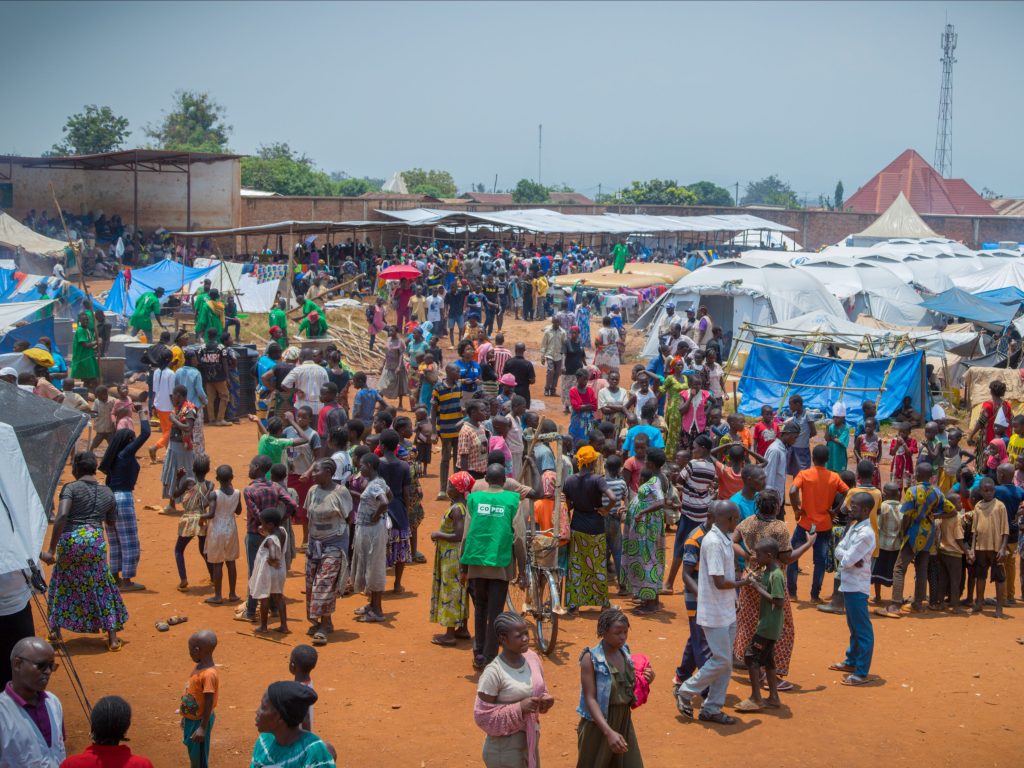
That decision came at a devastating cost. As they attempted the crossing, a sudden swell in the current swept her two eldest children away. They have not been seen since.
Elizabeth’s loss reflects a broader humanitarian crisis. Between January and March 2025, more than 70,000 people crossed into Burundi, fleeing escalating violence in eastern DRC. Thousands more have arrived in Uganda and Rwanda, making this one of the largest displacement influxes Burundi has seen in decades.
Over 80 per cent of Burundian returnees arriving from the DRC have no homes to return to and no means to rebuild. Like Elizabeth, many arrive with nothing – their documents lost, savings depleted, and belongings left behind. In Elizabeth’s case, even her phone, which held the last photos of her children and the only way to contact her husband, was lost to the river.
By March, the International Organization for Migration (IOM) had assessed the needs of over 18,000 newly arrived displaced persons in Burundi. Most were sheltering in overcrowded public spaces like schools, churches, and stadiums, including Rugombo Stadium in Cibitoke Province. Others were taken in by host communities already grappling with scarce resources.
Among them is Elizabeth, still searching for answers, holding on to what little she has left.